


05 June 2026
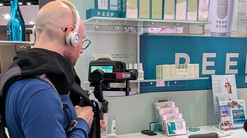
As the official media partner of 100% Optical, over the last few months the OT team has been reviewing lecture notes, writing up interviews, and editing videos from a busy show.
In that time, a thread of key topics has emerged from across the education programme and the exhibition hall.
Here, OT spotlights five major trends and topics from 100% Optical 2026.
1 Artificial intelligence and innovation
The optical show is always a destination for seeing the latest innovative launches – and this year did not disappoint. However, in addition to the newest products, the topic of artificial intelligence (AI) was front and centre.
On the education stages, speakers discussed how AI can be used in practice – currently, and in the future as the technology evolves.
Optometrist, Kishan Devraj, discussed AI models, the lack of existing regulation, and what practitioners need to bear in mind, emphasising it’s use as a productivity tool or assistant, not a management tool.
During the show, following a Main Stage lecture, medtech company, Cascader, announced a partnership with Specsavers.
Cascader, a spin-out company launched through a collaboration of Moorfields Eye Hospital NHS Foundation Trust, the UCL Institute of Ophthalmology, and Topcon Healthcare, is building on the field of oculomics to develop AI tools to support early detection of disease.
The partnership with Specsavers will explore how products that meet the needs of community practice can be delivered.

Specsavers announces partnership with AI medtech company Cascader at 100% Optical
The partnership hopes to instil AI technology in optometry practice and could “transform eye care in the UK and globally,” Specsavers said
In the exhibition, smart eyewear was a notable addition to 100% Optical stands, while OT received a demonstration of AI-supported devices, such as ReferAI, a referral letter generation tool.
2 Unpicking the research
The latest updates in research and what this could mean for patients were presented during the show.
Sana Hamid, Moorfields Eye Hospital consultant ophthalmic surgeon, explained the role of Rho-kinase inhibitors in glaucoma care, how these work, and patient experiences. Read more here.
In myopia-related news, Aston University academic and optometrist, Professor Nicola Logan, gave an update on atropine.
This followed the Medicines and Healthcare products Regulatory Agency approval of 0.01% atropine for myopia control in children at the end of 2025.
Logan spent time assessing the evidence, pointing to ongoing studies, and what is known about different concentrations of atropine, as well as the possibilities that a variety of myopia control interventions can offer. Find the full report on OT.
3 Not a dry eye
Dry eye is an increasingly necessary topic for practices to explore, and this was evident across the programme and exhibition floor.
Khan also took the opportunity to provide an update on guidance on dropless cataract surgery from the United Kingdom and Ireland Society of Cataract and Refractive Surgeons on dropless cataract surgery.
Nick Atkins, managing director of Positive Impact, spoke OT through the comprehensive Dry Eye Zone Circle-of-Care.
Presented by Positive Impact, the circle divides dry eye management into six steps, with relevant products for each stage: heat, massage, cleanse, antimicrobial, hydrate, and supplements.
A panel discussion drew links between menopause and dry eye, highlighting the need for awareness and the role of eye care professionals in recognising the impact of menopause on ocular surface health.
As clinicians, we are often the first to observe patterns patients have not yet connected, and a brief, thoughtful comment may prompt a GP conversation that transforms a woman’s broader health journey
4 Ahead of the curve
The 100% Studio area of the exhibition represented an ideal place to get hands-on with what is new and upcoming in eyewear.
OT met with Diego Kim, CEO and founder of Albert I’mStein, to talk about his collection of “happy eyewear,” which prioritises individuality with a colourful, quirky flair.
Meanwhile, Nicola del Din, CEO of Blackfin, talked OT through the brand’s new collection, representing a technical innovation for the company. Known for its use of titanium, the brand has launched a new frame with a transparent front made of a polyamide that it is calling VitraCore.
On the 100% Catwalk, delegates gained insight into the consumer trends set to shape the market in the year ahead from Natasha Cazin, global insight manager for eyewear at Euromonitor International.
Explaining the ‘Comfort zone’ trend, Cazin said it is about “empowering consumers to navigate uncertainty with confidence.”
5 Skills and conduct
Key sessions across the education programme shone a light on some of the challenges and pitfalls facing professionals.
Soft skills can make all the difference. Priya Kakkad, optometrist and professional services associate at Zeiss Vision UK, spoke about the role of communication as a skill central to clinical care, and why it matters more than ever in modern day practice.
Dr Pretty Basra discussed the concept of mental fitness for practitioners and why this is important for practitioners who are highly trained, but rarely taught to train their own minds. Find out more about mental fitness.
OT at 100% Optical 2026




Comments (0)
You must be logged in to join the discussion. Log in