


05 June 2026
Advancements in technology now mean optometrists have access to a variety of tools to support the detection of pathology from an even earlier stage, particularly tools that aid optometrists in gaining a broader view of the retina.
Sharon Ormonde, Optos sales director for Northern Europe, told OT: “We now have a compelling body of clinical evidence, over 4000 clinical papers, showing that the peripheral retina matters profoundly in staging and predicting progression in retinal disease.”
Optos’ ultra-widefield imaging technology captures up to 200 degrees (82%) of the retina in a single, non-contact image.
The single capture view extends beyond the vortex vein ampullae into the far periphery, Ormonde said, “enabling visualisation of pathology that traditional 30–45 degree fundus cameras, and even widefield cameras, routinely miss.”
Ormonde pointed to a 2012 study by Heussen et al which looked at multimodal optomap imaging found that up to 66% of the pathology captured on optomap is missed with traditional imaging methods.
She highlighted further that when imaging with optomap guided swept source optical coherence tomography (OCT), a study by Sodhi et al in 2021 found it impacted clinical decision making in 84% of cases, with 69% of patients presenting with peripheral only pathologies.
Another study, by Lee and Muni in 2023, found that the technology was useful for differentiating retinal detachment, schisis-detachment and retinoschisis in cases where it was not apparent clinically, Ormonde said.
“A comprehensive view of the retina, including the far periphery, is critical for effective disease management,” Ormonde emphasised.
She shared: “Ultra-widefield (UWF) imaging has repeatedly been shown to capture and document pathology that is prognostically significant, and more effective at supporting effective treatment decisions and improving outcomes.”
UWF fluorescein angiography provides an even stronger predictive value, Ormonde noted, by revealing areas of peripheral nonperfusion, vascular leakage, and other abnormalities that are not visible with standard posterior-pole-imaging.
Optos swept source-guided OCT improves the detection of retinal breaks, lattice degeneration, vitreoretinal traction, and early detachment.
Ormonde said: “By uncovering pathology that standard imaging might fail to capture, Optos UWF technology supports more comprehensive and efficient exams, giving clinicians a clearer sense of which patients are more likely to have deteriorating pathology, and enables more effective long-term disease management.”
Ultra-widefield (UWF) imaging has repeatedly been shown to capture and document pathology that is prognostically significant
Incorporating into practice
Many practices see a return on investment in the short-term, Optos suggested, both single-testing practices or those with a predominantly NHS patient base.
Optos noted that independent studies have shown that practices using optomap can see more patients in less time, improve detection and documentation of pathology, and generate incremental screening revenue.
The company calculated that, based on average screening revenue calculations, assuming 20 practice days per month and an optomap fee of £30, return on investment could be achieved quickly – for example, a practice imaging eight patients per day would generate £4800 in optomap revenue per month, equating to £57,600 per year.
“We see optomap embedded particularly well in practices that make it part of their routine examination process,” Ormonde said.
The optomap image can also be a valuable communication tool, Ormonde said: “Patients are often highly engaged when they see an image of their own retina, and for those with treatable pathology, this can help them better understand their condition and the importance of following recommended care.”
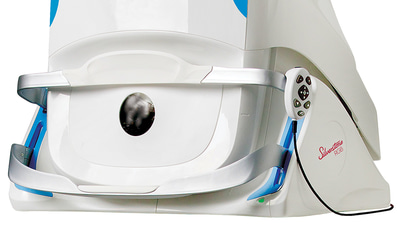
Wider visualisation
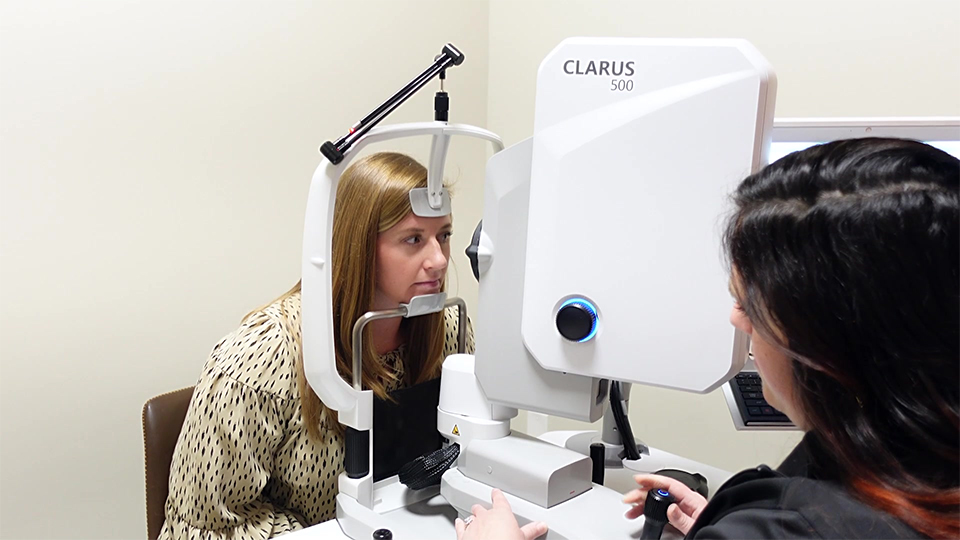
Zachary Tomlinson, clinical application specialist at Carl Zeiss Limited, pointed to the Zeiss Clarus 500 as technology that supports an enhanced view of the peripheral retina through UWF imaging technology.
The system captures up to 133 degrees of the retina in a single image. Tomlinson said that this is “significantly wider than conventional fundus cameras, and can create ultra-widefield views of around 200 degrees or more through automatic image montage.”
“This allows clinicians to visualise retinal areas far beyond the posterior pole, improving detection of peripheral pathologies such as retinal tears, lattice degeneration, and peripheral haemorrhages,” he explained.
The cameras use Broad Line Fundus Imaging, which sequentially captures red, green, and blue wavelengths to produce high-resolution, true-colour images, resembling the clinical view during ophthalmoscopy.
“In addition, partially confocal optics reduce light scatter and artefacts from eyelashes and eyelids, helping maintain image clarity across the wider retinal field,” Tomlinson said.
Eye-steering and montage functions on the tool extend peripheral coverage by capturing images in multiple gaze positions and combining them into a larger composite image.
“Together, these technologies enable detailed visualisation and documentation of the peripheral retina, supporting improved diagnosis and monitoring of retinal disease,” Tomlinson told OT.
The clinical application specialist highlighted that this technology enables a larger portion of the retina to be assessed and documented, meaning “clinicians are more likely to identify subtle or early peripheral abnormalities before symptoms develop.”
“Detecting these changes earlier allows practitioners to intervene sooner or monitor patients more closely, which can reduce the risk of disease progression and vision loss,” Tomlinson said.
“For example, identifying early peripheral retinal breaks or areas of lattice degeneration can prompt preventative referral or treatment, while detecting peripheral signs of systemic diseases such as diabetic retinopathy can influence monitoring intervals and referral pathways,” he added.
The ability to store and compare images supports longitudinal monitoring, Tomlinson said, leading to more informed and timely clinical decisions.
Detecting these changes earlier allows practitioners to intervene sooner or monitor patients more closely, which can reduce the risk of disease progression and vision loss
Embedded technology
Tomlinson explained that return on investment for technologies like the Zeiss Clarus 500 is often realised through a combination of clinical value, patient engagement and practice efficiency.
UWF retinal imaging can be offered as part of advanced eye examinations or private retinal screening services, supporting revenue while also enhancing clinical decision-making and documentation.
“The ability to clearly show patients images of their retina can improve patient understanding and acceptance of treatment or monitoring plans, which can strengthen trust and increase uptake of additional diagnostic services,” he said.
Over time, Tomlinson suggested, practices might benefit from improved referral quality, explaining: “Practices tend to embed this technology most successfully when it becomes part of the routine patient pathway rather than an optional add-on. For example, some clinics integrate ultra-widefield imaging into standard new-patient examinations, diabetic eye monitoring, or high-risk retinal assessments, ensuring consistent use of the device.”
Systems like this are commonly used in multidisciplinary or technology-led practices where retinal imaging is combined with other diagnostics, such as OCT, Tomlinson said.
“In these environments, staff are trained to capture images efficiently, clinicians regularly reference the images during consultations, and the technology becomes a central tool for clinical communication, monitoring, and patient education, which maximises both its clinical and financial value.”
Earlier detection in practice
Edmonds & Slatter Opticians in Kibworth introduced widefield imaging in 2009 and later incorporated OCT technology in 2020.

Vikesh Chauhan, lead optometrist at the practice, explained that the aim of these investments was to improve the practice’s ability to detect pathology across the central and peripheral retina.
He shared “Widefield imaging allows us to capture a broader view of the retina in one go, while OCT provides detailed cross-sectional imaging. Together, these technologies support earlier detection of subtle or asymptomatic changes, enabling more informed clinical decisions and improved patient outcomes.”
Implementing the technology required structured training for the whole practice team.
Optometrists completed manufacturer-led and independent clinical training focused on accurate interpretation of OCT scans and recognising pathological signs, while optical assistants were trained in patient preparation and image capture.
“Ongoing learning and peer discussion have also been important to maintain confidence and consistency across the team,” Chauhan said.
Sharing an example of how the technology has been used in the practice, Chauhan highlighted how UWF imaging supported the identification of R2 diabetic retinopathy changes in a patient who had previously been graded as R1 through the diabetic eye screening programme.
He said: “The wider retinal view enabled us to detect more advanced peripheral pathology that may not have been captured through standard screening images, allowing for appropriate escalation and referral.”
In another case, OCT imaging supported the identification of diabetic macular oedema in a patient, where cross-sectional retinal analysis revealed fluid accumulation not evident on clinical examination alone.
“This enabled timely referral and management, further demonstrating the value of combining imaging modalities to improve detection and patient outcomes,” he explained.


Comments (0)
You must be logged in to join the discussion. Log in