


18 July 2026
When Dr Valarie Jerome relocated from the US to the UK in 2009, there were many differences in daily life.
She adapted to workplace tea and coffee rounds, the British weather and sense of humour. She became accustomed to differences in language and optometric practice.
In 2026, after moving back to north east Florida, the optometrist is again going through a period of cultural acclimatisation.
“It wasn’t until I moved back and started practising again, and that I realised, ‘whoa, I am super British, despite my accent’,” Jerome shared.
As well as feeling the loss of practical aspects of British life – such as a workplace kettle and the ability to run errands on foot – Jerome misses her colleagues and chatting with the patients who came through her Newbury practice.
“I liked talking to my patients and learning about their lives,” she said.
Jerome made the shift to the US to be closer to her mother. She currently works as a locum optometrist – or ‘fill in optometrist’ as the role is known in the US – at practices in north east Florida and south east Georgia.
It wasn’t until I moved back and started practising again, and that I realised, ‘whoa, I am super British, despite my accent’
The optometrist regularly provides extended clinical services in practice – including providing follow up care to patients after cataract surgery, co-managing patients with age-related macular degeneration and prescribing glaucoma patients with intraocular pressure-lowering eye drops.
“I have moved from glaucoma detection to glaucoma treatment and management,” she shared.
“I'm seeing more glaucoma patients than I ever saw in the UK, and mainly that's because of the demographic,” Jerome reflected.
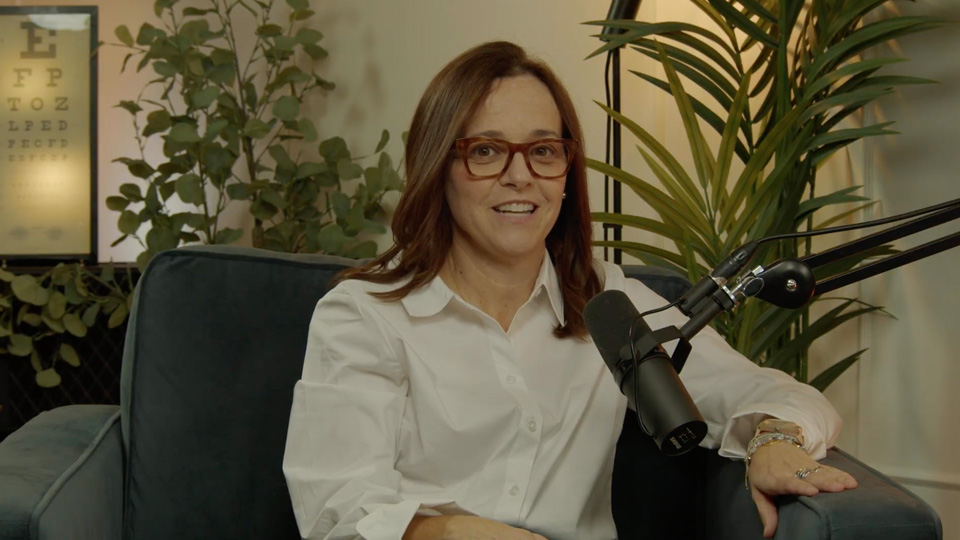
Alongside her locum role, Jerome has established a podcast, Eye Got You with Dr Valarie Jerome, and also offers virtual consultations.
“It’s not a replacement for an eye exam, but if someone needs independent advice on any glasses or contact lens issues, dry eye help or myopia management advice, I’ve made myself available for that service,” Jerome explained.
Jerome sees a large proportion of African American and Hispanic patients within practice. She has learned to conduct an eye examination in Spanish.
In the US, many optometrists will rely on a scribe to input data into the electronic medical records.
“If you develop a good relationship with your scribe, they can basically finish your thoughts,” she observed.
While a reliance on vision and medical insurance in practice does add an administrative burden, Jerome shared that she has observed more people presenting for routine sight tests without symptoms in the US as a result.
“Many days I see two or three patients with plano prescriptions who have been plano for many years. They just want to check everything is healthy,” Jerome said.
“That’s typically not a behavior that I would see in a UK patient,” she added.
The optometrist has also noticed a difference in how members of the public view optometry as a profession.
They will present to optometrists for any vision-related conditions, including foreign bodies.
“People come to you as their primary eye care provider. They’re not going to the ophthalmologist or GP for any eye-related issues. They wouldn’t go to the emergency room because they've got a bit of metal stuck in their eye,” Jerome said.
A difference that Jerome has observed in the US is that fewer patients see spectacles as a fashion accessory.
“I miss the spectacle culture in the UK – where most people have a nice pair of glasses. In the US, contact lens wear is more popular,” she said.

Postcard from… Australia
Dr Ceecee Britten-Jones on unravelling genetic puzzles, the changing scope of optometry, and calling one of the world’s most liveable cities home


Comments (0)
You must be logged in to join the discussion. Log in