


05 June 2026
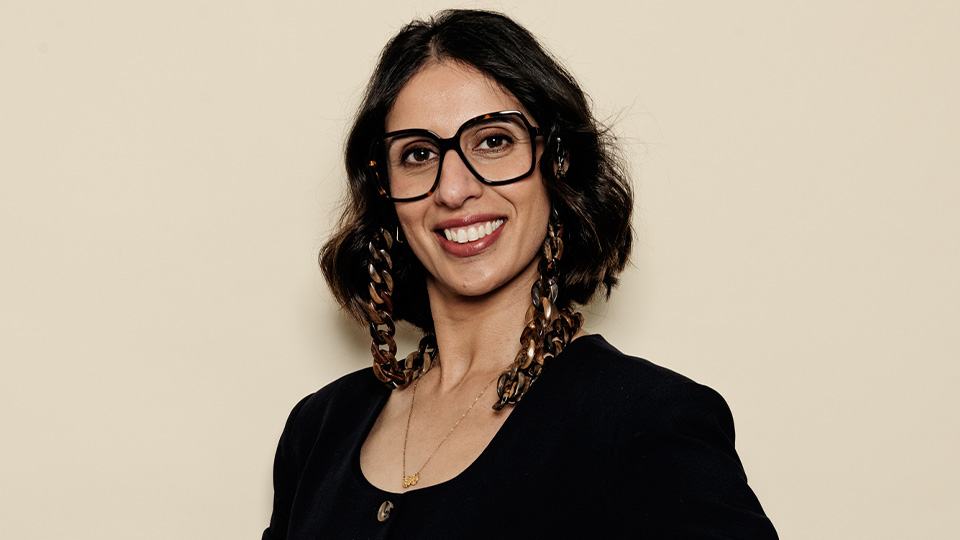
For optometrist and director of Richard Petrie Optometrists, Davina Dosanjh, the journey into practice ownership has taken her full circle.
For the past 25 years the practice has been part of her life – first as a Saturday job, then where she worked as an optometrist, and now as her own independent on the Derby High Street.
Dosanjh was born, grew up and went to school within a five-mile radius of the practice she now owns.
Her sense of commitment and connection to the area can be seen in the window artwork that adorns the premises, which features a nod to local industry, schools and famous women with Derby heritage.
Dosanjh told OT that sometimes she feels like Postman Pat walking down the High Street because of the number of people she knows.
For her the High Street is not simply about transactions, but about forming connections.
“From a child to an elderly person, going out to connect with a human is so important,” she emphasised.
“I think that's something that you get on a smaller, local High Street level, more than when you go into a city or into a larger part of the city where it’s a bit more diluted,” Dosanjh said.
As a practice owner, Dosanjh feels a duty to continue the legacy of her mentor and former practice owner, Richard Petrie, who established the practice 48 years ago.
This year, Richard Petrie Optometrists received the long-standing practice of the year accolade at the SightCare Awards.
Dosanjh told OT that she learned many lessons about practice ownership from Petrie while they worked together, including the value of maintaining work-life balance.
“He showed me that it wasn’t about spending hours and hours at the practice, on nights and weekends. It was about being there and also having that boundary,” she reflected.
The optometrist was motivated to become a practice owner as a way of contributing to the community.
“I think I’ve always wanted to give back. When I’m in clinic, I feel like I’m helping people,” Dosanjh said.
The practice offers a subscription eye care model and has been private since 2021.
Dosanjh finds that having a set of three underlying values helps the practice to remain resilient. Those values are: honesty, dedication and specialist.
“When things don’t feel like they’re going to plan, we can refer back to those values,” she said.
“It’s great for accountability as well – to make sure we are all singing from the same hymn sheet,” Dosanjh highlighted.
The optometrist noted that being able to adapt and evolve proved vital during the COVID-19 pandemic when her staff were on furlough and Dosanjh became responsible for every aspect of the business – from hand-delivering spectacles and contact lenses to repairs and emergency eye care.
She highlighted that even periods of pressure can result in positive change.
“The key is adaptability – how do we need to move forward? What can we do differently?” Dosanjh observed.
She added that having a sense of what is unique about a practice is key to remaining resilient through challenges.
“You have to be authentic. You can’t pretend to be something that you’re not,” Dosanjh highlighted.
A growth opportunity
After becoming a practice director at the age of 26, Irinder Khakha has matured alongside his business.
Specsavers Hayes now has five clinics while a Hayes Sainsbury’s practice Khakha established in 2022 runs two clinics.
What Khakha has come to realise during his 14 years of practice ownership, is that while practice ownership brings freedom, it also entails responsibility.
“You're accountable and responsible not only for your staff, but for your community,” he said.
One way that Khakha has served the eye health of his community is through the North West London Community Eye Care Service, which Specsavers Hayes joined in 2025.
The minor eye conditions service includes provision for independent prescribing optometrists to prescribe using NHS FP10 prescription pads.
Khakha uses his IP qualification to treat a range of urgent ocular conditions, including foreign bodies which are an occupational hazard for the large proportion of workers in the surrounding community who are employed in construction.
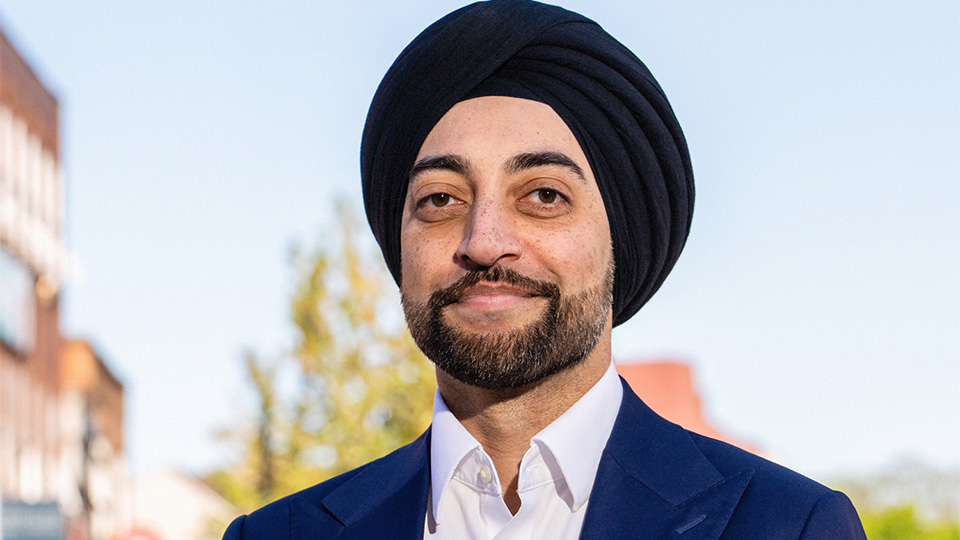
Alongside his role at Specsavers, Khakha has worked within glaucoma and medical retina clinics at Hillingdon Hospital since 2015.
“We've got a very good relationship between our practice and the local NHS acute trust. I see a lot of patients in practice that I've seen already in the hospital, and vice versa,” he shared.
Khakha shared that his leadership style has changed over time. He has shifted from a results-focused micromanagement approach to one that focuses on delegating and utilising the unique perspectives within his team.
“I feel as though building the team is more important than anything else. You can build a team around your values,” he said.
Khakha endeavours to understand the individual motivations of each member of the team – from teenagers to those approaching retirement – so he can support them in realising their career goals.
“I want to enable colleagues to be the best versions of themselves,” he said.
Reflecting on how he approaches recruiting and retaining colleagues, the IP optometrist highlighted the importance of creating a culture where people feel valued.
“Word spreads very quickly if you're a good practice to work in,” he said.
Khakha shared that there are clear progression pathways within the practices, with a strong focus on professional development.
“There are ample opportunities to expand into enhanced clinical roles and do IP. I think people tend to want to stay in a place where they feel supported and looked after,” he said.
During his time as a practice director, Khakha has navigated the challenges of the COVID-19 pandemic and the effect of cost-of-living pressures on consumer behaviour.
“The way that we've come through that is by ensuring that we don't sway from our core principles. Service has become a lot more fundamental to our survival,” he said.
During the first lockdown in March 2020, Specsavers Hayes remained open to provide emergency eye care to the surrounding community.
“As the largest practice in Hayes and one of the largest in Hillingdon, we were at the forefront during that time,” Khakha said.
“It was a very difficult environment with a rapidly changing landscape. But we knew that we had to continue being open for those most vulnerable and the ones who needed emergency care,” he emphasised.
Continuing to provide care gave a sense of reassurance to patients in what was otherwise a worrying time.
“Having vision loss is quite an anxiety-inducing time. If you’re unable to access care when you really need it most, then that is frightening,” Khakha shared.
He added that, six years after the pandemic, he continues to see patients who he treated during COVID-19 and may have faced irreversible sight loss without intervention.
“The gratitude continues to this day,” Khakha said.
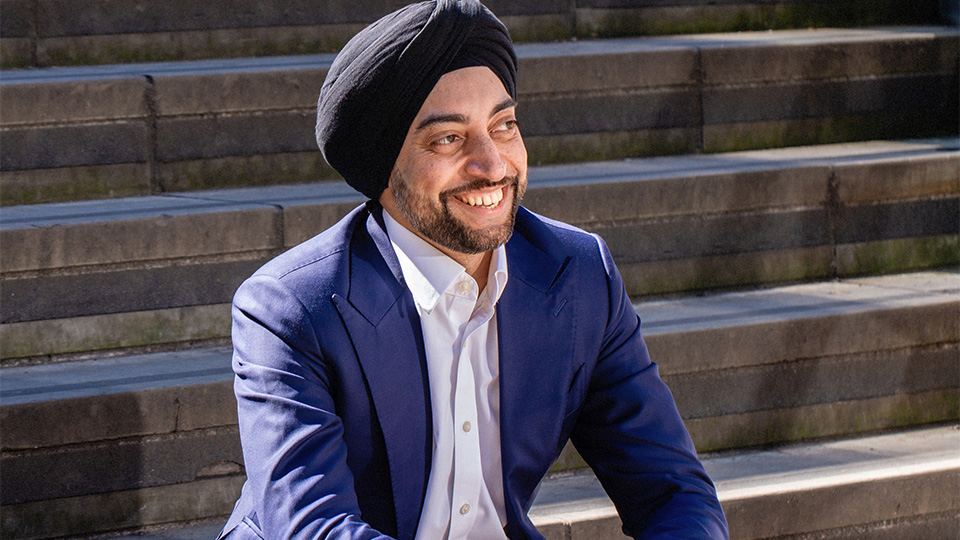
As the ophthalmic director has cared for his patients’ eye health, they in turn have cared for him.
“Our team room is filled with sweet boxes. People come in just after lunch to make sure I’ve eaten,” he said.
When Khakha became ophthalmic director of Specsavers Hayes in 2012, he had a clear vision for the type of practice he wanted to mould.
At the helm of an established practice where 10 colleagues were older than him, Khakha soon discovered that translating his vision into a reality was not as straightforward as he had anticipated.
“I was probably a bit young and naive going into a practice. I thought I was invincible, as a lot of 26-year-olds probably do,” he said.
While Khakha has shaped his practice, his colleagues and patients have also shaped him.
The patients who come through his practice range from toddlers to centenarians. They bring with them languages and traditions from Somalia, India, Pakistan, Afghanistan, Romania, Albania and many other nations.
“It’s quite enriching for the soul. You learn to appreciate different cultures,” he said.
Khakha estimates that around half of his daily sight tests are carried out in Punjabi.
Khakha shared with OT that the effects of cost-of-living pressures are continuing to be seen within his practice – with patients delaying routine appointments and taking a more cautious approach to spending.
In light of these pressures, Khakha highlighted that offering an individualised service and demonstrating the value that is offered is key.
“You need to understand your patient much more than you've ever done before,” he said.
Looking back at his decision to become a practice owner at the age of 26, Khakha has no regrets.
“I've learned things I wouldn't have learned. I think it's made me a stronger person and a stronger leader,” he said.
Our team room is filled with sweet boxes. People come in just after lunch to make sure I’ve eaten
After the flood
When the flood waters were rising to knee height in Monnow Eyecare in November 2025, practice director and IP optometrist, Helen Tilley, was on a ship destined for the Antarctic in the middle of the Southern Ocean.
With two weeks remaining on her voyage, outings to witness the natural beauty of the coldest continent were interspersed with images of flood damage to the practice she had developed over 16 years.
“I felt helpless. It was that loss of control that affected me most,” she told OT.
The Hakim Group independent practice was forced to close for six weeks before establishing a temporary premises within Singleton Court Business Park.
After reopening the practice doors at the end of March this year, Tilley told OT that the experience had made her realise how loyal the community is to the practice.
“I’ve been totally wowed by the support that we have received. It makes me choke up a little bit that people did drop everything to help,” she said.
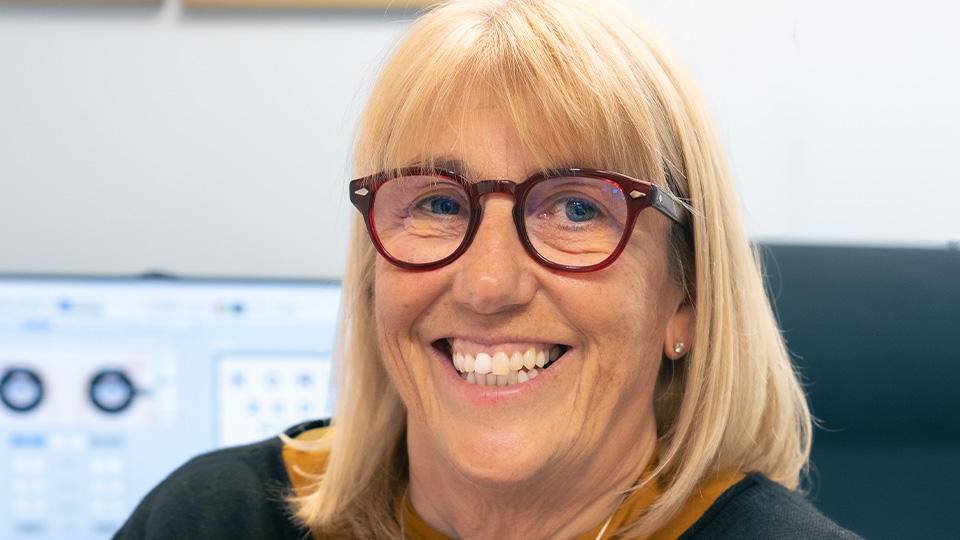
Fellow IP optometrist and business partner, Adib Missaghi, stepped up to coordinate the initial cleanup of the practice, while Tilley’s children also travelled from Nottingham, London and Chester to help out.
Both independent and multiple practices donated equipment to help the practice get back up and running.
“The generosity of the optometry community has been immense,” Tilley shared.
When the practice reopened its doors five months after the flood, the team were greeted with biscuits, chocolates and flowers from patients.
Tilley recalled a patient who spent two days helping with the initial clean-up effort.
“He just literally knocked on the door, came in, rolled his sleeves up and started jet washing stuff down,” she said.
Her staff carefully cleaned out a retinoscope Tilley has owned since 1984, and dried it with a hairdryer.
“My husband had managed to revive it and get the on/off switch working,” she said.
When she was in Antarctica, Tilley observed humpback whales feeding and unwittingly became the leader of a line of emperor penguins.
“You’re not meant to approach them, but you will turn around and find that there is line of them following you,” she said.
She noted that these experiences put her practice challenges into perspective.
“When you see 20,000 pairs of penguins, it’s quite awe-inspiring. Although what happened is upsetting, it’s just stuff. Stuff can be replaced,” she said.
“I was most worried that the patients would desert us and my team would leave. The amazing team and the patients were what got us through,” Tilley shared.
The generosity of the optometry community has been immense
Entering practice ownership
Tilley’s status as a practice owner came about through a moment of serendipity at the Welsh Optometric Conference.
In a conversation with fellow optometrist, Nick Rumney, Tilley mentioned that the optometrist she was working for was looking to sell his practice and Rumney suggested they buy it together.
While Tilley had three young children at the time and no previous intention of buying a practice, she agreed.
Tilley had a vision of establishing a practice that provides an excellent clinical service to patients. Today, more than half of the practice’s income is provided by clinical services – including six to eight emergency eye care appointments each day and triage services for glaucoma and medical retina.
“We have always been amongst the first clinicians to offer schemes which help alleviate the delays in secondary care,” she said.
“We have put our hands up to be part of pilot schemes, upskilled to be able to offer screening, triaging and monitoring schemes,” Tilley added.
While Monnow Eyecare is now an established and successful practice, during the early years of practice ownership, there were times when the business did not make a profit.
Tilley would pay her team and her suppliers, but not herself. She valued the support of Rumney during the first four years of practice ownership.
“He was an amazing mentor and an even better sounding board. It is really important to have these mentors in life and I have always tried to help when people have asked me for advice,” Tilley reflected.
Reflecting on her decision to enter practice ownership, Tilley shared that it is one of the best things she has done.
“Although there have been lows to go with the many highs, there is nothing better than knowing that people come to your practice because you provide them with a high-quality service,” she said.
Relocating to the South West
After training and working as orthoptists, Ben Williams and Simon Frackiewicz retrained as optometrists. In 2005, they relocated from London to Somerset to become practice owners.
“We had been friends for a few years and had often pontificated on how we would love to run our own practice together with a clinically-focused outlook,” Williams told OT.
Located in Yeovil and Chard, the practices serve a rural community with some patients travelling many miles to receive eye care.
During the pandemic, Robert Frith Optometrists was one of the few sources of emergency eye care in the area.
Williams shared that while some of the clinical services offered by the practice are not the most profitable aspects of the business, they are professionally rewarding.
“We think it's the right thing to do and it’s good for the community, people value the help we’ve given and tend to return as full patients” he said.
“I never want to be in a situation where the patient knocks on my door and I say, ‘Oh, we don't do that here. Try that practice down the road’,” Williams added.
Staff training is a focus for the two practices, with optometrists supported to complete IP training and encouraged to work within local NHS hospitals.
“Located where we are, we know we are not a big draw for a new graduate so we've mostly trained our own pre-regs to become full time employees, and honed in-house talent through dispensing optician courses,” Williams said.
He told OT that he appreciated the flexibility of practice ownership.
“There's a professional reward in being able to craft your career in the way you want to,” Williams said.
In addition, Williams has valued the opportunity to support others within the profession – including teenagers who completed work experience with the practice before being sponsored through university and completing pre-registration years at Robert Frith Optometrists.
“One of the nicest things is seeing how we've developed people over the years,” he shared.
Reflecting on the lessons that he has learned over his two decades as a practice owner, Williams observed: “The job is never done. There is no finishing line, so enjoy the journey.”


Comments (0)
You must be logged in to join the discussion. Log in