


06 February 2026
The pace of technological change within optometry is constant.
Lens and frame materials are refined, treatments improve and equipment evolves. A time-travelling optometrist from last millennium would be greeted by a very different scene entering an optometry practice in 2026.
In this feature, OT looks at five innovations that are changing the way eye care is delivered – from technology for monitoring intraocular pressure at home to an artificial intelligence tool that assists clinicians in optical coherence tomography analysis.
1 Home monitoring of IOP
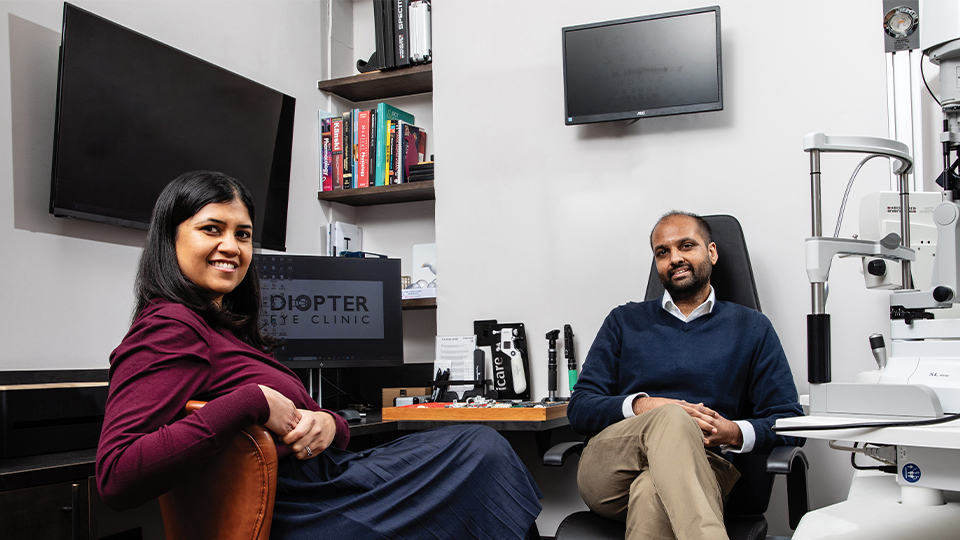
When Diopter Eye Clinic co-directors and optometrists, Ashish Chokshi and Tanvi Shah, opened the doors of their Fulham independent in March 2020, they had a vision of providing the same care to every patient that they would give to their own family and friends.
The husband and wife duo were both working at Moorfields Eye Hospital at the time.
“Our experience in hospital has shaped how we lead the practice,” Chokshi said.
“The principle that underscores everything is that we want to do the right thing for the patient 100% of the time,” he said.
Six years and a pandemic later, Chokshi and Shah are delivering a variety of clinical services in the community – including medical retina, glaucoma, specialty contact lens and low vision clinics.
Chokshi continues to work at Moorfields Eye Hospital part-time as the optometry lead for the medical retina service.
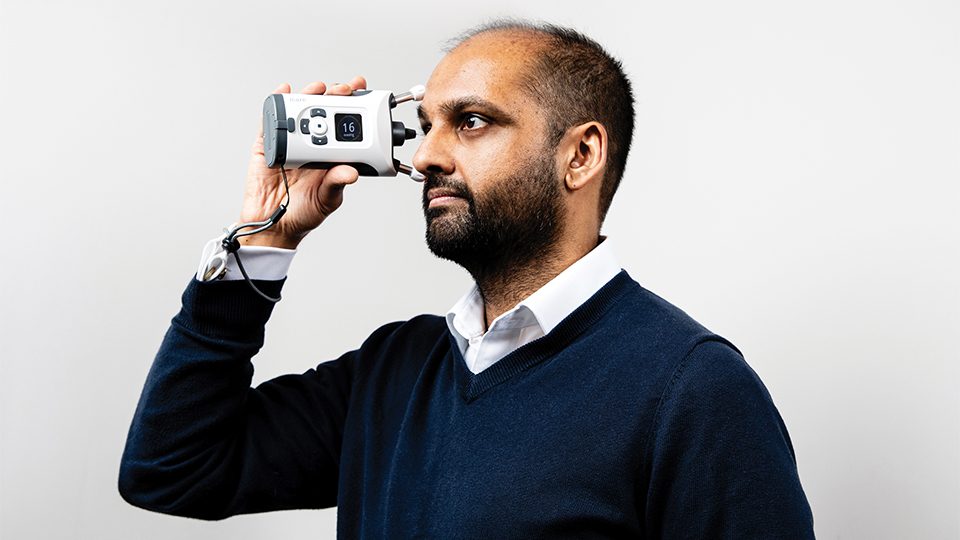
One piece of technology that has helped to deliver a pioneering level of care to Diopter Eye Clinic patients is a handheld rebound tonometer – iCare HOME2.
The device is loaned to suitable patients, enabling them to measure their intraocular pressure (IOP) at home with readings uploaded to an app and shared remotely with the practice.
Chokshi explained that the device can be used as an additional diagnostic tool or for ongoing monitoring and management of glaucoma.
“It really enables us to optimise patient care and treatment regimes, and empowers patients in their own care,” he said.
The device takes six readings at a distance of 5mm from the cornea, automatically eliminating the highest and lowest readings.
If a reliable reading is not obtained, an error message is displayed and the patient is encouraged to take another reading.
Patients receive an onboarding session before they take the device away on loan – where they practise using the device and are set up on the associated smartphone app.
“It’s quite user friendly. It’s easy to handle and doesn’t run out of charge,” Shah highlighted.
Chokshi observed that patient selection is key when deciding who to loan the device to.
He added that home measurement of IOP can be useful in suspect and borderline glaucoma cases as well as in patients where there is evidence of progression on optical coherence tomography scans – despite seemingly good pressure control.
“It is also useful from a practical and logistical perspective. For example, it can be helpful for patients unable to come in regularly for their care, if they live in a remote area or have mobility issues,” Chokshi said.
The principle that underscores everything is that we want to do the right thing for the patient 100% of the time
He shared that the device helped to identify a patient who had not responded to SLT treatment.
“They had been discharged from the care of an ophthalmologist but they were still getting pressure fluctuations. We were able to pick that case up quite early and quickly,” he said.
Shah recalled a case where measuring IOP outside of practice hours resulted in a patient receiving timely intervention.
“Previously this patient had consistently come to us in the morning, and her pressure was OK,” she said.
“One day she came in the afternoon, and we found a really high pressure – which we weren’t expecting,” Shah said.
The patient took the handheld rebound tonometer home on loan and recorded pressure readings.
“From two to four hours after she woke up, she had this consistently high spike,” Shah explained.
“We were able to make an onward referral, including the IOP data, and she ended up receiving a tailored treatment plan on the back of that,” she said.
When patients receive the device, they are also informed about what to do if they have a pressure spike outside of practice hours.
“Patient education is key for us,” Shah emphasised.
Chokshi highlighted that home IOP measurement could help to ease the burden on secondary care – particularly when it comes to monitoring post-surgical outcomes.
“When it comes to glaucoma care, that entire space of post-surgical outcomes is a greenfield,” he said.
2 Empowering patients with Okko Health
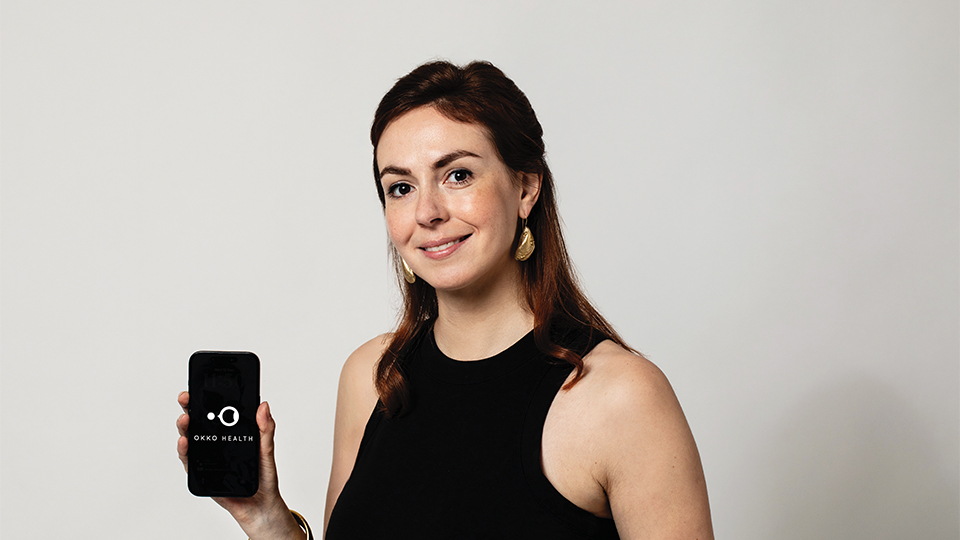
In July, Topcon announced a strategic investment in UK-based software medical device company, Okko Health.
Okko Health offers patients the ability to monitor their vision from home – enabling the early detection of subtle changes in visual function by completing puzzle games on their smartphone.
Dr Stephanie Campbell, founder and CEO of Okko Health, told OT that developing patient-centred technology is important to her.
“The primary benefit that we want to give patients is a sense of control over their own eye health so they can detect changes early and get early treatment when they need it,” she said.
Campbell, who is a qualified optometrist, came up with the idea of gamifying vision testing while studying towards her PhD at Cardiff University.
She discussed the idea with software engineers at an NHS Hack day in Cardiff, with a prototype developed and patented in 2015.
Part of the motivation behind developing Okko Health is to create a universal sight test that enhances the accessibility of vision testing.
Campbell recalled completing an internship in Japan as a 20-year-old and observing differences in the way that the nation tests vision – using a Tumbling E chart.
The origins of the name Okko Health can be traced back to the word okulo, meaning eye in Esperanto – a universal language developed by a Polish ophthalmologist in the 19th century.
“Part of the idea behind Okko Health was making a universal eye chart where it doesn’t matter what country you were in,” Campbell shared.
“It also doesn’t matter how old you were, if you have a learning disability or are pre-verbal,” she said.

Campbell shared that she had experienced situations as an optometrist working in hospitals where clinicians had ruled out testing a patient’s vision because of conditions affecting cognition.
“They would say ‘That patient has dementia. We can’t get a vision from this patient’,” Campbell recalled.
“No – it is possible. We just need to do it in a better way,” she emphasised.
A decade after the first iteration of Okko Health was patented in 2015, the company has 18 staff based in the UK, US and Japan.
The Okko Health platform has US Food and Drug Administration approval and is CE-marked in the UK and Europe.
Around 300 patients are currently using the technology in the UK. Campbell is currently building Okko Health’s US patient base.
“In the US, Medicare covers the ability to remotely monitor patients and to review that data,” Campbell explained.
“It also covers wrapround care, so you can be reimbursed in the US for looking after the patients between appointments,” she said.
I very much see it as empowerment – I think patients are going to access care faster when they have the right data in their own hands
Campbell has observed how the technology is making a tangible difference to the care of patients – with age-related macular degeneration patients bringing their appointments forward after noticing a change in their scores through Okko Health.
“The whole idea is that there's a safety net that’s helping the patient self-monitor and know the type of symptoms that they should be calling their clinician about. Ultimately, with early detection these patients should have better outcomes,” she said.
Campbell highlighted that Okko Health complements rather than competes with the role of clinicians.
“All clinicians need to optimise their time. So hopefully it's not a threat, because I very much see it as empowerment – I think patients are going to access care faster when they have the right data in their own hands,” she said.
3 Towards a portable OCT machine
While the tools available to domiciliary optometrists have improved considerably over the past decade, some technology remains beyond the limits of current practice – notably, optical coherence tomography (OCT) scans.
However, Bristol company, Siloton, is developing technology that could change this situation.
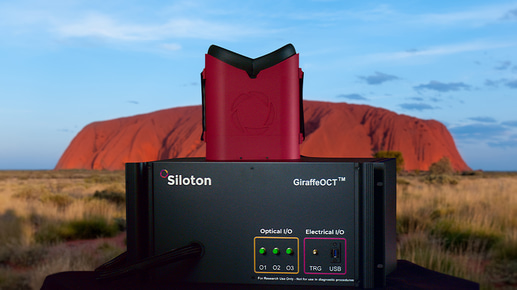
In July 2025, Siloton announced that it had sold its GiraffeOCT system to an Australian consortium that is looking to harness portable vision testing technology to serve remote communities.
The device incorporates the Akepa chip – which is capable of detecting light at the single photo level.
Siloton chief executive and founder, Dr Alasdair Price, explained that the consortium would do environmental testing of the chips before observing how the technology performs under outback conditions.
“They are really keen on getting this technology out to First Nations communities. It is exactly the type of thing that we want to see the system being used for,” he said.
Siloton is now also developing a second-generation OCT system for the European Space Agency to monitor one of the known hazards of space travel – Spaceflight-Associated Neuro-ocular Syndrome.
Price explained that while there is currently an OCT device on the International Space Station, it is anticipated that future long-distance space missions will have less space available for a traditional OCT system.
He added that the second-generation system would incorporate significant improvements in image quality and scope.
“It will be a massive step change from what we've done so far,” Price said.
Price anticipates that the Siloton device will make OCT technology more accessible to practices and patients – by offering smaller devices at a lower price point.
“If you had a handheld binocular system, the patient could just pick it up and do the scan while they are in the waiting room,” he said.
“Then that could really speed up your throughput and save on the actual real estate that you are using in the clinic,” Price shared.
He added that the technology would also open up the possibilities of OCT to domiciliary optometrists.
“We see our system as being really useful for increasing accessibility – whether that is by making this technology affordable for optometrists in independent practice or bringing the device into patients’ homes through domiciliary,” Price said.
He shared with OT that the current plan, subject to securing funding, is to introduce a product to market within around three years.
“That would be to have an initial clinical device that you could use in hospitals and optometry practices. We would then look to expand our regulatory clearance for settings like the home market,” Price said.

4 An AI tool for supporting OCT interpretation
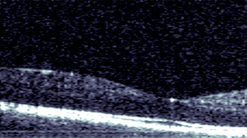
Dr Maria Znamenska recalls the uncertainty that she navigated when first using an optical coherence tomography device as a young ophthalmologist in 2005.
“It was one of the first devices in Ukraine, and no one had any experience of how to work with OCT or how to interpret OCT scans,” she shared.
In the absence of widely available information or training courses on OCT, Znamenska and her colleagues began imaging patients with a confirmed diagnosis and observing what this clinical picture looked like on OCT scans.
“It was a very interesting time, but also challenging,” Znamenska said.
Two decades later, as the chief medical officer of Altris AI, Znamenska is supporting clinicians around the world to navigate the use of OCT through the use of pioneering technology.
Altris AI has been applied to more than 70,000 OCT scans from patients in a broad range of locations. The technology offers clinicians a subscription to a cloud-based platform where they can upload OCT scans to receive artificial intelligence-powered support. The technology can detect, quantify, and track more than 70 retinal conditions.
“Eye care specialists primarily use this as a decision support tool,” Znamenska highlighted.
Znamenska added that Altris AI supplements rather than replaces the judgement of clinicians.
“It can be like an invisible colleague sitting next to you and bringing you a second opinion in some cases,” she highlighted.
“It's always good to have this extra layer of confidence with such a complex diagnostic procedure as OCT analysis,” Znamenska said.
Altris AI has US Food and Drug Administration clearance as an image management system and is a CE-marked medical device. The system has been adopted by more than 500 eye care providers globally – including optometry practices based in the UK.
Znamenska shared that Altris AI helps to streamline the workflow of clinicians, while adding an extra layer of protection for patients.
“Time is precious, especially in ophthalmology,” she said.
“We are lowering the chances that a patient will be harmed because something clinically important was overlooked or misinterpreted,” Znamenska observed.
Znamenska encouraged optometrists to embrace the opportunities presented by AI by implementing the technology in practice.
“This is the future,” she said.
“The whole world is changing, and we need to change as well,” Znamenska observed.
5 A vision screening kiosk
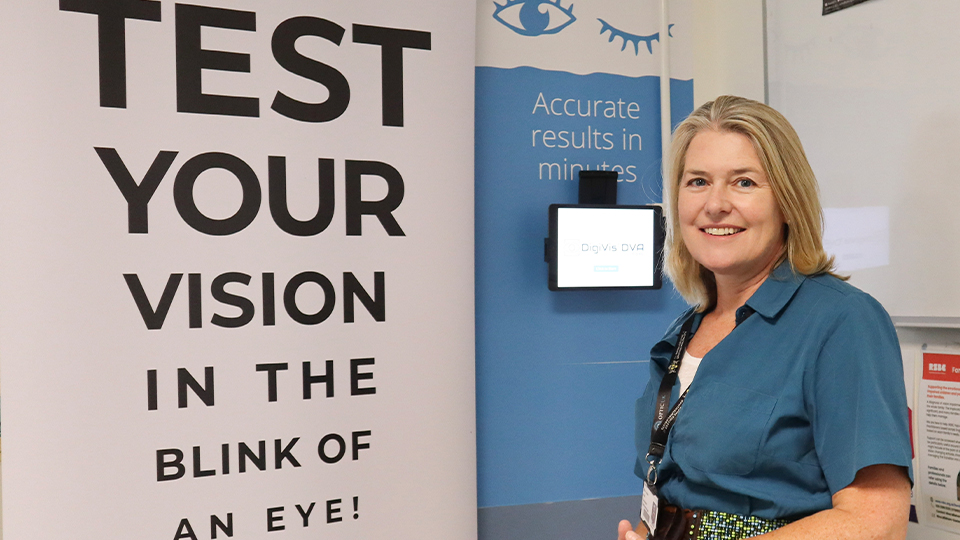
At Addenbrooke’s Hospital, self-testing kiosks running an application called DigiVis DVA are enabling patients to test their own vision when they arrive at the eye clinic.
Consultant paediatric ophthalmologist, Dr Louise Allen, highlighted that the technology reduces waiting times and frees up valuable clinical space.
She shared with OT that the concept for DigiVis came about during the pandemic when school screening was paused and remote consultations became necessary.
“Since then, the technology has been iteratively improved, and taken through the regulatory steps required to become a commercial medical device, DigiVis DVA,” she said.
Allen explained that DigiVis DVA is an online app which mimics linear logMAR distance visual acuity testing.
“Validation studies have shown similar accuracy and repeatability as chart-based testing,” she highlighted.
The DigiVis DVA Standard test is suitable for home testing, while the DigiVis DVA Kiosk test is designed for high-volume visual acuity testing environments.
“In 2024, by using Digivis DVA to support the uptake of remote consultations, 820 additional appointments in our paediatric service were released, eliminating our backlog of appointments and reducing our outpatient waiting times,” Allen highlighted.
Allen added that the technology is also estimated to have saved 34,000 miles of patient transport in 2024 alone.
She shared that one in 10 paediatric ophthalmology and orthoptic consultations at the hospital are now conducted as remote consultations using the DigiVis DVA Standard test, reducing the need for families to take days off work and school.
The technology is being deployed at Manchester University NHS Trust and there are pilot studies underway at other NHS trusts.
Allen emphasised that while the technology is not a substitute for a full eye examination, it can safely prolong the interval between hospital appointments and support affordable community screening – which may be a useful trigger to organise a more comprehensive vision test.
She added that several children with optic nerve pathology have already benefited from early detection after using DigiVis DVA at home.
“DigiVis DVA provides a way for patients at risk of visual deterioration, especially children who might not notice a deterioration of vision in one eye, to monitor their vision and get timely medical management,” Allen said.


Comments (0)
You must be logged in to join the discussion. Log in