


07 August 2026
Caroline Mosses is the senior optometrist at Specsavers Leigh. She is also, in a way, a detective.
She spends her days piecing together evidence – the visual field results, optical coherence tomography (OCT) scans and intraocular pressure readings – on the trail of a shapeshifting thief of sight.
“You piece information together like a jigsaw to help you see the whole picture more clearly,” Mosses shared with OT.
Each month, Mosses and two of her optometrist colleagues see around 20 patients through the Glaucoma Enhanced Referral Service (GERS). The practice also offers glaucoma monitoring, which sees low-risk patients transferred from the hospital eye service to receive regular reviews within primary care.
Data from Primary Eyecare Services (PES) shows that 42 patients were part of the glaucoma monitoring service in Ashton, Leigh and Wigan in 2025.
Of these patients, 81% were managed within the community, while 17% were referred back to the hospital eye service and 2% were discharged in line with management plans.
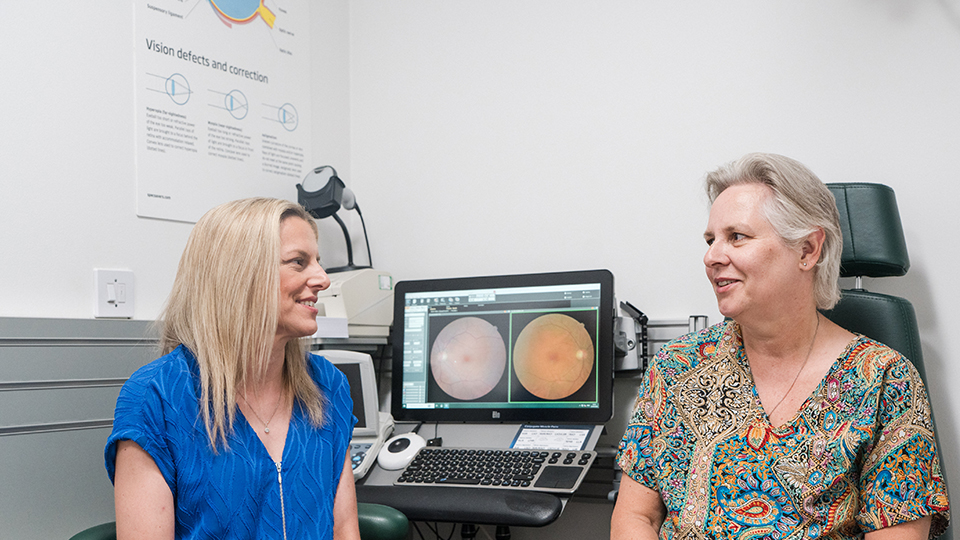
Mosses told OT that the GERS and glaucoma monitoring services provide care to patients in a convenient, familiar environment.
“They know where to park and they know the practice staff,” she said.
“Within GERS, we need to see patients within four weeks of a referral so they are not having to wait for months like they might do if they were referred to hospital,” Mosses said.
The optometrist observed that she has time to explain glaucoma to patients and the steps that they need to take to protect their eye health.
“A lot of them are very nervous, especially if they have a family member who has lost sight through the condition,” Mosses said.
“These patients completely change once you have seen them. You see them physically relax,” she said.
Mosses attempts to foster a sense of trust between herself and the patient, as well as an understanding of the disease process.
“I want them to know that it’s not something to be scared of, but they need to come back to get checked. We can pick up changes before they will notice a difference in their vision,” she said.
Feedback shared through recent Patient-Reported Outcome Measures has reinforced Mosses’ commitment to the service.
“Almost everybody would recommend the service to a friend or family member, which I think is amazing,” Mosses said.
“Seeing that makes me think that we are doing a good job here,” she added.
Alongside the benefits for patients, Mosses highlighted the professional satisfaction that she gets from offering GERS and glaucoma monitoring.
“It’s definitely made me a better and more clinically competent practitioner,” she said.
Mosses completed her professional certificate in glaucoma through the College of Optometrists in order to offer GERS.
She told OT that when she started her professional certificate her last formal assessment was more than two decades ago.
“I was really nervous about going back in and doing exams again,” Mosses said.
“Going back to university, written exams and assessments – I questioned whether I would be able to learn everything. But, actually, I enjoyed studying. It made me really enjoy my job again,” she said.
These patients completely change once you have seen them. You see them physically relax
After observing Mosses set up and implement GERS in practice, two of her colleagues were inspired to undertake their own further qualifications so they could also be involved in offering the service.
Mosses has since enrolled in her professional certificate in medical retina and is working towards her Master’s degree in clinical optometry.
She observed that offering extended services has also influenced the way that patients perceive her and her colleagues.
“They see that as a profession we are not just there to test their eyes and sell them a pair of glasses. There’s a lot more that we can do,” Mosses said.
Sarah Peyton, 62, has been attending Specsavers Leigh for the past 14 years. She was referred for a GERS appointment following a routine eye test six months ago.
“I got an appointment within a couple of days. They’re very efficient,” she said.
Peyton shared that the practice is a 10-minute walk from her home, which is more convenient than travelling by public transport to hospital as Peyton does not own a car.
The hospitality worker, who was seen my Mosses for her GERS appointment, appreciated the optometrist’s approach.
“She’s brilliant – very professional, but not to the point where she’s not approachable,” she said.
“I’m one of those people who likes to see what’s coming up on the screen and have it explained to me, and she’s very happy to do that,” Peyton said.
Ashton, Leigh & Wigan Local Optical Committee (LOC) chair, Julia Maiden, shared that GERS was introduced in the area in 2023 as an expansion of existing commissioned services within Greater Manchester.
Following the pandemic, Ashton, Leigh & Wigan LOC members entered discussions with the Wrightington Wigan and Leigh Trust eye unit about how optometry could help to reduce waiting lists.
“Glaucoma was identified as a key area where optometry could support,” Maiden shared.
She highlighted that GERS and glaucoma monitoring services have resulted in reduced anxiety for patients as a result of quicker referral refinement and monitoring decisions.
Maiden added that hospital eye services have reported a reduction in glaucoma referrals that correlated with GERS deflection rates.
She noted that capacity has been released within the hospital eye service for consultants to manage patients with complex or sight-threatening disease.
Reflecting on her tips for other LOCs that would like to see a service commissioned, Maiden noted that it takes time to build trust in primary care optometry.
“Strong relationships are essential, both with the HES and with your commissioners,” she said.
She encouraged LOCs to use evidence from other areas when putting the case for extended clinical services to commissioners.
“Ensure you demonstrate that there are clear protocols and defined escalation routes,” Maiden said.
Maiden shared that it took around 18 months to get the glaucoma monitoring service commissioned.
Since implementation, the LOC has undertaken work to remind consultants and the hospital eye service that the service is available to discharge suitable patients into.
“Optometrists who I have spoken to have found it rewarding to broaden their skills and have a change from the standard eye testing,” Maiden reflected.
Care close to home
Within Northumberland, Tyne and Wear, a total of 97 patients were part of the glaucoma monitoring service in 2025 according to PES data. The majority (81%) continued to be monitored in primary care, while 11% were referred back to the hospital eye service and 7% were discharged in line with management plans.
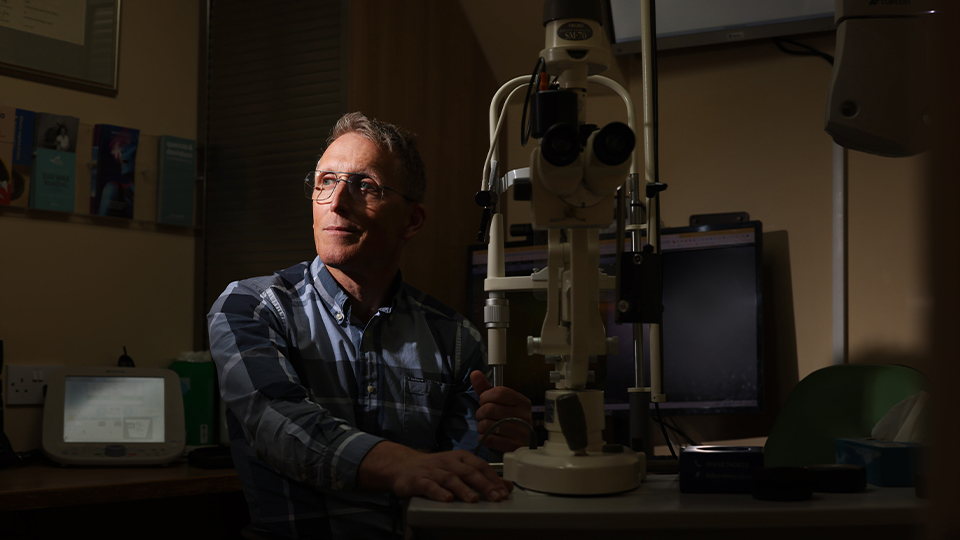
John Davidson, an optometrist and owner of the Hakim Group independent practice, Querido & Davidson, sees around three to four patients per week through GERS and the glaucoma monitoring service.
He shared with OT that patients appreciate being able to be seen in a convenient location.
At the closest hospital, Royal Victoria Infirmary, cars often queue for parking spaces and public transport links stop a 10-minute walk away from the hospital.
“While that is easy enough for someone who is young, it’s not an easy walk if you have mobility issues or if you are older,” he said.
They’re often quite challenging decisions to make, because they are not barndoor or established glaucoma. They’re usually borderline
Davidson takes the time to explain risk factors for glaucoma and the condition itself.
“I think it’s important to put yourself in their shoes. If somebody says to you ‘You might have glaucoma’ you might not understand what it is and perhaps you begin thinking ‘I’m going to lose my sight’,” he said.
He endeavours to reassure patients that if glaucoma is caught early, the current treatments are very effective.
“I tell them that there is a good chance they will not lose any significant vision with the treatments that are available,” Davidson said.
Davidson appreciates being able to put his clinical decision making to the test through GERS.
“They’re often quite challenging decisions to make, because they are not barndoor or established glaucoma. They’re usually borderline,” he said.
Davidson told OT that he believes “the learning journey should never stop.”
“I’m 55, coming up 56. As I gradually start to look to slow down and eventually retire, I don't intend to stop learning or for my knowledge and expertise to stagnate,” he emphasised.

John Davidson on offering glaucoma care in the community
The owner of Querido and Davidson spoke with OT for the August/September Eye care success stories edition
As a leader within his practice, Davidson endeavours to pass on his knowledge and skills to other team members.
“Hopefully that will spark their interest in going on to do higher qualifications as well,” he said.
Davidson is a member of Northumberland, Tyne and Wear LOC. He said that much of the groundwork in establishing the glaucoma monitoring service was done by Primary Eyecare Services.
“When we were told that this was going to happen, we put together launch events and training sessions,” he said.
“The support we had from Primary Eyecare Services was really superb. The protocols that we had to follow were already draw up,” Davidson shared.
Reflecting on tips for other LOCs to get services commissioned in their area, he encouraged practitioners to get in touch with LOCSU or their local PES representative.
“Also have a think about where the pinch points are for the closest hospital eye department,” Davidson added.
He observed that within his area the pandemic was a catalyst for offering more clinical services in the community.
“COVID-19 changed the landscape. Coming out of the pandemic, there was a crisis for glaucoma departments, where there just wasn't enough capacity to get people seen in a timely manner. Within Newcastle, that led to the hospital eye department reaching out for the first time and saying, ‘Look, we need help’,” Davidson shared.
The optometrist believes that care will continue to shift from the hospital to the community to meet the needs of an ageing population.
“When you look at demographics and projections of population changes over the next 10 years, there aren’t going to be enough ophthalmologists. It’s going to fall to the ophthalmic nurses and optometrists to pick up many of the low-risk stratified patients,” Davidson observed.
A life-saving service
As part of a pilot that began in June 2025, Cheshire and Merseyside optometry practices have been providing blood pressure checks to patients between the ages of 40 and 79 without a previous hypertension diagnosis.
Patients who had not received a blood pressure check in the past six months were eligible for the service.
Through the pilot, more than 1000 patients have been screened by staff at 61 optometry practices, with around 300 people referred for high blood pressure. This total included eight patients who were referred urgently with ‘very high blood pressure’ – a blood pressure reading of 180/120mmHg or higher.
Doctors told me that without intervention, a heart attack or stroke was inevitable
Mike Andrews, 45, was offered a blood pressure test during a routine sight test at Tuebrook Eyecare in September 2025.
“I’m not one for going to the doctor and have no real history of hospital visits, but in that moment, something made me think: ‘why not?’ I had no idea that decision would start a journey of some quite alarming conversations,” he recalled.
After Andrews’ blood pressure registered as 255/151, he went from the optometry practice to Aintree Hospital where he was admitted and monitored for several days.
Andrews now takes three medications daily to control his blood pressure.
“Doctors told me that without intervention, a heart attack or stroke was inevitable. My wife would have lost a husband, and my children would have lost their dad. That’s terrifying to think about,” he said.
Andrews shared his gratitude for being able to access the service within an optometry practice.
“I will be eternally grateful to the optometrist and for the option of having my blood pressure tested at that point on our busy family day,” he said.
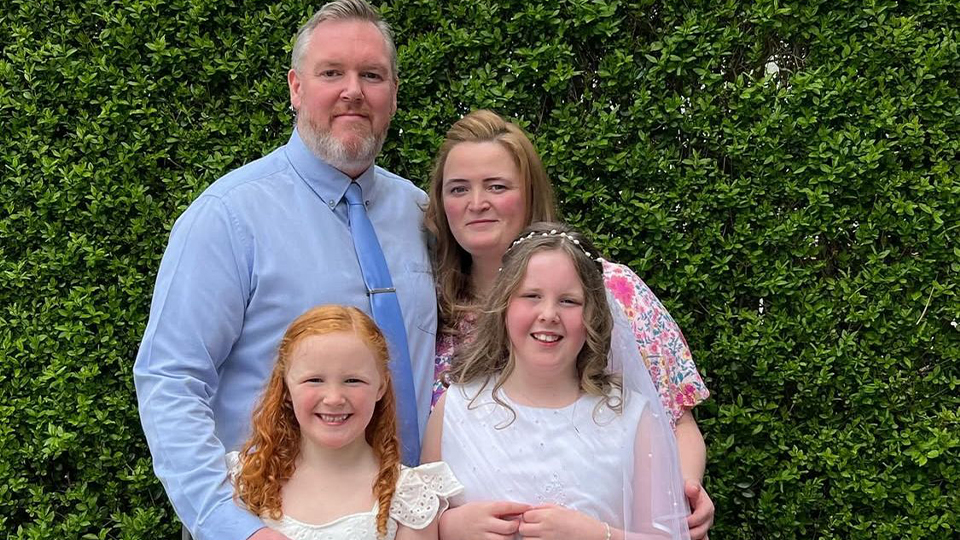
Locum dispensing optician, Jill Umpleby, helped to support practices providing the blood pressure check service through her role as cardiovascular disease lead at Cheshire Local Optical Committee.
Umpleby, who locums in two practices where the service is offered, told OT that one of the strengths of the pilot is that it picks up people who may not be visiting a GP.
“I would like it to be rolled out over the whole country because we are identifying people who would otherwise have been missed,” she said.
“For the rare cases where you find someone where the blood pressure is very high, it makes all the difference,” Umpleby said.
She added that the patients she has seen are pleased with the service being available in practice.
“People have been saying it is easier than getting a GP appointment or making a special trip to the pharmacy,” Umpleby highlighted.
“They’ve been thankful that they can get their blood pressure checked at a practice where they are used to the staff and it is a familiar environment,” she said.
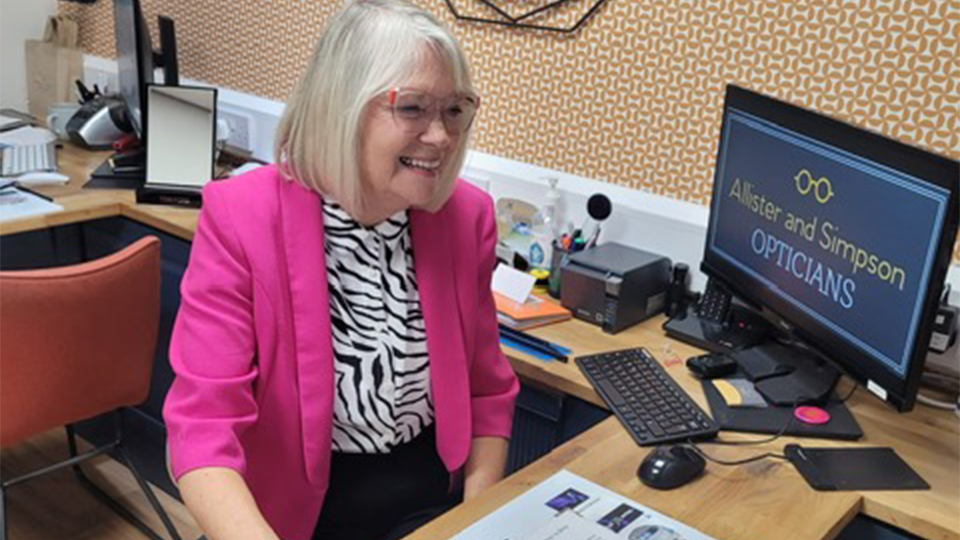
Cheshire Local Optical Committee chair and optometrist, Fionnuala Stott, highlighted that the ability of optical professionals to engage with patients opportunistically places optometry practices at an advantage in providing preventative healthcare.
“This service moves beyond traditional pathways and brings detection into everyday interactions, aligning closely with the NHS ambition to make every contact count,” she said.
“Optometry is not only well placed to support eye health, but can play a vital role in population health, early detection and long-term prevention,” Stott highlighted.
Stott noted that beyond the individual benefits for patients, there are wider implications of the service for healthcare.
“Early identification of hypertension has the potential to reduce hospital admissions, prevent strokes and cardiovascular events, and ultimately save lives. Even a small number of avoided incidents would offset the cost of the service, underlining its value within a resource-constrained healthcare system,” she emphasised.

Behind the scenes of our Eye care success stories edition
Optometrists in Leigh and Newcastle took time out of their diaries to be photographed during a record-breaking heatwave


Comments (0)
You must be logged in to join the discussion. Log in