


10 November 2026
The colourful window displays that brighten up the streets and mark the changing seasons. The friendly faces who have been a familiar presence for decades. The bustle of community.
Love Your High Street Week (9-15 November), organised by the British Independent Retailers Association, celebrates the local businesses that bring a unique flair and character to their communities.
To garner insight into the shape of the High Street today, OT heard from a retail trends consultancy and from practices in Derby and Uxbridge, about the different features of businesses in these community settings, the challenges they face, and the opportunities to be embraced.
Building trust, solving customer problems, and aligning with expectations
Jack Stratten, director of Insider Trends, a retail trends agency, described the picture of the High Street in 2026 as reflective of what is happening in retail more generally: “There have been big shifts in the way that retailers think about and utilise their physical stores and this applies to the High Street as well.”
More retailers are using their stores as marketing channels, as well as for sales, with some introducing content-creation spaces to generate digital content, he explained.
Stratten commented: “Retailers are also realising that they have to be bolder, different, braver with their stores, even at High Street level, because customers are drowning in options and everything is blending into one undifferentiated mass.”
However, he emphasised that this is not about “who has the biggest budget, but who is the most creative and imaginative.”
Physical spaces on the High Street also represent a “badge of verification in today’s oversaturated world,” Stratten suggested, with too much choice online.
“Retailers who build trust with consumers and a reputation for curation benefit massively as destinations for consumers looking to narrow down the options,” he said.
Many of the challenges facing High Street retailers are not new, Stratten noted, with ecommerce and social commerce well established, and the costs of doing business continuing to pose difficulty.
Despite this, there is recognition of the importance of a “varied, dynamic and attractive High Street offering,” Stratten said. He explained: “High Streets need to solve customer problems but also inspire them and create memories. I think sometimes we’re in danger of tilting the balance too much one way or the other.”
High Streets need to solve customer problems but also inspire them and create memories
Stratten suggested that an uptick in consumer interest in wellness and wellbeing could pose an opportunity for optometry practices.
For some, this comes from the drive to optimise their lives, while for others an interest in wellbeing could come from a desire to put their energy into what they enjoy and what makes them feel good.
He said: “Optometry sits at this really interesting intersection of health, wellbeing, and self-expression – there’s real power in ‘look good, feel good’.”
Stratten also recommended: “Optometry practices should pay attention to where customers are starting their journey, particularly artificial intelligence (AI) chatbots and agentic AI.”
“For a lot of people, changes in their vision or eye health will start with a Google search or an AI conversation, so optometry practices need to think about how they become part of that,” he said.
Optometry sits at this really interesting intersection of health, wellbeing, and self-expression – there’s real power in look good, feel good
Service and experience have always been key in retail and High Streets, but Stratten suggested that what has changed is “how people discover and engage with brands online before they ever visit a store.”
Customers often walk through the door already having had a level of engagement with a brand, he said, explaining: “Your shopper has much higher expectations across the board – they’re more knowledgeable about products, they’re used to rapid service, they’re used to personalised service – so in-store service needs to be aligned with that.”
Businesses on the High Street need to reassure customers and provide confidence, Stratten said. He continued: “Especially as the store is often a place where customers come to solve problems. So, if a retailer can take something off their plate and find a resolution, they’ll walk away talking about how great the service was.”
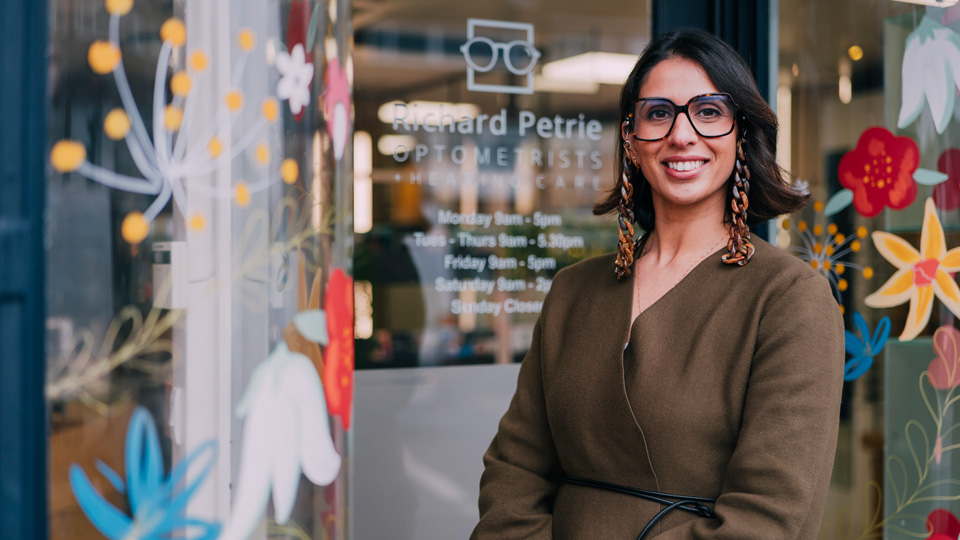
The High Street in Littleover, Derby
Richard Petrie Optometrists is based in Littleover, along a main road leading into the city centre of Derby, explained Davina Dosanjh, optometrist and practice owner.
With its own amenities and a “busy village vibe,” she said: “The community is wonderful, many of the local businesses are long-established and people are always stopping to chat and engage with one another.”
The High Street is recognised as a community hub and has a “friendly, family-feel,” Dosanjh told OT.
The challenges facing the practice will be recognisable to many, with the costs of running a business on the High Street representing the greatest hurdle.
She said: “Hands down the main challenges are based on costs. Rents and rates can be, and have almost been, crippling. Challenges never cease and must be navigated in order to keep businesses in premises and ‘in’ business.”
The opportunities for optometry practices based in High Street settings revolve around people, Dosanjh suggested. She shared: “I believe that opportunities always lie within engaging the people, those members of the community who we share the area with.”
“Creating value and experience to stay present as a longstanding business, I believe, adds value to a community and its High Street and clientele, not only of my business but those in the same vicinity,” she said.
I believe that opportunities always lie within engaging the people, those members of the community who we share the area with
One significant moment that stands out to Dosanjh from the local community was rallying around local businesses to encourage them to engage in art for their shop windows created by a local artist.
“It was a huge success and we continue to see this art uplift our local village windows even now,” Dosanjh said, adding: “It was very heartwarming.”
She continued: “I hope to be able to continue to engage in activities which connect businesses together, as well as connect the local community with those businesses to encourage support to keep them on the High Street. It is very important to me.”
Hear more from Dosanjh on the core values that underpin her work.

Business class
How optometrists are navigating the pressures of practice ownership to thrive on the High Street in 2026
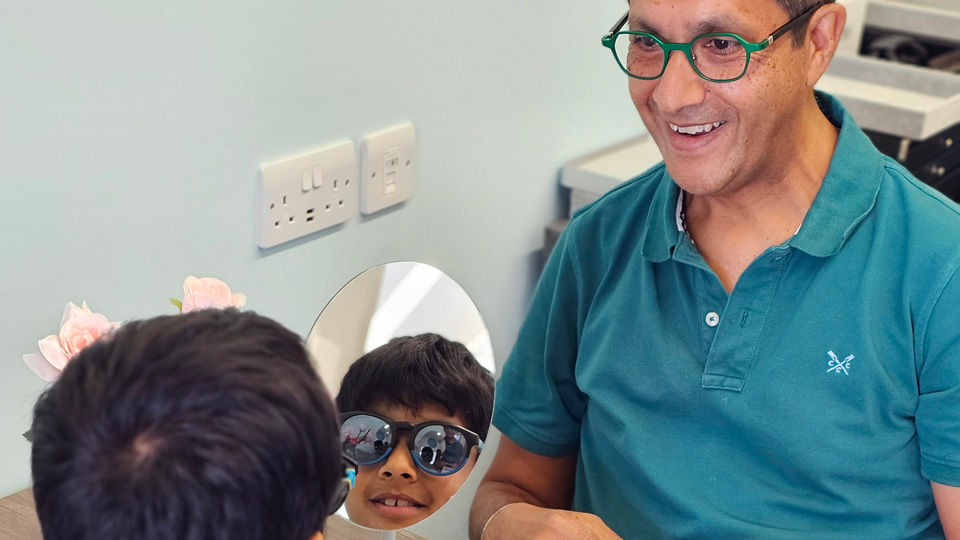
The High Street in Uxbridge, London
Harsh Shah, optometrist and director of Eyewise Opticians, told OT that it is a busy street, with two pharmacies, several hairdressers and takeaways, as well as five schools nearby.
“It can be very hard to get parking, but it does mean you are much more noticeable,” he explained.
Shah added: “You can be noticed if you stand out, so this is where working on practice displays and presentation is so important.”
The practice has been a long-standing presence in the business community of Uxbridge and this brings with it a sense of responsibility.
Shah said: “You’re trying to lead by example. Now people are looking upon our practice as an established place and thinking: ‘they must be doing things right.’”
As a business on the High Street, Shah suggested the challenge for practices is to make their message as clear as possible: “You can’t be everything to everybody.”
“There is an intrinsic fear that if you can’t serve this customer then you are going to lose business. But I think to strengthen your business, the simpler your message to the public, the stronger your positioning will be within that environment,” he explained.
The general public value having a clear message about the way the business is conducted, Shah suggested.
The challenge in standing out and differentiating a practice lies in how this is practically achieved, he said, recommending: “It involves everybody in the business, the culture, and it needs to be worked on. It’s not going to happen overnight.”
This can mean recognising: “I don’t want to try and do everything, because it dilutes the effort,” Shah pointed out, adding that the strength of each business will be different depending on their locality.
Shah is optimistic about the opportunities available for optometry practices to embrace.
One example is to take inspiration from other retail settings, such as hairdressers, with Shah explaining that at Eyewise Opticians: “We’ve been working on a variety of things to make wearing glasses as enjoyable as possible. We want to make eyewear a lovely accessory to have, and to make a difference to somebody’s life by helping them enjoy wearing glasses.”
Shah advised: “Keep thinking outside of the box. I find I take a lot of things away from different industries, like the service levels in restaurant businesses and ways of making a person feel special. The beauty is that every practice can stamp their own personality that nobody can copy.”
It can require courage to try new things, Shah acknowledged, and recommended running small trials in practice – such as trying a new approach for three months.
“Sometimes it works, sometimes it doesn't. The important thing is that we all learn from it because that’s how the business moves,” he said.
Despite the challenges of the environment outside, you have it within your control, in your practice, to make a difference
As the practice recognises 30 years in business, Shah said: “We have to adapt to a differing market. When I started all those years back, the concept of an optician was that they would be there for your life – almost like a relationship with a doctor – but that’s changed.”
“You can still have a continuity in different ways, by working on your service levels and all the things that mean a person has a good experience when they come for their eye care,” he said.
Shah reflected: “Despite the challenges of the environment outside, you have it within your control, in your practice, to make a difference. No matter how hostile the outside world is, once they come in, if it is like an oasis where they are relaxed and feel good, then you make it easy for them to come back.”


Comments (0)
You must be logged in to join the discussion. Log in