


09 November 2026
Swiss optometrist Fabian Schüpbach’s decision to study abroad at Cardiff University may be seen as a leap of faith.
Schüpbach had not travelled to the UK before he embarked on an Master’s in clinical optometry in 2024. He graduated as an optometrist in Switzerland a week before commencing his postgraduate studies in Wales.
He brought with him an enthusiasm for further learning, an eagerness to enhance his understanding of ocular pathology, and 3.5 kilograms of Swiss chocolate.
Reflecting on his choice to study abroad, Schüpbach told OT that he not only gained valuable clinical experience, but built lasting personal connections during his time in Cardiff.
“I really enjoyed the diversity and the openness of the city,” he shared.
“People would talk to you if you were walking down the street or sitting in a café, which doesn’t necessarily happen in Switzerland,” Schüpbach said.
Now Schüpbach works as an optometrist in a specialist contact lens practice in Bern, Switzerland, but travelled to Cardiff over the summer with his wife to visit friends they made during their stay.
“I love the city and I miss it,” he said.
Training to be an optometrist in Switzerland
In Switzerland, most optometrists complete a four-year apprenticeship as a dispensing optician before undertaking their three-year degree to become an optometrist.
Between the ages of 16 and 20, Schüpbach undertook his apprenticeship at a small independent practice in Thun.
The apprenticeship combined one to two days of classroom learning each week, with practical experience on the practice floor and in its workshop.
Alongside a foundational understanding of optics, he learned practical skills – such as adjusting and repairing spectacles, as well as glazing lenses.
Schüpbach shared that this experience set him up well for his studies at the University of Applied Sciences and Arts Northwestern Switzerland in Olten – which is currently the only university that offers an optometry degree in Switzerland.
“I think the apprenticeship definitely gave me an understanding of the basics. I brought that knowledge with me, so it was easier than someone who was starting the degree without that experience,” he said.
During Schüpbach’s degree he learned about the anatomy and physiology of the eye, as well as binocular vision and pathology. He studied optics, refraction and contact lenses.
“I think we have more mathematics in our degree than universities in the UK,” he observed.
Although Schüpbach did not have a pre-registration year, optometry students in Switzerland are required to gather 150 cases in the final year of their course. This total must include 35 ‘specialty cases’ across a range of categories, including binocular vision issues, pathology and contact lens adjustments.
These cases can be seen at the student clinic at the university, and through work experience at an optometry practice.
Schüpbach told OT that while optometrists perform many of the same tasks as their colleagues in the UK, they are unable to complete training to prescribe medication.
“In Switzerland, there is no specialist education to undertake independent prescribing or further education in glaucoma or medical retina,” he said.
“We don’t independently treat diseases in the same way that optometrists do in the UK. For example, there’s no way a Swiss optometrist would be able to prescribe an antibiotic. We have to refer,” Schüpbach shared.
Schüpbach noted that Switzerland has more capacity within ophthalmology than the UK – with around three times as many ophthalmologists per head of population when compared to the UK.
“This means that in Switzerland, if I have a cataract I can be in surgery in four weeks. In Wales, it would take much longer than that,” the optometrist said.
He decided to study for his Master’s in Cardiff after learning about the enhanced scope of practice that optometrists have in Wales.
“I wanted to progress clinically – I wanted to learn more about pathology and about treatment,” Schüpbach shared.
During his time studying, Schüpbach worked as a clinical assistant within the Cardiff University Teach and Treat clinic. He also completed observational sessions at the university emergency eye care clinic.
“It was very interesting and gave me more confidence differentiating presentations,” Schüpbach said.
“I was only responsible for capturing the images because I don’t have a GOC registration, but my brain wasn’t switched off,” he shared.
Schüpbach told OT that completing a professional certificate in glaucoma enhanced his understanding of the condition.
“I feel much more confident looking at a disc and deciding whether it looks glaucomatous or not,” he said.
“I learned the basics within my Bachelor’s degree, but through repetition and going deeper I really enhanced my understanding,” Schüpbach shared.
Daily life and work in Switzerland
Schüpbach now works as an optometrist at a specialist contact lens practice, Pfarrer Kontaktlinsen AG, in Bern.
“We don’t have any frames. We get a lot of specialty contact lens patients,” he said.
Schüpbach estimated that he had as many patients in rigid gas permeable lenses as those wearing daily and monthly contact lenses. He regularly sees patients with orthokeratology lenses, and completes fittings for patients with irregular corneas.
As well as seeing up to 12 patients each day, Schüpbach devotes time to designing lenses, including through the Wave custom contact lens software platform.
As part of the eye examination, Schüpbach will perform all of the imaging himself – including images captured using Pentacam, optical coherence tomography and Optos devices.
Because of the specialist nature of the business, some patients will travel two or three hours by train to reach the practice. Patients range from toddlers to those in their 90s.
“I’m very content in my role – my job is great,” Schüpbach said.
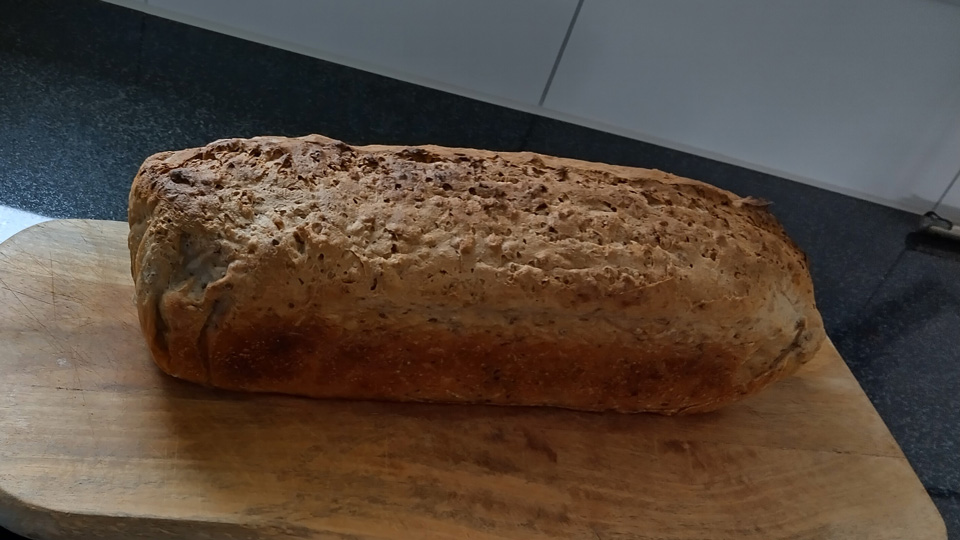
He shared with OT that most people in Switzerland work 42.5 hours per week. In his leisure time, Schüpbach enjoys cooking and baking sourdough bread.
River swimming is a popular past time in the Swiss capital – although, as a new father, Schüpbach does not have as much time for this hobby at the moment.
“In Bern in the summer, people will go swimming after work. They walk down to the river, have a swim and then go home,” he said.
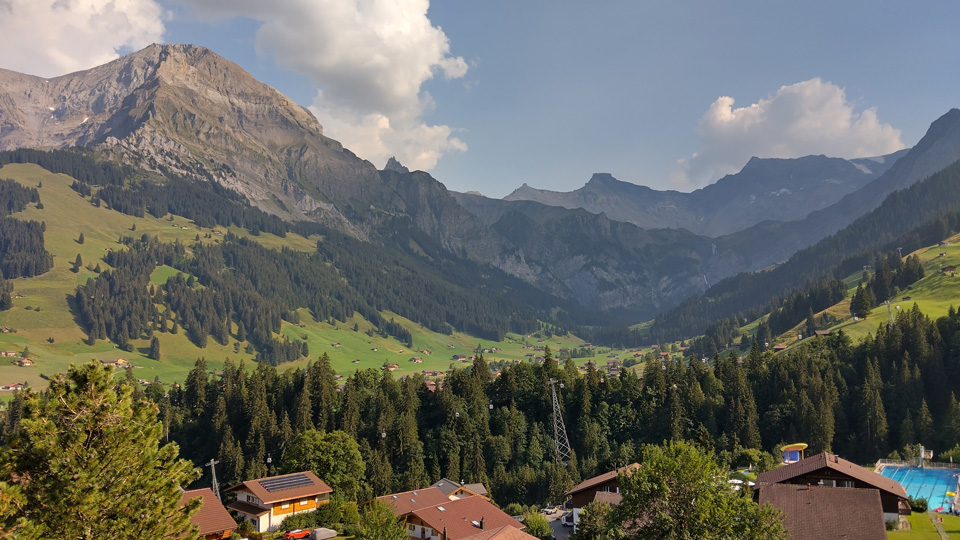
He added that hiking in the mountains is also a common leisure activity in Switzerland.
“We’ve got a lot of lovely mountains and glaciers,” he said.
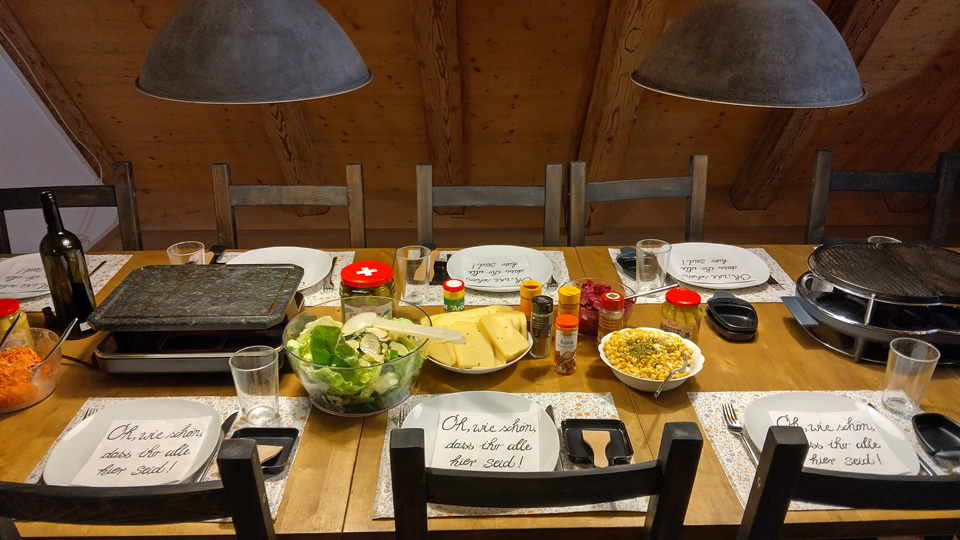
In contrast to fast food culture, popular Swiss meals such as raclette and fondue take hours to prepare and consume.
“You wait, you have a melted slice of cheese on a potato and then you put another one in the oven,” he shared.
“It’s a community meal and something that takes time so you can catch up about what has been going on,” Schüpbach observed.

Postcard from… Australia
Dr Ceecee Britten-Jones on unravelling genetic puzzles, the changing scope of optometry, and calling one of the world’s most liveable cities home


Comments (0)
You must be logged in to join the discussion. Log in