


01 August 2025
When you walk into Edwards & Walker Opticians in Doncaster, you will see the chandeliers, the barista coffee machine, the bespoke floral displays and a boucle sofa.
You do not see how Dr Pretty Basra lost half her patient base in the first three years after purchasing the practice in 2015, or that just as her bottom line began to recover, a pandemic struck.
You do not see the moments where Basra worried that her parents would lose their house, which was secured against the practice’s loan. After each successive challenge, Basra picked herself up.
“I realised that no one was going to save me. I had to save myself,” Basra told OT.
Basra now runs a practice that is both a successful business and community hub. Her team of staff know the big and small details that make up their patients’ lives.
“What I’m proud of is that we have created a sense of connection. We know whose grandchild is going to be born next month, who is going through cancer treatment and whose wife has just passed away,” the optometrist and practice director told OT.
Basra will occasionally receive messages from women working within optics saying that they do not think they could do what she has done.
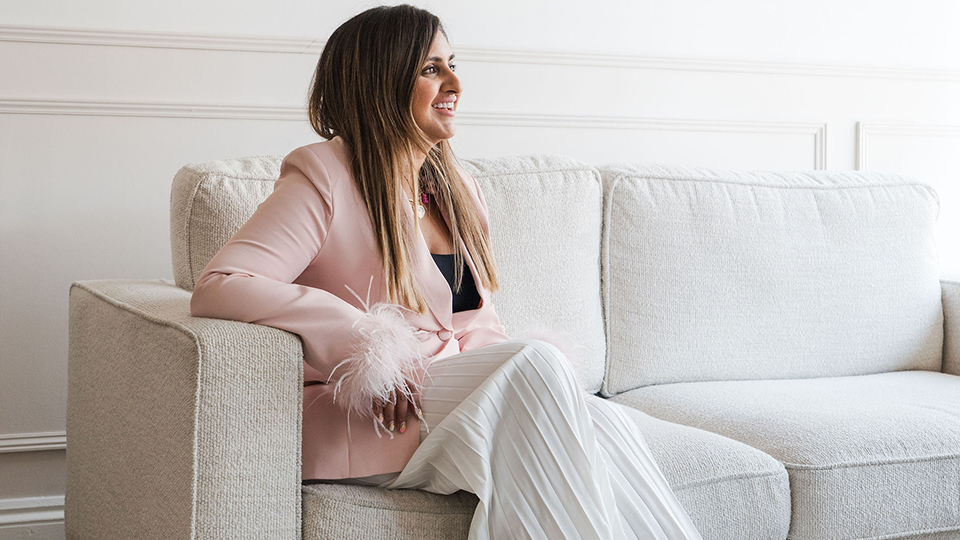
She endeavours to be open about the challenges she has faced to show that practitioners do not need to be perfect to work towards their career goals.
“I want people to see the failures. No one talks about that – they always talk about the successes,” Basra said.
In 2025, while reflecting on her decade as a practice owner, Basra decided to establish The SheSees Network to provide women in optics with a chance to learn from each other, to celebrate success and know that they are not alone in any challenges they may face.
“If people feel seen and heard that is half the battle overcome,” she said.
“I would say to any woman who is thinking of practice ownership that you can absolutely be a mum and run a business”
An evolving profession
When the first Opticians Register was published in the UK in 1960, only 5% of optometrists were women.
The tide turned in 2005, when women accounted for half of practising optometrists for the first time. Fast-forward to 2025, and there are now more women than men working as optometrists in the UK.
According to the latest General Optical Council data, 62% of practising optometrists and 67% of student optometrists are female.
Research published in Eye at the beginning of the year by optometrist Dr Helen Court and colleagues examined workforce trends in Scotland between 2022 and 2023.
“The workforce continues to be predominantly young and also female,” she told OT.
The research found that the proportion of women within the optometry workforce in Scotland has increased by 3% since 2019 – accounting for 66% of the workforce.
While the number of women working within optometry has steadily grown, there is still work to be done on ensuring that this demographic trend is reflected in leadership roles within the profession.
A gender pay gap has persisted within optics since employers with 250 or more employees were first required to publish the difference between the average pay of men and women in 2018.
Examining optometry workforce trends in Scotland
Across different companies, a reoccurring theme explains this difference in average pay – women are over-represented in junior roles and under-represented in senior roles.
The survey, titled Optometrists’ Futures, also found that men were 2.8 times more likely to aspire to manage their own business than women.
These differences can be traced back to disparities in career goals among male and female student optometrists. The same survey asked 276 student optometrists if they would like to run their own practice in the future – 52% of men said yes, compared to 35% of women.
Basra reflected on the importance of role models when it comes to shaping the ambitions of the next generation.
“I’m really passionate about visibility. If you can see someone who you relate to, you think ‘If they can do it, maybe I can do it too’,” she said.
During her decade of practice ownership, Basra has balanced her responsibilities as an optometrist and employer alongside being a mother of three boys.
Her first child was four months old when Basra first took over the helm of Edwards & Walker Opticians.
She shared that while establishing a business is challenging, it can offer a degree of flexibility around family life.
“I would say to any woman who is thinking of practice ownership that you can absolutely be a mum and run a business,” Basra said.
As a practice owner, Basra has learned many skills that are outside the realm of a university optometry programme – from business strategy to human resources and accounting. One of the achievements she is most proud of is establishing a strong team.
“The team are, for me, second to none. The customer service they deliver is worth its weight in gold,” Basra emphasised.
“If the people aren’t right, it doesn’t matter what products you offer or how good you are, it all just crumbles down,” she said.
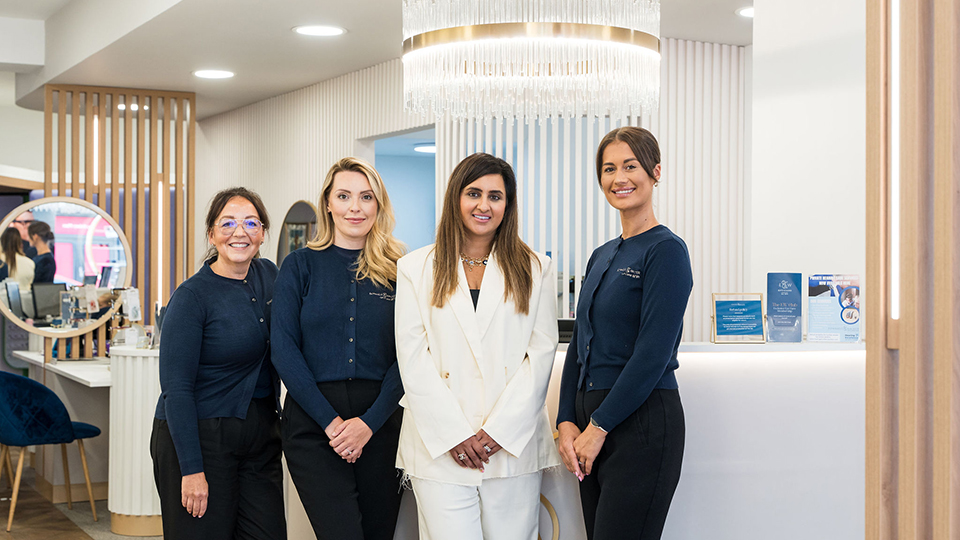
One long-standing employee is Basra’s former babysitter, Emily Irving, who was considering her next steps after having her own child.
“I know how difficult it can be for mums to get back into work, so I asked her ‘Why don’t you come work for me?” Basra shared.
Seven years after stepping into optics, Irving is passionate about her role as an optical assistant.
“I absolutely love it. I’m a really curious person – I want to know everything yesterday,” she said.
“In the world of optics and beyond there is so much to learn, and I feel like I’m just getting started,” Irving observed.
Irving, who now has three children, describes Basra as one of her main role models.
“She has such a strong work ethic – she always wants to go a step further. She will put what she has learned back into practice, for the benefit of not only herself but for the team,” Irving highlighted.
As well as providing a strong example, Irving added that Basra is an approachable and fair manager.
“If anything comes up with the children, she is so understanding,” she said.
“Practice ownership gives you the opportunity to create a legacy for your children”
Taking flight
When Hannah Bird left school, she had little idea about the type of career she wanted to pursue. That is until one day she walked past an advertisement for an optical assistant in the window of a High Street practice.
Bird successfully applied for the role and quickly found she enjoyed the problem-solving nature of the job.
“I fell in love with optics from then on and worked in different roles for High Street practices,” she said.
Chichester optometrist and practice director, Claudine Ickeringill, played a positive role in the development of Bird’s career.
“She was so inspirational. I would never have been brave enough to step into practice ownership if it had not been for her,” Bird said.
A decade ago, when Bird returned from maternity leave, Ickeringill encouraged her to take the next step in her career by training as a dispensing optician.
With Ickeringill acting as her sponsor and supervisor, Bird would study while her one-year-old daughter slept.
“In my mind, there was no option for me to fail. I was desperate to make Claudine proud,” Bird said.
In 2022, Bird purchased the independent Southsea practice, Percy Harrison Opticians.
While owning a practice has been a steep learning curve, Bird has valued the ability to fit her work around her family commitments.
“I’m really proud of seeing where the practice is now compared to where it was when I when I bought it,” she said.
“We’ve got a really lovely practice that is starting to grow and has a great reputation in the community,” Bird emphasised.
The original logo of Percy Harrison Opticians was the outline of a spectacle frame. Since purchasing the practice, Bird has added the silhouettes of two birds into the frame – a larger bird representing herself, and smaller bird representing her daughter.
“Practice ownership gives you the opportunity to create a legacy for your children,” she said.
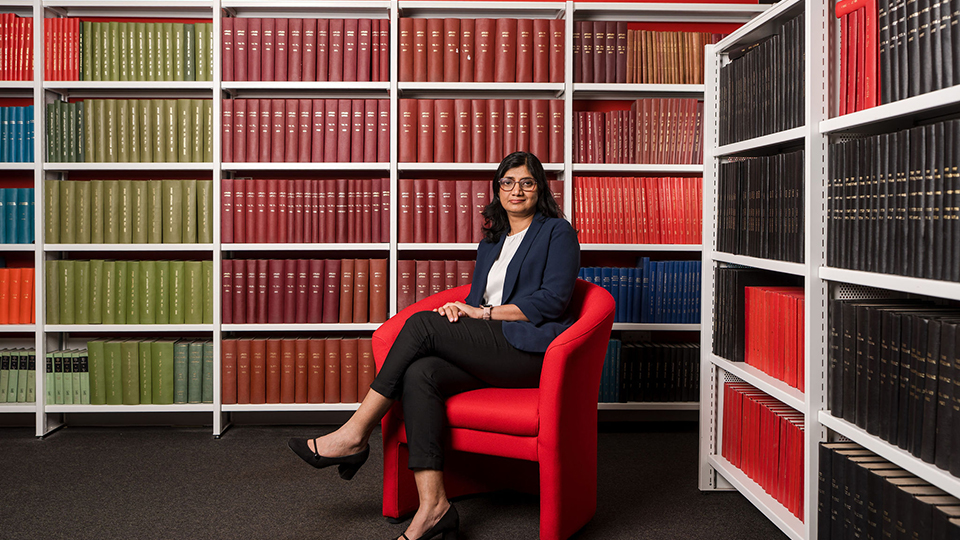
A sense of belonging
At the age of 13, Professor Hema Radhakrishnan remembers reading a book with a collection of profiles of famous scientists. Alongside a procession of male researchers, Radhakrishnan was struck by the story of the only woman featured in the book – Marie Curie.
“You have this woman who develops a portable x-ray machine out of everyday objects, and helps these war veterans recover. Her sole drive was to make a difference,” Radhakrishnan said.
“There weren’t many visible role models at the time, and I remember thinking ‘Wow, this is possible,” she said.
A perennial curiosity about the world around her saw the optometrist embark on an academic career after completing her PhD at Anglia Ruskin University.
“I was intrigued by the why questions. I took to both research and teaching like a duck to water,” Radhakrishnan said.
Alongside her research interests, Radhakrishnan has led on initiatives that promote equality, diversity and inclusion at the University of Manchester.
When Radhakrishnan first entered the world of academia two decades ago, she observed a disturbing trend where students with the same level of academic achievement at university entry would qualify with different results depending on their gender or the colour of their skin.
While the gender attainment gap has all but been eliminated, the attainment gap between white and global majority students has persisted.
“People now see more women in teaching roles and leadership roles, so they feel that they can perform better. But ethnic minorities still don’t necessarily have the same level of representation,” she said.
Data from Universities UK outlines a gap of 8.8% between the proportion of white and global majority students who were awarded a First in 2021.
Radhakrishnan shared that within healthcare disciplines – where students are interacting with patients and examiners – the lack of global majority representation can have a particularly profound effect.
“You are interacting with patients and you are interacting with examiners. There are more opportunities for unconscious bias to creep in,” she said.
“What I would like to see is an improved sense of belonging for everybody”
Increasing representation in research
Radhakrishnan took six months of maternity leave when her children were born in 2010 and 2014.
She continued to supervise postdoctoral staff and attend meetings remotely while she was on leave.
“I wasn’t someone who would take a rest while my baby was taking a nap. My way of recharging was to browse newly published research,” Radhakrishnan said.
While serving as associate dean, Radhakrishnan spearheaded an academic return scheme, where those returning from a career break are given six months of reduced teaching so they can catch up on research.
Radhakrishnan highlighted that women tend to be over-represented in teaching roles and under-represented within research.
Any gaps in research output – caused for example, by a career break – can make it difficult for early career researchers to secure funding.
“If a woman takes maternity leave, it can be difficult to return to a research career,” Radhakrishnan said.
“Women will often move on to teaching-focused roles, or drop out of academia altogether,” she shared.
She observed that while she was not able to take a longer or full break during her maternity leave, the flexibility of academia is compatible with family life.
“I can work from home, and I can choose what time I work, unlike some other areas within optometry,” Radhakrishnan said.
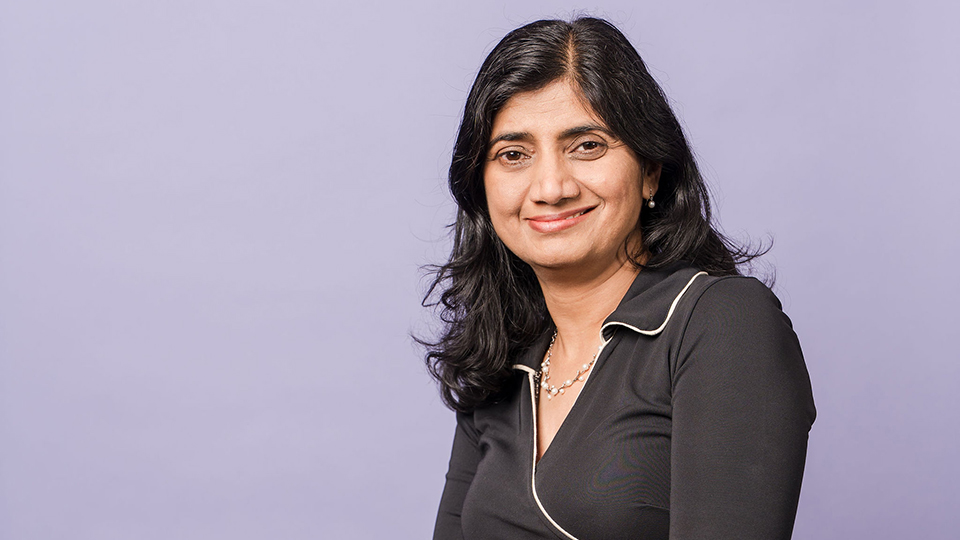
She shared with OT that she has had many female role models throughout her career.
“These women have shown that it is possible to be accessible and fallible, and still be involved in groundbreaking research, deliver excellent teaching or be an inspiring leader,” Radhakrishnan observed.
“That helps me to push myself out of my comfort zone every day,” she said.
Radhakrishnan emphasised that many men have acted as strong allies over the course of her career.
“I admire their integrity, resilience and courage,” she said.
“Marie Curie’s own husband would not accept the Nobel Prize unless she received the award too,” Radhakrishnan added.
She observed that healthcare is on the cusp of a period of rapid change, with the advent of artificial intelligence technology and remote care.
She believes diversity of thought in influencing this change will be more important than ever.
“What I would like to see is an improved sense of belonging for everybody – whether you are working on the High Street, in academia or domiciliary. When you feel that sense of belonging, you are going to perform to the best of your ability,” Radhakrishnan said.

Behind the scenes of our Women in optometry edition
OT puts a spotlight on female trailblazers within optometry


Comments (0)
You must be logged in to join the discussion. Log in