


13 December 2024
There remains a significant disparity within the optical sector six years after the first gender pay gap reports were published by leading companies within the profession.
Companies with 250 or more employees were first required to publish a snapshot of the average pay of male and female employees within their organisation in 2018.
Since then, some optical employers have made progress in reducing the gender pay gap within their organisation.
However, substantial differences in median hourly pay remain across many of the large employers within optics. OT is only aware of one employer where women do not receive less pay on average than men. In 2024, the General Optical Council (GOC) reported that the median hourly rate of women at the GOC was 2.6% higher than men.
As a smaller organisation, the optical regulator is not legally required to report its gender pay gap.
“We choose to do so to ensure that we are aware of any inequality within our own organisation and can then take steps to address this,” a statement from the GOC highlighted.
The gender pay gap is the difference between the average pay of men and women in each employer, whatever job they do. This is different to equal pay reporting, which is about ensuring that men and women doing jobs of similar value are paid fairly.
Boots Opticians
The latest gender pay gap, published on the Government reporting website, reveals that the median hourly pay for women employed by Boots Opticians is 13% lower than for men.
This is a significant improvement from the gender pay gap within the company when reporting first began. In 2018, the median hourly rate of female employees at Boots Opticians was 21% lower than for men.
The latest report shows that women occupy a greater proportion of both the highest and lowest paid jobs – with women in 68% of the top earning roles and 82% of the lowest paid jobs.
A significant disparity exists when it comes to bonus pay. The median bonus pay of women at Boots Opticians is 29% lower than that of men.
However, this is lower than the difference in 2018 – when the average bonus pay of women was 46% lower.
Boots Opticians managing director, Kyle Rowe, highlighted in a statement published on the company’s website that there are an increasing number of women in senior leadership roles across the business.
“We remain focused on identifying steps to further reduce the pay gap,” he said.
Boots Opticians has mandated a requirement for diverse candidate shortlists and interview panels for all leadership positions.
The employer has also introduced a policy enabling team members to claim back the cost of HRT prescriptions.
In the future, the company plans to improve policies and guidance on baby loss and fertility.
Boots Opticians also intends to establish support groups for team members to share their experiences of parenting and caring at various stages of life.
Moorfields Eye Hospital
The gender pay gap at Moorfields Eye Hospital has reduced slightly – from an 18.5% difference in median hourly pay when first reported in 2018 to a 16.5% difference in the latest round of reporting.
Within the organisation, women occupy 54% of the highest paid jobs and 72% of the lowest paid jobs. There is no difference between men and women when comparing median bonus pay at Moorfields Eye Hospital.
A spokesperson for Moorfields Eye Hospital told OT that reducing the gender pay gap is a priority.
“We have many actions in progress, including launching new equality, diversity and inclusion and leadership development programmes to help ensure there are equitable opportunities for all staff to learn and grow in an environment which supports colleagues to succeed at Moorfields,” the spokesperson highlighted.
The spokesperson added that Moorfields Eye Hospital is taking steps to reach and attract a diverse candidate pool for senior appointments.
“We have recently formed a new women’s staff network to discuss and tackle gender-specific issues in the workplace and aim to empower women to thrive at Moorfields,” they concluded.
Leightons Opticians & Hearing Care
At Leightons Opticians & Hearing Care, the median hourly pay of women is 23% lower than men.
This is an improvement from 2022 – when the company was first required to report its gender pay gap. In that year, the difference in median hourly pay between men and women was 30%.
There is a substantial difference in bonus pay between men and women at Leightons Opticians & Hearing Care, with men paid 49% more when comparing median bonus pay.
Head of people at Leightons Opticians & Hearing Care, Karen Price, told OT that the company has introduced an active trainee dispensing optician development programme – with optical and hearing assistants encouraged to apply. The majority of employees within these roles are female.
“This has enabled more entry-level recruits to advance their careers within the business. Through gender neutral advertising, we have also attracted more females to senior roles within the organisation,” she said.
Price highlighted that data from 5 April 2023 reveals that 70% of roles within the highest quartile at Leightons Opticians & Hearing Care are held by women.
She shared that alongside the trainee dispensing optician programme, the company is providing further development opportunities through bespoke in-house training to support career development.
Bayfields Opticians and Audiologists
At Bayfields Opticians and Audiologists, which reported its gender pay gap for the first time in 2024, the median hourly pay of women is 23% lower than that of men.
Bayfields reported that no bonuses were paid at the company – and therefore there was no difference between genders in bonus pay.
Women occupy 74% of the highest paid jobs and 90% of the lowest paid jobs. Bayfields did not publish additional context around its gender pay gap online and declined an OT request to provide further comment.
Optical Express
The gender pay gap at Optical Express has remained at around the same level in 2024 as when it was first reported in 2018. The median hourly pay of women at the company is 12% lower than the median hourly pay of men.
While the median bonus pay of women remains lower than men at Optical Express, the company has reduced this disparity since its first report in 2018.
The median bonus pay of women is 35% lower than men, compared to 2018, when it was 51% lower.
In a report published on the company’s website, Optical Express human resources manager, Manvir Aujla, highlighted: “While we fully appreciate that a gender pay gap exists in certain industries across the UK, we do not believe that one exists within the ophthalmic industry.”
He emphasised that gender is not a factor when considering someone’s rate of pay.
“Where we have a male and female carrying out exactly the same role, their rate of pay is exactly the same,” he said.
Aujla acknowledged that there is variation within gender representation in certain roles within the company.
“For example, the highest paid colleagues are the company’s ophthalmic surgeons, and in the UK, the pool of ophthalmic surgeons with the required skillset is overwhelmingly made up of made up of males,” he shared.
He added that Optical Express has increased the number of female surgeons working for the company since 2022, and will focus on continuing to lift this number, where possible, through its recruitment strategy.
Vision Express
Vision Express has made a small improvement in its gender pay gap between 2018 and 2024 – reducing the disparity between female and male employees’ median hourly pay from 22% to 19% over the period.
The median bonus pay of women at Vision Express is 29% lower than that of men.
As part of a statement published online, Vision Express chief executive officer, Onur Koksal, highlighted that the company’s Women in Vision group has delivered a series of events and aims to increase the number of women in leadership roles.
“Gender pay reporting and the analysis of our data brings transparency to the different experiences of men and women in the organisation. This insight into our workforce, alongside colleague feedback on our practices, enables us to make changes that will have a lasting impact for all our colleagues,” he emphasised.
Specsavers
Specsavers does not report a gender pay gap across its practices – as each practice within the network is an individually managed business.
However, statistics provided for Specsavers Optical Superstores (its UK support office network) and Vision Labs (a manufacturing and distribution site) reveal a gender pay gap in median hourly rates of 27% and 10% respectively.
While Specsavers Optical Superstores has been successful in reducing its gender pay gap since 2018 (when the difference between median hourly rates was 42%), the gender pay gap within Vision Labs was slightly lower in 2018 (at 8%) than reported in 2024. According to the latest reporting, women occupy 36% of the highest paid jobs and 58% of the lowest paid jobs at Specsavers Optical Superstores.
At Vision Lab, women occupy 22% of the highest paid jobs and 49% of the lowest paid jobs.
As part of a statement published on its website, Specsavers chief people officer, Pauline Best, highlighted that future activity to achieve gender balance within the companies will involve aiming to shortlist an equal number of male and female candidates for vacancies.
The companies will also advertise salaries on a greater number of roles to encourage more women to apply, and ensure a balanced interview process for all senior roles to reduce any bias.
“While we know this won’t immediately reduce our gender pay gap, we see it as a positive step forward, and we are absolutely committed to the activity that will help us get there,” she emphasised.
Duncan & Todd Opticians and Hearing Care
At Duncan & Todd Opticians and Hearing Care, the median hourly pay of women is 45% lower than men. Women occupy 69% of the highest paid jobs and 94% of the lowest paid jobs.
The difference between median hourly pay at the company is around the same as it was in 2019, when women were paid 46% less than men.
Duncan & Todd has committed to ensuring that flexibility of working hours and hybrid working options are available for roles at every level in the business. The company is also working to conduct regular internal gender pay gap audits to identify areas of concern and ensure actions are taken in a timely manner.
Scrivens Opticians and Hearing Care
The gender pay gap at Scrivens Opticians and Hearing Care has reduced from 28% when first reported in 2018, to 22% in 2024.
Women occupy 56% of the highest paid jobs at the company and 82% of the lowest paid jobs.
In an online statement, Scrivens Opticians and Hearing Care chief executive, Nicholas Georgevic, highlighted that around three in four employees within the company’s workforce are women.
“We have always been committed to treating our people equally and ensuring that everyone, irrespective of ethnicity, background or gender, can progress and develop in direct proportion to their individual ability and commitment,” he said.
“The gap is not caused by men and women being paid differently to do the same job, but by the inherent nature of retail businesses in which many more women than men are employed in store-based customer facing roles,” he said.
Creating inclusive workplaces
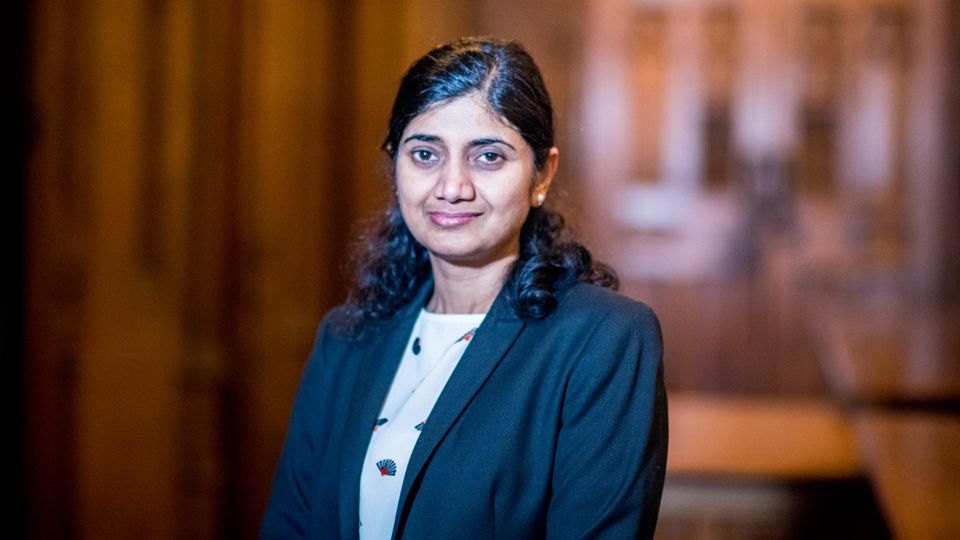
Professor Hema Radhakrishnan is an optometrist and professor of vision sciences at the University of Manchester. Radhakrishnan highlighted that employers should be striving to create more inclusive workplaces.
“It’s about providing equal opportunities and realising the potential that everyone has to offer,” she emphasised. “What that diversity provides is invaluable in a lot of ways,” Radhakrishnan told OT.
She highlighted the need to explore further the idea that the gender pay gap exists because of women being over-represented in roles with lower levels of pay.
“Why should women be represented more in those jobs?” Radhakrishnan said.
“This is a question that we have to answer collectively, rather than just brushing it off.”
In terms of addressing the gender pay gap, Radhakrishnan nƒoted the importance of providing career progression opportunities for those who work flexibly or in part-time roles. “There can be an expectation that only those who can work full time are able to move up the career ladder,” she said.
It’s about providing equal opportunities and realising the potential that everyone has to offer
The optometrist highlighted the need for salary to match an individual’s skills and the role – rather than matching what an individual was paid previously, which has the potential to compound inequalities. She emphasised the importance of also considering the ethnicity pay gap when reflecting on inequalities in how professionals are reimbursed.
“It’s important to look at these differences and see how it affects the gender pay gap. A large proportion of women training to be optometrists are also from ethnic minority backgrounds,” Radhakrishnan shared. “We know that can affect earning ability and progression,” she said.
Within a higher education setting, analysis by the University and College Union in 2019 found that black and minority ethnic academic staff were paid on average 9% less than white academic staff.

Proactive pay negotiation
Women in Vision UK vice president, Dr Bethany Higgins, highlighted that while the gender pay gap is a blunt measure, there is value in companies reporting this information.
“It reflects the systemic inequality within a workforce. Any way of encouraging people to talk about these issues is important because it promotes transparency and accountability,” she emphasised.
Higgins shared that addressing the gender pay gap should be a priority for employers. “A significant gender pay gap can undermine workforce morale and lower employee satisfaction,” she said.
“Job seekers are currently looking for roles where ethical practices, diversity and inclusion are prioritised. It’s in the interests of employers to address this,” Higgins shared.
Turning to factors affecting the gender pay gap, Higgins highlighted that a greater proportion of women work in part-time roles, while women are less likely to own their own practices or be proactive in salary negotiations.
She encouraged people to have open conversations about salary within the workplace. “It can be quite a scary thing to do but I do think we should be having more of an open dialogue about pay,” she shared.
Higgins acknowledged that negotiating a pay rise can be intimidating, and conversations with colleagues and mentors can help to make it a less lonely process.
“The important thing is to get over that fear barrier. The worst that can happen is that someone will say, ‘No’,” she said.

She highlighted that both conscious and unconscious bias can affect women of childbearing age within the workplace.
“Although it is unlawful to ask whether a woman intends on having children, I feel it is still very much on the minds of employers when they are considering a person’s credentials,” Voon shared.
She observed that disparities in pay can be amplified when female optometrists have children.
“Pregnancy and childbirth takes a physical toll on a person and there will be a period of time when a mother has to take time off to recuperate no matter how invested they are in their career,” Voon said.
“In a field such as optometry taking a period of time out of the consulting room can knock your confidence and the longer you are out, the harder it is,” she shared.
Voon emphasised the importance of fair and transparent recruitment processes, with employers making higher level opportunities flexible where possible.
She highlighted that equity involves considering what an individual wants and allowing them to achieve that – no matter what the ambition is.
“An important high salaried role for one person may be the pinnacle of achievement but for another, success may be finding a less stressful part time role which works around their family,” Voon shared.


Comments (0)
You must be logged in to join the discussion. Log in