


26 June 2026
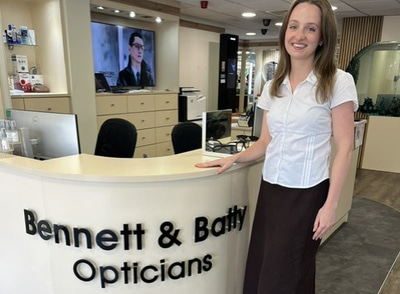
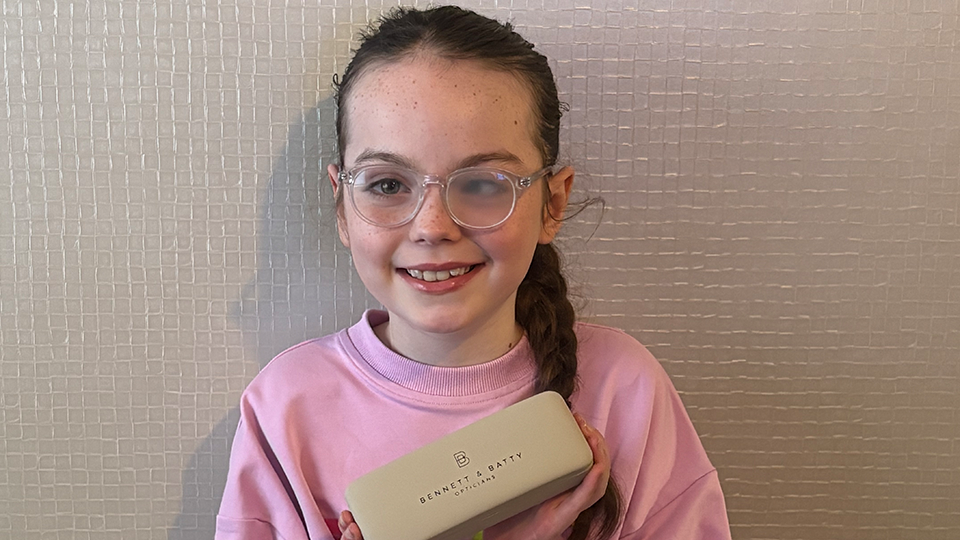
It was optometrist Charlotte McCombe’s first day working at Bennett & Batty Opticians, a Hakim Group independent practice in Liverpool, when Nicola Murray and her nine-year-old daughter, Harper, arrived for the final appointment of the clinic.
Harper had been experiencing double vision as well as a noticeable turn in her eye, and after tests elsewhere, Murray had booked with Bennett & Batty Opticians for a second opinion.
Looking back on the appointment, Murray said: “I can honestly say that Charlotte’s thoroughness, professionalism and willingness to listen saved Harper’s life.”
OT spoke with McCombe and Murray about the sight test and referral that led to Harper’s diagnosis of a brain tumour.
What did you identify during the sight test and what was your reaction?
Charlotte McCombe, optometrist across five Hakim Group independent practices (CM): Harper was booked into the last eyesight test slot of the day. She presented with right esotropia and her only symptom was double vision that had worsened recently. I refracted her as I usually would and the eye turn acted as I’d expected it to on cover test.
However, on Volk examination I noticed there was significant bilateral optic nerve oedema with haemorrhaging, which indicates papilloedema. I was shocked to discover that because Harper had not reported any of the usual symptoms of papilloedema like headaches, vomiting and pain.
How did you approach explaining what you had identified/suspected?
CM: I explained to Harper and her mum that when looking at the back of her eye I had noticed that both the optic nerves were swollen and bleeding. Harper’s mum asked what this could mean and I let them know it could indicate a neurological or brain issue which needs immediate medical attention so that further investigations can be carried out. I find in situations like these, when breaking bad news, it is important to be mindful of the language you use as it is often a really sensitive topic.
I think it is important to try and not use too much medical terminology, particularly because our job is to refer to investigate further, so we’re not diagnosing.
What were the next steps that you took, and what was the significance of these steps to this case?
CM: I let Harper and her mum know that I was going to write a letter explaining what I had found during the eye test, which I gave to them and explained that they needed to take to A&E at Alder Hey Children’s NHS Foundation Trust immediately. Papilloedema is considered an emergency because it can indicate serious, often life-threatening issues, which all require immediate medical attention and treatment to try and prevent damage to the nerves or vision. Harper had been to A&E already the day before, so they were aware of her, and I advised going straight down with the letter.
I was mindful about the language I used. I try and explain things in layman’s terms, saying that it is a brain issue that required immediate medical attention so that we can find out why the optic nerve is swollen and why the eye turn was worsened so quickly.
As a clinician you can suspect what might be behind it because realistically for Harper it was likely to be something slow-growing because she had no emergency symptoms. It is likely to be something that has come on gradually. It comes with practice as a clinician to know what words feel appropriate to you.
When did you hear about the results of your referral and how have you been involved since?
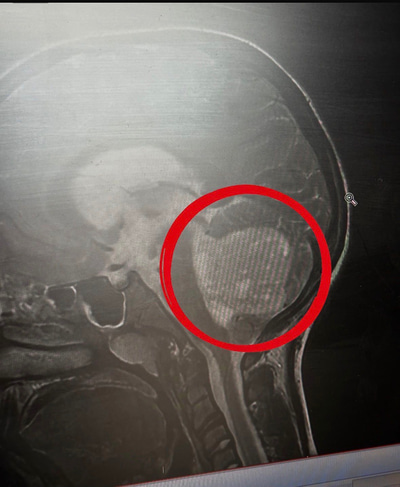
CM: One of my colleagues followed up with Harper’s mum a few days later and when they called, Harper was in brain surgery. It turned out that Harper had been diagnosed the evening after the eye test with a posterior fossa brain tumour and hydrocephalus. She’s had three brain operations and requires a lifelong VP shunt to help with the raised intracranial pressure.
Harper still has double vision, which is being treated with alternate eye patches and she also had discoordination, so she needs specialist neurorehabilitation. Harper’s family are raising money to support her recovery journey and at Bennett & Batty we’ve set up an in-store donation box to encourage the local community to support her as well.
The team at Bennett & Batty sent her gifts to show we were thinking of her. Harper was so thoughtful that she sent flowers to us with cards and a voice note to thank us. She has even come to see us since she got out of hospital, which is so lovely.
It has been an emotional time for everyone. Harper was a competitive dancer – she loves dancing and wants to get back to it as soon as possible. It does tug on the heartstrings.
I saw her grandfather recently – he lives slightly further away but made the effort to come in for an eye test to us because they really trust us to look after them. It is a nice feeling to know that you are trusted to care for someone.

What are your three top tips for other practitioners when making a referral?
- Have a patient-focused approach. Act with empathy and compassion at all times and have your patient’s wellbeing at the centre of your focus
- Always investigate each case thoroughly. For example, with Harper, strabismus was not something I had previously linked to papilloedema, which just shows it’s important to not diagnose based on initial presentation
- Strengthen your clinical knowledge whether you are newly-qualified or have been practising for years. Actively expand your clinical skills and ensure your advice is always up-to-date. I would say that is important.
Nicola Murray, Harper’s mum, describes the family’s journey

“Prior to visiting Bennett & Batty, I had taken Harper to another optician because I was concerned about a sudden and noticeable turn in her eye. She was also experiencing frequent dizziness, double vision and issues with her balance. At that appointment I was told she simply had poor eyesight and was prescribed glasses. However, I was not satisfied with that explanation and requested a referral, which was declined.
“Charlotte was incredibly thorough. It was immediately clear that she was taking our concerns seriously and carrying out a very detailed examination. She spent a considerable amount of time assessing Harper and, most importantly, listened carefully to everything we had been noticing.
“Following her examination, Charlotte explained that Harper’s eyesight was not significantly impaired. Instead, she had identified that Harper had swollen optic discs with evidence of haemorrhaging and suspected papilloedema. She carefully explained her findings, completed a referral form detailing her concerns, and strongly advised us to take Harper to A&E as a matter of urgency for further investigation.
“After taking Harper straight to A&E with Charlotte’s referral letter on 16 February 2026, she underwent urgent scans which revealed a low-grade glioma – specifically a posterior fossa pilocytic astrocytoma (brain tumour). Just three days later, Harper underwent a lengthy and complex operation to remove the tumour. Thankfully, the surgery was successful and the vast majority of the tumour was removed.
“Following the operation, Harper faced further challenges and required two additional emergency surgeries due to complications from hydrocephalus. An external ventricular drain was inserted in February, followed by the placement of a VP shunt in March.”
Charlotte was incredibly thorough. It was immediately clear that she was taking our concerns seriously and carrying out a very detailed examination
“Despite everything she has endured, Harper is doing incredibly well. She is currently undergoing extensive privately-funded neurological rehabilitation and has shown remarkable determination throughout her recovery. She has re-learned how to walk and continues to make progress every day, growing stronger with each milestone she achieves.
“I can honestly say that Charlotte’s thoroughness, professionalism and willingness to listen saved Harper’s life. Had she not taken our concerns seriously and carried out such a detailed examination, Harper’s diagnosis could have been delayed with potentially devastating consequences.
“What stood out most was that Charlotte looked beyond a simple eyesight issue. She listened, investigated further and trusted her clinical judgement when something didn’t seem right. As a parent, that meant everything. To Charlotte, I would simply like to say thank you. Thank you for listening when others did not, for acting so quickly, and for ultimately helping to save our daughter’s life.
“To other parents, I would encourage them to trust their instincts. If you feel something is wrong, keep asking questions and seek a second opinion if necessary. Sight tests are about far more than just whether someone needs glasses – they can reveal serious underlying health conditions that might otherwise go undetected.
“Our experience has shown us just how important routine eye examinations are and how skilled optometrists can play a vital role in identifying serious medical conditions. We will always be grateful that Charlotte recognised the signs when she did, because that intervention gave Harper the best possible chance of survival.”


Comments (1)
You must be logged in to join the discussion. Log in
Anonymous03 July 2026
Its good to hear that the parents are grateful and Charlotte is being treated. But should we also not be questioning that the NHS GOS fee at £24.13 is inadequate to cover this practices clinical work and is always reliant on English Optoms goodwill. Such examples need adding to the OFNC goodwill survey if the parents are willing.
ReportLike1