


07 February 2025
Some people have watches that remind them to take a break when they have been sitting for too long.
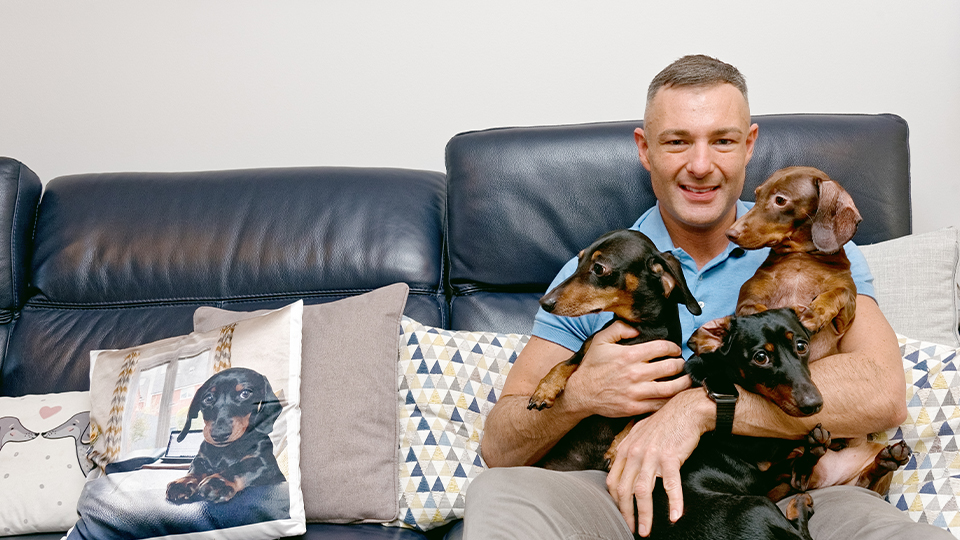
Optometrist Neil Retallic has a dachshund named Zeus. If Retallic has been sitting at his desk for too long, Zeus will roll a ball down the stairs before patiently descending the stairs to retrieve it and begin the cycle again.
His one-dog campaign for work life balance has not gone unnoticed by Retallic.
“Dogs know what is important,” he told OT.
“They always seem so happy to be part of your life and pleased about the small things,” Retallic shared.
Data from the General Optical Council (GOC) reveals that the optometry workforce is facing significant challenges when it comes to workplace satisfaction and wellbeing.
The 2024 GOC Registrant Workforce and Perceptions Survey – which polled around 15% of optometrists and dispensing opticians – found a noticeable increase in the proportion of respondents who were dissatisfied with their role.
One in four respondents said they were dissatisfied in their job, compared to one in five in 2023.
As part of Retallic’s own PhD research, he canvassed more than 1600 UK optometrists and pre-registration optometrists about their mental wellbeing through an online survey.
Retallic shared with OT that the survey found higher levels of mental wellbeing challenges among optometrists than the general population – in line with an earlier survey of Australian optometrists.
It’s in everyone's interest to takes steps to create a happier workforce
He added that around one in three optometrists surveyed were experiencing mental health challenges, with significantly higher levels among pre-registration optometrists.
Retallic reflected that pre-registration optometrists often lacked the time to build similar social networks to qualified optometrists in part due to the additional demands of their professional training.
“They are a unique population because they are balancing study with a new job and clinical interactions, which isn’t easy,” he highlighted.
“It was also encouraging that they recognised the personal job satisfaction from supporting patients,” Retallic shared.
Common threads that arose from the survey were the importance of maintaining a good work-life balance, efficient clinic management, as well as the value of having support from colleagues.
Retallic highlighted that flexibility within roles – such as being given autonomy to take on additional qualifications or tailoring working hours to accommodate caring responsibilities – enhanced the wellbeing of optometrists.
More than 1000 free text responses from optometrists included descriptions of how practitioners support their own wellbeing, from therapy and mindfulness apps to taking a walk at lunch or meditating during a break.
“They’re not all massive changes. They’re little things that you can easily accommodate into your day,” Retallic highlighted.
One of the motivations for undertaking the study was to help inform the development of future support for the profession.
“We are already working on CPD sessions that will be delivered at 100% Optical and Specsavers events,” Retallic shared.
He emphasised the importance of addressing factors that can create challenges for wellbeing in the workplace.
“It’s in everyone's interest to takes steps to create a happier workforce,” Retallic said.
“What we want to do is keep people in the profession for longer rather than losing them for avoidable reasons,” he said.
The 2024 GOC Registrant Workforce and Perceptions Survey found that 16% of respondents planned to leave the profession within the next two years.
Among this group, the most common reason cited for leaving the sector was ‘disillusionment with the profession’ (61%) followed by ‘to reduce stress/burnout/fatigue’ (53%).
In the balance
When it comes to his own wellbeing, Retallic pays tribute to his three dachshunds – Zeus, Dexter and Alexa.
He described to OT how they have added to his sense of purpose and routine. They have encouraged Retallic out of the house into nature and wreaked havoc on his household virtual assistant.
“To be able to come back home to them has made such a difference,” he said.
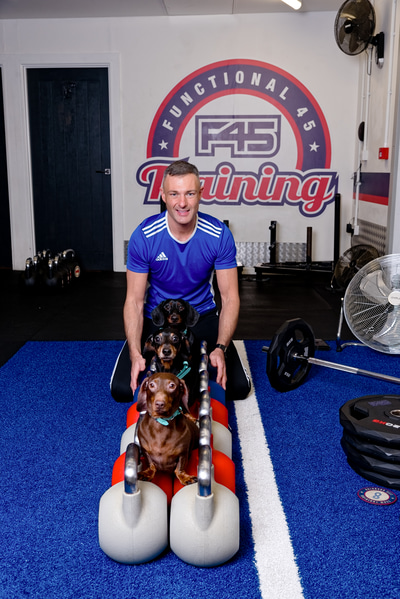
As well as being an advocate of pet ownership, Retallic supports his physical and mental wellbeing through regular gym sessions.
“Our job is not as physically active as other occupations, so staying fit and healthy is important,” he said.
For dispensing optician and practice director, Shabnam Fazl, painting provides her with an anchor when dealing with everyday challenges.
“When things are not making sense – whether it is something personal or professional – the paint on the canvas does,” she said.
“After I paint, I have this incredible sense of calmness. I feel really grounded once I have put everything on the canvas,” Fazl shared.
After enjoying sketching as a child, Fazl began painting when her uncle made a canvas for her at the age of 16.
“From a young age, I watched him paint. He was my inspiration,” she said.

Fazl shared with OT that she has to be in a certain mood to paint. She keeps a blank canvas and brushes ready in case she feels the need to create an artwork.
She will sometimes wake up at midnight and begin painting in the office space she uses for her artwork.
Fazl observed that painting is similar to meditation. When she is working on a canvas, she has a sense of freedom.
“All stress, worries and anxieties seem to fade away as I get deeper and deeper into the paintings,” she said.
Fazl has infused her passion for creativity into her Hakim Group independent practice, E&G Opticians. A range of artwork is displayed on the walls, including a series of pictures of eyes.
“A couple of patients have called our practice the eye gallery,” Fazl shared.
From software to sandwiches
When KCM Community Café was on the verge of closing seven years ago, Professor David Thomson seemed an unlikely candidate to take over the reins.
“My main ventures into a kitchen are as a consumer, rather than someone with any culinary ability,” the founder of Thomson Software Solutions told OT.
However, faced with the prospect of losing a valuable community asset, Thomson decided to step out of his comfort zone and take over the management of the café.
“I thought, ‘Why not? I spend most of my life in front of a computer. Let’s do something completely different,” he said.
Although he originally envisioned making the café self-sustaining, then quietly withdrawing into the background, Thomson can be found each Thursday between 11am and 2pm chatting with regulars as they drink their tea and eat a baked potato.
“Much to my surprise, I absolutely loved it,” he said.
There are a lot of lonely people out there, so in a very small way, in Potters Bar, hopefully we're plugging that gap
Thomson said that the original idea behind establishing the café 18 years ago was to help people form connections over low-cost, nutritious meals.
“The idea was to provide a community hub where people could come and feel welcomed,” Thomson said.
Drawing on his software skills, Thomson wrote a bespoke café management system so that volunteers can take orders on tablets.
The café now has more than 100 regular attendees, from young parents to older customers who have forged new friendships through the café.
“The whole place has an amazing buzz about it, and the volunteers have formed a fairly close-knit group themselves,” Thomson said.
Thomson highlighted that his role at the café enhances his own wellbeing by giving him the sense that he is contributing to the community.
“You really come away feeling that you’ve done something worthwhile,” he said.
“There are a lot of lonely people out there, so in a very small way, in Potters Bar, hopefully we’re plugging that gap,” Thomson said.
He has on occasion made tea and coffee, but his culinary skills remain largely untested.
“They wouldn’t let me anywhere near preparing the food. I mainly go around, take the orders and chat,” Thomson shared.
“Despite my original intention to sneak out the back door after a year, here we are – seven years later. I love it. We will carry on for as long as we can, I think.”
Professor David Thomson on volunteering at a community cafe
Hand-delivering telegrams
When he is not travelling to different areas of the UK and Ireland as Specsavers’ head of clinical performance, optometrist Russell Peake can be found at his 1960s Olivetti typewriter.
Since establishing the Spa Telegram service in 2021, Peake has typed close to 1000 telegrams.
The telegrams have marked a range of significant occasions, from births, marriages and exam results to a hand-delivered proposal and a transplant anniversary message between a mother who donated an organ to her son.
“I’m connecting people through the messages they send, and that’s a really lovely position to be in,” he said.
As someone who spends much of his working day in front of a computer screen, Peake enjoys the analogue nature of writing telegrams. The hobby also gets him outdoors as he delivers messages within the Leamington Spa and Warwick area by bike.
“This is genuinely something that supports my wellbeing, both mentally and physically” he said.
Peake receives telegram requests through his website and Instagram page (@spatelegram), with £2 from each telegram ordered donated to LWS Night Shelter in Leamington. Messages have been sent as far afield as Australia, South Africa and Japan.

Reflecting on the pressures that exist within optometry, Peake shared that patients trust optometrists to look after their most important sense.
“It’s a job with responsibility and with that comes pressure,” he said.
Peake observed that optometrists may take their job home with them if they are worried about a management decision. There is also potential for isolation in practices with a single optometrist.
“It is important to have a peer network and the opportunity to be able to discuss any challenges,” Peake said.
As someone who visits a range of practices, Peake has observed factors that contribute to a positive workplace culture. These include having good systems in place for one-to-one meetings and personal development. Highly motivated and skilled support staff as well as strong teamwork is also key, Peake shared.
“There are no silos within the team. Everyone is working as one,” he said.
Lessons from nature
After a busy day, optometrist and practice owner, Zabir Ali, returns to his own small section of the Dorset countryside.
While he might hear the occasional honk of a peacock, when he is at home, Ali is largely insulated from the sounds of modern life.

“I wanted a place where I could go, close the gates and not hear any noise. There’s a real sense of relaxation,” Ali shared with OT.
On his acre and a half smallholding, Ali has four peacocks, four rescue alpacas, chickens and ducks. He is close to both a beach and a forest.
His surroundings are very different from his childhood in Birmingham, as one of five children growing up in a low-wage, single income household.
Ali has observed how the animals will change their behaviour as the temperatures drop.
“You learn so much from the natural world. We tend to be on this nine-to-five cycle every day of the year, which is not very natural,” Ali highlighted.
“This is the time of year where we're meant to slow down, relax and get a bit more sleep,” he said.
I’m connecting people through the messages they send, and that’s a really lovely position to be in
Ali told OT that after the peacocks’ feathers fell out in autumn, he has noticed new growth in preparation for spring.
“You see that cycle year-in, year-out, and it gives you confidence that the world will be okay,” he shared.
Alongside the wellbeing benefits of being immersed in nature, Ali enjoys a variety of exercise – from running and strength training to yoga and pilates.
He shared that the hardest part of exercising is often motivating himself to get out the door after a day at work.
However, Ali highlighted that the sense of achievement is worth the effort.
“You could have been on the sofa eating crisps, but instead you have given something back to your body,” he said.

“A clinic day is my favourite day of the week”
Optometrist and owner of Wessex Optical, Zabir Ali, talks OT through a clinic day that centres patients above all else
A health boost from hockey
Hockey is a sport that has seen Jaclyn Payne represent Scotland and travel to France, Germany, Holland, Spain, Belgium and South Africa.
But aside from the opportunity to travel to far-flung locations, it is the daily boost to her physical and mental health that keeps the Specsavers Home Visits optometrist motivated to play – even when there are thunderclouds above or hail underfoot.
“Being out in the fresh air is wonderful. Exercise really does get the endorphins going to boost the mood,” Payne said.
As well as playing for the Huddersfield Dragons, Payne plays representative level hockey for two over 40s teams – Yorkshire and the North East, and Scotland.
She highlighted that hockey is a great sport for general fitness.
“There is a lot of sprinting, combined with pure endurance to last the game. You have to be strong to tackle but agile to change direction with your opponent,” Payne said.
The domiciliary optometrist emphasised the mental benefits of working towards a shared goal with a diverse range of people.
“We all have different things going on in our personal lives – ladies looking after elderly relatives, mums with kids driving them nuts, young women with relationship issues, teens going through exams. It’s such a great space to offload what has happened in your week if you choose to,” she said.
The employer perspective
Practice owner and AOP councillor, Mehul Patel, feels a personal sense of duty towards his staff.
He knows their ambitions, their interests and their favourite hot drinks. When he explains to his children the responsibilities of being a business owner, he tells them that he has 18 mouths to feed beyond their dining room table.
“I treat my team like a family,” he said.
Team rewards have ranged from weekends in Paris to a three-night Centre Parcs holiday for a long-serving staff member.
Something simple – like a birthday – is very important to recognise
His practice manager, who turns 60 in March, has been gifted a five-night holiday in Malta.
Alongside these grand gestures, Patel believes that small acts of daily recognition are key – such as recognising exam results and celebrating birthdays.
“The personal touch is very important. We ensure that we value them, and something simple – like a birthday – is very important to recognise,” he said.
Patel believes that by investing in his staff, he will differentiate his practice as an employer.
He has observed in other workplaces how looking after staff can result in a more effective business.
“The restaurants where the waiters are happy are the ones that give you exemplary service,” he shared.
As a practice director at E&G Opticians, Fazl has focused on creating a positive work environment for her staff.
She encourages feedback from staff about any improvements that could be made to the business and is open to receiving any new ideas they may have.
Fazl highlighted that investing in the team – and trusting them to make use of their skills – is a key priority.
“Empowering individuals has always been my personal goal,” she said.
“I don’t shy away from sharing work with them, allowing them to show their creativity and capability,” Fazl emphasised.
The effect of high workloads
A striking finding from the 2024 GOC Registrant Workforce and Perceptions Survey was the prevalence of high workloads within the profession.
More than half (54%) of those surveyed reported being unable to cope with their workload, while 67% said they had worked beyond the hours they were paid for.
These findings were reflected in the experiences of several optometrists who outlined to OT the effect of pressurised work environments on their mental health.
A Durham optometrist told OT that during his career he has worked in practices that have testing times as short as 15-minutes with rolling clinics.
“The workload was physically possible but mentally it was so incredibly taxing and without realising I had become short tempered and cynical,” he said.
He added that the toll of the workload built up over time.
“I hadn’t appreciated just how burnt out I’d become. Each fleeting weekend I would dread the idea of returning to work,” he said.
While he eventually left the job, the optometrist told OT that he had not recovered the same attitude and drive he had early on in his career.
“The time we spend at work takes up such a significant portion of our lives and given we only have one chance at life we should aim to achieve a relationship with our careers that works for us and not against us,” he said.
A Buckinghamshire optometrist told OT that at one time he was expected to perform 19 sight tests in a day, with a “very limited” lunch break.
He found it challenging to be in the same room all day, with little interaction outside of sight testing.
“Initially you think it will be okay, but slowly it begins to drain you, to a point where you fear going in,” he said.
He said that some practitioners need to continue going in to work to pay their mortgage and bills.
“For me it affected my mental health, where you begin to feel down,” he said.
“Regular breaks away from work, such as a holiday or a hobby, can also help. I find going for a walk on the lunch break helps clear the mind,” he said.
An East Midlands optometrist highlighted the effect that ‘ghost clinics’ can create – where a practice double-books appointment slots to mitigate against lost income from missed appointments.
“This has had a significant strain on the team dynamic and optometrist morale throughout the day,” he said.
He highlighted that working in a practice with ghost clinics left him feeling stressed.
“I had to remind myself I have a duty of care to the patient in front of me and will take the appropriate time to investigate and address their concerns,” he said.
I hadn't appreciated just how burnt out I'd become. Each fleeting weekend I would dread the idea of returning to work
The optometrist has also worked in practices where only 15 to 20 minutes is allocated for a sight test.
“Sometimes they’ll want you to squeeze an extra patient in before your lunch or at the end of the day,” he said.
He added that these challenging working conditions can affect his mood.
“It does become a mental juggling act that you have no choice but to find your way through,” the optometrist emphasised.
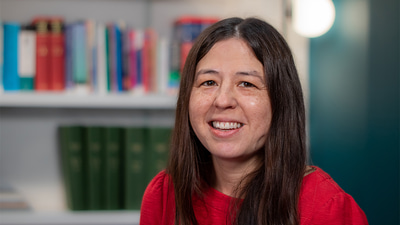
AOP head of employment, Liz Stephenson, highlighted that while there are no specific rules on the minimum length of a sight test, employers have a duty to provide a safe system of working for staff.
She encouraged optometrists to get in touch with the AOP employment team if they believe the time allocated for a sight test is compromising patient safety or breaching a legal obligation.
“They may be able to raise this in such a way that will give them legal protection as a whistle-blower,” Stephenson said.
If working arrangements feel unsafe, practitioners are advised to contact the AOP in the first instance.
They might be advised to raise the issue with their employer – clearly identifying the health and safety risk to themselves, other staff, or patients.
“If there is a health and safety rep or committee at their workplace, they could raise issues through the representative,” Stephenson suggested.
AOP head of clinical and regulatory, Henry Leonard, highlighted that while the General Optical Council has never mandated a minimum time for the sight test, the AOP’s position is that the practice should allow as much time as necessary.
“The closest we’ve come to setting a length of time for a sight test is in Scotland,” Leonard shared.
Scottish Government guidance estimates that the minimum time spent on each patient for an eye examination would be around 30 minutes for a routine examination.
Racism and mental health
One of the topics that the 2024 GOC Registrant Workforce and Perceptions Survey explored was the prevalence of discrimination within the optical workforce.
One in four respondents reported that they had experienced discrimination in the past year. Among respondents from an Asian or British Asian background, 44% reported experiencing discrimination over the past year.
Among those who planned to take a career break or leave the profession, the proportion of people who had experienced discrimination was higher – at 50% and 46% respectively.
Close to half (47%) of those who had experienced discrimination over the past year reported that the unfair treatment was related to race, followed by sex (30%), age (29%) and religion or belief (22%).
Optometrist and public health researcher, Dr Mandy Truong, delivers annual presentations to optometry students about racism in healthcare at Deakin University.
Truong highlighted that society has changed over time to the point where it is much less socially acceptable to make overtly racist comments in public spaces.
However, there may be more subtle comments or behaviours that have a cumulative effect on practitioners.
“Often they are little comments or microaggressions that may seem innocuous but if someone is receiving that regularly, it is going to build up,” she said.
“Racial discrimination is an upsetting experience because deep down it is a questioning of someone’s existence in a place or community – they are being made to feel like they don’t belong,” Truong emphasised.
She highlighted that there is a strong body of international research that shows experiencing racism can have negative consequences for someone’s mental health.
Truong shared that alongside making someone more vulnerable to symptoms of anxiety or depression, there is research linking experiences of racism to a higher risk of chronic illness in later life.
She explained that the cumulative effect of discrimination, exclusion and unfair treatment over time is described as ‘the weathering hypothesis.’
“Imagine you’re a house on a cliff and you are constantly getting buffeted by stormy weather. There is potential for it to affect you in the long term even if the experiences of discrimination lessen over time,” Truong said.
She shared that sometimes in response to racism, people may adopt hyper vigilant behaviours.
This may include a person changing their ‘foreign sounding’ name, the way they speak or dress in order to fit in.
“It’s that idea of ‘What do I need to change about myself to feel safe if I don't have control over my external environment? How do I change myself so I can blend in with everyone else?’” Truong observed.
She added that people do not need to directly experience racist comments or behaviours personally to be negatively affected.
“There's evidence that vicarious discrimination – seeing other family members, colleagues or friends experience racism – can also impact your own wellbeing,” Truong shared.
One of the reasons that people continue to experience negative effects of racism throughout their lives is a lack of accountability, which means that people do not receive redress for their experiences, Truong shared.
She highlighted that in order to tackle racism, employers need to create effective reporting mechanisms and take action when reports are made.
“I think it's important to have organisational support and a safe space for people to call racism out when it occurs,” she said.
She highlighted that it may be appropriate to make this reporting mechanism anonymous.
Truong, who comes from a migrant refugee background, highlighted that sometimes there can be pressure on people from immigrant backgrounds to be a “model minority.”
“You're expected to be grateful for being allowed into the country. You’re told to put your head down, work hard and be grateful for what you get. It can be hard to speak out, potentially, even if there's support around,” she said.
Introducing workplace training on racism and having an action plan to address racism can also be helpful, Truong added.
“This is a signal from leadership that the organisation takes stamping out racism seriously, and everyone has a part to play,” she said.
Turning to why it is important to address racism within the workforce, Truong shared that if no action is taken, nothing will change.
“This is not something we can sweep under the carpet. People spend so much of their time at work that it really matters what happens there,” she said.
Dr Rebecca Rhead is a lecturer in society and mental health at King’s College London’s Institute of Psychiatry.
She is lead author of ‘Ethnic inequalities among NHS staff in England - workplace experiences during the COVID-19 pandemic’ which was published in BMJ Occupational & Environmental Medicine.
This research found that staff from ethnically minoritised groups were more likely to face difficulties accessing personal protective equipment than their white British colleagues, as well as being more likely to experience harassment and discrimination.
Rhead told OT that discrimination and harassment can have “profound effects” on mental health.
“In the NHS, our research has shown that ethnically minoritised staff have increased experiences of discrimination and harassment, and this not only impacts their health but can also lead to low job satisfaction and increased sickness absence,” she highlighted.
Previous research by Rhead and colleagues found that ethnically minoritised NHS staff often feel disempowered and fear the repercussions of speaking out about their working conditions.
She highlighted that these concerns can be serious enough that affected staff may transfer to different teams or quit the NHS altogether.
Rhead emphasised the need for clear rules that hold all levels of management accountable.
“Leadership within the NHS also needs to start taking responsibility for actively combating racism,” she said.
Taking steps to enhance responsibility could involve more detailed annual reports, specific targets for improvement, and the sharing of data, strategies and outcomes with regulatory bodies, such as the Care Quality Commission, to ensure transparency.
“We also need clear and open ways for staff to report racism without fear of backlash. Providing training for all NHS staff on how to recognise, challenge and report racism and harassment is essential,” she said.
Personal experiences of discrimination
An optometrist working in South East England told OT that she would like to wear a hijab but is worried about unwelcome comments.
“I really respect people who do wear one because they clearly don’t care about standing out,” she said.
She knows other optometrists who shorten their names to fit in, or refrain from growing a beard because they are worried about the response.
“They will hide parts of their identity,” she said.
As someone who practises in a predominantly white area, she is asked repeatedly by some patients where she is from.
“Those comments affect me because they are thinking of you as an outsider. I was born and raised in England,” she said.
The optometrist shared that work social functions centred around alcohol can be challenging for Muslim optometrists.
“You want to have a good relationship with colleagues, but you don’t want to be pressured to do things that are against your values,” she said.
She highlighted that the ongoing conflict in Palestine has taken a toll on her mental health.
“There’s a dehumanisation of people who aren’t white. You see these images of women and children suffering on the news, then you have to go in to work and be silent. That can be draining,” she said.
A Glasgow optometrist shared with OT that in the past he might have been bothered by regular questions about where he is from.
“It felt like I was being made to explain my Scottishness. I grew up in Glasgow – it’s the only place I’ve ever known to be home,” he said.
However, now he focuses his energy on the factors within his control.
“I’ve always been taught just to work harder. If someone makes a face when they see me in the waiting room, I try and go above beyond,” he said.
A practical consideration that can prove challenging as a Muslim optometrist is finding a private space with washing facilities to perform daily prayers.
“Prayer times follow the position of the sun, so on a winter’s day you might have three prayers during the working day,” he said.
“That can be challenging if the staff aren’t understanding or if it is a busy practice and people are barging in,” the optometrist shared.
I’ve always been taught just to work harder. If someone makes a face when they see me in the waiting room, I try and go above beyond
He highlighted that it could be helpful for practices to have a standard operating procedure around accommodating prayer times.
“It can be awkward to bring up and not everyone has the confidence to raise it,” he said.
The optometrist shared that he has had positive experiences in practice where managers have been flexible with how he takes his breaks in order to accommodate his prayers.
He also valued the support he received on an occasion where a patient refused to be seen by a non-white optometrist.
“They asked him to leave and told him that he would not be welcome back in the practice,” he said.
“They completely had my back and there was no fuss made about it,” the optometrist highlighted.
The experts: how to foster mentally healthy workplaces
Dr Jasmine Virhia is a behavioural scientist and lead author of The Beyond Workplace Wellbeing Framework: A New Framework for the Organisation of Work to Cultivate Wellbeing and Productivity in the Workplace.
Virhia highlighted that it is important to focus on leadership in order to create psychologically safe workplaces.
“If leaders can show that they actively listen and can take a step back in meetings, for example, it provides a space to offer opinions,” she said.
Virhia added that it can be helpful for leaders to speak last in meetings so that people can speak freely before them, without feeling pressure to take the same view as the leader.
Having the perspective of employees from a wide range of backgrounds can help to improve the service that is offered.
“You want to be able to leverage the diversity of thought that exists among your employees,” Virhia emphasised.
Employees could be provided with different ways to provide feedback to leadership, for example, in writing or in a one-to-one meeting rather than in a group setting.
“Not everyone will feel comfortable sharing their thoughts verbally in a meeting. A lot of people will take time to digest the information,” she said.
Virhia highlighted that one way of measuring how safe people feel to speak in the workplace is auditing who speaks and how much.
She added that this does not need to be a formal process, but simply observing over a period of a couple of weeks whether there are more dominant voices within the workplace.
“That may be an indication that some people don't feel comfortable in that space,” she said.
Within a psychologically safe workplace, Virhia shared that people feel comfortable to disagree with each other and with leadership.
“If people feel comfortable saying ‘No, I don't think that would work’ or ‘I'm not sure about this because of x, y, z’ that's a really good sign,” Virhia emphasised.
Another sign of a psychologically safe workplace is that staff feel comfortable owning up to mistakes that they have made, she said.
Everyone has different things they value when it comes to wellbeing. There are different activities that people engage in to maintain their health and happiness
Virhia highlighted that it can also be helpful for leaders to show vulnerability.
“People really benefit from knowing that their leader is human, particularly in the healthcare sector where we know that there is immense pressure,” she said.
“If staff can relate to their leader, then that reassures them that they understand what they are going through,” Virhia added.
Virhia encouraged leaders to focus on demonstrating they are trustworthy through their actions and communication.
“Leaders can often go wrong by just assuming that that they should be trusted because they're in a position of power,” she said.
Turning to how employers can enhance the wellbeing of their staff, Virhia highlighted some of the limitations of companies choosing a benefit for their employees – such as meditation apps, subsidised gym memberships and educational lectures.
She shared that wellbeing is subjective – so a gym membership might be perfect for one person while time spent with family or friends would be better for another staff member.
“Everyone has different things they value when it comes to wellbeing. There are different activities that people engage in to maintain their health and happiness,” she said.
Virhia added that employees may be balancing their workloads alongside the wellbeing benefit.
“People might be encouraged to attend a seminar in their lunchbreak or yoga after work on site. But really, who has the time?” she said.
“When people are in the workplace, they feel like they are there to work,” Virhia said.
As an alternative to designated wellbeing activities, Virhia suggested that companies could take the money they would invest in the scheme and allocate a set amount to each employee.
The employee can then decide what would most support their wellbeing – whether that is spending the money on professional development or buying back some time in their day.
Virhia highlighted that a central concept within her research is giving employees the autonomy to perform their role in the best way they can – and in a way that enables them to support their own wellbeing.
“It’s really unrealistic for an organisation – particularly large organisations – to think that they can cater to every single person’s idea of wellbeing,” she said.
Virhia shared that alongside supporting wellbeing, employers have a responsibility to minimise ‘ill-being’ that employees experience as a result of their work.
This may take the form of stress, bullying, burnout or harassment.
Virhia emphasised the importance of leaders tackling these issues within the workplace.
“When people are overworked and don’t have enough time to tend to their wellbeing in a way that works for them, they end up in a cycle,” she said.
“They are more likely to end up burnt out, which means they will have less job satisfaction or be less engaged and less productive,” Virhia shared.
While acknowledging the pressures within healthcare, Virhia observed that a shared sense of purpose among staff can help to mitigate workplace stress.
“Where resources are scant, I would suggest trying to focus more on the collaborative aspect of work,” she said.
“Where can people find support and joy in those relationships?” Virhia emphasised.
The importance of autonomy
Principal research fellow at the Institute for Employment Studies, Jonny Gifford, is a co-author of Exploring the interactions between job quality, industries and health.
The review found that three in five UK workers reported having to work to tight deadlines, while two in five said they had to work at high speed.
One in three UK workers have control over how they work – which is the lowest rate in Europe.
Gifford highlighted that the autonomy of workers has declined in the UK in recent decades.
“There has been a long-term erosion of how much people are able to control how they do their work,” he said.
In contrast to this lack of autonomy, an alternative approach is job crafting – where people are supported to shape their roles.
Workers then have the flexibility to meet competing priorities in a style that suits them.
“Managers should try to empower people to do their job in ways that work for them,” he said.
“There are clear benefits, not just for wellbeing, but also for productivity,” Gifford shared.
We need to empower people to make choices that work for them
He highlighted that the idea is not to give workers unrestricted freedom, but to provide for a reasonable loosening of management control.
“It’s not about creating your dream job and going off to do whatever you want to do, it’s about looking for opportunities to empower people to work in a way that they see fit,” Gifford emphasised.
Reflecting on why companies should focus on prioritising the mental and physical health of workers, Gifford highlighted that workplaces can play a fundamental role in helping a society to thrive.
“Employers are not just making a buck, they're also key actors in society,” he said.
“We need to be creating good quality jobs that enhance people’s lives,” Gifford emphasised.


Comments (2)
You must be logged in to join the discussion. Log in
Anonymous20 February 2025
Everything being monitored:
Conversions
Sales £££
Test times
How many visual fields
Recalls
How long patients wait
Patients turning up 2 days early, late, “squeezing “ in appointments
How many referrals
Patients and optometrists are human not robots….
ReportLike4
Anonymous09 February 2025
My oh my
It really is time to separate eye examinations from the sale of optical appliances.
It should also be a fundamental part of optometry in university to explain to students the reality of working in practice (mostly multiples) with ghost clinics, appointments squeezed into diaries and a maniacal obssession on conversion rates and sales.
And please clarify if you pay someone as an employee they are not part of your team. If you pay someone a salary they are an employee. Team members own a share of the business.
ReportLike46