

29 March 2026
My grandfather was born in London, in the East End, about 100 yards from where ABBA Voyage now takes place.
According to the 1901 census, he was born on the same day the British Optical Association (BOA) was founded. By 1911, his father had moved to work for a munitions company in Birmingham. My grandfather ended up getting a job in Birmingham's jewellery quarter, polishing silverware, and making candelabras. He was given the machines to run, but he was running them more quickly than anyone else. He was paid by piece, so he was told he either had to take a cut in salary, or work more slowly.
On his way home, he passed an optician called Lessar Brothers, who were looking for someone to cycle completed spectacles from the lab to practices across the city.
He started working for them, during and after the First World war, and gradually he was brought into the business. By the middle of the 1920s, he was conducting refractions, and working on the manufacturing side. He used a plane mirror retinoscope – a mirror with a hole in it, and a light bulb.
By the 1930s, he was doing a bit of locum work around the West Midlands, and he had a practice.
His first son, by the time he got to 14, had left school and had started cutting edging and fitting lenses into frames. His second son was doing the same thing, and it looked like that was my dad’s destiny as well.
But my grandmother didn’t want him to go into the optical factory.
She wanted him to be professionally qualified, so she got him into sixth form, and then he took a place at Aston College, which became Aston University. He did his optometry degree from 1948 to 1951. By then, his brothers were running an optical manufacturing business, called Dudley Optical, and my dad had become an optometrist.
For his national service, he went to Hamburg, joined the Royal Army Medical Corps as a staff grade optometrist, and worked in a military hospital. I turned up in 1958. In the same way that my grandfather was born on the day the BOA was founded, I was born on the day the Opticians Act 1958 was passed, and the General Optical Council (GOC) was founded.
At the age of five, I had a serious eye injury.
I was playing in the garden, and the metal valve on the end of a hose pipe hit me in my right eye. I spent quite a considerable time in and out of hospital, and then ultimately it was realised the eye was too badly damaged. I went through the ages of five to 14 with a David Bowie: one brown eye, one blue eye. I was relieved when they decided to remove it and give me an artificial eye.
I was lucky enough to pass the 11 Plus and go to grammar school, where I gravitated towards sciences and languages.
Going through O-levels, I realised I probably wasn’t going to do medicine. Nobody else had ever heard of optometry – but I had, because of my dad and my grandad. I applied to go to university in 1976. Then, probably because I was too busy riding motorbikes and working in the pub, I didn’t do very well in my A-levels, and was two grades short to get into Aston.
I took a year off, resitting A-levels, and ended up applying the second time around to Cardiff.
In Cardiff, my big influences were Professor Margaret Woodhouse, who is now the special needs specialist, Professor Michel Millodot, who was the head of school, and Professor David Henson – exceptionally well qualified, excellent teachers.
I decided I would apply for a hospital pre-reg placement.
I thought that if I knew anything about optics at all, I did know how a practice worked, and it was probably a good idea to get some different experience. I applied to Bristol Eye Hospital, and for some reason or other, I got it.
I started my pre-reg placement in August 1980.
I had a colleague, Fred Giltrow-Tyler, who is still working there, who had a very advanced opinion of where optometry could go. The best thing I learnt there was that ophthalmologists were not that scary. They were human beings, and you could talk to them. Fred also taught me that standing up to authority was possible.
Towards the end of that year, I bumped into the next pre-reg who would be working at Bristol.
She said: ‘I’ve got a plan to go out to Australia after I qualify, because you can do a higher degree out there.’ I knew that people did that in the United States, but I never thought it was feasible to go to somewhere like Australia. We’d had neighbours who had emigrated there and posted back little koalas and boomerangs, so I had always had an interest in Australia.
After I’d qualified, I found myself in practice, looking through the Optical Yearbook.
It was one page per day, and you would write in all your appointments, but it also had a directory of all of the optometry schools around the world, including the Australian ones.
I wrote to the heads of school in Melbourne, Sydney and Brisbane, and I got a reply from the guy in Melbourne, Barry Cole, who had qualified as an optometrist in the 1950s and had gone on to be one of the first Australian optometrists to do a PhD. It coincided with the Australian Government bringing in a programme that was very beneficial to optometrists. In effect, they had expanded the scope of practice, and increased the sight test fee, and it was a bit of a boom time.
They managed to find me some funding, and a part-time teaching job in the university, making use of the fact that I’d done a pre-reg in hospital, because there was no such thing as a hospital optometrist in Australia at that time.
I went out there in 1982. I ended up going to work in the Kooyong Low Vision Clinic, where the Australian Open used to take place. Chris Evert, the legendary tennis player, once popped into the café where I was having lunch.
It was a multidisciplinary clinic, with an optometrist, an ophthalmologist, an occupational therapist, a social worker, and a mobility instructor, all based on the same premises, so you could do a full rehab package for somebody with vision impairment. That didn’t exist in the UK.
That was my grounding in vision impairment, and that was what I targeted when I eventually came back from Australia. My Master's thesis was on measuring contrast sensitivity in patients with low vision, and that’s still relevant today.
In Australia, they had some terrific continuing education programmes.
One of them was all about radiation – radiological damage to the eye, but also UV and infrared. I met a guy there who was really fascinating – Donald Pitts, the optometrist from Houston – who designed the gold visors for the Apollo moon shots, so they were protected from cosmic gamma radiation.
We also met Lou Catania, who is regarded as the guru of optometry therapeutics.
He had pioneered it in the US, and at that time was teaching in Pennsylvania. He came out to Australia and presented his work. In Australia at that time, ophthalmologists were not allowed to teach optometrists. It meant that eye disease had to be taught by optometrists – and if you’re teaching it to a high standard, you’ve got to be good at it.
It taught me that eye disease is not only the province of ophthalmology. It is fundamentally part of what we do. Lou Catania illustrated the fact that you could actually treat and manage non-surgical eye disease, as optometrists, perfectly safely.
Eye disease is not only the province of ophthalmology. It's fundamentally part of what we do
In Melbourne, there was quite a group of us.
That included Mitchell Anjou, who has done an enormous amount to deliver eye care to the remote Torres Strait Islander communities. I also worked with John Siderov and Sarah Waugh, who are both at the University of Huddersfield now.
We would ask, ‘What are we going to do next?’ I kept saying that I wanted to go to Africa and do some climbing. I’d done a lot of climbing and bush walking in Australia – I’d been to Tasmania; I’d been into the Australian Alps. I wanted to climb Kilimanjaro – that was my big thing.
I came back from Australia in early 1985 and worked for a year.
My colleagues arrived gradually as they finished their MSc programmes in the summer of 1986, and we flew to Kenya. We climbed Mount Kenya and Kilimanjaro. People then went their different ways: Sarah went off to Houston to do a PhD. Mitchell went back to Australia, via the gorillas in Uganda. I went south, down through Tanzania, into Zimbabwe and Botswana.
Afterwards, I started doing a bit of part-time work in a practice in Cardiff, and some part-time teaching at Cardiff University.
I worked with Susan Leat, now a professor emerita at the School of Optometry and Vision Science at the University of Waterloo in Canada, in a multidisciplinary low vision clinic in Cardiff. We introduced third year students to low vision patients, which hadn’t been done before.
At the same time, Margaret Woodhouse had started a special needs assessment clinic. Our students were coming out with a high level of exposure to really complex issues amongst patients, with all sorts of different problems.
Whilst I was working in Cardiff, I got a phone call from an ophthalmologist I’d worked with during my pre-reg, Brendan Moriarty, who was doing a three-year PhD programme in Jamaica.
Brendan said, “we need an optometrist out here, to help run a clinic.” I got permission and went out to spend six weeks in the summer of 1988 working in a suburban clinic in Kingston, which also involved a bit of teaching.
My likelihood of being able to stay teaching in Cardiff changed when the emphasis at the university altered.
We started to lose a little bit of support for direct clinical educational services. Everything became very laboratory and research-based. That didn’t suit me, and I couldn’t see a future there.
Then there was a big international meeting in Cardiff, with people from Australia, Switzerland, Canada, and the US.
I bumped into one of my old mates from Australia, and we were sitting in a pub in Cardiff. The chap next to me said, 'did you know there is a practice up in Hereford that might be looking for a partner?' I kept my eye open, applied for it when the advert came out, and visited for an interview. I found a practice that had equipment levels that I'd never seen in any other UK practice. You walked through the door, and it was like walking into my old clinics in Melbourne.
It was run by a husband and wife team, Peter and Angela Bishop, who had come out of Aston as the first cohort of degree-educated optometrists.
Angela, after qualifying as an optometrist, had gone on and done orthoptics, so she was working as a paediatric optometrist in the practice and as an orthoptist in the hospital. That was quite a different culture, because lots of optometrists didn’t like to see kids – many still don’t.
Peter had done an MSc at Aston in contact lenses, and had begun to fit medical contact lenses, including keratoconus, and extended-wear lenses for people who had had cataract operations – the sort of thing that we were doing in Bristol during my pre-reg.
I thought, ‘we’ve got a practice here that’s got specialisms in contact lenses, specialisms in paediatrics – they’re missing low vision.’ I sold myself to them on the basis that there was a role for private practice in delivering low vision services. That’s what we did, and my time at BBR Optometry starts from there.
One of the things I felt was that the level of continued education for optometry in the UK was quite a low .
There didn’t appear to be any coherent political move towards advancing the scope of practice, and that didn’t fit in with what I’d done in terms of low vision or what I’d seen in terms of therapeutics.
A group of us decided we would take ourselves off to the United States, to the American Academy of Optometry. A few of the UK university academics were starting to present there, but there still weren't many of us who were actually in practice going there.
At that time, the British chapter of the American Academy of Optometry had a veto on anybody achieving Fellowship if they worked in a practice that had a shop window.
Eventually, they removed the veto from the British chapter, and that meant that we could now directly apply. I submitted case records and sat my interview in New Orleans, in 1994. On the interview panel was Ian Bailey, one of the Australian optometrists who invented the Bailey-Lovie chart, who is a real innovative hero of mine. In fact, I’d brought the first Bailey-Lovie chart back into the UK in 1983. So, I got my fellowship with the American Academy of Optometry.
All the time that was going on, I had been working at BBR.
We’d moved to Hereford, I’d bought into the partnership, and I’d developed the low vision side of things. We managed to convince our local NHS that we could deliver low vision services in the community, not in the hospital. In 1994, we ran a pilot study through the practice. It worked, so we rolled it out to the other practices that were interested in the county.
We ended up with six practices, and after about a year or so, the hospital said, ‘we don’t need to do a low vision service anymore. We’ll refer the patients out to you.’ There were people who were relatively isolated, in some of the satellite towns, who could now go to their own optometrist to get a magnifier or whatever they needed. We proved to our local health service that we could deliver a service that was sustainable, repeatable, and better than the hospital.

BBR Optometry: investing in technology and people
Nick Rumney, BBR Optometry CEO Nick Black, and director Suzanne Wadsworth, on how the practice has evolved
By that time, a group of us had been appointed as new examiners for the College of Optometrists.
The College was running its PQE scheme, so we would go to Aston, Glasgow or Cardiff for a couple of days, and act as examiners on behalf of the College for the next cohort of people after they had done their pre-reg year.
As always happens, you end up sitting in the pub, and whilst there we were bemoaning the fact that the scope of practice in optometry had not significantly altered in the best part of 25 years.
We said, ‘but look at the demographics. There aren’t enough ophthalmologists out there. There are patients walking through the door who can’t get satisfactory treatment. GPs don’t know anything about eyes, aren’t equipped, and haven’t been trained. Why are we staying in this rut, when Australian optometrists are marching into therapeutics, the Americans are already there, and the Canadians are going in that direction? Why are we behind the times?’
We proved to our local health service that we could deliver a service that was sustainable, repeatable, and better than the hospital
It was quite clear that there were aspirations in the professional bodies in in the UK.
But none of this was being very publicly discussed. So, I wrote to Lou Catania, who had been all over the world teaching therapeutics for optometrists, asking if he would be prepared to come to the UK to do a roadshow.
Fred Giltrow-Tyler, from my days in Bristol, had started a programme of outreach continuing education, which we thought might work. We spoke to an ophthalmologist in Bristol called Claire Bailey, and between us, along with Lyndon Jones, set up a seven-venue road show across various cities in 1995. It was sold as, ‘this is going to show what the potential scope of practice could be.’ We had nearly 700 optometrists attend. There was instant interest – one in six practising UK optometrists went to those meetings.
The idea was then picked up by a few people, including Frank Munro in Scotland, who was the College of Optometrists president at the time, and Ian Hunter at the AOP.
They set up, in the late 1990s, a therapeutics steering group, that was joint between the College and the AOP. Frank Munro chaired it, and I was deputy chair. That must have also been hitting the zeitgeist at government level, because a piece of legislation, The NHS Act, was passed in 1997, to widen the scope of prescribing of medicines outside of doctors.
which said that optometry should be the next profession to take on therapeutics, was published in 1999. So, we had correctly predicted at each stage what was going to happen.
At BBR, the next step was doing something about cataracts.
The first thing we did, in 1999, was post-cataract assessments. That meant that, after cataract surgery, patients only went back to the hospital if it was painful or they lost vision.
The next step was to be clear about the criteria for referring people in for cataracts in the first place. At that time, lots of optometrists were working under a legal obligation that you had to refer when you saw a cataract. More than half of visits were a waste of time, because patients weren’t ready for surgery. Meetings between the local optical committee (LOC) and local ophthalmologists, established quite tight criteria for referral.
It was a simple three question process: is it a cataract that is affecting the person’s quality of life? Is that quality of life affected such that they can’t do the things they want to do? Do they want to have an operation? If you answer yes to all three of those, then you refer them. We jumped from 45% to 95% of people being listed for surgery.
That ran on for a couple of years, and then we ran a pilot on red eye, with patients who had been going to their GP. That became a minor eye conditions scheme, which rolled out across the county. As an LOC, we trained all our optometrists to deliver MECS, over 20 years ago.
In 2000, I was invited to give a presentation at SECO in Atlanta, along with Donald Cameron.
Whilst we were there, we went to dinner one night in a Chinese restaurant, and we both simultaneously said ‘did you realise there are elections for the GOC coming up next year?’ We agreed to stand. In 2001, Donald and I, along with a few other people, joined the GOC Council. We were immediately given responsibility for trying to develop the legislative components and the educational components around therapeutics, because it was quite clear the Government was going to move in that direction.
The GOC was heading towards a change in legislation that did not require a new Opticians Act.
Instead, they decided to use Section 60 legislation, which meant that the GOC could set up fitness to practise panels, legislate for educational change with a specialist register, and make CPD compulsory. We were all part of that programme. The legislation came through, eventually, in 2005.
In the 2000s at BBR Optometry, we were starting to think about glaucoma.
By 2009, we’d got a proposal to ensure that people were only referred on suspect glaucoma if they had a complete set of fields data, Goldmann tonometry, and dilated disc analysis, preferably with photographs.
One of the big problems with glaucoma was false positive referral, with too many people who didn’t have it having to be assessed in the hospital. We moved that step further back, into our practices.
We had that almost up and running, and then NICE published its guidance on glaucoma, which led to almost the entire profession of optometry starting to over-refer again. But we didn’t have to, because we had a system set up, and we were going to be paid for it – which we still are.
That’s developed into stable ocular hypertension management.
We are paid a fee to see a patient on an annual basis and report back to the hospital. It’s moved on into stable glaucoma management, and stable AMD treatment and management, so people who don’t need to be in the hospital don’t go to hospital. About 24,000 appointments are now taking place in optometry in the community, rather than the hospital.
By the time we went into COVID-19, we had three or four independent prescribing optometrists in the community.
The hospital asked if optometrists in would be the reserve A&E. They gave us our prescribing pads, and we’ve been running that through the CUES system ever since. I think I’m right in saying that Herefordshire has the widest and the longest running enhanced service schemes, protocols and scope of practice of any single area in England. We're practically doing the same as optometrists in Wales and Scotland, but we’re doing it just within our county.
The American Academy of Optometry invited me to chair the admissions committee for fellowship.
I had an Austrian, a Swiss, a Canadian and an Australian, interviewing with me on the committee, and a huge number of new fellowship admissions were coming from India and Africa. That’s meant that I’ve been able to offer some influence to different countries.
I’ve now retired from practice, and my last day at BBR Optometry was in July 2025.
I had been doing a couple of days a week before that, because we had been planning my retirement for five years. Part of an exit strategy involves bringing other people along. We’ve now got three new partners in BBR, Georgia, Daniel and Magda, who have become shareholders.
I’m still working clinically, and I’m still on the GOC register.
I do two days a month in an ophthalmology independent treatment centre, a partnership of local ophthalmologists and optometrists in Herefordshire. Two days a month, I do a cataract consenting clinic, seeing 20 patients and going through the formal medical consenting process. One day every two months, I do a clinic for YAG laser capsulotomies.
I’ve recently been appointed to an advisory committee for the Department of Health and Social Care, discussing what medications get taken on to be prescribed by the NHS – things like lubricating drops and dry eye treatments.
I also do a good bit of teaching, including within the Hakim Group. I spent a week in February 2025 teaching in Trinidad, and in June I went out to a meeting in South Africa. There’s still relevant knowledge that I can pass on. I’ve maintained that portfolio of different things, that I have had all along.
About the author
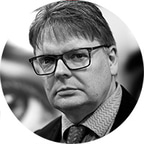
Nick Rumney 
Independent prescribing optometrist
Nick Rumney is an independent prescribing optometrist, and former director at BBR Optometry in Hereford


Comments (0)
You must be logged in to join the discussion. Log in