


16 March 2026
BBR Optometry in Hereford marked a major milestone in 2025 as chairman and optometrist, Nick Rumney, officially retired from the practice after 34 years.
As Rumney embarks on new ventures, and new home-grown talent step up as shareholders in BBR Optometry, Rumney and Nick Black, the CEO of BBR Optometry, contact lens and low vision practitioner, consider how the practice has evolved and what comes next.
Changes in the profession
When considering how the practice has evolved, Rumney noted that it is important to recognise that practitioners from BBR Optometry had been participating in hospital eye care “forever.”
“When I joined, Peter Bishop was running a contact lens clinic for keratoconics and aphakics in the hospital, and Angela Bishop was working a day a week as an orthoptist in the same hospital,” he said.
It was natural, then, that when Rumney joined the practice he also began working in low vision services in the hospital.
“This coincided with the arrival of a new ophthalmologist, Dr John Deutsch, who was much more open to discussions with local optometrists,” he explained. “We started to think about how we might be able to free up space in the hospital – the most obvious one at the time was low vision.”

Following meetings with the Local Optical Committee and Family Health Services Authority, a pilot low vision scheme based in optometry practices in the community was launched in 1994.
Rumney said: “After running for a year, the authority said that it seemed to be working well so we could keep going.”
By the late 90s, discussions were being held around the cataract criteria in order to reduce the number of patients being referred with cataract, who would then be put on a waiting list.
Rumney said: “Within months, the hospital ophthalmologist said: ‘We would like you to be able to do the standard, most common post-cataract examinations.’ This would mean that four to six weeks after surgery, the patient would go to the practice, rather than the hospital, to be signed off.”
For 25 years, Rumney added, Herefordshire optometrists have had clear, defined criteria for cataract. They have been paid a fee to perform a dilated examination prior to referral, and a fee to manage post-operative care.
“There are still places in England where this doesn’t happen,” he said.
Hereford similarly has a scheme for enhanced glaucoma case finding, meaning patients are not referred until they really need to be, Rumney shared.
This level of working between secondary and primary care came into its own in the first few weeks of the COVID-19 pandemic lockdown.
Rumney explained: “The hospital could turn to us and say: ‘We’re redeploying our ophthalmology team into respiratory medicine and we’re not going to have an A&E department, can you optometrists be the A&E fallback position?’”
Optometrists in community practice saw the majority of all A&E referrals, treating or managing to conclusion, he noted, with only a small percentage needing to be referred into the hospital.
“The tragedy is that, subsequent to COVID-19, a lot has been rolled back. The hospital Trusts have returned to an open-door A&E system which is not very efficient,” Rumney said.
“I think the single biggest problem we have got is that the NHS organisation in England is so fragmented. Everything has to be replicated, doubled-up, and reinvented every single time. Whereas in Wales, Scotland, and Northern Ireland, you have a system that works on a national level,” he added.
Investing in the practice
BBR Optometry CEO, Nick Black, explained that the level of fees the practice sets for examinations has allowed for recurrent investment of technology over time.
Taking optical coherence tomography as an example, Black explained that when the practice first introduced the technology: “We realised what a shift in clinical services and knowledge it was for the optometrist to make better decisions.”
“We wanted to offer everybody the best examination. We set the fee for the extended exam at £38 and gave everybody who had an extended eye exam an OCT scan too,” he said. The level of uptake rose to 80% and has been consistently maintained.
Black said: “The investment our patients put in has allowed the optometrist to give them the best outcomes, but has also created the financial basis to reinvest.”

The practice introduced an Optos widefield camera in 2012, adding £5 to the extended examination and private examination fees. Black said: “It paid for itself.”
BBR Optometry has six consulting rooms, which have all received upgrades in the last 10 years.
“It is a cycle of investment that has allowed BBR Optometry to continue this level of clinical expertise. We set out a stall saying: ‘This is the level that we believe is what we should offer,’” he said.
There are always more potential avenues the practice could invest in, Black acknowledged, but noted that as a mature business it is more about making small percentage tweaks.
“We are a finite size – we've pretty much utilised every room in the building. When we choose what we’re going to invest in, we need to justify those decisions,” he said.
Hereford is also a market city, Black highlighted: “It is not the most affluent area in the country – you can still buy a pint of beer for about £2.50, which gives a pretty good measure of the local spending. So there is an understanding that, as a business, there is going to be a finite number of people who want what we do.”
The question becomes: how to communicate the BBR Optometry offering to attract those patients who are seeking that service.
Black said: “We have some visions of the future. Whether that be expansion into the tear clinic, macular degeneration, and expanding our specialist skills.”
Driving the relationship between clinical and retail in the practice is also a key area the team are focused on.
Black said: “We have developed this amazing clinical practice, and over the last 10 years there has been a big shift in terms of the product that we’ve stocked using local or independent frame manufacturers to marry-up clinical skills with what people are wearing and optimising their visual performance.”
The practice has been ISO-registered since 1997, which provides a structure behind the decisions taken by the team.
“It gives a spine to the business in terms of a framework for which you do things – we have a consistency across the organisation and accountability,” Black said.
Further change to the business came in 2006 with the introduction of a direct debit contact lens plan.
Black explained: “We realised – why is it only the contact lens patient who needs to think about their eye care wrapped up in a direct debit?”
The practice team worked with accountants to find the balance and set a direct debit offering for patients and now offers two options.
Black said: “That has driven the relationship between the clinic room and dispensing. What we’ve seen is, since 2006, our average transaction value keeps rising. Now almost a quarter of the monthly turnover is on direct debits. That takes huge financial pressure off an organisation’s cash flow.”
This became “highly relevant” to how protected the practice was during the COVID-19 pandemic and lockdown, Rumney said.
“At the time, I was making the point that, yes we’re an optometry practice, but we have to look at ourselves as a business. We could have been making widgets, we could have been a veterinarian, we could have been lawyers, but fundamentally a business has to be able to run itself,” he said.
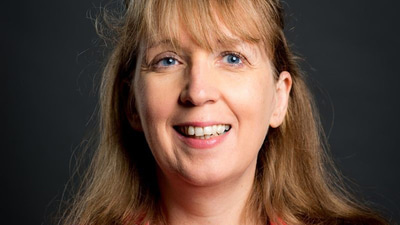
Suzanne Wadsworth joined the BBR team in 2006, bringing with her a wealth of specialist clinical expertise that further strengthened the practice’s offering. Wadsworth has a particular interest in paediatric eye care and has completed additional training in colorimetry and the use of coloured overlays.
In 2016, Wadsworth was appointed to the Board as a director and shareholder, marking an important milestone in her career with the practice.
Reflecting on her appointment, Wadsworth said: “Joining an already well-established leadership team in 2016, alongside BBR Optometry directors Nick Rumney and Nick Black, played a significant role in my development as a leader. We had the opportunity to learn from one another, which was invaluable.”
Joining Hakim Group
It was during this time that BBR Optometry first came into contact with Hakim Group.
During the pandemic, Hakim Group launched Stronger Together webinars, open to the whole profession, which tackled some of the biggest challenges facing practices at the time with advice and support.
Rumney said: “It’s not surprising that the majority of those people chose to join afterwards, it was so supportive.”
BBR Optometry joined Hakim Group in 2020. Looking back, Rumney shared: “I think one of the things that made us attractive to Hakim Group was the fact that the decision to invest in new equipment was always taken on a forward-thinking business plan. What is the return on investment?”
Some pieces of equipment might provide a seven:one return on investment, such as OCT, Rumney suggested, while others like intense pulsed light therapy might provide a two or three:one return, because of the different fee structures.
Much of the decision making behind this planning came from a good relationship with the practice’s local accountants. The practice established key performance indicators, monthly management accounts, and quarterly board meetings.
Rumney said: “Yes, it is an optometry practice, but if you’re going to sit a patient in a chair for 40 minutes – how much does that cost to deliver? How can you make that more efficient or profitable? All those things have to be pulled into place.”
After joining Hakim Group, Rumney took on an advisory role as part of the SharkLink panel of independent practice owners.
Building up the team
The BBR Optometry practice team is made up of 26 people. Comparing this to when Rumney first took up his role in the practice, he said: “I was the third optometrist. There were two dispensing opticians, one part-time, and three reception staff.”
The practice is passionate about upskilling the team and helping them to succeed, including supporting more than 30 pre-registration optometrists over the years. Two people have also completed PhDs with the practice.
“On top of that, five dispensing opticians have come through the practice, countless optical assistants and clinical assistants have trained with us,” Rumney said.
"We’ve seen people within our group go on to shine when they’ve left us,” he said.
With Rumney retiring, it means some changes ahead for the practice team.
He said of the process: “By planning it the way we did – in a phased withdrawal over five years – the rest of the team has made it easy. If you wanted a textbook example of how to manage an exit strategy without getting upset that somebody else is fiddling around with your trainset, I think we can exhibit that.”
Black joked: “Nick has a huge amount of skills. So how do you replace Nick? Well, you get three people.”
Through a process of consultation and information-sharing, three of the existing team members stepped forward to become shareholders: Georgia Wootten, Daniel Read, and Magda Peppa.
Georgia Wootton is an optometrist specialising in therapeutics and independent prescribing.
Wadsworth described: “Georgia works in the hospital setting as well, does laser clinics with the NHS, and is a secretary for the local optical committee. She has done the WOPEC leadership course and is a young optometrist with a lot of strings to her bow.”
Read has been the practice manager for 10 years and has, Black said: “A flair for the spectacle side and a passion that is hard to compare. He is passionate about product, taking the clinical and matching it up with the outcomes.”
Peppa is a dispensing optician and contact lens specialist. Wadsworth shared: “She has an amazing set of super skills and really wants to push that area.”


Comments (2)
You must be logged in to join the discussion. Log in
Anonymous27 March 2026
Can I ask why there is no mention of the Hakim Group ownership on the BBR website ?
ReportLike22
John Davidson20 March 2026
Nice article. Well done team. A very similar journey for me but I'm 10 years behind you Rumney!
ReportLike0