

02 April 2026
On 7 January 2026, the Government published its highly anticipated Road Safety Strategy.
The aim of the strategy is to reduce the number of people killed or seriously injured on roads in the UK. With an average of four lives lost daily in 2024, the strategy sets out targets to reduce road deaths and serious injuries by 65% by 2035.
The strategy commits to review policy areas such as the safety of young and novice drivers, older drivers and motorcyclists, and to implement evidence-led interventions.
As part of this work, the Department for Transport launched five public consultations, covering each of these policy areas, including one in relation to the introduction of sight testing for older drivers.
The sector, and particularly the AOP and The College of Optometrists, have long called for a change to the law that addresses the antiquated means of testing vision for driving that currently exists in UK. While our campaigns have heavily focused on reminding all drivers to have regular sight tests – as the easiest way of ensuring their vision meets the legal standard and is road safe, we have always recognised that this is far from ideal. Without mandatory sight tests there is a huge gap in the law that is failing road users and the public. The Government’s new Road Safety Strategy, and this consultation, is an opportunity to close that gap, and make our roads safer for all.
The AOP and The College of Optometrists have been working together to provide a joint sector response that offers a clear message to government – that optometry is well placed to deliver this reform. As part of the process, we have been liaising extensively with our members, partners, industry, patient groups and stakeholders across the devolved nations.
There is rarely a single solution for complex policy issues such as this one. We wanted to ensure that our consultation response reflects this reality, recognising that alternative viable approaches might exist but to identify what we see as the most effective path forward and make our recommendations.
For this reason, it was essential for us to capture diverse perspectives across the sector to consider what we are saying in terms of practical implementation, alongside potential market and workforce impact, wider societal and health benefits, and in different national contexts. Bringing these voices together strengthens the overall quality of our response but also helps to identify risks, uncover opportunities, and build broader support for the proposed solution. We hope what is broadly a unified position from all corners of the sector delivers effective change, particularly for the affected families who have been campaigning tirelessly to have some closure on this issue.
Our joint consultation response with The College of Optometrists is largely based on our existing principles for implementing the current vision standards for driving. It was important throughout this process to ensure that we remained aligned to our past policy positioning, which is evidence-led, while also continuing to be agile and responsive to differing perspectives.
Read our full consultation response on the AOP website from 11 May.
Fast Forward
1 Mental health awareness week 11–17 May
How do you keep yourself and your team well? Get in touch with OT to share your story.
2 AOP Annual General Meeting and Council meeting 3 June
The AGM will be held at the AOP’s office – find out more
3 Hospital and specialty optometrists conference Autumn
Hospital and specialty optometrists are encouraged to keep an eye on their emails for save the date information for HSOC, returning this autumn.
Rewind
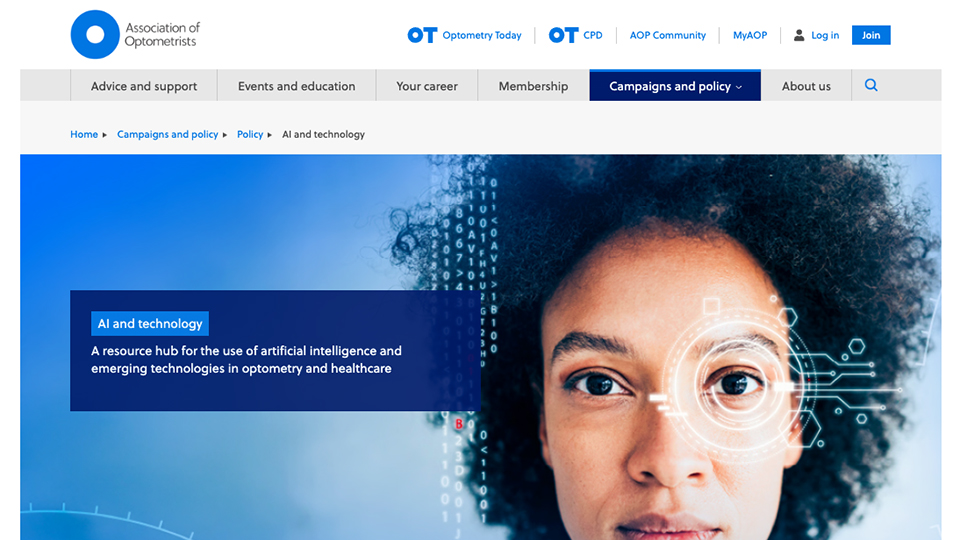
An AOP explainer on... the AI and Technology resource hub
CPD reform proposals

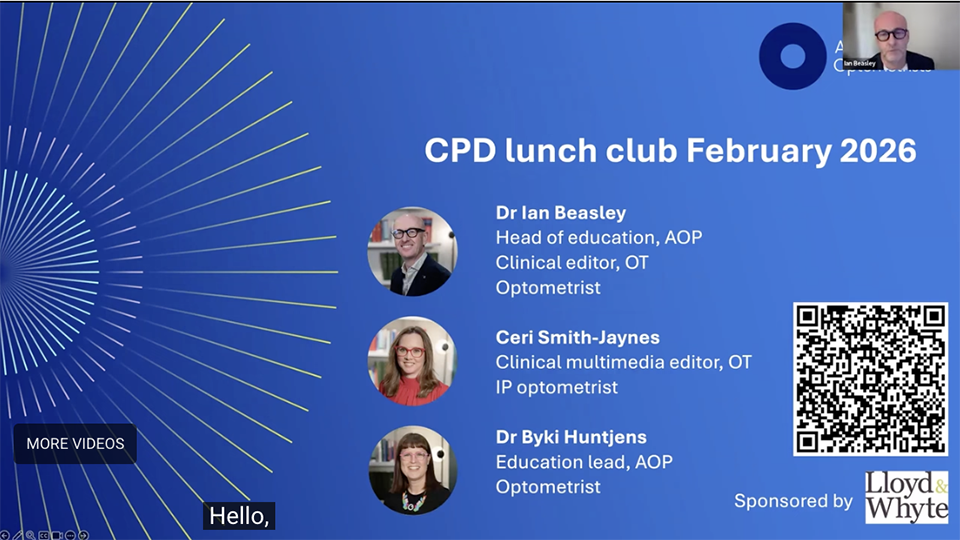
Listen on demand: CPD lunch club
About the author

Serena Box 
Head of media, PR and external affairs
Serena Box is a health communications strategist, with oversight of the AOP’s external affairs team. She drives advocacy, media campaigns and stakeholder engagement to raise the profile of eye health and champion the role of primary care optometry. Serena builds strategic partnerships across the optical, health, and charity sectors, lobbying government to advance eye health goals. She has a strong interest in public health, system reform policy and social equity. Contact her via email to support the AOP’s advocacy work


Comments (0)
You must be logged in to join the discussion. Log in