


31 December 2025
2025 saw AOP representatives hosting events in Westminster, sitting alongside ministers on party conference panels, and popping up to discuss glaucoma awareness everywhere from BBC Morning Live to The Telegraph.
Here, AOP head of PR and external affairs, Serena Box, and AOP clinical and policy director, Dr Peter Hampson, share the highlights and opportunities that the past year has presented with OT.
Serena Box, head of PR and external affairs at the AOP: a glaucoma message that resonated

What has been the most important campaign the AOP has run this year to raise the profile of the profession with the public?
In 2025, the major outward-facing moment was our You won’t see it coming campaign, launched to coincide with Glaucoma Awareness Week. Glaucoma is silent and devastating if missed – and regular sight tests matter more than most realise. That was the story we wanted to tell the public.
But the campaign didn’t stop at awareness. It shone a light on something optometry already does brilliantly: enhanced, optometry-led glaucoma services. It showed the public that care doesn’t always have to live in hospitals, and that neighbourhood optometry is safe, sensible and deeply effective.
There was a moment of validation too. One exemplar service in Gloucestershire, featuring in the campaign, was directly name-checked in the Government’s 10-Year Health Plan as something that has “significantly advanced the shift of eye care from hospitals to neighbourhood settings,” cutting waiting lists, reducing unnecessary referrals, and making life easier for patients. One of those important times where optometry is rightly recognised by officials as a vital component of healthcare reform.
It showed the public that care doesn’t always have to live in hospitals
How would you describe the response to this campaign?

You won’t see it coming: why the AOP is campaigning for glaucoma care
The AOP’s head of media, PR and external affairs, Serena Box, discusses the Association’s latest campaign, which aims to raise awareness of the “silent thief of sight,” and calls on the Government to commission services nationally
After that, the ripple effect took over: the campaign was covered in more than 150 regional print and online articles, plus longer-form features with patients like Matt Weale and former Liberal Democrat MP Paul Tyler.
What particularly stood out on this campaign was the incredible engagement on social media. Across organic and paid activity on LinkedIn, X, Facebook and Instagram, we reached almost 99,000 impressions and drove hundreds of extra visits to the campaign pages. The campaign was seen and heard and the message resonated with people – which in communications terms is what it is all about.
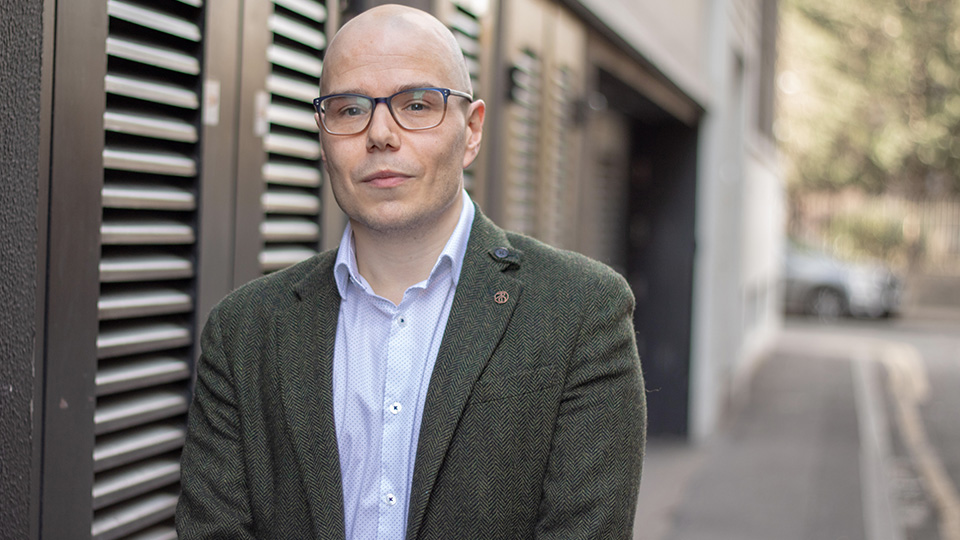
Dr Peter Hampson, clinical and policy director at the AOP: reinforcing the value of optometry inside and outside Parliament
What action has the AOP taken to raise the voice of the profession with policymakers in 2025?
We have been engaging with All-Party Parliamentary Groups (APPGs), and with policy makers, and with parliamentarians. We ran drop-in events, including one at Portcullis House, in Westminster, which was attended by more than 30 MPs.
The aim of these drop-in events is to make people more aware of what optometry does, where gaps in services are, and how patients don’t have access to eye care services everywhere. We have been focusing a lot on this type of work. Hopefully people are paying attention and listening.
We also went over to Northern Ireland to support Optometry Northern Ireland with its work. I’ve been to Wales, and we have been supporting Scotland. We have been trying not to be England-centric.
What results have you seen from that work that has taken place in 2025?
There has definitely been an increase in awareness. More people are coming to us, and we are a bit more visible, which is good. But people having awareness is just stage one.
We know that the General Ophthalmic Services fee doesn’t reflect what the sector can do at the moment. But the reason we go to APPGs and to other events is to make certain that, in future conversations, people do think about us.
The General Ophthalmic Services fee doesn’t reflect what the sector can do at the moment
What would you like readers to know about the AOP’s approach heading into 2026, and how members can support these aims?
Our work in 2026 will be, to some extent, more of the same. Obviously, we will innovate a little bit. But until people have heard and actioned messages that we have about what optometrists can do, we have got to keep repeating those messages.
In terms of our members, if they have interactions with their local MPs, or if they have interactions with commissioners, it’s about taking every opportunity they can to emphasise how much optometry can help, and how.
If members need support in terms of materials, whether that’s briefings or data to help support their arguments, the AOP can help. We would encourage members to get in touch, and fully utilise our support in those conversations.


Comments (0)
You must be logged in to join the discussion. Log in