

05 June 2026
I always wanted to work in healthcare, and I was a science nerd from a young age, so it was always going to be pharmacy or optometry.
No one in my family wears glasses, I don’t wear glasses, and we don’t have any eye problems – in fact, I’m ashamed to say I’d never even had a routine eye test when I decided to go into optometry. This is hilarious to me now, because I’m always saying: ‘Get your eyes tested, get your eyes tested!’ Optometry was completely new to me, but I enjoyed it immediately, and have ever since. I have never thought that I could be doing something else, or that this wasn’t the right decision for me.
I did my degree at Glasgow Caledonian University between 2006 and 2009.
At the time it was the only course in Scotland, but that has changed now. I’ve always found the ocular health and biology side the most interesting. The physics of the lens is obviously important, but it’s the health of the eye – and how it relates to the rest of the body – that fascinates me the most. It still amazes me how much you can tell about general health just by looking at the eyes. I remember thinking, ‘that is so cool.’
It’s the health of the eye – and how it relates to the rest of the body – that fascinates me the most
University was a lot of learning and work, but the reward came when I got to test patients and apply what I had been studying.
I learn best by doing – I can take in the information, but it only really comes together when I can use it.
Chatting to patients changed me: I used to be super shy and introverted and I struggled with that, but working in clinic changed everything. It’s now difficult to shut me up.
I did my pre-registration placement at Specsavers in Perth.
At that stage, everything feels exciting. It was my first time away from home, which was a big thing for me. I learned a lot that year. One of the biggest lessons was not to assume anything. A patient came in with a woman I assumed was his daughter; he corrected me that she was his wife. I’ve never made that mistake again.
The pre-reg year is hard work: you’re constantly balancing studying and being in clinic.
Anyone doing pre-reg would say the same – it’s a tough year and it is worth it, but at the time it feels like it will never end.
However, there’s nothing like the first time you see something you’ve studied, like your first papilloedema. That was the first time I had to call the hospital, and it felt intense, but it’s great when you get the follow-up letter from an urgent referral confirming what it was, the treatment offered, and that the patient is now doing much better.
There’s nothing like the first time you see something you’ve studied, like your first papilledema. That was the first time I had to call the hospital, and it felt intense
I stayed on in Perth for another year, then left and did locum work.
It’s tough going from being in one place to moving between locations – you have to learn different systems, get to know new teams and new ways of working, and think on your feet. Building those skills really helped, and meant I could go from a large practice to a small practice in the same week and still focus on excellent patient care.
As a locum, if you have referrals you need to do them the same day, because you might be somewhere else the next day, so it can be stressful. The flexibility and autonomy is fantastic, but I do not miss doing the tax returns.
There are pros and cons, but if I hadn’t done a regular locum clinic, I’d never have met my husband – we’ve been married 18 months now.
I started my independent prescribing (IP) training just before COVID-19 and qualified in 2022.
It was all thanks to an ophthalmologist who was generous with his time and amazing with his patients; they loved him. I was at an event I knew he’d be at and – which was very unlike me at the time – went up to him and cheekily asked, ‘Would you be okay with supervising me through my IP placement?’
I learned so much from his clinical style, especially how he is with patients and how he explains things. At every turn he put the patient first, which is exactly what I try to do too.
When I was first approached about working with the Specsavers practice I am currently with, I was torn.
It was close by and meant less travel, but they wanted someone full-time. I have a couple of chronic health issues, which means lots of appointments and hospital visits and as they are usually during the week, being able to schedule them around part-time work is much better for me. Plus, I get time to recuperate when things aren’t so good.
I went for the interview at Specsavers in East Kilbride anyway, told them I wanted to work part-time, and I still got the job.
Lots of people live with long-term health conditions, and it’s important to normalise it and highlight the challenges.
The flexibility Specsavers has offered is essential, and I’m lucky to have amazing optometrist colleagues. If I get short notice for a medical appointment, I’ll message our Teams chat and ask if someone can swap a shift – they’re so kind, and always find a way to cover so I can get there.
I make a point of helping patients feel listened to and making sure they understand what I’ve said. I know how frustrating it can be when you don’t feel heard
Everyone has stressful days, when it feels overwhelming and you have to stay late to do paperwork.
For me, the hardest things haven’t been in my career so much as the personal health issues that have made my job harder. There was a period about 10 years ago when I was in and out of hospital a lot, and it was tough.
Because I’m a life-long patient myself and know how it feels to be on that side, I try to make sure my patients don’t feel how I’ve felt at times.
I make a point of helping patients feel listened to and making sure they understand what I’ve said. I know how frustrating it can be when you don’t feel heard, and I never want my patients to experience that.
My top tip for this is to focus on the patient in front of you.
Forget about all the other things you still have to do – the patient is there to see you and has taken the time to be there, so the least we can do is give them our full attention for that time. Compartmentalising is important and it’s taken me years to learn this. I still get days where’s it’s overwhelming, but at the end of the day, we are there for our patients as healthcare providers.
There are so many standout moments in my career, but one that sticks out is quite sad.
I saw a patient who was a keen motorcyclist. He came in because he’d noticed his peripheral vision wasn’t great. There was a loss, and I referred him urgently because he’d previously been treated for – and recovered from – cancer.
Unfortunately, it was awful news from the hospital – the cancer was back, and they had told him he had less than a year to live. I didn’t know what to say. But he kept saying, ‘thank you so much for referring me so urgently – now I know what I’m dealing with, I can make the most of the time I have.’ I think about him often, and hope he got the time he needed to end life well.
When I won the Doug Perkins Award for Clinical Excellence in September 2025, I was completely blindsided.
I had no clue that the partners in our practice had nominated me until I got the video call to say that I’d won. There is a video of me somewhere looking absolutely gobsmacked. After years of imposter syndrome, I finally thought, ‘oh, maybe I actually do know what I’m doing.’
In one-to-ones, the partners always say they can tell how much I care for my patients, but I kept saying, ‘everyone in this store is so good – it’s not just me; we’re all so good at what we do.’
Nominating someone involves a bit of a process – you have to gather colleague testimonials and submit feedback from patients – so it was a lot, and I was really touched they took the time to put me forward. It was pretty cool to meet Doug Perkins, one of the founders of Specsavers, too.
Further down the line, I plan to get the glaucoma certification, because it would be useful and I could help many more people.
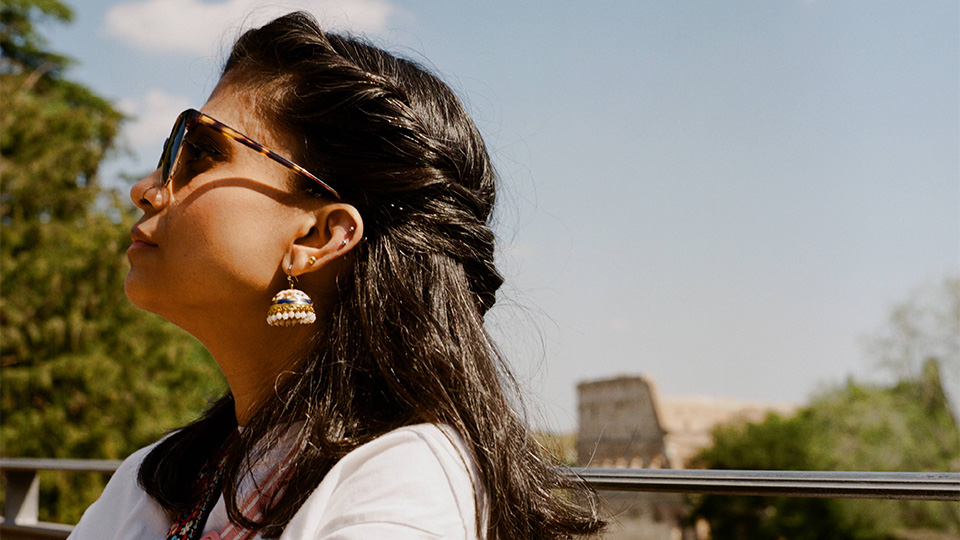
I don’t have other specific career ambitions, but personally my husband and I want to explore as much of Europe as possible. We have just got back from Rome, and I’d love to visit Florence and Granada. It’s the architecture I love, especially seeing how it has been influenced by a mixture of cultures throughout history.
About the author
Faayza Haq 
IP optometrist
Faayza Haq is an independent prescribing optometrist at Specsavers in East Kilbride, and is the Doug Perkins Award for Clinical Excellence winner 2025


Comments (0)
You must be logged in to join the discussion. Log in