


05 October 2024
Hannah Einarson has swapped an hour-long commute for a five-minute walk to work.
Rather than watching condensation make its way down a bus window, she looks out at the green curves of the Cuillin Hills and the pastel houses that line Portree Harbour.
At lunch, instead of grabbing a quick supermarket sandwich, Einarson will return home to make soup or tomato tortellini.
As the only optometrist on the Isle of Skye, Einarson told OT that she was mentally preparing for the experience to be isolating.
However, she has quickly formed connections within the community – she has learned to sail with a local club, while her boyfriend has joined the football team.
“All my patients have been so lovely. When they have found out that I am staying, they put quite a bit of effort into keeping me here,” she said.
Einarson’s appointment in January is the first time in two years that J M MacDonald Opticians has had a resident optometrist – with the Duncan & Todd practice previously relying on locums.
Challenges recruiting optometrists are not limited to the Inner Hebrides, with practices in rural and remote locations across the UK also struggling to hire permanent optometrists.
A survey of more than 2000 AOP members in 2018 found that 47% of practice managers in rural locations had one or more optometrist vacancy.
With a large proportion of patients in their 60s, in her daily practice Einarson sees a range of age-related eye conditions. Tourists also present for emergency appointments with conditions such as retinal detachments and contact lens-related corneal ulcers.
Where appropriate, she will co-manage patients with the local GP practice.
“It’s reciprocal: if they see someone who is outside of their scope, they send the patient to me. If I’m outside of my scope, I can send the patient to them,” she said.
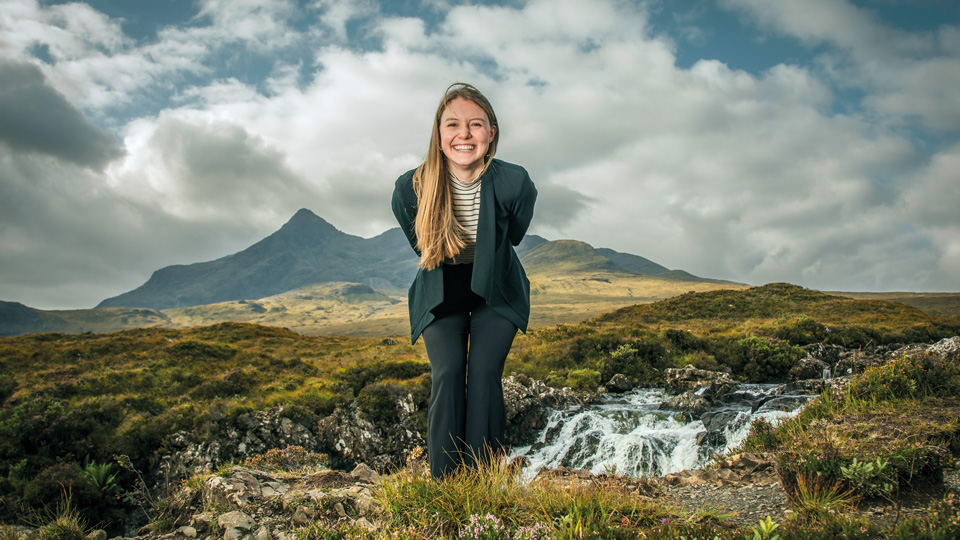
While Einarson has a substantial level of responsibility as the only optometrist on the island, she has found staff at Raigmore Hospital in Inverness to be very supportive.
She shared that although working in a less populated location may seem daunting, she has gained a lot professionally.
“Because you have to depend on yourself, you absolutely gain confidence,” Einarson said.
Einarson, who is Canadian, decided to study optometry at Glasgow Caledonian University (GCU) after realising that Canada’s sole English language optometry programme is based in Waterloo – a 20-hour drive away from Einarson’s hometown of Winnipeg.
“I would have to move regardless so I made the leap over the water,” she said.
After she graduated from GCU in 2022, she worked for a multiple practice based in Kilmarnock while continuing to live in Glasgow during in pre-registration year in 2023.
Einarson shared that after moving to the Isle of Skye, she noticed that the chat at the start of the appointment tends to last for longer.
With limited public transport options on the Isle of Skye, it is not unusual for acquaintances to step in to provide patients with a lift for an emergency appointment.
“Neighbours don’t seem to have any issues dropping whatever they’re doing to help each other out,” she said.
Neighbours don’t seem to have any issues dropping whatever they’re doing to help each other out
One of the challenges of sourcing both locum and resident optometrists within rural and remote areas has been a lack of suitable accommodation.
To address this barrier, Duncan & Todd has taken out a rental within Portree that locum optometrists were based in while working on the Isle of Skye – and which Einarson now calls home.
“That made it really easy to move and not stress about accommodation,” Einarson shared.
Duncan & Todd HR adviser, Janna Swanson, shared that sourcing resident optometrists is a priority for the group because of the consistency it provides both patients and staff.
“Staff morale is probably the biggest thing. We wanted our team to feel like they had someone they could rely on consistently,” she said.
J M MacDonald Opticians practice manager, Emil-Bogdan Petrica, described the recruitment of Einarson to the practice as an “absolute-game changer.”
“Before she joined us, many of our patients, particularly those with complex needs, struggled with the inconsistency of seeing different locum optometrists,” he said.
“It was tough watching them have to repeatedly explain their conditions and not always get the care they deserved,” Petrica highlighted.
He shared that it was clear how much patients appreciated seeing the same, trusted face when they walked through the door.
“It’s been incredibly rewarding to know that we can finally offer this level of consistent care. Hannah’s commitment to our patients has made my job so much easier,” he said.
“Having her here has been a blessing for all of us,” Petrica emphasised.
Duncan & Todd regional development manager, Jo Millar, highlighted that optometrists working in rural and remote locations become embedded in the community.
“Across the highlands, we’re so hospitable. Whoever graces the door, we’re always friendly,” she said.
“You’re greeted with open arms – no matter where you’re from, your background or culture,” she said.
In navigating the workforce challenges in rural and remote areas, Swanson and Millar have broadened their search to Northern Ireland – recruiting pre-registration optometrists from Ulster University.
This year they have made offers to three Ulster University students for placements in Ayrshire, Aberdeenshire and Tayside.
Swanson encouraged optometrists to consider roles outside of areas that are saturated for recruitment, such as Glasgow.
“You’ll never know whether it’s for you unless you try it. My eyes have been opened when I’ve been traveling across Scotland – I’ve caught myself thinking that I would like to live further north,” she said.
University challenge
The launch of the University of Highlands and Islands (UHI) optometry programme in 2019 aimed to address workforce shortages within Scotland.
UHI head of optometry, Alison MacPherson, shared that it is not unusual for patients to wait 10 weeks for a routine appointment at an optometry practice in parts of Scotland.
“It’s well documented that across healthcare, not just within optometry, there are real challenges with recruitment and retention in rural areas,” she said.
She added that the ageing population has implications both in terms patient demand but also regarding the individuals who deliver that care.
MacPherson shared that in rural and remote parts of Scotland it is common for practices to be owned by a single optometrist.
“You’ve got to look at the succession planning. Those clinicians get to a point where they are ready to retire,” she said.
The optometry programme has aimed to connect students with rural and remote employers by offering placements in a wide range of locations – including one placement in the Shetlands and another in the Western Isles.
MacPherson, who is from Inverness, was working in a semi-rural practice before taking up the position at UHI.
“I’ve seen firsthand how important optometry services are in these communities,” she said.
“Working in these locations is really rewarding. That’s one of the things that we as a university feel very passionate about – trying to encourage more people to embrace the idea of working somewhere a bit different,” she said.
The Optometry Scotland view
Optometry Scotland chair, Julie Mosgrove, highlighted that it is more common for optometry graduates to stay close to where they trained – opting for a familiar setting rather than a significant lifestyle change.
Mosgrove added that securing housing in rural areas can be challenging, which adds another layer of complexity to relocation.
“Workforce challenges in rural and remote communities can significantly impact access to eye care by reducing the availability of services,” she highlighted.
“With fewer optometrists, patients may experience longer waiting times, reduced appointment availability, and the need to travel greater distances for care, which can delay diagnosis and treatment,” Mosgrove said.
Optometry Scotland is calling for targeted initiatives to attract and retain optometrists in rural areas – such as financial incentives, enhanced training opportunities, and support for career development.
With fewer optometrists, patients may experience longer waiting times, reduced appointment availability, and the need to travel greater distances for care
Mosgrove shared that the UHI optometry course is expected to have a positive impact on the optometry workforce, both by augmenting the overall number of optometry graduates and increasing the number of locally trained optometrists.
“By conducting placements in the community, students gain exposure to various practices across multiple locations, offering them insight into what it’s like to work in different areas. This programme could help alleviate some of the staffing pressures by encouraging graduates to pursue careers in more rural locations,” she said.
Recruitment challenges
11%
of managers in UK cities report having one or more optometrist vacancy
47%
of managers in UK rural areas report having one or more optometrist vacancy
69%
of managers in rural areas say it is ‘difficult’ or ‘very difficult’ to recruit newly qualified optometrists
Embracing rural practice
Kiera Logan is completing her pre-registration year at a practice in Dunfermline and is part of the first year to graduate from UHI.
Perth was the furthest north that Logan, who grew up on the outskirts of Glasgow, had travelled before she began her course in Inverness.
As part of a small cohort that navigated the hurdles of the pandemic together, Logan shared that UHI optometry students looked out for each other during their course of study.
During her study, she completed placements in Stonehaven and Forfar. If everyone in both towns went to a concert at Wembley Stadium, only a third of the seats would be full.
Logan observed how staff would take time with patients – who were often elderly and had travelled some distance for their appointment.
Turning to her future career plans, Logan shared that she would prefer to work in a rural area.
“In terms of the next five years, I would like to be able to find a practice that I can work in permanently, so that I can start building relationships with the patients in that area,” she said.
Sea change in the south west
In 2011, the University of Plymouth launched an optometry programme – with one of the aims being to address recruitment challenges in the south west of England.
Professor Phillip Buckhurst, who helped to establish the course, told OT: “The south west is one of those areas where it is very sparse in terms of the numbers of optometrists. That is still the case – but there were even bigger shortages before we opened.”
At present, around one in five students who study optometry at the University of Plymouth come from the south west.
“That’s lower than we’d like it to be, but it has risen over the over the years,” he said.
The university has a series of outreach initiatives that aim to boost the proportion of optometry students who come from the local area.
Around 40% of students graduating from the University of Plymouth optometry course stay in the south west – which means that now when Buckhurst visits his local practices, he often sees his former students.
“That is lovely to see. So many of our students have gone on to own or manage practices here,” he said.
Buckhurst, who is originally from Cheshire, relocated with his wife to Plymouth to work at the university.
“Before the university was looking to offer optometry, it never occurred to me to move to the south west. Now I’ve lived here, I realise how wonderful it is,” Buckhurst shared.
“It is a holiday destination for a reason,” he highlighted.
An employer’s perspective
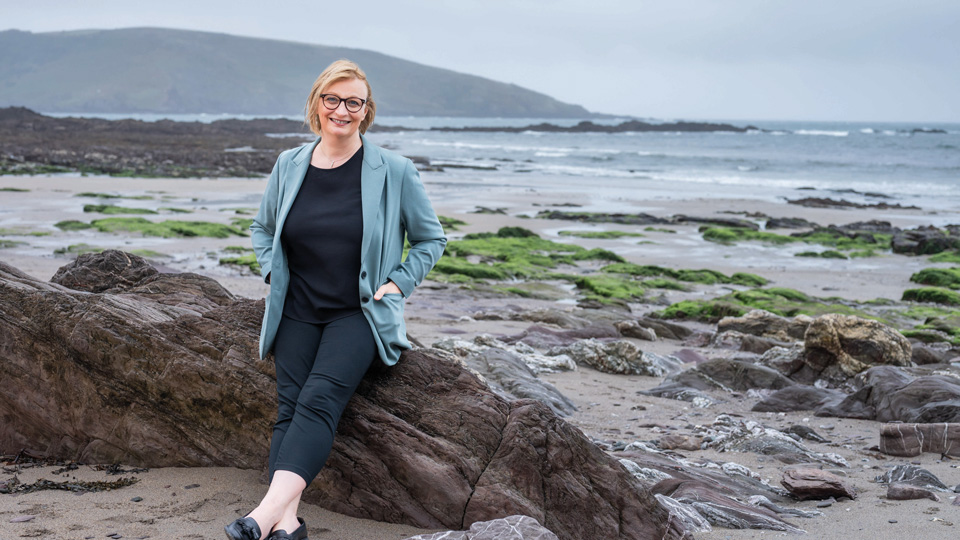
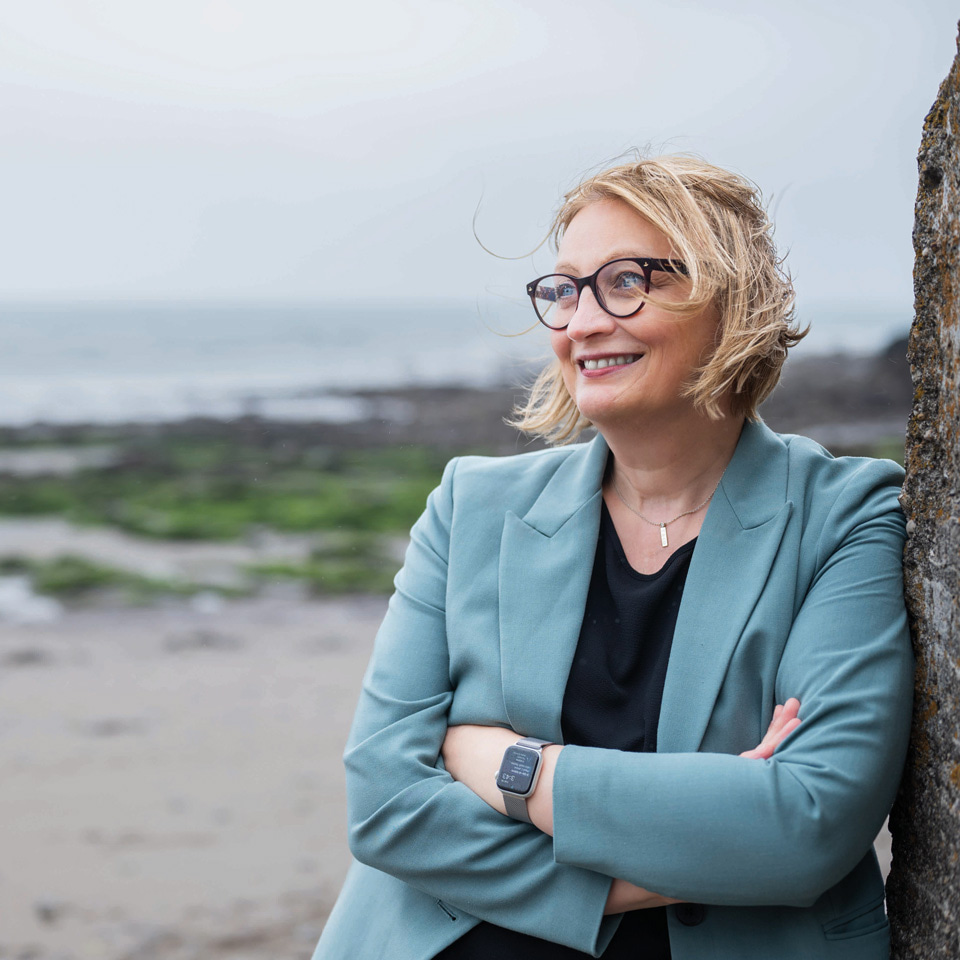
Optometrist Dr Josie Forte owns Specsavers practices in Plymstock, Marsh Mills and Plymouth city centre, alongside her Plymouth Hearcare business. She toldOT that when she became a partner in the Plymouth practices in 2014, the optometry programme had not been open long enough to have an effect on workforce challenges.
During that time, patients might wait three to four weeks for a routine appointment.
Forte struggled to convince optometrists to take on permanent positions in Plymouth, while recruiting locums was also challenging because of accommodation shortages during the summer months.
“People thought that there would be this instantaneous flood of optometrists, which didn't happen,” she said.
Fast-forward to 2024, and most of the pre-registration and newly-qualified optometrists Forte employs are graduates of the University of Plymouth.
Her practices are less reliant on locums and waiting times for appointments have dropped.
“We’re beginning to see, certainly in the town centre, the fruits of that labour,” Forte said.
However, she added that even 10 miles from Plymouth, there remains a recruitment problem.
Forte highlighted the need for the broader industry to support the university in addressing workforce challenges.
“It has been 13 years of building relationships. You have to open your doors and support students when they arrive,” Forte said.
Forte sees offering careers in optometry as a tool for social mobility in the south west. Around one in five households in Plymouth earn less than £17,500, while the neighbourhood of Stonehouse in Plymouth is among the most deprived in England.
She shared that before the university opened, there was limited awareness of optics as a career when she went to speak to local schools.
“Particularly in the south west, you were trying to explain what optometry is when there was no history of study within the local area,” Forte shared.
“But now we have the university on our doorstep I think we’re starting to break that barrier down,” she added.
Forte observed that there is a range of rewarding careers available within optics, providing opportunities for people in the surrounding area.
“First and foremost, the most important thing is that the service is provided, but if you can get as many local people involved in offering that service, there’s an added sense of pride in helping people in your local community in other ways too,” she shared with OT.
Generation rx
A school talk by Forte at Plymouth High School for Girls prompted Emily Todd to become interested in optometry as a career.
After her biology teacher thought the profession could be a good fit for Todd, she contacted Forte, who arranged for her to come in on a Saturday.
“I did the work experience and knew that this was something that I wanted to move forward with,” Todd said.
“I saw what an impact the staff were having on someone’s life in such a short period of time,” she shared.
Todd was offered a Saturday job, studied optometry at the University of Plymouth, and now works at Forte’s Marsh Mills practice.
Behind the cover story

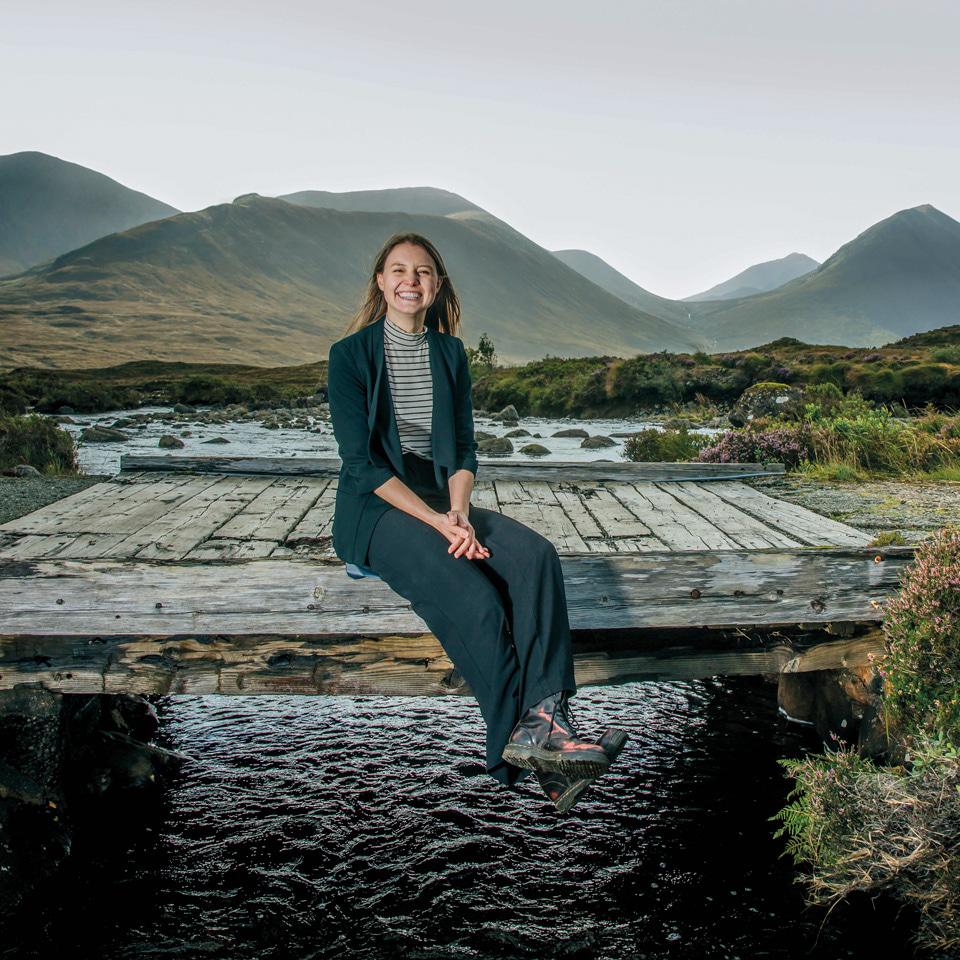
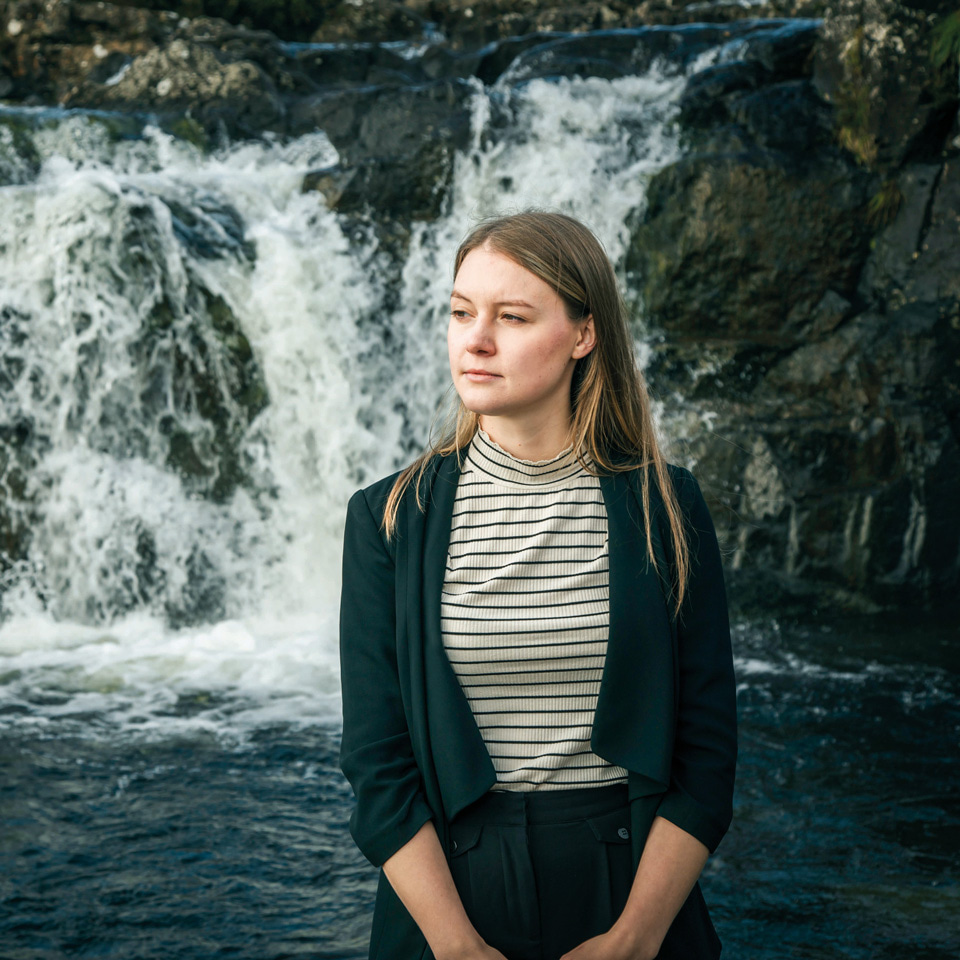
Optometrist Hannah Einarson is photographed on the Isle of Skye near Sligachan with Allt Dearg Cottage seen in the distance
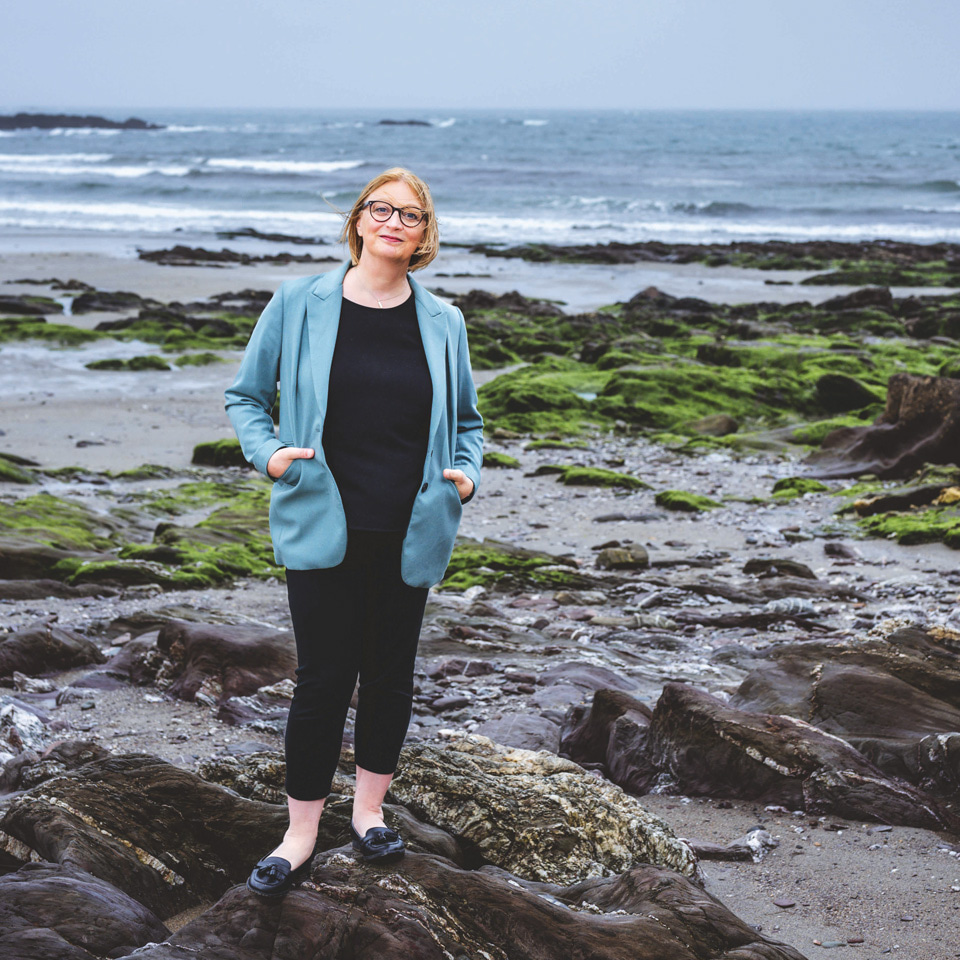
Optometrist Dr Josie Forte told OT that chilly conditions kept all except one resilient beach goer away during the photo shoot: “She removed her outerwear to reveal a swimming costume and went for a choppy swim. Devon people – robust”
Todd told OT that she is unsure whether she would have studied optometry if a course had not been available within Plymouth.
“I don’t think I would have been happy living away,” she said.
“I know some people want to move as far as possible from home, but there are a reasonable number of people who just want to stay where they are,” Todd highlighted.
Forte shared that it has been rewarding to observe Todd’s career journey.
“I’ve watched her progress and she has been very successful both inside and outside of work,” she said.
Eva Oberg chose to study optometry at the University of Plymouth after growing up in Castlebar – a town with a population of around 12,000 in County Mayo, Ireland.
She saw the south west as a region offering a similar relaxed atmosphere to her hometown, with the added benefit of more daily sunshine hours.
“Birmingham, London or Manchester would have been too much for me and too many people. I wouldn’t have known even how to navigate the city,” Oberg said.
She valued the relatively small cohort size at the University of Plymouth, which enhanced the accessibility of teaching staff.
Oberg completed her pre-registration period at Forte’s Plymstock practice – a suburb on the outskirts of Plymouth that has a slightly slower pace to the city centre practice.
After she graduated in 2018, Oberg continued to work at the Plymstock practice before transferring to the city centre practice this year.
“From day one, I had a really good rapport with patients. I still see patients who have followed me over from Plymstock,” Oberg shared.
Oberg has purchased a house with her boyfriend, who is from the south west. Outside of work, she can be found walking, kayaking or cycling.
“My partner and I have a small dog – so he is often in the backpack,” she said.
“I never really wanted to move back home because I was so happy here,” Oberg shared.
The rise in locum working
The 2024 General Optical Council (GOC) registrant survey found that 29% of optometrists worked as locums. This is an increase from the 2021 GOC registrant survey, when 22% of optometrists worked as locums.
The 2024 GOC registrant survey found that 9% of optometrists planned to switch to locum work within the next two years.
Southampton-based optometrist, Rebecca Rushton, switched to locum work in March 2012.
“I became a locum for the flexibility: to be able to have time off whenever I wanted it but to have the ability to work more and earn more if I needed it,” she said.
She shared that while some people see working as a locum as a ‘stop gap,’ she cannot imagine going back to a permanent role.
“I’ve been doing this for over 12 years and absolutely love it,” she said.
Francesca Marchetti, who works as a locum optometrist in the West Midlands, highlighted the diversity of roles that she has been able to engage in as a locum –including within hospital optometry, academia and professional bodies.
“Being a locum allows me to do all of these things and do them well,” she said.
South Staffordshire-based locum optometrist, Frank Eperjesi, shared that the flexible nature of the role gave him time to pursue interests outside of eye care – including tennis, football, DJing and writing children’s books.
“I don’t have to go cap in hand to any one or fill out loads of forms to get time off,” he said.
Sam Phillips is entering his sixth year of locum work after beginning this mode of practice in 2019.
“I have worked in many domains in this time: multiple, domiciliary, independent and most recently in a prison. I currently work in the latter two areas,” he shared.
Reflecting on his decision to become a locum, Phillips shared that this way of working gives him the freedom of choice to explore many different areas of optometry.
“I became a locum as I recognised that the world of optics is large, and I had experienced so little of it at the time. Committing to a full-time contract would mean that I was tethered to one place of work,” he said.
Working as a locum gives Phillips the ability to take holidays when he wants to without the need to seek approval from a line manager, and selecting his preference of days and times to work.
“I’ve known locums that travel the country and work as they go. There are so many ways the flexibility comes in handy,” he said.
Phillips also points to the financial rewards of locum work and the opportunities for networking.
“I found in my first two years post qualification I knew my immediate colleagues and university friends. Since working as a locum, I have lost count of the number of optometrists, dispensing opticians and ophthalmologists that I have formed connections with. It’s incredibly handy for questions and advice or even to find out about new opportunities,” he highlighted.
Talent acquisition manager at Hakim Group, Jennie Fowler, acknowledged that locums play a “vital role” within the workforce.
Earlier this year, Hakim Group launched an app to provide locum optometrists with easy access to shifts at independent practices within the group.
When registering, locum optometrists can input preferences – such as travel radius and preferred shift times.
“The app allows locums to set minimum shift rates, submit the rate they would like to receive for a shift, and directly negotiate their fees with a practice. Booking and cancelling shifts can be done on the app,” Fowler said.
Seeking balance
Among the more than 2000 optometrists polled by the GOC in its 2023 registrant survey, 28% said they planned to reduce their hours within the next two years.
Within this group of optometrists, 68% cited work-life balance as a reason for reducing hours, while 58% said the decision was taken to reduce stress, burnout or fatigue.
Head of people at Leightons Opticians and Hearing Care, Karen Price, shared that since the pandemic, work-life balance became more important to many people.
“Many of our roles have flexible schedules and initiatives, allowing employees to prioritise their overall wellbeing so they can enjoy a healthy work-life balance,” she said.
Fowler highlighted that Hakim Group is committed to helping team members reach their full potential – both within and beyond the workplace.
“We enthusiastically engage in conversations about flexible work arrangements that cater to the needs of both our team members and customers,” she said.
Sight loss certification by optometrists
The introduction of sight loss certification by optometrists working on the High Street and within the domiciliary sector in Wales is one way that the workforce is adapting to meet the needs of an ageing population.
Welsh optometrists issued Certificates of Vision Impairment (CVI) to 101 patients with bilateral atrophic age-related macular degeneration (aAMD) between May 2023 and May 2024.
The task, which was previously carried out by ophthalmologists working in hospital, has been extended to optometrists with relevant qualifications under the General Ophthalmic Services Wales (GOSW) contract.
CVIs have been issued both within High Street optometry practices and by domiciliary optometrists working in patients’ homes. Around one in five (18%) of CVIs were completed in a domiciliary setting.
“Not only is this a benefit to the patients in being able to access care closer to home in a timely manner, but for the first time in the UK, optometrists with advanced training in low vision have been able to perform this function,” national GOSW clinical lead, Rebecca John, told OT.
She highlighted that the service was introduced following research that found optometrists within the Low Vision Service Wales (LVSW) performed at a comparable level to ophthalmologists when identifying eligibility for certification of low vision impairment.
Follow up research exploring feedback from patients has found support for the provision of CVIs by optometrists.
John noted that patients with condituons other than dry AMD would like to access certification in primary care.
“We would like to see the types of conditions that LVSW accredited optometrists can certify expanded,” she said.
There are around 200 optometrists within Wales who have the appropriate training to provide CVIs – around a quarter of the nation’s optometry workforce.
John highlighted that the initiative means patients who have been referred to the hospital eye service for certification can now be seen in primary care – which frees up appointments.
Wales Council for the Blind director, Owen Williams, shared that without the opportunity to receive CVIs in their own home, it would be challenging for patients with restricted mobility to access certification.
“Now, the patient will get all benefits of certification without having to make an appointment with an ophthalmologist at the hospital. Given the waiting lists to see an ophthalmologist, this is a great advantage to patients with bilateral dry AMD,” he said.
“With around 200 LVSW-accredited optometrists throughout Wales, we would expect to see a much more even spread of CVIs being issued across the country. Previously, with fewer people able to certify patients, there was evidence of an uneven distribution of certificates being issued,” he said.
Williams shared that increasing access to certification helped patients to connect to additional support in the community – such as self-help groups, emotional support, fitness and wellbeing opportunities or help with staying in employment.
“There are many ways a patient can be helped beyond medical interventions, and we see the optometrist as a key figure in the process of socially prescribing and referring to other organisations,” he emphasised.
Williams added that an additional benefit of enhancing the availability of CVIs is that this data become a more accurate reflection of sight loss within the population.
“Epidemiologists can make use of the certificates to identify trends in sight loss that, in turn, can contribute to better service planning,” he said.
I feel proud to be one of the optometrists providing certification as part of optometry services in Wales
Domiciliary optometrist, Lisa Evans, shared that being able to provide CVI to patients in their own homes avoids the potential stress of an ambulance transfer to hospital.
Evans shared that while certification can be an emotional milestone for patients, she takes the time with each person to explain what certification entails and the benefits of it.
“This may involve signposting to various local support networks including NHS and social services, such as a rehabilitation officer for the visually impaired, the NHS Wellbeing Team or the NHS Frailty Team,” Evans shared.
She highlighted that low vision optometrists have “excellent links” with charities who support people with sight loss.
“Being qualified to prescribe various aids appropriate for patients’ needs under the LVSW, enables us to enhance patients’ daily living and quality of life,” she said.
“It is a rewarding part of optometry as it empowers patients to move forward, develop a more positive outlook of life and importantly, feel less isolated,” Evans highlighted.
“I feel proud to be one of the optometrists providing certification as part of optometry services in Wales,” she concluded.
Sonia Mazarelo is an optometrist who practises at the Tonypandy and Porth branches of Davies & Jones Optometrists.
She has undertaken six CVIs for patients to date, with her first completed in December 2023 – only a month after the initiative was first introduced.
“Patients are very positive and happy that the CVI can be done in a relaxed practice setting – with family or friends present if preferred,” Mazarelo highlighted.
Being seen in practice avoids a longer trip to the hospital, Mazarelo added.
She shared that patients are pleased with the short waiting time for a CVI in practice, which means that they can access support sooner.
“This is of great benefit to them, especially if they live alone or have other sensory problems,” Mazarelo said.


Comments (0)
You must be logged in to join the discussion. Log in