


07 August 2026
With the role of optometry expanding in the provision of glaucoma care, technology is evolving alongside these advancements to provide reliable data and a comfortable patient experience.
David Thickens, chief executive officer at Grafton Optical, highlighted that visual field testing remains a key component of glaucoma detection and monitoring, adding: “As glaucoma monitoring continues to expand within community optometry, practices are looking for technologies that can support efficient workflows while maintaining high clinical standards.”
The Rexxam Field Navigator, distributed by Grafton Optical, uses advanced eye-tracking technology within a lightweight headset to perform visual field assessments.
Thickens explained: “The Field Navigator offers an alternative approach to conventional perimetry that aims to reduce the impact of factors such as delayed reaction times, missed button presses and fixation losses, helping clinicians obtain reliable visual field data.”
Unlike conventional perimetry, the device continuously monitors eye movements and gaze behaviour throughout the test, analysing the results to assess visual field sensitivity while objectively monitoring fixation.
“This can be particularly beneficial for elderly patients, those with dexterity issues, or individuals who find traditional visual field testing stressful or tiring,” Thickens shared.
The headset is designed to be lightweight and comfortable, with a straightforward testing process that is easy for patients to understand.
The eye-tracking approach might help reduce patient-related variability associated with button-response testing, supporting the collection of reliable data.
The device can also be operated without the need for a dedicated dark room, helping to create a more controlled testing environment.
Thickens said: “Practices may benefit from being able to offer patients an alternative visual field testing experience, particularly for those who have previously struggled with conventional perimetry, for example, patients with Parkinson’s disease.”
With community optometrists playing an increasingly important role in glaucoma detection, referral refinement and monitoring, Thickens said: “Reliable visual field assessment is fundamental to these services.”
Devices such as the Field Navigator can support confidence in visual field measurements and informed clinical decisions, the company suggests.
“As pressures on hospital eye services continue to increase, technologies that enable efficient, patient-friendly and reliable testing within community settings may help support the continued development of enhanced glaucoma services closer to patients’ homes,” Thickens explained.
He added: “Ultimately, technologies that improve patient comfort and test reliability can help practices deliver high-quality glaucoma services with confidence.”
Empowering optometrists
The Perivision VisionOne is a VR-based perimeter with artificial intelligence-optimised visual fields distributed by BiB Ophthalmic Instruments.
The system uses a patented algorithm called Sequentially Optimised Reconstruction Strategy to reconstruct the full visual field from a smaller subset of test locations.
Tim Baker, managing director of BiB Ophthalmic Instruments, explained that this approach improves speed whilst maintaining accuracy and repeatability.
“There are both monocular and binocular testing strategies, including the usual 24-2, for example,” he said.
The stimuli are rendered on a spherical surface within the headset to mimic standard bowl perimetry, meaning the results are closer to what patients and clinicians are used to.
Built-in sensors monitor gaze in real-time, automatically prompting the patient to re-fixate, or adjusting the test for accuracy.
The system operates with a cloud platform, with clinicians configuring tests on the headset and analysing the results on a web dashboard providing standard EMR-compatible outputs (PDF/DICOM).
Baker emphasised: “There is no risk regarding loss of data or GDPR.”
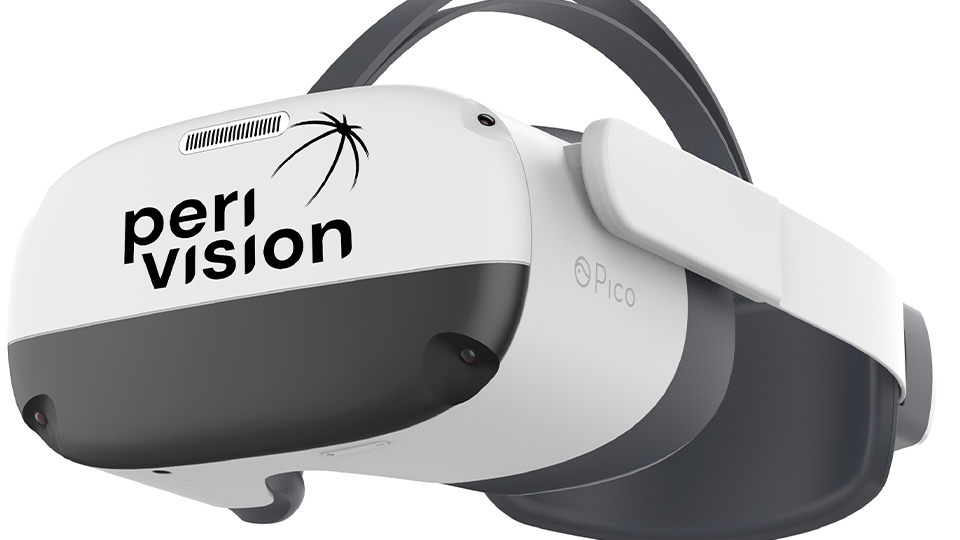
Describing the benefits of a headset system for visual fields, Baker said: “They are comfortable for the patient, but it’s also easier to avoid fixation errors and fatigue problems.”
He explained: “Patients can sit in any comfortable position, lean back, or even be tested in a wheelchair since no chinrest is required. The device is lightweight and can be adjusted to almost any head size.”
Test times are up to 70% faster than standard SITA strategies, he noted, suggesting this can reduce fatigue during testing, while the system also uses auto-occlusion to allow patients to keep both eyes open while testing each monocularly.
An automated voice guide, which is available in multiple languages, provides real-time instructions.
For practices, the system can be ideal as testing can be performed in any chair or exam room, while any staff member can be trained to perform the test.
“The rapid tests could be conducted in the patient chair in the consulting room, for example, whilst clinicians look at OCT or imaging results or write up notes,” Baker said.
There is a strong correlation between VisionOne and the gold standard Humphrey Field Analyzer for mean deviation, with a reported R value of 0.91, the company shared.
Considering what the device brings for practices, Baker said: “This technology empowers optometrists to manage glaucoma more effectively in local settings.”
With the technology, high-frequency testing is more feasible, which can help detect progression up to 10 weeks earlier than routine schedules, Baker suggested, adding: “Modern opinion suggests patients with active perimetric glaucoma should have at least nine visual field exams conducted every year.”
Describing the test as less intimidating, Baker proposed that patients are more likely to return for regular monitoring, improving long-term outcomes as a result.
The portability of the device increases access, supporting mobile clinics and home-based monitoring for patients with mobility issues.


Comments (0)
You must be logged in to join the discussion. Log in