


26 September 2024
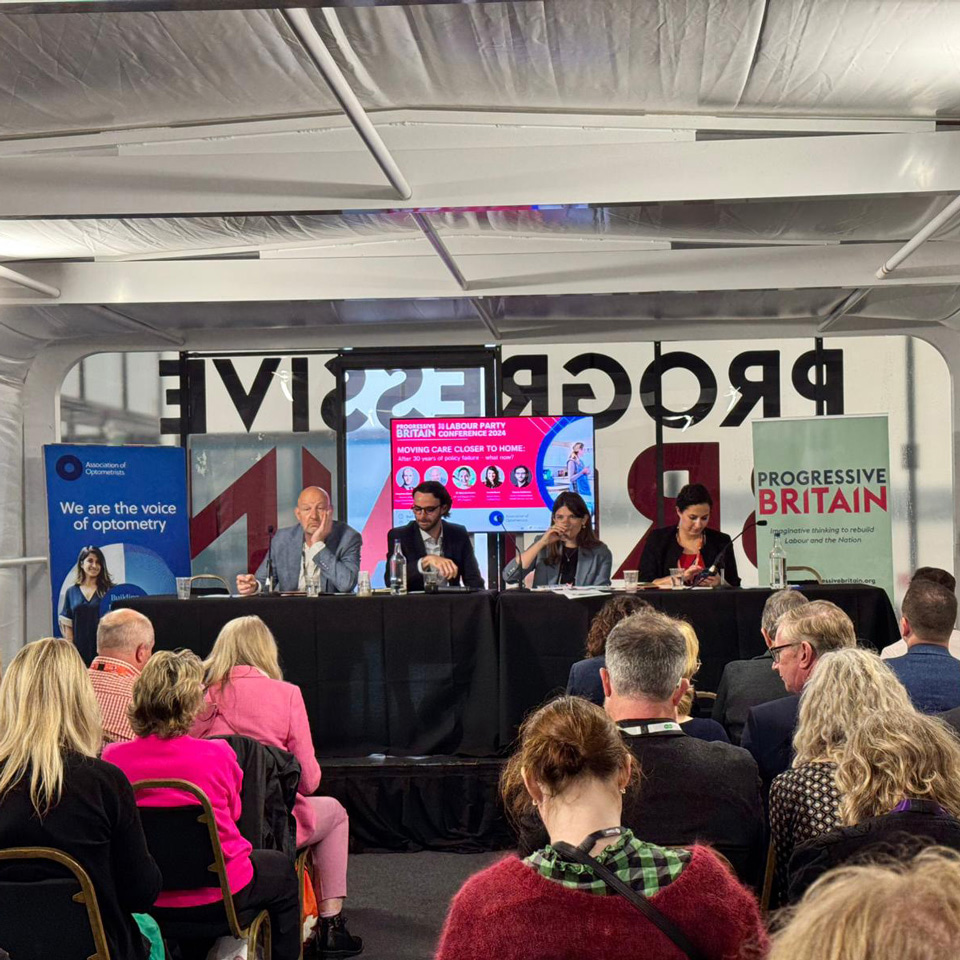
Bringing eye care closer to home was a key topic of discussion during an AOP fringe event at the Labour Party Conference in Liverpool.
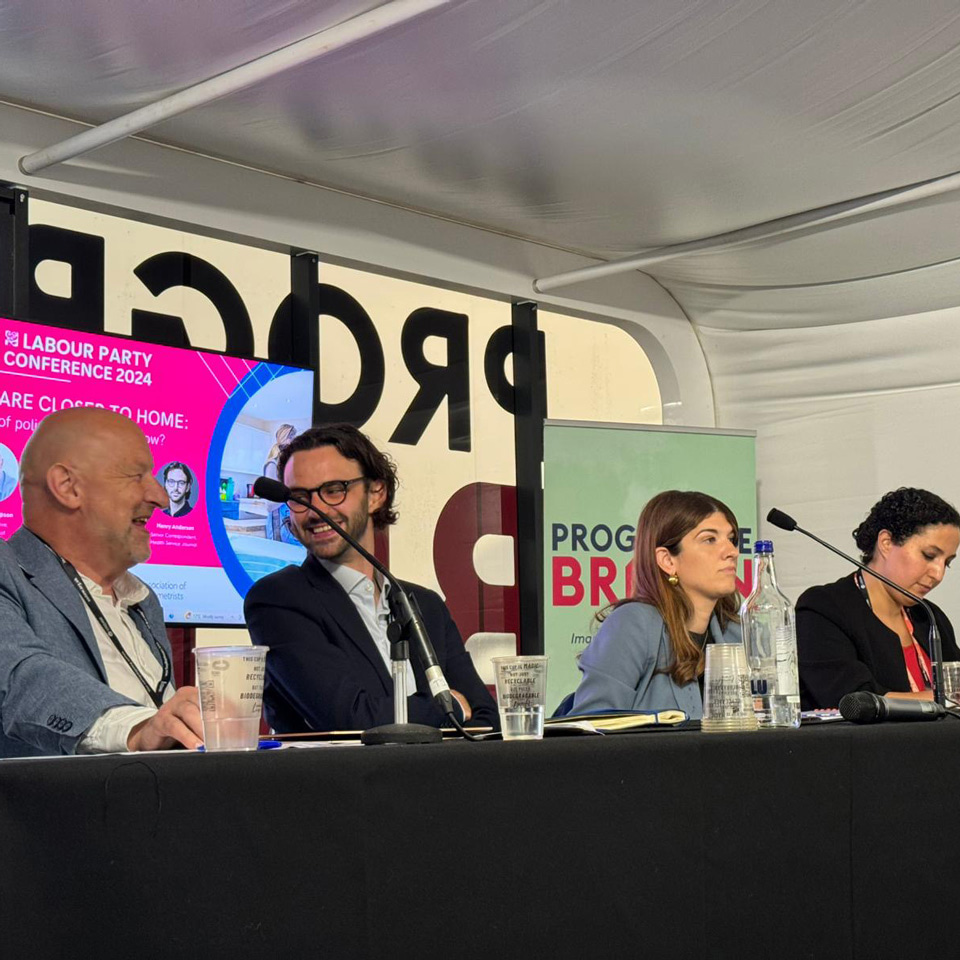
The event, entitled Moving care closer to home: after 30 years of policy failure – what now?, took place on the afternoon of Sunday 22 September.
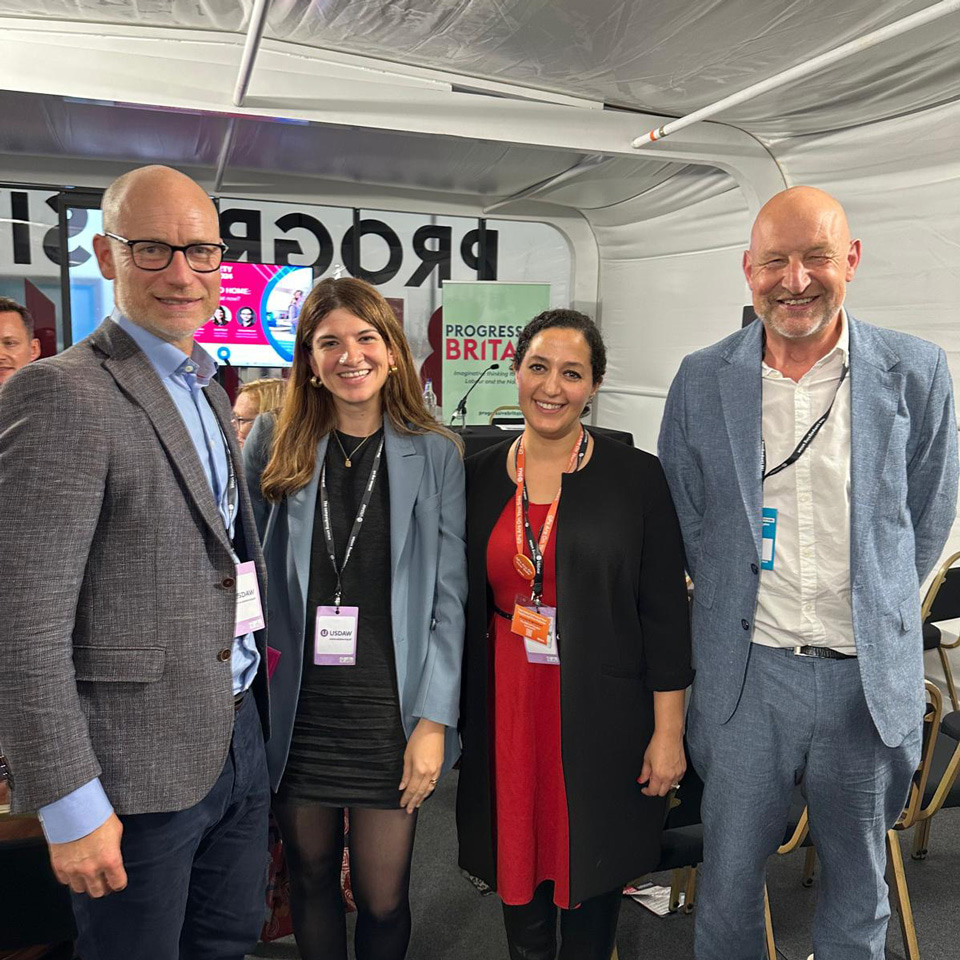
The panel included Minister of State for Care Stephen Kinnock MP, alongside Adam Sampson, AOP chief executive.
The hour-long discussion focused on the Government’s failure to grow and invest in primary and community health and care services over the past three decades, and how in this context care closer to home can be made a reality.
Joining Kinnock and Sampson on the panel were GP and deputy chair of the British Medical Association’s General Practitioners Committee for England, Dr Samira Anane; Sarah Reed, a senior fellow at the Nuffield Trust, and Henry Anderson, senior correspondent at the Health Service Journal.
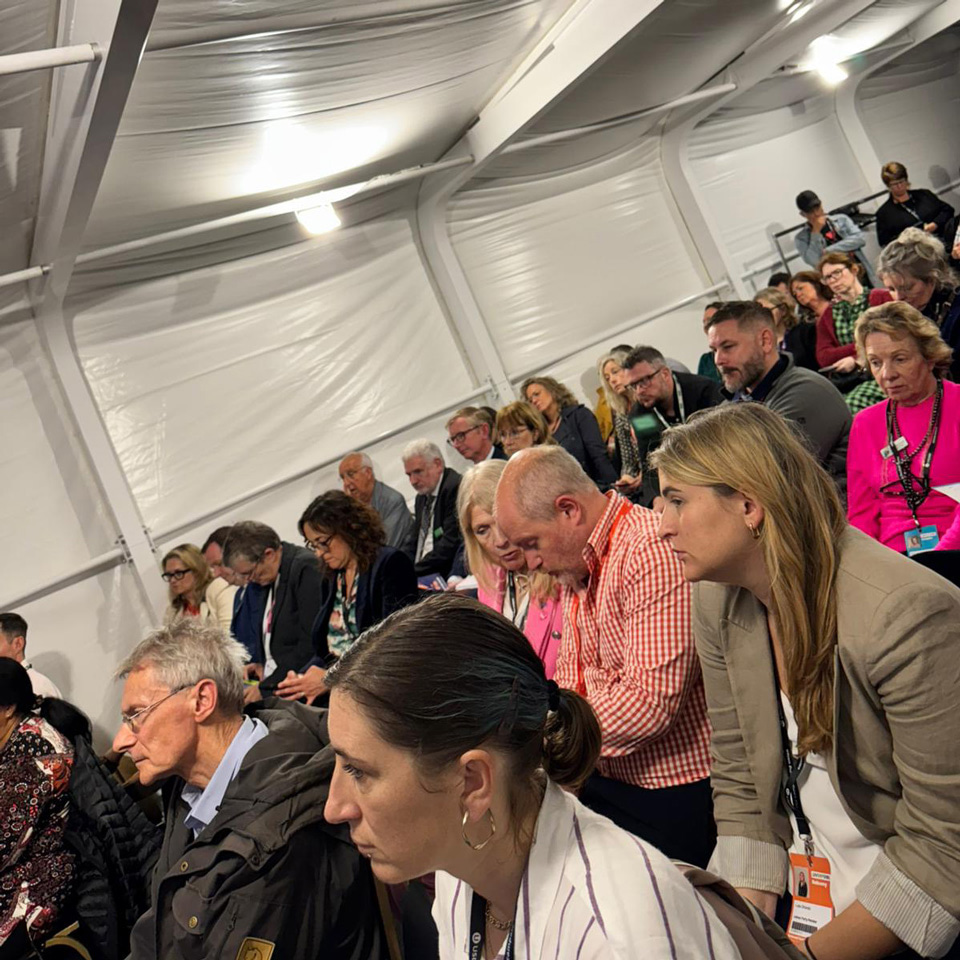
The AOP partnered with thinktank Progressive Britain for the event, which was attended by an audience of around 60 conference delegates.A seat at the table
The way forward
Sampson said that the panel presented an opportunity to touch on a number of important issues.
It also provided a chance to engage policymakers on what is going on in optometry on the ground, he said.
“In the manifesto and in the election campaign, the Labour front bench made repeated references to the potential for great use of High Street optometry to reduce waiting lists,” Sampson told OT.
“We wanted to engage very quickly with the new administration, to build on those positive indications and try and turn them into firm commitments.”
Sampson hopes that an affirmed commitment to making more use of optometry will be reflected in the Government’s 10-year plan for health.
This could potentially see “a significant shift away from the dominance of secondary care into a greater use of primary care,” he said.
Health secretary, Wes Streeting, emphasised his ambition to “end two-tier healthcare in our country for good” during his conference speech on Tuesday 24 September.
Preventative care, precision medicine, and personalised treatment “are no longer just for the few, but for the many,” Streeting said.
He added that a reformed NHS will move from “analogue to digital, from hospital to community, from sickness to prevention.”
“Optometry has a large part to play in this,” Sampson believes.
Alongside the Labour Party conference, the AOP attended the Liberal Democrat conference in Brighton from 14–17 September, and will have a presence at the Conservative conference in Birmingham from 29 September–2 October.
Speaking about political party conference season overall, Sampson noted: “There does seem to be a growing awareness of the role that optometry can play. What we’ve got to do is capitalise on that and turn it into firm action.”
Meetings with health ministers and advisers, with key stakeholders in primary care including GPs and pharmacists, and continued relationship building with thinktanks will be key, Sampson said.
“It’s going to be a very busy autumn,” he added.


Comments (0)
You must be logged in to join the discussion. Log in