

06 August 2026
At the start of 2017 I was looking forward to an early retirement later that year after almost four decades in practice. I had already cut down my hours, was relocating and was afraid of getting insufficient clinical time to maintain competence.
Retirement these days is a new chapter rather than an ending, and there were lots of other things I wanted to do outside of the consulting room. Coinciding with this, I read an article in OT about a new Peer Support Line and thought volunteering would keep me within the optometry community, using my experience of trying to handle tricky practice and personal situations.
It was perfect timing as I wasn’t really ready to walk away from optics completely.
I applied to be a volunteer for the service when it launched, and was successful.
I went along to the training that all volunteers complete ahead of joining and taking calls thinking I would be pretty good at problem solving – after all it’s what optometrists do. However, I quickly discovered this was definitely not what that the PSL service was about.
Whilst all volunteers who man the service are well qualified to solve problems aplenty in the consulting room, the role of a PSL volunteer is not to give advice. It is to provide a listening service, give support not answers.
We deliberately only hear one side of the story.
This took me well outside of my comfort zone as I had not previously thought about the value of this. As volunteers, we were there to offer a confidential, safe space for callers to explore their feelings, totally non-judgemental and empathetic.
We deliberately only hear one side of the story
Becoming a volunteer
The initial training was at the AOP’s offices in London and led by Rosie, a Vet PSL come Samaritan trainer, who informed us we could expect to hear problems relating to anything from work-related stress, bullying, and impending complaints or GOC cases to family problems, mental health, and self-harm…or a combination of these.
The initial and ongoing training involves presentations, small group discussions and example caller issues to consider. It covers sensitive and difficult topics – the AOP understands that some calls may spark strong feelings for a volunteer depending upon their own personal experience.
Our volunteer group sessions are a safe space where we can learn and are not judged, and all discussions are confidential. They always end with the opportunity to share something good that has happened, and there is an amazing bond of friendship and mutual support.

“I am usually someone who just gets on with things, but I suddenly couldn’t”
A volunteer optometrist who supports the AOP’s Peer Support Line shares how their personal experience and how it led to volunteering for the free to use support line service
The first caller
Importantly, when taking a call we, and the callers, remain anonymous, using a pseudonym if we wish. This allows callers to open up without fear of anyone else knowing who they are. It is such a valuable way of dealing with a situation as it gives them the tools to find a way forward themselves.
They may well have plenty of friends or family who do not understand the joys of being in a consulting room, or are very happy to say what they would do, but that’s not always helpful.
It was not easy taking those first few calls, but I soon settled in, sometimes telling myself it was a good thing I didn’t actually have to problem solve.
The first call I took on the PSL was seemingly a signposting to AOP membership for a mature optometrist having a change of job after many years in the same practice. I was slightly nervous beforehand but we always give the caller the opportunity to talk and we ended up spending an hour chatting about changes in the profession over the years, the anxiety of moving to a new environment and the importance of respecting other staff members. Things that only another optometrist can fully understand.
Over the years, there have been several repeat callers who just need to offload and find the service beneficial to do so. In addition to what happens on my on-call day, I feel that the whole concept of being empathetic and non-judgemental has infiltrated my whole life: it is something we should all learn in school. It is easy to judge your family or friends as you know their history and the other side of their story, but having someone to listen and just be there can be a life saver. Look around you… that person standing too close to the train platform edge… just go say something to them, make eye contact. Isn’t it cold? Would you like a coffee?
I would encourage you to think about volunteering for the PSL: it can make a huge difference to a callers life, and yours.
A volunteer family
I have made good friends within the team of volunteers. We meet once a year in person, and several times in between on Zoom. Whatever life throws at us as individuals, there is always a superb caring response. The AOP support is excellent – Elin Daniel, who leads the service is very responsive to our needs and always emphasises the importance of looking after our own wellbeing as a priority. There is no problem taking a break from volunteering if something else is going on in our lives, like a bereavement or health concerns.
Over the years I have noticed a shift in the caller demographic towards students and pre-registration optometrists, and now we will have the CLiP cohort coming through. This generation seems, thankfully, more open in raising concerns and are sometimes coping with multiple stresses inside and outside work concurrently.
As I get older, I feel more removed from my early days in practice when undoubtedly the commercial pressures were not so strong, so I am now retiring as a volunteer. I feel privileged to have been part of the group and hopefully some callers have felt in a better place after a call than before.
If you feel that you can give a day a month on call, responding within two hours, I encourage you to think about volunteering for the PSL: it can make a huge difference to a caller’s life, and yours.
About the author
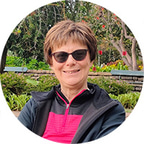
Sally Jones 
Retired optometrist and PSL volunteer
Sally graduated from UMIST in 1979 and was in Independent Practice in Cheshire along with hospital sessions, until retirement. She now enjoys volunteering, being a theatre usher and maintaining woodland trust paths. Unbeatable travel experiences include Antarctica and the Galapagos Islands.


Comments (0)
You must be logged in to join the discussion. Log in