


15 May 2026
When I think about how I have supported my now wife, Sheena, through her mental health journey over the years, one thing I have always emphasised is: I don’t have the answers, and that is okay.
We met at university where we were both studying optometry. As a young adult who had been looking forward to university, I was outgoing, sociable and excited by the opportunity to reinvent myself.
Sheena and I were friends initially and as our friendship grew, I realised that she was struggling. It was something I had never experienced before, and if I’m honest, I probably took on too much responsibility in those early days.
When she opened up and told me about her mental health troubles and anxiety, I felt like I had an opportunity to make a difference to her world and threw myself into being there. I didn’t really speak to anyone else about it as back then it didn’t feel this was something people talked about openly. You just got on with it.
However, over the years I have learned that supporting someone going through a difficult time does not mean carrying the weight of their happiness. They are still entirely responsible for their own happiness, just as I am of my own.
Someone else’s happiness can never be your responsibility. You can support them, and care for them, but their happiness has to come from within themselves. That has probably been one of the biggest lessons I have learned.
Over the years I have learned that supporting someone going through a difficult time does not mean carrying the weight of their happiness
Being there
During the early days of our relationship at university, there were times when Sheena would lock herself away in her room. I didn’t know what was going on and I couldn’t fix it, but I would sit outside the door so she knew I was there.
What mattered was consistency, and no matter what was happening, she knew I was there.
Listening and being there matters, and I have realised that I don’t have to have the solutions – knowing someone is there during difficult moments can mean everything.
As healthcare professionals, we often feel pressure to solve problems. We’re trained to help, advise and fix. But when it comes to mental health, sometimes the most important thing we can offer is support.


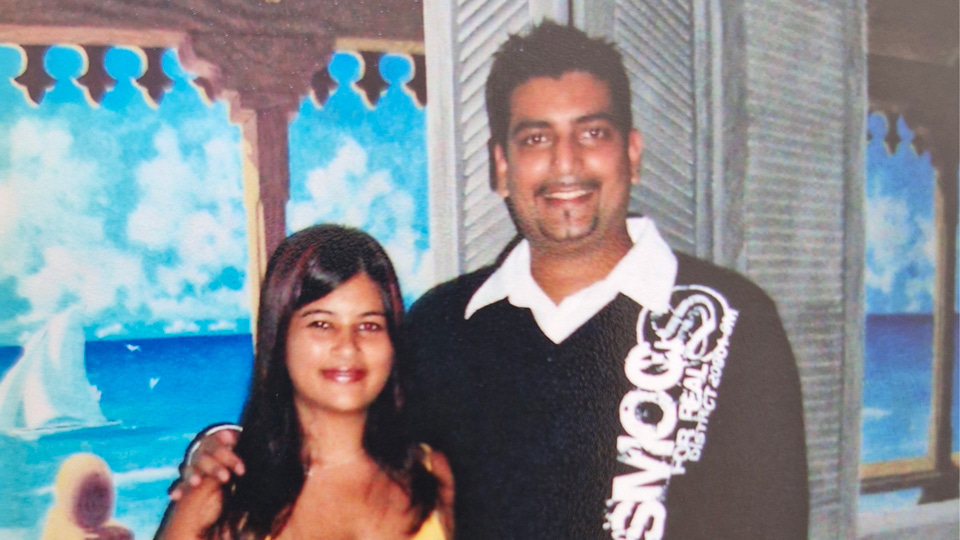
Everyone benefits when you look after yourself too
Looking after myself
Initially I didn’t realise the impact that providing this support was having on me.
While I have always been a naturally social person, there were times when we stopped going out or I would make excuses to avoid social situations. Nobody around me know what was happening because I wasn’t open about it.
Looking back, talking about it and being open would have helped us both. There is also the added complexity of protecting another person’s privacy.
However, nowadays, conversations around mental health are becoming more normal, and this is really good to see.
Over time, I realised I needed to carve out space and time for myself, and for me, this was football.
It became the one time where my mind completely switched off. I wasn’t thinking about anyone else or worrying about anything outside of what was happening on the pitch.
When you are supporting someone through difficult times, it is easy to feel guilty about taking time for yourself, but I know now that everyone benefits when you look after yourself too.
More recently, after losing my sister, I attended some grief support groups and I have found sitting with people who have experienced a similar thing really powerful.
Nobody was trying to fix anyone else, and we were all just sharing our experiences openly, which reminded me just how important conversation is.
To keep showing up for someone else, you have to look after yourself too
Generational learning
Our experiences have changed how we speak as a family. We make time to talk openly about feelings, worries and gratitude. Around the dinner table, we regularly check in with each other.
When my children were younger, with time away from home due to work, I would write them letters. I would leave one for them before bed and they would write back the next day. It sounds simple, but it created a way for us to keep communicating with each other.
I want my children to grow up believing that talking about emotions is normal, not something to hide.
The one piece of advice I would give to someone supporting a partner, friend, family member or colleague through a mental health journey, is to build your own support system too. Make time for yourself, talk openly, and accept that you are not responsible for someone else’s happiness.
One of the quotes I come back to often is that one person may not be able to change the world, but you can change the world for one person, and I truly believe that.
To keep showing up for someone else, you have to look after yourself too.
More Opinion
-
 Adam Sampson: “Our profession offers a small ray of hope”
 -
 Neil Hilton: “These are often genuine mistakes, the kind that could happen to any of us”
 -
 Robina Sharif: “It reminded me that, at its heart, optometry isn’t about technology, it’s about people”
 -
 Ghislaine Dunn: “Leadership isn’t always a grand ambition. Sometimes it grows naturally”
Comments (0)
You must be logged in to join the discussion. Log in