

28 March 2026
When people ask me why I became an optometrist, the honest answer is, I always wanted to do something medical, but I’m not very good with blood.
Optometry felt like the perfect solution. It meant I could still work with people and be involved in healthcare, but without the bits of medicine I knew I’d struggle with.
At around the age of 18, when I was choosing my university options, I was also in hindsight quite horribly sensible about it all. What appealed to me about optometry was the practicality of it. I remember thinking that optometry was a job I could pick up and put down. It seemed flexible. It felt like something you could do two days a week, or full time, or anywhere in the world. Back then, I also thought it was a job where you didn’t take work home with you – you’d see your patients, finish your clinic, walk out the door, and that was it.
I went straight to university from school, and although I had chosen the course deliberately, I hadn’t really thought much beyond that. I certainly didn’t have a clear plan for where I wanted to end up. In fact, for probably the first eight years of my career, I just worked. I saw patients, I learned, and I gained experience.
When I was studying optometry, I don’t think I was aware of just how many different directions an optometry career could take you. Looking back, optometry is full of options. You can locum, you can work in a multiple, you can work in an independent practice, you can specialise clinically, work in the hospital, teach, or eventually become a practice owner. There’s a huge amount of flexibility built into the profession.
I don’t think you’d have described me as unambitious, but personally I also didn’t have a big strategic career plan. I wasn’t sitting there mapping out leadership roles or thinking about running a business. I was just getting on with the job – and I think that’s actually quite common.
Today as a practice owner, that notion of optometry that I had, about leaving work at work, has changed quite considerably. When you’re working for someone else, you can walk out at the end of the day, but when you’re running a business, that’s very different. You can’t take the patients home with you, but the responsibility absolutely comes with you.
Suddenly you’re thinking about the team, the business, the systems, the future. The decisions you make affect not just your own day, but everybody else’s as well. In that sense, becoming a practice owner definitely changed my relationship with the profession.
Leadership in optometry isn’t just about clinical expertise – it’s about creating an environment where good eye care can happen. It’s about supporting your team, building a culture, and making decisions that ultimately benefit patients
Natural growth and leadership
When we talk about women in optometry – particularly women in leadership – there can sometimes be an assumption that careers follow a very deliberate trajectory. That people set out with a plan to lead, to own, or to specialise. But for many, including me, that isn’t how it happens.
Often it’s more gradual. You build confidence in the consulting room. You gain experience. You start noticing things about how practices run – what works and what doesn’t work, and you begin to see opportunities where you might do things differently. Slowly, the idea of taking on more responsibility doesn’t feel quite so daunting.
Leadership isn’t always a grand ambition. Sometimes it grows naturally from caring about the profession and the people around you.
That’s particularly relevant for women in optometry because one of the profession’s greatest strengths is its flexibility. That flexibility was one of the reasons I chose it in the first place, and it remains one of the reasons it works so well for women, including me.
Becoming a practice owner shifted my perspective of leadership. It made me realise that leadership in optometry isn’t just about clinical expertise – it’s about creating an environment where good eye care can happen. It’s about supporting your team, building a culture, and making decisions that ultimately benefit patients.
Those are skills that many women bring very naturally to the profession. The challenge, perhaps, is confidence – recognising that those skills are leadership skills.
Looking back, the 18-year-old version of me chose optometry because it seemed sensible and flexible. I certainly didn’t imagine that one day I’d be running a business or thinking about leadership within the profession. But that’s one of the things I value most about optometry now – it’s a career that allows you to grow into opportunities you didn’t necessarily see at the start.
For women entering the profession today, I would encourage them to remember: you don’t have to have your entire path mapped out from the beginning. Sometimes the best careers are the ones that evolve one opportunity at a time.
About the author

Ghislaine Dunn 
Optometrist and practice owner
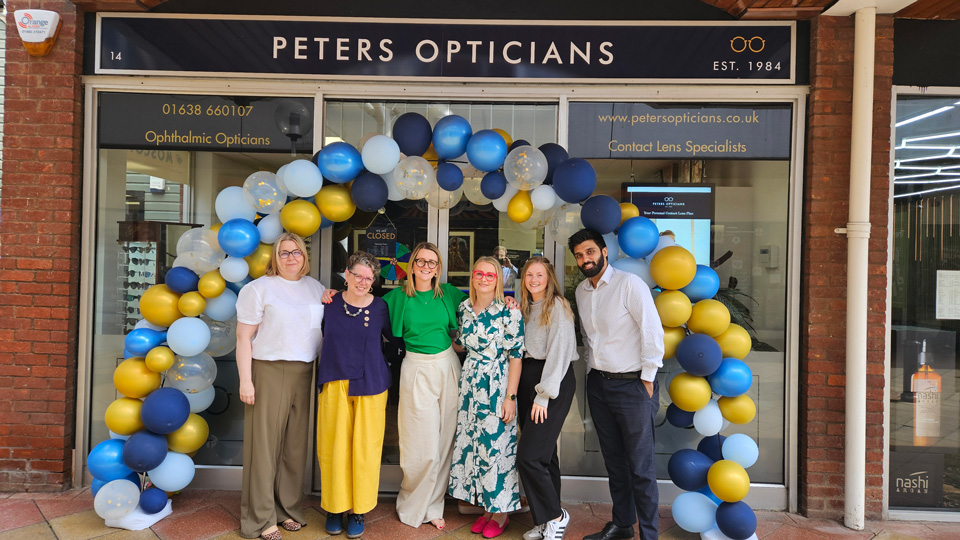
Ghislaine Dunn is an optometrist and owner of Peters Opticians, and Peel & Gudgin Optometry, both Hakim Group independent practices


Comments (0)
You must be logged in to join the discussion. Log in