

21 March 2026
I have been an optometrist for more than three decades, yet nothing in my 35 years of practice prepared me for the intense, humbling days that I recently spent volunteering in the rural town of Jodhpur, India.
I travelled to Jodhpur in Rajasthan for the first time in February, as part of a charity initiative supporting a local ophthalmic hospital. The connection came via a friend whose family had worked with the hospital out there 20 years ago. Although the original ophthalmologist has sadly passed away, his son now runs the hospital, which offers both private care and pro bono work, including free cataract surgery, follow-ups, and medication for disadvantaged communities across the area.
India does not have an NHS equivalent. Access to consistent eye care, especially in rural areas, is far from guaranteed, which is where we came in.
We worked from late morning until around 5pm, with barely a pause apart from the odd comfort break, and examined child after child
819 children screened, 182 pairs of glasses dispensed
The first part of our trip involved outreach clinics in four government-run schools located about an hour outside Jodhpur. While an hour from London feels urban, an hour from Jodhpur places you firmly in rural India – think small villages, limited infrastructure, and very few healthcare services.
Over four days, 819 children were screened using an illiterate E chart, which is something that can be used to screen people who are unfamiliar with Roman letters. The children who did not meet the visual standard were referred to us for full examination.
During the outreach, we examined just over 200 children. In my UK practice, I might see seven children in a day, spending up to an hour with each. In Rajasthan, we worked from late morning until around 5pm, with barely a pause apart from the odd comfort break, and examined child after child. The testing was rudimentary compared with UK standards, but our goal was to provide eye care where no access existed, which I had to keep reminding myself.
We dispensed more than 180 pairs of spectacles, which were supplied by the local Rotary Club, with families contributing 50 rupees per frame, which is about 40p. It was agreed with the local organisers that a small fee would be charged in to give the spectacles a sense of value – it was set at an amount people could afford.
The children we saw who required spectacles were able to choose from three frames, and one was by far the most popular. It was fascinating watching them carefully try on the frames and use our phones as mirrors. It reminded me that children are children everywhere and they just want to feel confident.
Prescriptions that stayed with me
There were a number of children who I remember due to their prescription. One girl had a prescription of around -10.00 in one eye with astigmatism – without correction, she could barely see beyond 10cm. There was also a young boy who had vision of +8.00 with astigmatism. He had glasses, but the arms were broken and the lenses were so scratched he couldn’t wear them anymore. In this type of case, in the UK in my practice, I would gradually increase the prescription over months, but in rural Rajasthan, we dispensed the full correction and explained, via an interpreter, that the adaptation might take time.
Of course, some children had suspected pathology beyond refractive error too. In those cases, we referred them to the hospital, which arranged transport and a consultation free of charge. For me personally, one frustration was knowing that I wouldn’t be there for the follow-up, but I knew I had to trust the system and hope that it would happen.
Beyond my comfort zone
I won’t pretend I wasn’t apprehensive ahead of the trip. I have visited India before and understand its rhythms, and I knew that flexibility would be essential. However, clinically, this was entirely outside my comfort zone. On the first morning, I realised I would see more children in one day than I might see in six months at home.
Initially, I aimed for every fraction of clarity as we are trained to do. But I quickly realised that by doing so I would not be able to see the number of children who needed help. I had to remember that “good enough” for these children in this situation was life-changing.
As my career has progressed, I feel increasingly fortunate to give back – not only financially, but by using clinical skills honed over 35 years
Moments that mattered
There were countless small but powerful moments: children confidently chatting despite cultural norms; young girls interacting with my female colleague as a professional role model, and the joy on children’s faces when they realised they could see clearly.
There were quieter reactions too – from shy smiles to children who said nothing.
Showing my parents the photos, they were proud and immediately asked when I would return – that meant more than I expected.
Why I’ll return
As my career has progressed, I feel increasingly fortunate to give back – not only financially, but by using clinical skills honed over 35 years.
This experience reaffirmed that whatever little I can achieve on a trip like this is more than would have happened otherwise. I hope to return in 12–24 months, perhaps going into Gujarat, where my family is from and I speak the language more fluently.
For anyone considering volunteering, abroad or closer to home, my advice: don’t be scared. It may push you beyond your comfort zone, it will challenge the way you work, but a small positive impact accumulates.
In four days, we saw 220 children and dispensed 182 pairs of glasses.
About the author
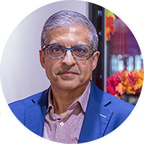
Deven Lakhani 
Director of D&R Optometry Ltd
Deven Lakhani is an optometrist and former owner of Hammond Opticians, a Hakim Group independent practice in Enfield


Comments (0)
You must be logged in to join the discussion. Log in