


04 December 2025
Technology for the diagnosis and management of glaucoma is moving at pace – from smart contact lenses that monitor intraocular pressure to tiny stents that improve fluid drainage.
However, when it comes to increasing early and effective intervention for this potentially sight-threatening condition, the life-changing effect of a more fundamental and traditional skill should not be overlooked.
Good communication helps patients to understand glaucoma and the steps they can take to preserve their sight.
Even with the latest treatments and technology at their fingertips, clinicians can only manage glaucoma if a patient understands how to comply with their treatment – and if their condition is identified through regular eye care.
“I think one of the most important things that optometrists can do is tell people, once they’ve had a sight test, no matter what their age, that they've made the right choice,” Specsavers director of professional advancement, Paul Morris, reflected.
“By coming in, even if there is something wrong, most of the time there is something we can do if we’ve caught it early. It’s about building those healthy habits,” he said.
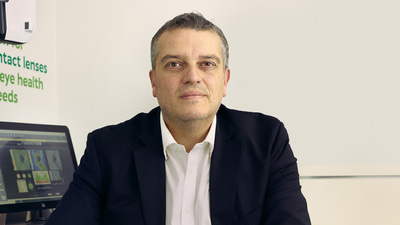
IP optometrist and director of Specsavers Flint, Kevin Liu, worked as a science and chemistry teacher at a comprehensive school in North Nottinghamshire before training as an optometrist.
“When you are teaching, you are imparting information – trying to help someone who doesn’t have the same knowledge develop it,” he said.
“That’s what we are doing every day when we see patients. We are educating them about their eyes,” Liu observed.
Here, OT outlines how experienced optometrists communicate with patients on a range of topics – from explaining the nature of glaucoma and intraocular pressure, to encouraging patients to attend regular sight tests.
How I explain… glaucoma and intraocular pressure
Michael O’Kane: I try to make my explanation individualised, taking into consideration how anxious a person is and how much detail they want to know. Recently I was talking to a man who was renovating his flat and the plumbing was a nightmare. So, when we were talking about his intraocular pressure (IOP), I explained that the IOP was effectively a measure of his eye’s plumbing system. The ciliary body produces a liquid that flushes over the lens to keep it clean and healthy, but it has to be drained.
What can happen is that the drain gets clogged up, but the tap is still flowing so the pressure can build up inside the tank – his eye. I told him that eyedrops effectively help to clear the drain and allow the pressure to redistribute, because whenever the pressure is building up, it damages this nerve at the back of the eye. I told him that we would get him some eyedrops that effectively help to clear the drain and allow the fluid to redistribute. Even if that doesn't work, there are other drops that we can use to turn down the tap as well as improving the drain – that can work as well.
Veronica Nellins: I will tell them that glaucoma is not just one condition, but a family of different conditions. For primary open angle glaucoma, it is a slowly progressive condition. There are different options for treatment, such as eye drops, laser, or, in more advanced cases, surgery. The aim is to slow the condition down enough so that it does not have a serious effect on their eyesight during their lifetime. I do try to give them peace of mind, but I will also reinforce the importance of following their treatment regime once they are on it and coming in for their appointments. I will encourage them to let their siblings or children know about the condition so they can go for a checkup.
Katie Mote: I will tell them that glaucoma is a group of conditions that involve the nerve fibres at the back of the eye. You can have it with high or normal pressure, and if it is caught early, often there is very little damage to the visual field. If the treatment is effective, then you can live with glaucoma for a long time without it having an effect on your vision.
We stress the importance of regular eye examinations as the best preventive measure
How I explain… the value of regular sight tests
Michael O’Kane: Glaucoma is an asymptomatic condition, and the earlier you can be diagnosed and treated, the longer you will have a useful level of vision. You have to look after your eyes because you only have one set. It’s not like your teeth where you can still chew with dentures – you can’t see with a false eye. The best chance of being able to detect these subtle signs of pathology is having your eyes examined on a regular basis.
Rebecca Daly: The main message for all patients is that the most common forms of glaucoma are asymptomatic until quite advanced. We stress the importance of regular eye examinations as the best preventive measure. Sometimes the diagnosis isn’t clear-cut, and we reassure patients that uncertainty is actually positive – it means the disease hasn’t progressed to an obvious stage. We may monitor them over time and revisit their status at each appointment. Consistently attending exams with the same practitioner, and building a long-term record of OCT scans, visual fields, and intraocular pressure, is invaluable.
How I explain… using eye drops correctly
Veronica Nellins: Some people think that if they miss a few days, it will be OK. They don’t realise that there is no cumulative effect. If they haven’t taken their eyedrops for 24 hours, then it is no longer in their system. I tell them they need to take the drops each day and make sure that they can put them in. I have bottles of lubricant drops so the patient can show me their technique.

Johnathan Waugh: Sometimes when patients are in hospital, they may not have that much time with the consultant and might be overloaded with information. When I see patients using drops in practice, I will check they are using them properly. If they are struggling, then there are things we can do to help such as compliance aids or reinstruction.
How I explain… glaucoma and driving
Michael O’Kane: I make the patient aware that glaucoma is a condition that they have to notify the DVLA about. Glaucoma may affect a patient’s ability to drive at night, in low light levels and in fog. I will tell people that it is important to have regular eye examinations so we can monitor their visual field. You have to get the tone and the nuance right – you don’t want to bombard them. We can support them to be able to drive for as long as they are safe to do so.
Veronica Nellins: I do tell them that they have to notify the DVLA once they are diagnosed, and that they might have to perform an enhanced visual fields test. If I know their visual fields are good and they are likely to pass, I will tell them that for peace of mind. I don’t want to scare people into not coming back for their checkup. The aim is to keep their vision good for as long as possible.
Katie Mote: One of the most common questions we get from patients is if they can drive with glaucoma. They do need to tell the DVLA. Nobody likes to deliver bad news, but I try to reassure patients that glaucoma is normally a slow condition, and many patients can continue to drive for a long time. They just need to make sure they continue to attend their eye care appointments so we can keep things in check and make sure they are safe.




Comments (0)
You must be logged in to join the discussion. Log in