


04 December 2025
Across the UK, people treasure their vision for the same reasons.
Eyesight helps people to connect with others and to the world around them. It is their window into the world – helping people to study, work and enjoy their leisure.
However, depending on whether a patient lives in England, Wales, Northern Ireland or Scotland, the care they receive in a community optometry practice may look very different.
Within glaucoma care, variation in national and local commissioning has resulted in disparities in service provision according to a patient’s postcode.
Here, OT outlines the role optometrists are playing in the provision of glaucoma care across the four nations of the UK.
England
While England has made progress in the provision of glaucoma referral refinement and glaucoma monitoring services, in the absence of a national framework, some areas remain underserved.
According to the Specsavers Access to Care 2025 report, in England there are five integrated care boards (ICBs) without a glaucoma referral refinement service, and 13 ICBs without a glaucoma monitoring service.
It is estimated that if these services were rolled out nationally, around 300,000 hospital eye service appointments would be released annually.
Specsavers director of optometry, Sarah Joyce, leads on clinical strategy to support Specsavers partners and their teams in the delivery of this expert care in the community.
She heads Specsavers’ team of clinical performance consultants across the UK and Ireland.
“This team is comprised of highly skilled and experienced optometrists who collaborate directly with our community colleagues as part of our shared mission to change lives,” Joyce said.
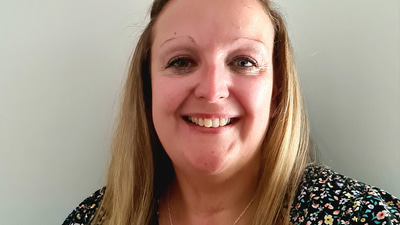
As an optometrist with experience working in community practice, Joyce shared that she is “deeply passionate” about her work.
“It centres on ensuring our practice partners and their teams are equipped with the necessary tools and expertise to provide vital access to care for the communities that we serve,” she said.
“Reflecting on my two decades in optometry, I’ve seen increased recognition of the profession’s role in helping to prevent avoidable sight loss from glaucoma and supporting patients with the condition,” Joyce highlighted.
Joyce share that there are community optometrist-led glaucoma referral refinement, enhanced refinement schemes and stable glaucoma monitoring schemes in some parts of England.
“There is significant potential for further stable glaucoma schemes across the country, and we have the workforce ready to deliver these services. Such an approach would enable patients to be seen more quickly within primary care settings,” Joyce said.
Reflecting on examples of best practice, Joyce highlighted the provision of community-based glaucoma care in Greater Manchester.
Referrals go through a single point of access run by Primary Eyecare Services. If an optometrist identifies elevated intraocular pressure, funding is provided to conduct further checks through the Glaucoma Repeat Readings Service.
The Glaucoma Enhanced Referrals Service (GERS) allows optometrists with additional glaucoma qualifications to assess suspect cases referred by their peers.
“The community-based glaucoma provision in Greater Manchester exemplifies the effective delivery of neighbourhood eye health, reducing patient waiting times and easing demand on hospital eye departments,” Joyce said.
The optometrist highlighted that as well as easing pressure on secondary care, community glaucoma services provide optometrists with the opportunity to utilise their skills and expertise for the benefit of patients.
"It would be great to see a national framework for stable glaucoma services rolled out across England, bringing an end to the postcode lottery for patients and helping to reduce preventable sight loss,” Joyce emphasised.
“There is significant potential for further stable glaucoma schemes across the country, and we have the workforce ready to deliver these services”
Scotland
In Scotland, independent prescribing (IP) optometrists with NES Glaucoma Award Training (NESGAT) training are delivering the NHS Community Glaucoma Service – which aims to ease pressure on secondary care by managing low-risk patients in primary care optometry practices.
Optometry Scotland estimates that the NHS Community Glaucoma Service – where IP optometrists with NESGAT training monitor glaucoma patients in the community – could save around 350,000 appointments annually.
Specsavers clinical performance consultant, Gillian Syme, who is based in Glasgow, told OT that NESGAT training was developed because demand for ophthalmology care was outstripping capacity in Scotland.
Syme highlighted that the NHS Community Glaucoma Service has the potential to provide safe, effective and local care for patients.
“We are at the very beginning with only a few health boards starting to provide this service,” Syme shared.
“Patients who have been involved really like it as they don’t have long trips to the hospital eye service where they often spend hours waiting to be seen,” she said.
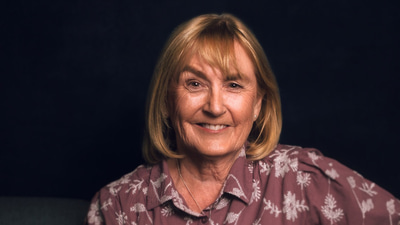
Syme, who spent 28 years as the optometrist director of Specsavers Irvine, told OT that many optometrists enjoy being involved in the NHS Community Glaucoma Service.
“It’s another string to their bow and makes the job more interesting. Optometrists like to feel that they are helping secondary care,” she said.
In her current role as clinical performance consultant, Syme has visited practices as far afield as Aberdeen, Wick and Britain’s most northerly town of Lerwick, on the Shetland Islands.
While at present there are only a small proportion of practices offering the NHS Community Glaucoma Service, Syme has listened to the concerns of optometrists across Scotland who are dealing with the effects of long ophthalmology waiting times on a daily basis.
“It can be frustrating when you have picked up glaucoma in practice, but then there is a long wait for the patient to be seen in hospital,” Syme shared.
“If that person was your relative, you would want them to be seen quickly,” she said.
Syme shared with OT that in Scotland the large number of optometrists with further qualifications and messaging from other healthcare providers has shifted public perceptions of the profession.
“If you go into your GP practice, for example, there is a large poster saying if you have problems with your teeth, go to your dentist. If you have problems with your eyes, go to your optician,” she said.
“The message is getting out there that we are the first port of call,” Syme highlighted.
In Scotland, around one in four optometrists have an independent prescribing qualification.
IP optometrist, Michael O’Kane, is a director of two Specsavers practices in Edinburgh –one of the areas in Scotland where the NHS Community Glaucoma Service is underway.
O’Kane is anticipating that his Morningside practice will become responsible for the care of around 400 low-risk glaucoma patients.
“There will be major benefits for patients in terms of access to care and speed of access,” O’Kane highlighted.
Through the NHS Community Glaucoma Service, O’Kane highlighted that patients can be seen in a convenient location by a practitioner who they may see for their regular eye care.
“They’ll see familiar faces and that can be reassuring for patients,” he said.
“I think the service will contribute to better quality of care overall. Those patients who need hospital expertise will be seen faster because we are able to care for the more stable cases,” O’Kane observed.
“Distributing the workload among specialists in the community means the volume of patients is more manageable providing more time to offer a holistic approach,” he added.
“The message is getting out there that we are the first port of call”
Northern Ireland
In Northern Ireland, alongside a repeat reading and referral refinement service, optometrists are commissioned to monitor ocular hypertension patients in the community.
Since 2013, optometrists in Northern Ireland have received funding to provide repeat intraocular pressure readings through the Level 1 Enhanced Service (LES 1).
LES 2, which was introduced in 2016, provides funding for optometrists to filter glaucoma referrals – reducing unnecessary referrals to secondary care.
Through an ocular hypertension scheme, which was first introduced as a pilot in 2019, the hospital eye service transfers patients with ocular hypertension into community optometry practices for ongoing care and review.
In August 2025, there were 67 optometrists involved in the ocular hypertension scheme. More than 2400 patients have been transferred from the hospital eye service into the ocular hypertension scheme since 2019.
Jill Campbell, a Specsavers clinical performance consultant in Northern Ireland, highlighted that patients have responded positively to the scheme – which enables them to be seen close to home.
“It’s great for patients, and it gives ophthalmologists the time to see more complex patients who really need their care,” she said.
The Extension for Community Healthcare Outcomes (ECHO) network provided optometrists involved in the ocular hypertension scheme a chance to learn from colleagues in both primary and secondary care through regular meetings.
Ophthalmologists deliver presentations on new developments and research as part of the network, while optometrists will deliver case study presentations.
“There can be a tendency for optometry and ophthalmology to work in silos, but when you see people face to face, it is a huge learning opportunity and a chance to build trust between the two professions,” Campbell emphasised.
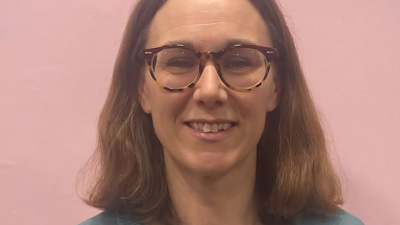
Locum optometrist, Veronica Nellins, has been involved in offering the ocular hypertension scheme since the initial pilot in 2019.
She shared that funded community glaucoma services provide acknowledgement of the advanced skillset and equipment within optometry practices, as well as the extra chair time involved in delivering care.
“I like that our skills are being recognised,” she told OT.
“It gives me more freedom to provide additional services and try to provide the best care possible for the patient,” Nellins emphasised.
Wales
Following a refreshed national optometry contract in 2023, there is now provision in Wales for optometrists to monitor low-risk glaucoma patients through the WGOS4 service.
Specsavers Flint optometrist director, Kevin Liu, previously owned practices in Manchester – where he helped to establish the Glaucoma Enhanced Referrals Service.
His move across the border was partly prompted by the extent of clinical services optometrists can offer in Wales.
“I’m turning 50 next year and entering the later chapters of my career, so I decided that Wales was going to be the place for me to really explore my clinical skills to the maximum,” Liu shared.
Liu highlighted that with an ageing population, more people are being diagnosed with glaucoma every day.
“I think it is essential to establish these services in the community to enable secondary care to focus on the complex cases,” he said.
“If our workforce can support more patients to be seen in a timely manner, then we can help to prevent avoidable sight loss,” Liu emphasised.
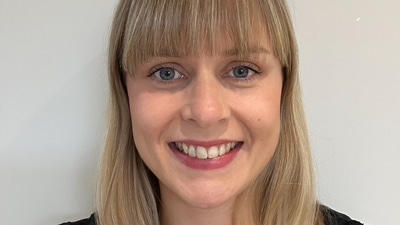
IP optometrist, Katherine Mote, helps to filter glaucoma referrals through the WGOS4 service at Phillips Opticians in Newbridge.
Mote will review new glaucoma referrals from other optometrists to make sure they are appropriate through a filtering appointment.
“If we think everything is fine, we can discharge them without any hospital input,” she said.
“Because we perform a series of standardised tests, the triage process is very thorough. The more advanced cases of glaucoma are seen very quickly by the hospital,” she highlighted.




Comments (0)
You must be logged in to join the discussion. Log in