


A European clinical trial for a new electronic eye implant has found that the device supported meaningful central vision in study participants with geographic atrophy, enabling them to read letters, numbers, and words through an eye that had lost sight.
The study was published in the New England Journal of Medicine. The trial was led by Dr Frank Holz of the University of Bonn, with participants from the UK, France, Italy, and the Netherlands.
The trial of the PRIMA System device, developed by Science Corporation, involved 38 patients who had geographic atrophy with dry age-related macular degeneration (AMD), in 17 sites across five countries in Europe.
OT heard from surgeons at Moorfields Eye Hospital, the sole UK site in the study.
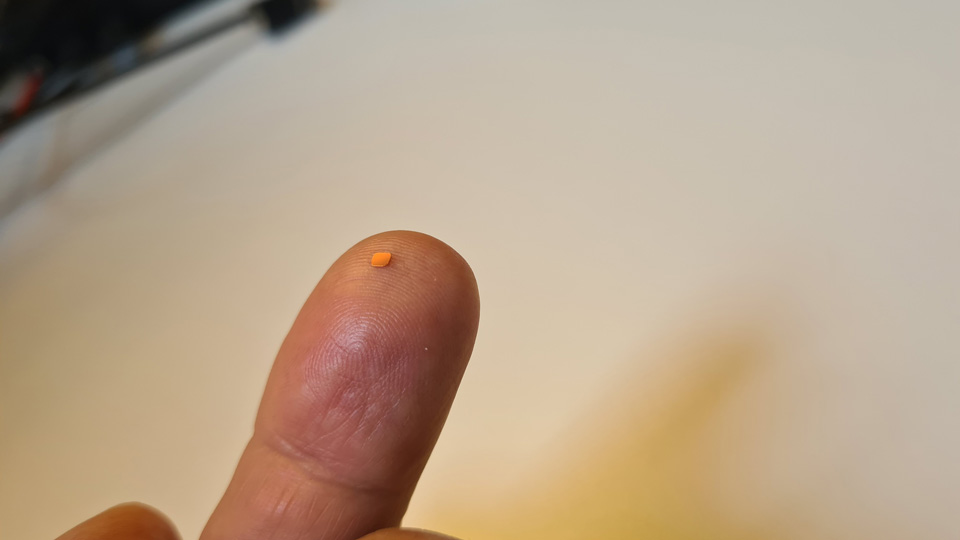
Mahi Muqit, consultant vitreoretinal surgeon at Moorfields Eye Hospital, implanted five patients with the PRIMA device system – a wireless photovoltaic electronic retinal chip.
Muqit explained that the trial demonstrated a significant improvement in visual acuity amongst participants, sharing: “We found that around 84% of patients were able to read letters, numbers, words, and sentences.”
“Around 80% of patients were able to read between four to five lines on a ETDRS vision chart,” he said, adding: “So the prosthetic vision was significantly improved and meaningful.”
The chip is very thin and shaped like a 2mm x 2mm SIM card, Muqit explained: “It is about 30 microns – half the thickness of a human hair.”
Through a vitrectomy operation, a small trapdoor is created in the patient’s retina and the chip is implanted under the macular, then moved into the optimal location.
Once the eye has settled around three or four weeks after the procedure, the patient can start operating the device with a pair of augmented reality glasses linked to a pocket computer.
The prosthetic vision was significantly improved and meaningful
Muqit explained: “The glasses over the implanted eye have a video camera that captures a visual scene, which is then projected into the glasses and infrared light transfers that stimuli into the pocket processor.”
The visual stimuli is converted into an electronic signal, which then passes through the retinal and optical nerve cells into the brain.
“Initially you see phosphenes, which are light perceptions, that is then modified and refined – with contrast and brightness – into meaningful signal. In our patient groups across the trial, that signal was actual resolution of letters and numbers, so object resolution was achieved,” Muqit explained.
The patients in the study each experienced an intensive rehabilitation programme to learn to interpret the signals and begin reading again.
Muqit explained that the operation is one all vitreoretinal surgeons are already trained to do, and the specific implantation technique requites a short training programme.
One of the studies conducted with the device demonstrated that patients can integrate their prosthetic vision with their peripheral vision.
“It integrates quite naturally,” Muqit said, adding that this is better for daily function.
The PRIMA System clinical trial
38
patients with dry-AMD and geographic atrophy
84%
patients were able to read letters, numbers, words, and sentences
80%
patients were able to read four to five lines on a ETDRS vision chart
Reflecting on the success of implantation and the study, Muqit said: “When I speak to my patients at Moorfields, all of them are able to recognise letters and words. With the device off, it is all black, and with the device on, they can start to recognise things.”
With the clinical trial complete and primary end points reached, Muqit believes it may be two or more years before patients in the NHS will access the technology.
He said: “It’s quite exciting, because now we’ll be able to see patients in our clinic and offer something they can reflect on and decide if that’s the right therapy for them.”
In the time following the interview, the company behind the device, Science Corporation, submitted a CE mark application for the PRIMA retinal implant.
Patients suitable for the treatment would be those with advanced geographic atrophy who have large areas of atrophy.
Muqit suggested: “If you see patients in your practice who are struggling, who are asking for more, then certainly talk about this device that may be coming out in the future.”
“The operation itself is a routine operation we carry out and it has been successful in restoring aspects of central vision, so I think that optometrists should be aware of this. All patients should be aware of this technology coming, because currently there isn’t anything that can meaningfully restore vision in these blind patients,” he said.
Looking ahead, attention will turn to what other conditions the technology might be able to address. Muqit proposed Startgardt disease, retinitis pigmentosa, and inherited retinal diseases could be areas for exploration.
The research at Moorfields was delivered through the National Institute for Health and Care Research Clinical Research Facility at Moorfields Eye Hospital NHS Foundation Trust.
A patient experience

Sheila was one of patients in the trial and told Moorfields that she wanted to participate in research to help future generations.
Before receiving the implant, she described her vision as like “two black discs” in her eyes, with a distorted vision outside of this.
It’s just amazing
The new technology supported a “new way of looking through your eyes,” she said, adding: “I can’t put it into words. It’s just amazing.”
The process of learning how to interpret the signals has not been easy, Sheila admitted, but emphasised the importance of dedicating the time to learn and practice.
Describing the excitement of when she first saw a letter, Sheila explained how, with the support of the team, she was able to identify the letters “quick as lightning.”
“I seemed to learn a bit each time and thought if I put the hours in, I would pick up more. That’s what I did. If I woke up at two o’clock in the morning, I would go downstairs and put the camera on. I kept on with it,” she said.
Sheila added: “I had a love for it. I made friends with the camera. I thought: ‘You have to be my friend for this to work.’”


Comments (0)
You must be logged in to join the discussion. Log in