


06 February 2026
Eligible Universal Credit recipients can now receive automatic access to free eye care in Northern Ireland following legislative change.
Between 2017 and 2025, a legal technicality meant that those on Universal Credit in Northern Ireland needed to fill in an HC1 form in order to receive free eye care and dental care – a barrier that did not exist in the other nations of the UK.
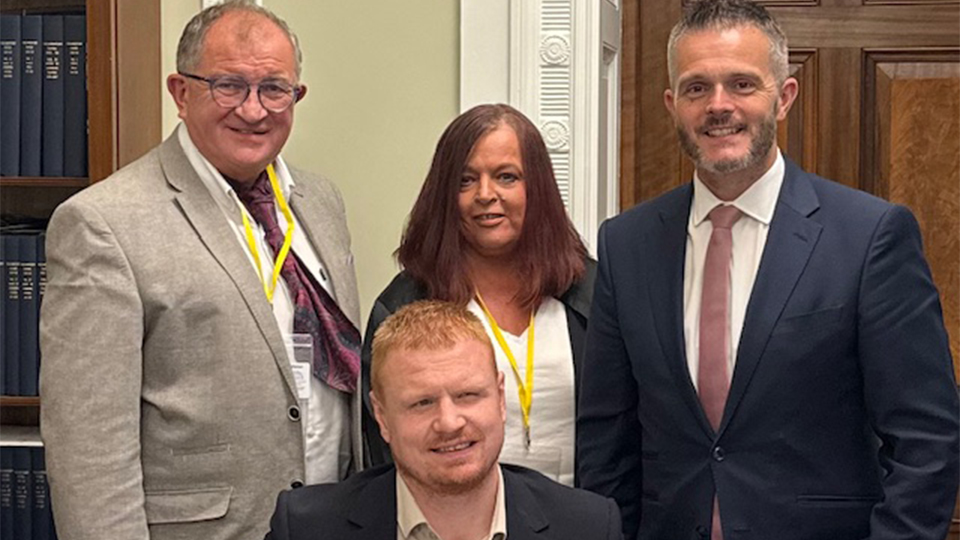
Optometrist, Sam Baird, welcomed the introduction of automatic access to free sight tests for eligible Universal Credit recipients from December 1, 2025.
“It means that we can provide care for vulnerable people when they come in for their eye examination,” he told OT.
“There will be many optometrists and receptionists who are a lot happier because their life is more straightforward,” he added.
While an income threshold will be in place – in line with Great Britain – it is expected that 195,000 Universal Credit recipients will receive automatic access to free eye care and dental care in Northern Ireland under the change.
The Department of Health has previously explained that the delay in passing the necessary legislation was caused by the collapse of Stormont and the diversion of resources due to the pandemic.
Northern Ireland health minister, Mike Nesbitt, highlighted that tackling health inequalities has been a key area of focus since taking office.
“The loss of automatic passporting for such a large number of people in Northern Ireland has been of considerable and understandable concern,” he said.
“I am delighted to say that work has completed to update the relevant legislation which now brings Northern Ireland in line with the rest of the UK in this area and will ensure that eligible Universal Credit recipients receive the automatic help they need to access these crucial healthcare services,” Nesbitt highlighted.
Before the changes came into effect, as an independent practice owner, Baird and his staff were having to turn away patients on a weekly basis – explaining that they needed to fill in the 22-page HC1 form before they could receive care.
“It was in some cases quite heartbreaking. There was very little we could do,” he said.
Baird told OT that he was motivated to campaign on the issue because of a sense of “gross injustice.”
“The Universal Credit system was supposed to be universal, but in Northern Ireland it wasn't,” he said.
“These people had the same entitlement as in the other home nations, but they weren’t being allowed to realise that entitlement and it was affecting their lives,” Baird emphasised.
Encouraging patients back to practice
Alongside Baird, dispensing optician and past chair of Optometry Northern Ireland, William Stockdale, was among optical professionals who campaigned for change to bring about parity for Universal Credit recipients in Northern Ireland.
He described the introduction of access to free sight tests and dental care for eligible Universal Credit recipients as “long overdue.”
“It shouldn't have taken eight years to get to this stage, but it’s really good news that it’s here,” he said.
He highlighted that now the change has been implemented, the challenge will be encouraging people who have fallen out of the habit of seeking eye care to return to practice.
Using official General Ophthalmic Services data, OT has previously reported that 23,910 fewer benefit recipients accessed sight tests following the loss of automatic access to free sight tests and dental care in 2017.
“The difficulty is now getting those 23,000 people back in because many have experienced a situation where they have turned up for an eye test that they had always received and were basically turned away at the door,” Stockdale highlighted.
Stockdale estimated that around 500 were affected by the removal of automatic access to free sight test within the patient base of his Northern Ireland domiciliary service, Optomise.
He estimated that only around 10 people within this group successfully completed and submitted an HC1 form between 2017 and when automatic passporting was introduced at the end of 2025.
Stockdale explained that many of the people who he sees are based in care homes and assisted living facilities – and the responsibility for filling out the form often fell to social workers, support staff or relatives.
“Unfortunately, for all sorts of reasons, the forms were not being filled out,” he said.
This situation created an uncomfortable conundrum for Stockdale and his staff. The needs and circumstances of the people they were seeing had not changed – but a legislative blind spot meant Optomise could no longer receive payment for providing the same care.
Stockdale and his team decided to continue providing sight tests to Universal Credit recipients.
“We continued to see the people we had always seen,” Stockdale said.
“In domiciliary, as with any practice, your patients become your friends. You get to know them, you’ve spoken to their family. You’re not going to leave them high and dry,” he emphasised.
Stockdale estimated the cost to his business of providing eye care over this period at around £30,000.
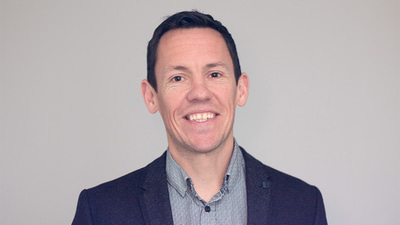
Optometry Northern Ireland (ONI) chair, Brian McKeown, highlighted that the Universal Credit campaign aligned with a key strategic objective of ONI – to provide better access to eye care.
“It's fantastic that when a patient comes into your practice now, they can just get access to care straight away. They don’t have to fill in a document that takes weeks and weeks to come back,” he said.
“From an Optometry Northern Ireland perspective, it is good that pressure from a variety of directions has helped to secure this result,” McKeown added.
He added that the ability to see patients even if they have not produced evidence of being within the income threshold is helpful.
“We just tick the box that says, ‘Evidence not seen’ and see the patient,” McKeown said.
“It makes it straightforward because it is not our place to be going into the details of someone’s personal finances within an optometry practice,” he added.
The Universal Credit system was supposed to be universal, but in Northern Ireland it wasn’t
Tough financial decisions
Advice NI is an umbrella organisation that provides guidance and support to more than 60 independent advice agencies within its network.
It also has a free phone helpline that people can contact directly for help on a range of issues – with around three in every four inquiries relating to social security and benefits.
Advice NI information officer, Matt Cole, told OT that the organisation’s helpline received regular calls from people seeking guidance on the HC1 form.
“I would be surprised if we weren't getting queries about this every day across our network,” he said.
Cole told OT that Advice NI had lobbied the Department of Health “extensively” to introduce automatic passporting for eligible Universal Credit recipients.
“The extension of automatic entitlement to eligible people on Universal Credit will significantly reduce the administrative burden for those affected, and the organisations that support them,” he said.
Cole shared that while Advice NI would have preferred automatic passporting to be introduced without an income threshold, the change is a “positive step.”
“There will be vulnerable people and people on low incomes in Northern Ireland who will be better off as a result of this decision,” he said.
Cole told OT that people on low incomes are having to make difficult financial decisions on a daily basis.
“It is decisions like, ‘Do I put food on the table or do I put the heating on?’,” he said.
“If an unexpected cost comes up like a sight test or dental visit, they are going to have to make some tough decisions about basic necessities,” Cole said.
“Within our network we would have supported clients who were absolutely making those decisions,” he added.
Cole emphasised the importance of providing access to eye care without additional administrative barriers.
“This is a basic need. It may not have the same immediacy as going cold or being hungry, but it has a knock-on effect for someone’s long term health,” he said.
Bob Quigley is advice co-ordinator at Dove House – a community trust that provides welfare rights advice to people living in Derry.
Quigley told OT that following the transfer of large numbers of people from legacy benefits to Universal Credit, his staff would assist around 10 people each week to fill in the HC1 form.
“Some people may have literacy issues or anxiety around filling the form in the wrong way. The form confused people, and they felt overwhelmed,” Quigley explained.
He added that appointments spent helping people with the HC1 form meant there was less time to help people with other issues.
Differences in the requirements for people on legacy benefits and Universal Credit created a “two-tier benefit system,” Quigley highlighted.
“It was unfair – everyone should have equal rights,” he said.
Quigley said the introduction of automatic passporting was a “great relief” to Dove House service users.
“When people come in carrying the form, we can say ‘You don’t need to fill that in anymore.’ You can see the stress being lifted off them,” he said.
Andy Allen, who represents East Belfast for the Ulster Unionist Party, told OT that constituents had previously approached his office for help filling in the HC1 form.
“It’s an important step now that this anomaly has been rectified. Individuals will be able to access eye care and dental care more seamlessly,” he said.
Allen, who lost his sight from an improvised explosive device in Afghanistan, emphasised the importance of receiving timely intervention for health problems.
“I've long campaigned on this as somebody who lives daily with a sight impairment,” he said.
“I wanted to make sure that there weren't any unnecessary barriers getting in the way of people being able to avail of optical care,” Allen shared.
Allen paid tribute to the work of optometrists who continued to work within the administrative challenges that the HC1 created.
“I do recognise and value the role that they play. They are at the coalface of delivering services,” he said.
“In many cases they are identifying individuals who aren’t aware they have an eye condition that needs ongoing treatment, and helping to preserve their vision,” Allen shared.
The Department of Health viewpoint
A spokesperson for the Northern Ireland Department of Health explained that a number of factors contributed to the delay in making Universal Credit an automatic passporting benefit for Help with Health Costs.
Although a consultation on the issue was carried out in 2017, this work was not carried forward due to a range of factors – including the absence of the Northern Ireland Assembly, implementation challenges in Great Britain (particularly around earning thresholds) and the low number of individuals who would be in receipt of Universal Credit in 2017.
More recently, the Department of Health pointed to the impact of the pandemic and resource constraints as factors influencing the delay in introducing automatic passporting.
The spokesperson highlighted that the Department of Health has publicised automatic passporting through a range of measures – including a press release by the Health Minister and updated public-facing guidance which was sent to all dental and ophthalmic contractors for display in practices.
“In addition, the Department for Communities issued communication to all eligible Universal Credit recipients,” the spokesperson shared.
The spokesperson added that advice and guidance on the changes has been sent to all optometrists, with a question and answer leaflet in development to ensure “smooth and successful implementation.”


Comments (0)
You must be logged in to join the discussion. Log in