


06 February 2026
On 31 December 2023, the last area of East Sussex to operate a minor eye conditions service (MECS) saw its provision decommissioned by NHS Sussex Integrated Care Board.
Eye care practitioners in Eastbourne had retained their MECS contracts after services in the High Weald – the only other area in East Sussex to provide MECS – were terminated in 2018. The service had initially been commissioned in 2017.
The ICB’s review also found that the money saved through the decommissioning of MECS could be better invested in cataract and glaucoma diagnosis and follow-up, NHS Sussex said.
A snapshot report seen by OT showed that the service saw 3384 patients between April and December 2021.
Between October and December 2021, 84% of MECS patients in East Sussex were managed within primary care, without the need for onward referral into secondary care.
During the same period, 100% of patients with urgent symptoms were seen by a MECS provider within 24 hours (excluding on Sundays), whilst 99.63% of those with routine symptoms were seen within five working days.
East Sussex MECS: a 2021 snapshot
2472
Number of patients self-referring to MECS between October and December 2021
3384
Patients seen under MECS in East Sussex between April and December 2021
84%
Percentage of MECS patients managed within primary care between October and December 2021
23.43%
Percentage of MECS patients presenting with flashes and/or floaters between April and December 2021
23.79%
Percentage of MECS patients presenting with painful eyes between April and December 2021
100%
Percentage of patients with urgent symptoms seen by a MECS provider within 24 hours (excluding Sundays) between October and December 2021
Dimple Mehta, an optometrist and the chair of East Sussex Local Optical Committee (LOC), was involved in initially setting up the MECS offering in the area.
Decommissioning of the service has had “a massive impact,” he told OT.
Under the pre-2022 clinical commissioning group (CCG) structure, two out of three areas of East Sussex – High Weald and Eastbourne – had MECS in place, Mehta explained.
There has been a significant impact on patients and practices in the years since the services were decommissioned in these areas, Mehta told OT.
For patients in East Sussex, travelling to an acute hospital to be seen for minor eye conditions can sometimes take 50 minutes by car and much longer via public transport, he said.
Dimple Mehta
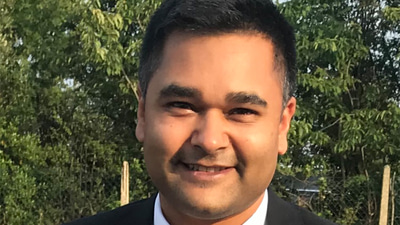
“Geographically, Sussex is quite a big area, and it’s quite widespread,” Mehta told OT, adding: “The inability to have a service locally is a problem.”
He also believes that hospitals in the area are “struggling with the demand of additional patients entering the system with MECS-related queries that they feel quite comfortably could be dealt with in the community.”
Mehta told OT that two local hospitals have been in touch with East Sussex LOC to discuss presenting a case to the ICB to resume the service because “they just can’t manage the volume coming through.”
Meanwhile, for community optometrists in East Sussex, a lack of trust as to whether any future enhanced services will exist for the long-term has formed, Mehta believes.
“In the early days [after the service was decommissioned], there was definitely some ill feeling around all of this,” he told OT: “Everyone felt that we were genuinely delivering a good service.”
Immediately after the decommissioning of the service, patients presenting to practices with conditions previously seen under MECS would be directed to GPs, pharmacies or hospital as the ICB had instructed, Mehta said.
He told OT: “[The ICB] advised us, if a patient turns up to your practice with a MECS-related problem, either send them to the hospital, to the GP, or to the pharmacy.”
This “wasn’t really ideal for the patient. But we felt that, as that was what we were being told, it was the right thing to do,” he said.
Many optometry practices in East Sussex are continuing to deliver MECS privately, Mehta said.
“In order to sustain that, and to be able to deliver those services, they are having to charge between £30 and £50 pounds for an appointment, which feels quite expensive for a patient, particularly if they have got an acute problem,” he told OT.
There was definitely some ill feeling around all of this. Everyone felt that we were genuinely delivering a good service
Mehta also foresees a longer-term issue, brought about because of the ill-feeling the decommissioning of MECS has created amongst local practitioners.
“If other services do come into effect, it is going to be harder to recruit practices [to participate in them], because they are a bit dubious as to how long these things last,” he explained.
Mehta’s worries are echoed by Jo Broad, an optometrist and the former owner of Pople & Broad Opticians, in Heathfield, who told OT that an investment of time and money was made by her practice in order to ensure that colleagues were MECS-certified, only for the service to be decommissioned two years later.
“When it first began, we all had to train up – we all did the Wales Optometry Postgraduate Education Centre (WOPEC) MECS training in good faith,” Broad said.
Broad completed her WOPEC training in order to be able to deliver MECS in 2017, before the service was decommissioned the following year.
She emphasised the monetary costs for practices in putting their optometrists forward for the exams, as well as the extra stress involved for optometrists themselves, some of whom had not studied for exams for many years.
“We set ourselves up, and equipped our practices and made sure that we had the correct equipment in order to provide it fully,” Broad told OT: “We thought we were doing a really good job.”
Joanne Broad

Broad’s former practice is located in the High Weald, 40 minutes from a hospital, she explained.
“These were mainly simple procedures, with very simple examinations. We could resolve 80–90% of them in the practice, very easily,” she told OT.
“With good faith, we did that – and then literally had it ripped out from under our feet.”
Broad called the cancellation a “huge disappointment.”
GP and pharmacy colleagues who had grown used to referring patients with minor eyes conditions to local optometrists were also left disappointed, she told OT.
Broad emphasised: “We felt it was working very smoothly. Certainly, the patients were very, very happy with it.”
Some practices are also now reconsidering whether they should continue to be involved in local cataract services, Mehta revealed.
“The goodwill has gone,” he said.
A wider problem that challenges the neighbourhood health agenda
Whilst the MECS scheme in East Sussex was decommissioned prior to the publication of the Government’s 10-Year Health Plan in summer 2025, the Local Optical Committee Support Unit (LOCSU) emphasised to OT that cancellation of eye care services in primary care in general is opposed to the current neighbourhood health agenda that the Government has outlined.
Zoe Richmond, clinical director at LOCSU, told OT that: “Local decommissioning of these essential services goes against one of the central pillars of the NHS 10-Year Plan, to bring care closer to home.”
Speaking about the prospect of further cancellations of services, Richmond emphasised that “a service decommissioning decision will leave many patients with little choice but to seek hospital care, adding to already extensive hospital waiting lists, or to fund their own assessments.”
Richmond also noted the impact of the service cancellation both on optometry practices and their patients.
“Optometrists and practice staff will need to invest valuable clinical time explaining to patients why the service is no longer available through their preferred practice,” she said.
“Turning people away from their first point of care and signposting them to an alternative provision will likely have a negative impact on the person’s NHS and care experience.”
Optometry has a skilled and ready workforce that will be further underutilised with the decommissioning of services
Richmond also emphasised the importance of community optometry in being able to take on this kind of work.
“Optometry has a skilled and ready workforce that will be further underutilised with the decommissioning of services, while adding pressure to already stretched NHS services,” she told OT.
Addressing commissioners, Richmond said: “We would strongly recommend engagement and conversations with LOCs to ensure collaborative solutions.”
Primary Eyecare Services, which provides enhanced eye care services across England and facilitated the MECS schemes in East Sussex before they were decommissioned, emphasised the importance of collaboration in both commissioning and providing these services.
Dharmesh Patel, chief executive of Primary Eyecare Services, told OT: “At Primary Eyecare Services, our priority is to work collaboratively with our NHS commissioner colleagues and local optical committees during this time of substantive change within the NHS to ensure patients receive the care they need.”
Patel said: “Despite the challenges, overall the picture remains positive. Whilst there are a small number of areas that are decommissioning some enhanced eye care pathways, we are also seeing new services being commissioned on a regular basis.”
He added: “We need to continue to work with the NHS to meet its short, medium and long-term objectives, backed by high quality delivery and supported by a depth of data and evidence.
“This is where professional primary eye care providers at scale like ours must focus to ensure ongoing retention of existing services whilst supporting the commissioning of new services.”
OT has contacted NHS Sussex Integrated Care Board for their view on the impact that the decommissioning of MECS in East Sussex has had in the county, and for confirmation that money saved by the cancellation was or will be put towards glaucoma and cataract services.
A vision for future care
Mehta acknowledged the cost implications of MECS, and noted that block contracts for care that ICBs hold with hospitals are likely to lead to the feeling that ICBs are “double paying for certain things, and so they want to try and utilise the hospital services as much as possible.”
However, he emphasised that cancellations of MECS “is a step backwards for patient care.”
Mehta believes that hospitals are key to any reinstatement of the MECS in primary care optometry.
“The only way for services to even be considered to come back into effect is to have the backing of the acute hospital,” he told OT.
He added: “They are the ones that, in the end, are having to deal with the fallout.”
Broad envisages a future where MECS focuses more on acute, rather than chronic, conditions, in order to provide a more cost-effective service for the ICB.
She also noted that, in a time where optometry education is being redesigned to remain fit for the future and numerous practitioners are upskilling via independent prescribing, removing the treatment of minor eye conditions from community practice is contrary to the direction of travel being seen elsewhere.
“I feel that optometry is moving towards a much more interesting phase for newly qualified optometrists. I think they’re going to be far more clinically based,” she told OT.
Broad also believes that the clinical services provided by MECS should be banded monetarily, in the same way that Welsh Eye Care Services appointments are.
“There are certain conditions where we should be paid more, because there is going to be a lot more involved, and there might well be follow-up – whereas taking an eyelash out of someone’s eye is a one-off thing, and we could do it in about 10 minutes,” Broad said, adding: “There’s this variety here that we’ve got to cater for.”


Comments (1)
You must be logged in to join the discussion. Log in
hilaryandmichael09 February 2026
what a surprise!!!
ReportLike0