


07 February 2025
A new statutory duty under the Equality Act 2010 came into effect on 26 October 2024, requiring employers to take ‘reasonable steps’ to prevent sexual harassment in the workplace.
The Equality Act provides legal protections against sexual harassment in the workplace, and this new duty creates an additional positive obligation on employers to work to prevent sexual harassment from happening, and if it has taken place, to prevent it from happening again.
As a result of the change, the Equality and Human Rights Commission is now able to take enforcement steps against employers who fail to take action.
It also means that employment tribunals will have the power, where a claim is successful, to increase compensation awarded to the claimant against the employer by up to 25%.
These are significant penalties. It is a signal that employers can’t turn a blind eye to the possibility of sexual harassment happening in the workplace.
The AOP employment team has prepared guidance outlining the change and what it means for employers. This includes a link to guidance from the Equality and Human Rights Commission, along with guidance from the AOP on tackling workplace discrimination and harassment.
The AOP encourages a zero-tolerance policy towards any form of harassment or discrimination.
Templates are available from the AOP for an anti-harassment and bullying policy, diversity, equality and inclusion policy, and disciplinary and capability policy. This includes examples of gross misconduct – behaviour that could result in immediate dismissal without notice.
These policies can be used as a tool by employers to send out a clear message around what behaviour is acceptable and what is not, the rules, and what will happen if those rules are breached.
There can be a misconception that sexual harassment in the workplace doesn’t really happen anymore, but it is very common. Some employers may believe that having policies in place is enough to prevent sexual harassment, but that is unlikely to be the case.
The initial response for many on the receiving end of harassment can be to feel humiliated and ashamed. Employers need to not only be looking out for it, but creating a safe place for staff to bring it to their attention. That is where policies and procedures are important, because it sets the scene, but it needs to go further than that. Employers need to be at the forefront of bringing about cultural change.
Another myth that persists is that some people are just too sensitive – a common phrase used is that “it’s just banter.” If something humiliates, degrades, or offends another person, then that is harassment, regardless of the intention.
There are a number of steps that employers can take to prevent sexual harassment in the workplace, such as regular training for staff. If employers are concerned about the cost, there is a wealth of good material available online.
Employers should participate in training and educate themselves on this topic, presenting a good example for their teams.
Employers have a duty to provide a safe place to work. Harassment needs to be talked about and tackled because the impact is devastating. Everybody needs to take action and challenge harassment.
There can be a nervousness about language and making mistakes, but it’s a growth opportunity for everybody in avoiding discrimination on the grounds of all the protected characteristics and learning how to talk sensitively, inclusively, and in a way that makes people comfortable.
AOP members, whether an employee or employer, who has concerns about a member of staff can approach the legal team with any employment concerns. We can advise on how best to approach the situation and help to draft letters.
Members will speak confidentially with an experienced employment lawyer or paralegal who will handle the conversation sensitively.
Fast-forward
1 100% Optical education
Make the most of the education programme, see updates from suppliers, and network at the biggest optical industry event in the UK. Take a look online.
2 AOP events
The AOP schedule for events for spring/summer will be published in March. Follow along on the AOP events page.
3 AOP Council applications
Applications for designated positions on the AOP Council will open in the coming months. Find out more about the AOP Council and what is involved.
Rewind
A review of AOP activity in the last two months
Driving vision in the headlights
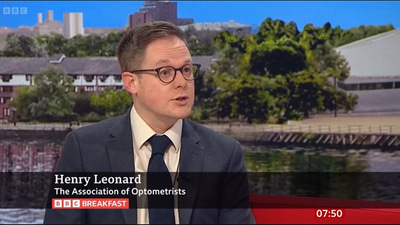
The AOP secured more than 400 items of coverage for its latest Don’t swerve a sight test campaign. Henry Leonard, AOP head of clinical, took to the BBC Breakfast sofa, AOP CEO, Adam Sampson, appeared on ITV, and BBC Scotland interviewed Kevin Wallace, AOP clinical adviser.
Goodbye to 2024

From business wins, to changing policy, to new qualifications, and community-work, OT asked contributors to share their standout moments from 2024. Experts also shared insight into key drivers in the eyewear market.
The cycle begins again

For AOP members and OT subscribers looking to get ahead in the new CPD cycle, OT has a variety of resources, advice, and education available on the website. Don’t forget to prepare a new personal development plan to structure the next cycle of your education.


Comments (0)
You must be logged in to join the discussion. Log in