


05 December 2025
The need to embed a culture of lifelong learning, along with emphasising that myopia is likely to be one of the fastest progressing areas of optometry students’ future careers, are at the forefront when academic departments are developing their myopia management teaching.
Our experts

Name:Dr Niall Hynes
Occupation:Senior lecturer in optometry at the University of Huddersfield, and AOP Councillor representing academic optometrists
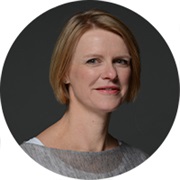
Name:Professor Nicola Logan
Occupation:Professor Nicola Logan, professor of optometry and physiological optics at Aston University
How do you approach teaching optometry students about myopia management?
Dr Niall Hynes (NH): Myopia management is a good way of demonstrating to students about evidence-based practice. I like to bring them through the recently published literature – the number of studies that have examined the effectiveness of, say, multifocal spectacle lenses, multifocal contact lenses, or orthokeratology, and the studies that have gone into the pharmacological treatments as well.
I go through all the studies with them and show them where the evidence is. I want students to understand that myopia management doesn’t work because their lecturer told them it works – it works because the evidence is there.
I’ve been giving this specific lecture for the past four years, and every year new slides have gone in, because it’s an area that’s constantly updated, and we’re getting new evidence all the time. There are new treatments becoming available as well.
It’s an example for students of one of those areas where, soon after they’ve qualified, the evidence base will be updated again. It’s going to be changing constantly. It’s a great example for students that education doesn’t stop once they’ve graduated. These are the kinds of things that they need to keep on top of.
When I qualified, myopia management wasn’t there. Optical coherence tomography was just at its advent as well. They are two areas where we’ve seen huge leaps and bounds in the past decade. It’s getting them to look through the evidence base, and realise for themselves that certain treatments are effective, but also realise the limitations that the research has shown in these treatments.
I want students to understand that myopia management doesn’t work because their lecturer told them it works – it works because the evidence is there
Professor Nicola Logan (NL): Most of the content regarding myopia at Aston is embedded into stage two and stage three of our teaching elements. It’s within the theme of paediatric optometry, and it crosses over into contact lens teaching, because some of the interventions for myopia control are contact lenses. And of course, it crosses into dispensing, because there are spectacle lenses for myopia.
I deliver a lot of the content for myopia, and that really allows us to embed the latest evidence from research into the teaching. It’s updated on an annual, if not more regular, basis, so the students are kept up-to-date.
We’ve been embedding aspects of myopia into our teaching for the past 20 years or so. We were talking about it long before we had interventions available in terms of lifestyle, risk factors, or awareness of it.
Students need to understand that natural trajectory of it – if they did nothing, the numbers of children who might be affected, and the risk factors, so that they can talk to parents more confidently about it in practice. Parents will ask if their child is at risk of developing myopia, and what can be done if they develop it. Students really need to be able to answer those questions.
We talk them through the range of options available to them in practice, when you might use one versus another, and we recognise that not all practices will have all interventions available. There is a lot of case-based discussion: you’ve got this child at a specific age, and this is their lifestyle, and here is what you might do or say, and what interventions might work or not work, and what you would choose – those discussion elements, so they feel really familiar and confident with it.
We’ve been embedding aspects of myopia into our teaching for past 20 years or so. We were talking about it long before we had interventions available
In contact lenses, we run through all of the options for myopia control, with more emphasis. Within some of our other teaching, we talk about how you would measure or assess a myopic eye – not just for refractive error, but for axial length and the different types of biometers available. You can see how myopia permeates across different aspects of our teaching.
When students are at stage three, there are patient-facing clinics that deal more specifically with children with myopia, and they will rotate around those clinics. By the time they leave university, students should be really comfortable seeing children with myopia, and being aware of the research out there, but also being aware that research is fast-evolving, and how to access updates and what to look for when the new intervention comes on to market. What are the key things they need to think about before they bring that into use in clinical practice?
Myopia is an ongoing discussion. It’s not something that necessarily happens at that first visit with the child. You plant that seed of discussion, and it’s about how that progresses. With the students, we talk about the management of that journey. You might see a child before they develop myopia, and know they’re at risk, and follow it on. It’s how you approach the long-term.
We don’t have myopia management as a specialty, because we want our students to realise that it’s a core part of their work and their understanding. It’s embedded throughout the programme, in different ways. It's not a niche area. It’s right across our teaching. That’s really important.
Because myopia is a fast-moving area with a quickly developing research base, do you find any challenge terms of the content that you are teaching?
NH: It’s a challenge and an opportunity. The challenge is keeping up-to-date yourself, and ensuring that what you’re teaching is the most current information that we have. You don’t want to miss key points. The month before the lecture, I’ll do another literature search to make sure I haven’t missed anything major that’s happened within the past year.
I was at British Congress of Optometry and Vision Science recently, and it was a great opportunity to chat to the PhD students who are involved in myopia research at the moment. We know there are some brilliant studies that have recently been published around the country, and talks that have been given, which I hope to incorporate into the lectures going forward. The biggest challenge is keeping up-to-date, and ensuring that the lecture is as contemporary as possible.
NL: Optometry is evolving across many different domains of practice, and myopia is just one of those. Once students qualify, they don’t stop learning. We have continuing professional development (CPD); if they go to conferences, they’ll recognise that myopia is up there with so many other things in terms of trying to keep up to date with everything that’s ongoing. It’s lifelong learning, and we try to embed those skills for how they access that lifelong learning and what they take from it.
Research does move quickly. It’s important for students to realise that, if they’re working with children with myopia in practice, it is one of the CPD areas that they will need to engage with. We point them to lots of different sources, like the International Myopia Institute’s (IMI) website, because they can freely access all publications through that. The IMI has summaries of lots of the papers, so you don’t have to read the whole paper to keep up to date with what’s going on.
We also have a newsletter that goes out to our alumni, updating them with the latest research on different aspects that we do through the university. It’s bringing that to the fore: recognising that it’s an ongoing area of research. How they access up to date information, and what they then do with it, is important. What do they take from it, when they do try to embed it into practice?
It’s important for students to realise that, if they’re working with children with myopia in practice, it is one of the CPD areas that they will need to engage with
At what point do you introduce students to myopia management?
NH: I teach paediatric optometry, which is a third-year module. But I do think myopia management is something students should have awareness of a little bit earlier. It is mentioned in clinical skills and other modules, but I take a deep dive into it in the third year.
I’m a big believer in not just giving students a lecture. You want to signpost them to different resources: get them used to the College of Optometrists guidelines, and the CPD in Optometry Today and other publications. I like to identify a few CPD articles, to give them an understanding and get them used to reading those kinds of articles, because there’s so much change happening. It’s a popular area for CPD, as it should be, and it’s an opportunity to broaden those horizons in terms of that high-level, independent learning.
Are students generally quite interested in the subject of myopia management?
NH: Yes, I think so. Because a lot of the students have myopia themselves, and they might have family members or younger siblings who might be progressing myopes, they do tend to take an interest in it.
We have a study in Huddersfield at the moment, looking at management of myopia in university students. In a small but significant minority of myopes it continues to progress, the research suggests, into early adulthood. We’re doing research into whether the myopia management techniques that work in children work in university students as well. Obviously, there is a lot of close work involved in university-level study. Some of the environmental causes of myopia are very much the same.
Also, we try to get across the point that it is fairly dynamic at the moment. These are the big changes they are going to face during their careers. We’ve set the scene. A Brien Holden Vision Institute paper from 2016 suggested that half the world’s population are going to be short-sighted by 2050. The myopia epidemic is going to be one of the big challenges of their careers. When you explain to them that this is only going to be increasing, they do tend to sit up and take notice.
This is true of whatever setting they end up working in. In the hospital, there is the connection with pathological myopia. There is a potential that we’re going to be seeing more ocular disease as a result of high myopia. That makes us sit up and take notice. It’s not only a case of, ‘oh, you’re going to need a pair of glasses.’ There are the many other potential risks associated with myopia, particularly high myopia, that we need to be concerned about.
The myopia epidemic is going to be one of the big challenges of their careers. When you explain to them that this is only going to be increasing, they do tend to sit up and take notice
NL: We have good data on undergraduate optometry students in terms of their refractive error profile, and over 50% of them have myopia themselves that they know about. It’s key to lots of them. Some are still progressing myopes – we know with university students, myopia still progresses quite a lot in that cohort. It’s something they’re all aware of.
We try to ensure that our students are fully aware of the research that we’re doing. They hear about the research at a much earlier stage than perhaps students at other universities might do. We’ll talk about what we’re presenting at conferences, before it’s in a peer reviewed publication and in that wider domain. We have our myopia research clinics that run every day. There is a whole range of different things that they’re exposed to, and hopefully that makes them more aware of that need for ongoing learning.
We also talk about the importance of research and how what ends up in clinical practice has come through research somewhere. It’s thinking about what happens at those early stages.
Our students all do a research project in year three, and quite a lot of those are related to myopia. Some are practical projects, so they get experience in terms of collecting and analysing data related to myopia. They get a much better feel for what’s going on, what’s normal, and what’s happening in a myopic eye. I think it really helps to embed all that other learning that they’ve had. I try to excite them in the whole research and learning experience, so hopefully they will then stay engaged.


The Professor Nicola Logan episode
In the first episode of OT’s new podcast series, we speak to Aston University’s Professor Nicola Logan, an expert in the field of myopia, about its development, progression and management
Have the new education training requirements changed how you teach myopia management?
NH: We’ve moved into the second year of our new programme now, and we’re teaching myopia a little bit earlier. We want our students to be as prepared for practice as possible when they’re going into fourth year, and into that placement.
It will depend also on how the evidence base progresses. I’ve no doubt we’ll be teaching different treatments. At the moment, there’s no pharmacological treatment available in the UK. There is a big study going on into that at the moment, with universities across the UK looking into it. When the results of that come out, they are going to influence what we’re teaching.
Who knows what will happen in the future, in terms of university myopia clinics. That’s something I think universities have the potential be at the forefront of, in terms of managing myopia in the community.
Is there anything else that you feel is important to emphasise to students when teaching myopia management?
NH: What we need to get across to students is how to manage expectations – how we how we approach it with the parents and the child, how to encourage compliance with the treatment, and how that can have an effect on it.
But also, the fact that it doesn’t work for everyone. It’s important to get across to students that it’s not a miracle cure. It has been shown to be effective over many different types of treatment, but it’s setting expectations to parents and children that it’s not going to cure their short sightedness. How we communicate, and making sure that we’re properly informed, is important to get across to students.
I still do a bit of locuming myself – I still work in clinical practice, and it’s easier said than done. Unfortunately, at the moment, the cost is prohibitive for some patients.
NL: For older myopic patients, often there isn’t a lot that can be done, because they might have an irreversible visual impairment. But it’s then talking to them about their grandchildren, and if there is myopia there, and what we could do for them to try and stop that. It’s that different type of conversation that you might be having with some of those patients, and the awareness that myopia permits right through your life. That family knowledge links us to being able to do something about it at an earlier stage. Being able to link those things up is important for our students.

Myopia management funding
Independent prescribing optometrists, Neil Hilton and Dr Keyur Patel, consider the potential of central funding for children at risk of myopia


Comments (0)
You must be logged in to join the discussion. Log in