


07 August 2026
If a time-traveller from the early days of optics at Aston University took a tour of the optometry department in 2026, they would be greeted by an array of technology with the potential to amaze, bewilder and delight.
The 29 fully-equipped consulting rooms within the Aston Eye Clinic are a major advancement on the single room that greeted ophthalmic optics students in 1948.
As part of an interview for the College of Optometrists’ Students Past Project Archive, the late Professor Geoffrey Ball recalled that all lectures took place in this space.
The department later received an additional small room – roughly seven metres by five metres – where two cubicles were constructed for eye examinations.
“It was windowless, airless and extremely hot,” Ball shared.
Rather than testing their clinical skills in a state-of-the art patient simulation suite, post-war students examined ‘patients’ sourced through a local labour exchange.
“These were mostly minor actresses resting until the pantomime season began,” Ball recollected.
I’m proud that when I go around the Midlands I see students who have gone on to have wonderful careers
Milestone moments
This year Aston University is celebrating the centenary of its optometry department – with its previous incarnation, Birmingham Technical School, offering classes in optics from 1926.
The celebration ties into a broader 60-year anniversary of its status as a university, after Aston University received a Royal Charter in 1966.
Retired optometrist and senior lecturer, Dr Colin Fowler, started at Aston University as a postgraduate student in 1970 after completing his undergraduate degree at the University of Wales Institute of Science and Technology (now Cardiff University).
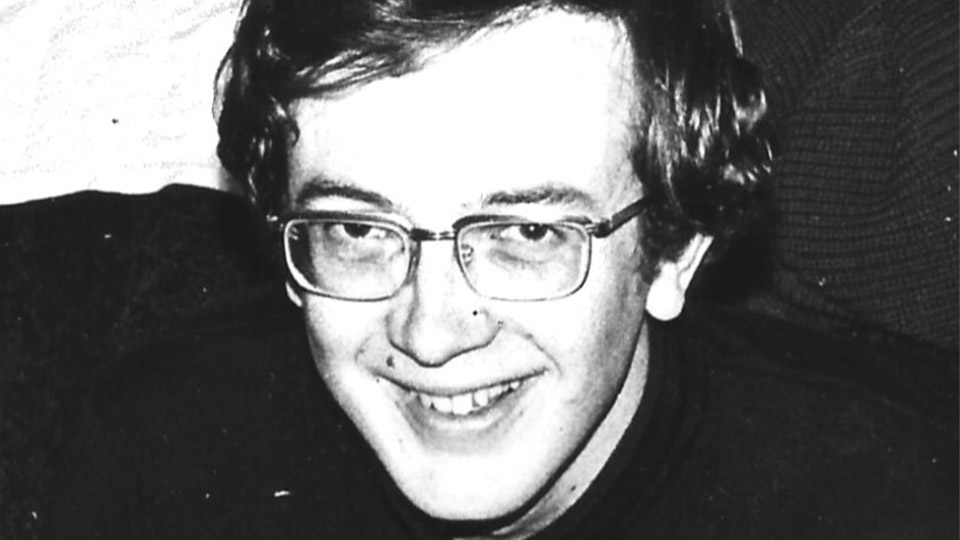
He went on to work as a lecturer and senior lecturer within the Aston University optometry department between 1973 and 2006. Fowler continued working as a visiting member of staff until 2020.
During his professional career with Aston University – which spanned half the institution’s centenary – Fowler observed significant changes.
“There is more of a focus now on what would have traditionally been ophthalmology rather than refraction and dispensing,” he said.
As part of their undergraduate degree in the early 1970s, students learned how to make plastic frames. Retinoscopy and direct ophthalmoscopy formed core elements of their training.
“We didn’t have modern visual field analysers – the instruments were quite basic and tedious to use,” Fowler recalled.
Fowler undertook a PhD in ophthalmic lenses – an interest that was sparked through exposure to photography equipment as a child.
“My father was a pharmacist, and he had a big photographic department in his shop,” he said.
“From a very early age I was tinkering with old cameras that were lying around,” Fowler shared.
This willingness to experiment continued into Fowler’s career as an academic. After his students complained about the expense of purchasing a retinoscope, Fowler constructed a rudimentary retinoscope in his garage using an LED lightbulb and £5 of plumbing tube.
Fowler’s professional interest in ophthalmic lenses saw him join bodies responsible for the development of international standards. In this role, he travelled to a range of countries, including Germany, the US, France, Japan and Australia.
The academic reflected that the best part of this experience was meeting people with a shared interest.
“There aren’t that many people with a deep theoretical interest in the design of ophthalmic lenses,” he said.
In each country, Fowler would make an effort to visit the nation’s largest ophthalmic lens factory.
“My favourite one was in Australia – which was located on a cliff top,” Fowler said.
“You saw aspects of the country which you wouldn't normally see as an ordinary visitor,” he observed.
An academic home
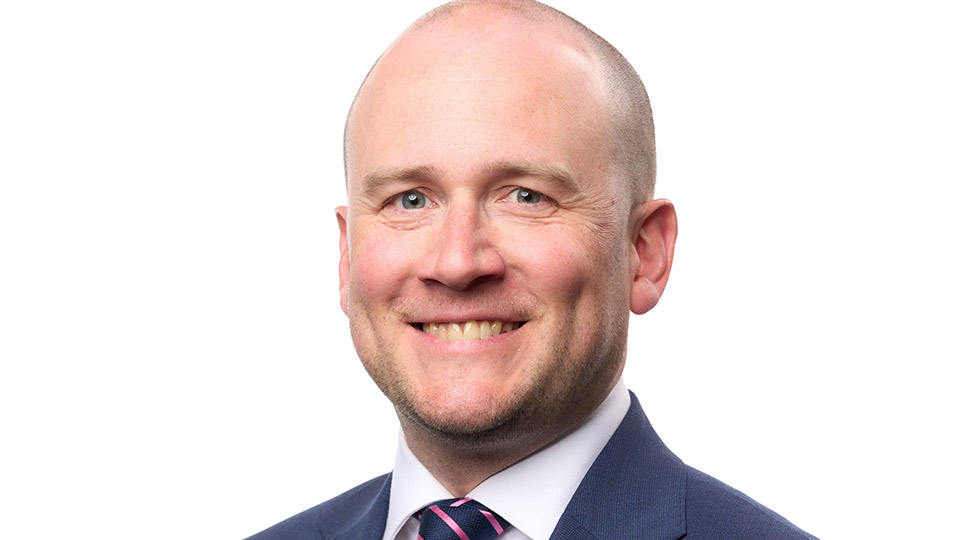
After a largely uninterrupted 29-year stretch of studying and working at Aston University, the former police garage with its distinctive chequerboard façade feels like home to Professor Leon Davies.
On a noticeboard in Davies’ office hangs a photograph taken at Professor Bernard Gilmartin’s festschrift in 2011.
Smiling back at the camera is a sort of optical lineage – Professors Michel Millodot, Neville McBride, James Wolffsohn, Davies and Dr Amy Sheppard.
From left to right, each person has supervised the other.
“That’s our academic family tree,” Davies told OT.
Growing up in Brierley Hill in the Black Country, Davies observed his grandmother’s sight loss as a result of glaucoma and cataracts.
“As a very young person I can remember saying ‘I'll become a professor and I'll help you’,” he shared.
Davies, whose parents both left school at the age of 14, became the first person in his family to attend university.
“I can vividly remember coming here on my first day as an 18-year-old undergraduate, sitting in the reception area with some of my peers and being really excited,” he recalled.
Following brief periods working at Boots Opticians Worcester and Wolverhampton Eye Infirmary as part of his training, Davies returned to Aston University following the completion of his pre-reg to study towards a PhD.
He has since gone on to hold a variety of roles at the university – including lecturer, senior lecturer, reader and professor.
Davies estimates that the total number of students he has taught over the course of his career is equivalent to a quarter of the current General Optical Council register.
“I’m proud that when I go around the Midlands I see students who have gone on to have wonderful careers,” he said.
Davies highlighted the role that research plays in informing teaching at Aston University.
“Whatever we do – whether that is basic or translational science – underpins what we teach. That then feeds into the evidence base that supports the broader profession,” he said.
Reflecting on the qualities that Aston University instils in optometry graduates, Davies highlighted a sense of clinical confidence and intellectual curiosity.
He also hopes that a focus on public service – seen through initiatives such as the Villa Vision programme – helps to shape the values graduates bring to their future workplaces.
“The essence of any undergraduate degree is not simply about the discipline that you are studying, but about becoming a well-rounded individual,” Davies shared.
“Putting the patient first, having that that social responsibility at the core of what we do, you can almost not go wrong because you're doing it for the right reasons,” he reflected.
Davies believes that one of the strengths of the Aston University optometry department is its ability to adapt to ensure that research and teaching reflects developments within the profession.
Academics are currently applying for grants and scoping research exploring how artificial intelligence (AI) can be utilised within optometry.
“AI is here – it is not going away, so we are thinking ‘how can we innovate around that?’ We want to be on the front foot for our students and our patients so that we can use the technology to better serve them in the future,” Davies highlighted.
You knew from an undergraduate level that you could go on to shape your profession
The evolution of education
When Sheppard, who is head of optometry and audiology at Aston University, began her studies to become an optometrist in 2000, the technological landscape was different to the environment that greets optometry students in 2026.
With fewer resources available online, she spent many hours at the library getting out textbooks and photocopying journals for her dissertation. Her university notes are written carefully in fountain pen.
“I don't recall anyone having a laptop in the lecture theatre,” she told OT.
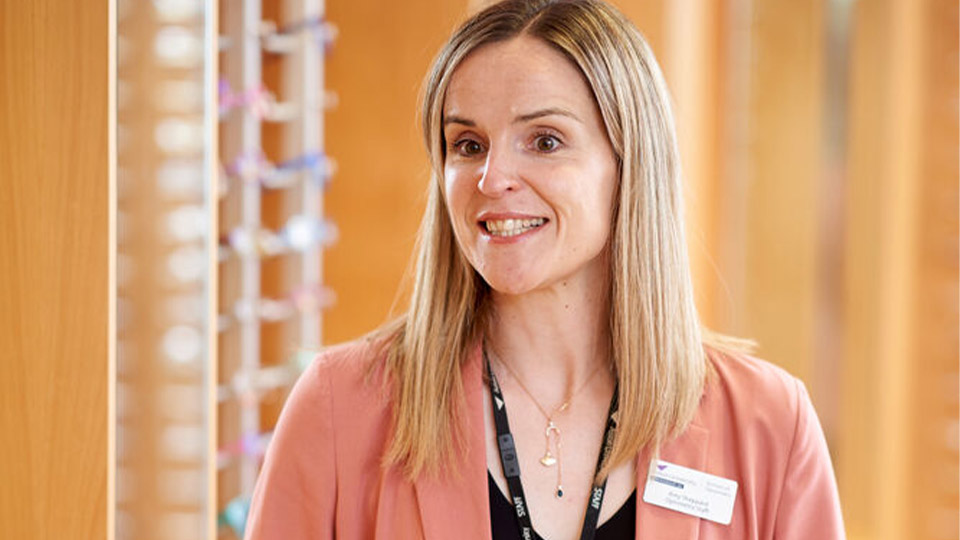
After being inspired by the researchers she learned from during her undergraduate degree, Sheppard embarked on a PhD in 2007 before going on to work as a teaching fellow, lecturer and reader within the optometry department.
Sheppard noted that one of the Aston University optometry department’s strengths is its focus on inclusivity.
“We do a lot of work on removing barriers to access to university and supporting students once they're here so that everybody is able to succeed,” she shared.
Reflecting on changes within the optometry department over the course of her career, Sheppard observed that the student cohort is larger and it has also diversified – with a broad range of postgraduate qualifications on offer. This includes Aston University’s innovative Doctor of Optometry programme.
The General Optical Council’s (GOC) updated education and training requirements have resulted in significant changes to how the optometry programme is delivered at Aston University.
“All of our students are going to be graduating with Master's degrees, and they are eligible to apply to register with the GOC as soon as they've got those degrees,” Sheppard said.
“We’ve got our first big cohort of students going into their fourth and final year this summer, so that’s a significant change,” she said.
Sheppard told OT that the university collaborates with organisations, such as Focus and The Guide Dogs for the Blind Association, to give students a broader understanding of the patient perspective.
“We want to train safe and competent clinicians, but we also want students to take an empathetic approach with a real focus on patient-centred care,” she reflected.
Not just a number
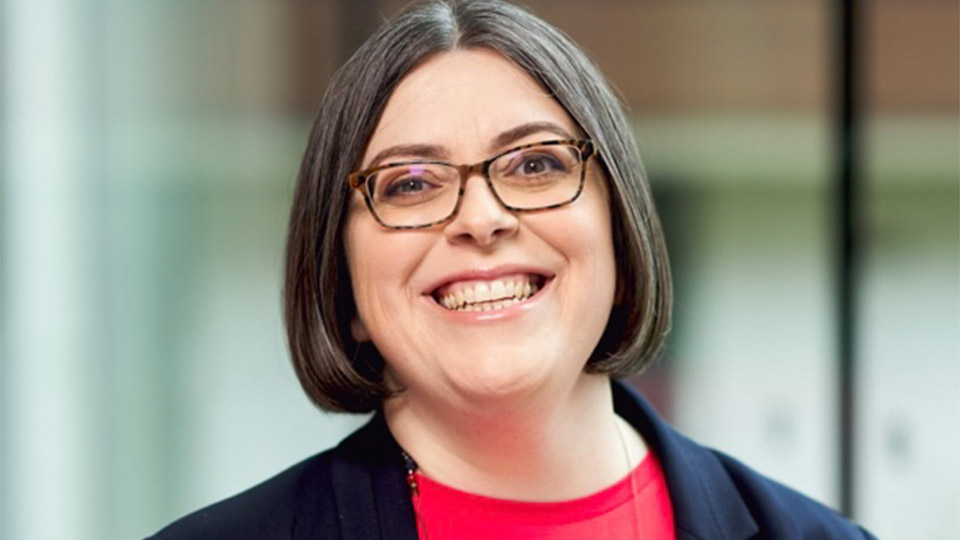
Aston University senior teaching fellow, Dr Olivia Hunt, started her PhD at Aston University in 2001. She has worked at the university in a range of clinical supervision, teaching and curriculum development roles.
Her current role as year three lead involves arranging clinical teaching for this cohort as well as providing broader student support to around 140 students each year.
“We are one of the biggest optometry schools but I really want to focus on making the student experience as personalised as possible,” she said.
“It’s really important that they know that they matter and they are not just a number. We need to know their names, who they are and their strengths,” Hunt reflected.
Hunt observed that while technology and the structure of training has changed over the course of her career, there are some aspects of teaching that remain constant at Aston University.
“Students need to learn how to sit with the patients, build trust and listen properly. They need to learn how to explain their decisions and make clear and safe decisions for that patient,” Hunt reflected.
Topics such as professionalism, consent, safeguarding and communication are now an integral part of the curriculum.
“When I was training, those things were much more implicit in how we practised and they are now much more explicit in how we teach,” Hunt said.
Hunt shared that she learns from her students as well as leading their clinical education.
“The students are great and make me laugh every single day that I teach. They stay the same age while I get older,” she said.
The next generation
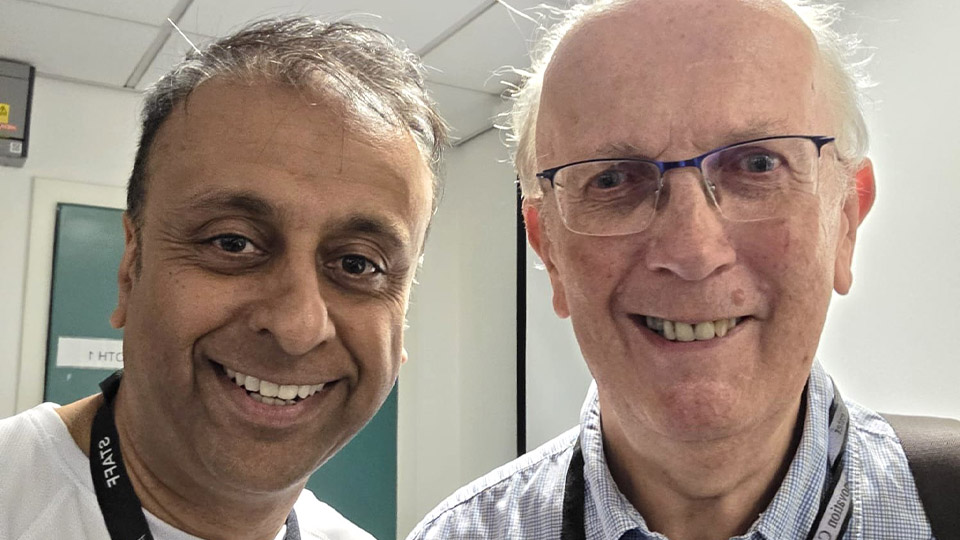
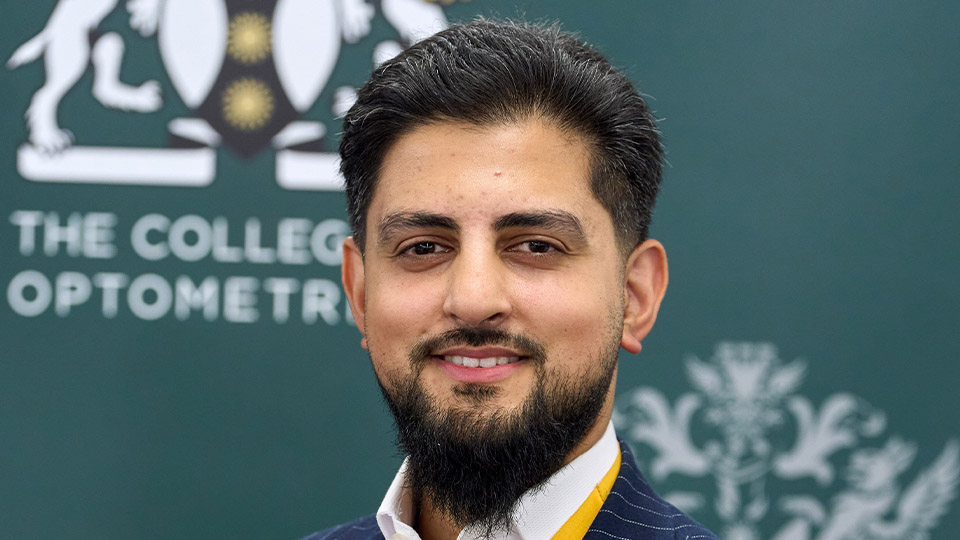
Optometrist and director of Evington Eyecare and While Opticians, Hassnain Safdar, graduated from Aston University in 2016.
“I felt like it was a really prestigious institution and I felt humbled to be in that environment,” he told OT.
Growing up, Safdar recalls picking up his brother’s glasses and being fascinated by how his view of the world was so different to his sibling’s when viewed through the lens.
“The optics side of optometry really appealed to me – the idea that through using just a few simple techniques you could really transform someone's life,” Safdar reflected.
Later, during a work experience placement on a hospital ward, Safdar found that interacting with patients while delivering their tea and coffee was his favourite part of the role.
“I loved speaking to patients who were really craving a social connection,” Safdar said.
These combined experiences prompted Safdar to become that rarity within university corridors – an emmetrope studying toward an optometry degree.
Reflecting on the overarching skills he gained through his degree, Safdar shared that his degree has strengthened his ability to think critically about issues.
“The way the education is delivered challenges your way of thinking,” he said.
“That is a testament to some of the lecturers and professors who are there. They really are at the top of their game and I think that in itself is inspiring as an undergraduate,” Safdar emphasised.
The College of Optometrists vice president added that observing how teaching and research staff were active within different areas of the profession also served as a strong example.
“You knew from an undergraduate level that you could go on to shape your profession and help the people by being part of organisations that are driving change,” Safdar said.

A personal history of Aston University optometry department in 12 objects
Alumni and a historical expert chart the course of optics at Aston University through an array of everyday objects


Comments (0)
You must be logged in to join the discussion. Log in