


13 October 2026
A new book exploring clinical, surgical and humanitarian perspectives on ocular trauma during war was presented at the European Society of Cataract and Refractive Surgeons Congress (11-15 September, Excel London).
Eye Injuries in War (Springer, 2026) provides an overview of pathophysiology, diagnostics, surgical strategies, and rehabilitation of eye injuries caused by modern warfare.
German medical writer, Sibylle Scholtz, told OT that the idea for the book grew out of an international webinar delivered in 2025 where Ukrainian ophthalmologists presented their first-hand experiences of treating eye injuries under wartime conditions.
“The discussion and the response from the international audience made us realise that this knowledge should not disappear when the webinar ended. It needed to be collected. It needed to be preserved. It needed to be made available to a much wider audience,” she highlighted.
Scholtz, who is also an associate senior research fellow at Saarland University’s Institute of Experimental Ophthalmology, highlighted that there was an emotional dimension to producing the book.
“I have close friends and colleagues in Ukraine. When the full-scale invasion began, I felt a profound need to do something constructive. The book became our way of transforming concern and helplessness into practical contributions,” she said.
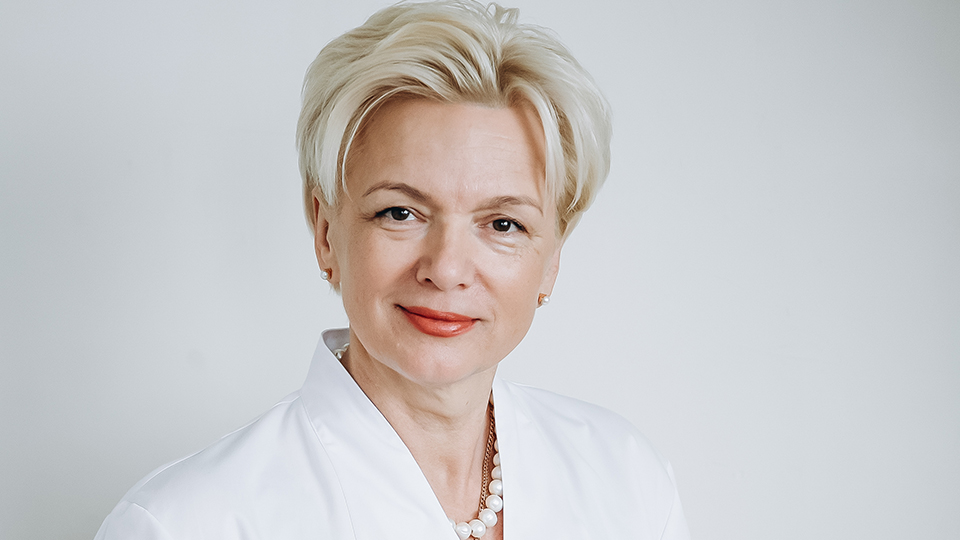
Kyiv ophthalmologist, Oksana Vitovska, highlighted that since Russia’s full-scale invasion of Ukraine, her work has been shaped by “enormous challenges.”
“From my perspective, it was essential to share the experience gained by our clinicians. They work under extremely difficult circumstances. The injury patterns, the organisation of care, and the surgical decisions are not theoretical for us. They are part of the daily reality of ophthalmology during war,” she said.
Lee MacMorris, who is based in California and has collaborated with Scholtz on other projects, provided research and editorial support.
“From my perspective, as an information professional, it was clear that much of this valuable knowledge was scattered across individual publications, presentations, clinical reports, and personal experience,” she said.
“A webinar is important, but it is temporary. A book creates a lasting and structured record,” she said.
She added that she was “deeply moved” by the human stories behind the clinical material.
“These were not simply examples of injuries or surgical techniques. Every case represented a person whose life had changed within seconds. Helping to preserve and communicate these experiences was an important motivation for me,” MacMorris highlighted.
The changing nature of modern warfare
Vitovska highlighted that modern warfare increasingly involves drones, missiles, cluster munitions, artillery, mines and improvised explosive devices.
She added that explosions can transform glass, metal, stones, and building debris into secondary projectiles.
“As a result, we see more complex and combined injuries: multiple penetrating wounds, intraocular foreign bodies, burns, orbital fractures, and extensive craniofacial trauma. A single patient may require interdisciplinary therapy,” she said.
Working as an ophthalmologist in Kyiv, Vitovska has been confronted with the consequences of war-related eye injuries.
“These injuries are frequently extremely severe and may involve not only the eye but also the face, brain, and other parts of the body. Decisions often have to be made rapidly and under enormous pressure,” she said.
As a result of this experience as a clinician, Vitovska has learned to work in stages.
Her first priority is to save the patient’s life, followed by preserving the anatomical integrity of the eye. Her final priority is doing everything possible to restore vision and provide long-term rehabilitation.
“Personally, it is impossible to remain unaffected,” she said.
“At the same time, the courage of our patients and the dedication of Ukrainian healthcare professionals have given me an even stronger sense of responsibility and determination,” she highlighted.
Scholtz highlighted that modern warfare increasingly takes place in urban environments – increasing the exposure of civilians to conflict.
She noted that while improved body armor has enabled more seriously injured soldiers to survive, the face and eyes often remain exposed.
“Consequently, eye injuries constitute a substantial proportion of the injuries seen among survivors,” she said.
These were not simply examples of injuries or surgical techniques. Every case represented a person whose life had changed within seconds.
Clinical case studies
While the principal focus of the book is on Ukraine, injury patterns and medical lessons from Afghanistan, Iraq, and Syria are also referenced alongside discussion of the humanitarian consequences of conflict in Gaza, Sudan, and Yemen.
MacMorris highlighted that taking a global perspective was important to the authors.
“The book is rooted in Ukrainian experience, but its purpose is international knowledge transfer. The information should be available to anyone who may one day face similar medical challenges,” she said.
A clinical cohort featured within the book comes from the caseload of a public ophthalmology clinic in Dnipro, Ukraine between February 2022 and January 2025.
The clinic treated more than 1500 military personnel and civilians during this time, while surgeons performed 298 surgical procedures following penetrating eye injuries.
“These figures illustrate the severity of the damage caused by explosive fragments and high-velocity projectiles,” Vitovska noted.
Vitovska shared that the clinic remained open despite “extremely challenging” circumstances.
“Across Ukraine, however, the situation varied: some ophthalmologists relocated to the western regions of the country, while a number of clinics temporarily suspended their activities,” she said.
Vitovska added that during the first few months of the full-scale invasion of Ukraine by Russia there was a shortage of medicines and surgical supplies while the number of people with severe ocular injuries increased dramatically.
“This placed enormous pressure on the healthcare system and ophthalmic services in particular,” she said.
Vitovska highlighted the gratitude of Ukrainian clinicians towards international colleagues and humanitarian organisations that supported the continued provision of care.
“Medical teams closer to the front line focused primarily on emergency treatment, primary wound closure, and stabilisation, while specialised centers subsequently provided complex vitreoretinal and reconstructive procedures,” the ophthalmologist explained.


Comments (0)
You must be logged in to join the discussion. Log in