


19 November 2026
Around 780,000 people visit emergency departments in England each year with an eye problem.
Analysis by the AOP as part of the Eye care everywhere campaign reveals that up to eight in 10 of these cases could be safely dealt with in primary care optometry.
In this feature series, OT explores how the Community Urgent Eyecare Service (CUES) is helping to divert eye conditions from secondary care within different regions in England.
CUES in Norfolk and Waveney
Within Norfolk and Waveney, data from Primary Eyecare Services shows that 14,778 patients were seen through CUES in 2024–2025.
Primary Eyecare Services – a not-for-profit lead provider of services – estimates that in the same year the service freed up 3757 outpatient appointments and 7784 GP appointments in the region.
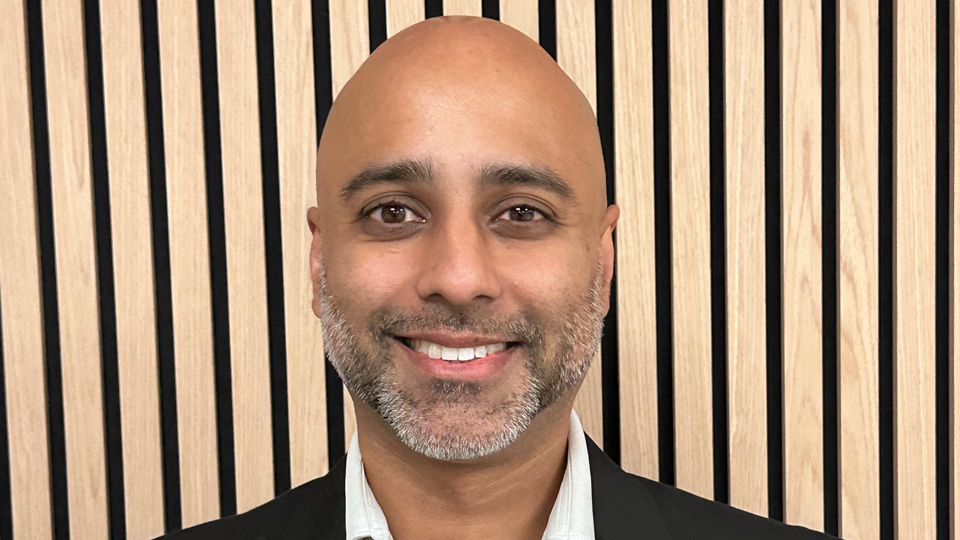
Suraj Shah is the clinical director of four Specsavers practices based in Norfolk – with all four practices offering CUES.
“I joined the Norfolk group of Specsavers practices in August 2019, having previously worked in Specsavers practices in London,” he told OT.
Shah estimated that the four practices have seen around 5000 CUES cases since he joined the group.
“We now see approximately 30 to 40 episodes each week, although that figure varies,” he shared.
Shah highlighted that patients present to CUES appointments with a broad range of symptoms.
“These include red, sore, gritty or itchy eyes, dry-eye-related symptoms, foreign bodies, pain and sudden changes in vision,” he noted.
The optometrist added that while some symptoms may not sound dramatic – such as a patient who notices a new floater or black dots in their vision – an eye examination can occasionally reveal a retinal tear or detachment which requires a same-day emergency hospital referral.
“These are the encounters that demonstrate why direct access to urgent eye care in the community matters,” Shah emphasised.
He observed that most of the patients who present to CUES can be managed within primary care.
“That is one of the real strengths of the service. Optometrists can filter cases effectively, provide appropriate advice and avoid sending patients into secondary care when their condition can safely be managed on the High Street,” Shah said.
The clinical director highlighted that having CUES available improves access to eye care within Norfolk.
“One of our practices is a CUES hub, but we can direct patients to another of our locations when the hub cannot see them,” Shah said.
“Across the four practices, we can normally assess urgent patients within 24 hours,” he added.
Shah noted as well as providing patients with a more convenient service, CUES can offer patients reassurance at what can be an uncertain time.
“Eye symptoms can be frightening. People want to understand what is happening and whether their sight is at risk. An optometrist has the equipment and expertise to investigate the problem, give bespoke advice and provide reassurance,” Shah said.
Since moving to Norfolk, Shah has completed higher qualifications in glaucoma, medical retina and independent prescribing.
The optometrist shared with OT that he finds offering CUES professionally rewarding.
“The work also takes me back to why I entered optometry. Refraction, glasses and contact lenses are important parts of High Street practice, but as expert clinicians we can do even more for patients,” Shah highlighted.
“CUES allows us to use our education, experience and knowledge to manage eye health problems,” he said.
Reflecting on the provision of CUES across England, Shah called for a more consistent level of service.
“Patients should not face a postcode lottery. A consistent system would mean that people could access the same standard of urgent eye care, regardless of where they live or which optician they normally visit,” he emphasised.
“Community optometrists already have the expertise to play this role. Patients everywhere should have the opportunity to benefit from it,” Shah added.
People want to understand what is happening and whether their sight is at risk. An optometrist has the equipment and expertise to investigate the problem, give bespoke advice and provide reassurance
Transformative care in the community
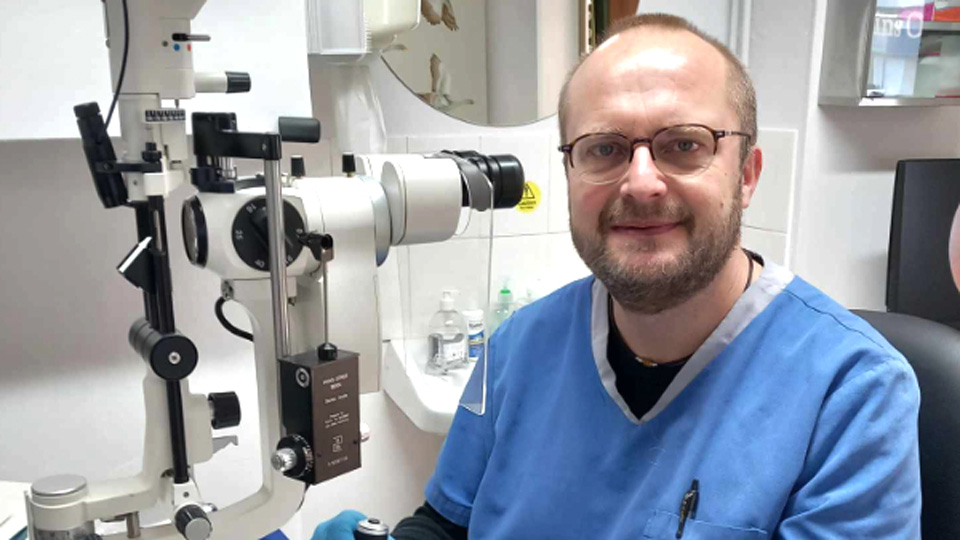
Adkins Opticians owner, Ed Adkins, told OT that his Diss optometry practice has offered CUES since its inception in 2020.
“Prior to this, we had a Minor Eye Condition Service, which CUES replaced,” Adkins said.
The optometrist, who is also secretary of Norfolk and Waveney Local Optical Committee, estimated that his practice sees between three and four CUES patients each week – although this figure varies.
“Patients present like buses rather than an orderly trickle,” he said.
Reflecting on the range of CUES presentations that he sees, Adkins shared conditions vary from corneal and conjunctival foreign bodies through to iritis and retinal detachments.
Adkins recalled a CUES appointment during the pandemic when he was able to make a significant difference to a patient’s quality of life.
“During lockdown, an elderly gentleman consulted me in desperation due to feeling very ill, with failing vision and headaches, despite consulting a GP,” Adkins recounted.
“He had the classic symptoms of giant cell arteritis - temporal tenderness and jaw claudication,” the optometrist shared.
Adkins phoned an alternative GP who was able to arrange for the patient to receive oral steroids within the hour.
“According to a young relative, the chap literally leapt out of bed the following day,” Adkins said.
In terms of organising his workflow, Adkins generally tries to keep a 15-minute appointment free at the end of each morning and afternoon session in case it is needed for a CUES appointment.
According to a young relative, the chap literally leapt out of bed the following day
Adkins observed that while in theory CUES can benefit patients by offering timely, local eye care, this has not always been possible following a reduction in the number of practices offering CUES after the pandemic.
“Some parts of Norfolk don’t have any CUES services locally and the patients have to sometimes travel across our large county as a result,” he shared.
Adkins highlighted that CUES has the potential to reduce unnecessary referrals into secondary care – freeing up capacity for hospital clinicians to focus on more complicated cases.
“Offering enhanced services adds variety to my day. Because I don’t know what each day will bring, it keeps me sharp and gives me the chance to learn and practise different skills,” he said.
A common sense solution
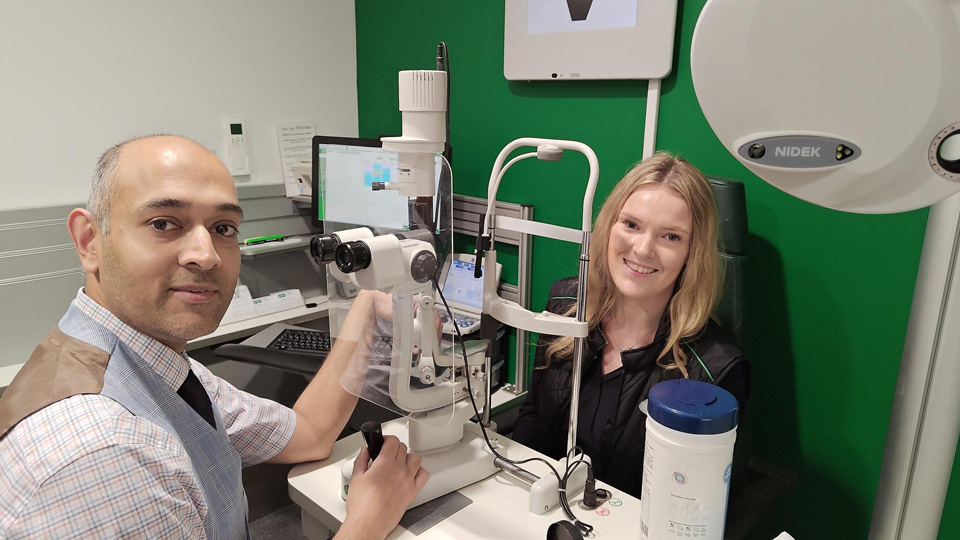
Ali Ganiwalla, optometrist director of Specsavers Gorleston and Great Yarmouth, shared with OT that offering CUES was a “no-brainer decision.”
His practices rolled out the service shortly after it was implemented in the region.
“This service just makes sense – not simply as a response to the pandemic, but generally speaking. We have not looked back since it was introduced,” Ganiwalla highlighted.
Across Specsavers Gorleston and Great Yarmouth, Ganiwalla estimated that around 20 patients per week would receive a CUES appointment.
A triage lead has the responsibility for assigning the first available appointment at either practice to patients presenting for a CUES appointment.
Ganiwalla observed that being able to access urgent eye care services in the community gave a sense of reassurance to patients – which was heightened during the pandemic.
“To a patient, especially a patient who was isolated at home and couldn’t access other services, CUES was a godsend,” he said.
Ganiwalla will often observe a sense of relief in patients who have been worrying about an eye problem that is relatively straightforward for an optometrist with his training to resolve.
“Even when the news isn’t good, they are reassured by the fact that they know what’s happening and that there is a plan to potentially fix or improve the issue,” he said.
“It really does change their mood and outlook considerably,” the optometrist added.
He recalled the example of a woman who presented for a CUES appointment with an eye that kept watering.
While she did not remember anything entering her eye, Ganiwalla found and removed a 3mm foreign body.
“I couldn’t work out what it was, but it wasn’t metal. It seemed like something multicoloured had gone into her eye,” he said.
At a check-up a week later, the woman’s epithelium had completely healed.
Ganiwalla has previously completed a foreign body workshop with the Wales Optometry Postgraduate Education Centre.
“That was quite good because it helps you to build up your confidence,” he said.
Ganiwalla highlighted that CUES gives practitioners a chance to put skills into practice.
“There is a sense of satisfaction in those cases, like foreign bodies and epilation, where you are able to provide a patient with immediate relief,” he said.
Ganiwalla highlighted that there are lengthy waiting times at the local accident and emergency department in his area, while GPs may not necessarily have the right training or equipment to see patients with acute eye problems.
“Previously we would see patients who had been round and round in circles, going from one type of treatment to the next, but not achieving a resolution,” he said.
The role of telemedicine in Norfolk and Waveney
CUES in Norfolk and Waveney is supported by the Primary Eyecare Services telemedicine service.
Primary Eyecare Services head of telemedicine, Sehrish Vasi, told OT that the telemedicine service is delivered in a number of areas across England, particularly in rural areas and those with workforce challenges.
“It is a centralised virtual screening and consultation service. The telemedicine service supports local practices by managing appropriate patients remotely,” Vasi shared.
“This model ensures patients are directed quickly to the right level of care – whether that’s being managed virtually, booked into a community optometry practice, or escalated to secondary care,” she said.

Within Norfolk and Waveney, patients can call the CUES hub for an initial consultation.
A non-clinician will determine whether the patient is eligible for the service, before booking the patient into a virtual clinic with an optometrist.
Vasi explained that the telemedicine optometrist will ask a series of questions to inform their clinical decision making.
“We either manage that patient within our telemedicine service through a treatment plan or advice, or refer on to an optometry practice within the community,” she said.
Vasi observed that patients are rarely referred to hospital through the telemedicine service.
“It is few and far between. We try and manage as much as we can within the community to support secondary care where possible,” she said.
Within the Primary Eyecare Services telemedicine team, there are currently 47 optometrists and 27 non-clinical team members who are based in different areas of England.
“What we are trying to do is provide timely care to patients without the need to travel,” she said.
“As well as supporting the patient, we are supporting secondary care,” Vasi observed.
She added that there is a growing awareness of the role that the telemedicine service can play.
“People are starting to learn about who we are and what we do. I think, looking at the bigger picture, telemedicine is going to be a key and vital part of optometry,” Vasi shared.
The AOP view
The AOP’s Eye care everywhere campaign is calling for change to make enhanced services available to all – no matter what a person’s postcode is.
AOP clinical and policy director, Dr Peter Hampson, told OT that the AOP would like to see a consistent, well-resourced community eye care service implemented across England – bringing care closer to people’s homes.
"Across England, optical practices are already delivering enhanced eye care that keeps many patients out of A&E and away from the 8am scramble for a GP appointment,” he said.
“With the NHS under immense pressure, too many patients face long waits and care that depends on where they live. Equitable access to community optometry can, and often does, spare people unnecessary trips to busy hospitals and GP surgeries,” Hampson emphasised.


Comments (0)
You must be logged in to join the discussion. Log in