


03 September 2026
On Friday (4 September), many UK optical professionals will be celebrating Janmashtami – a Hindu festival that celebrates the birth of Lord Krishna.
OT spoke with optometrists about the personal significance of Janmashtami and how they will celebrate the day.
My Janmashtami
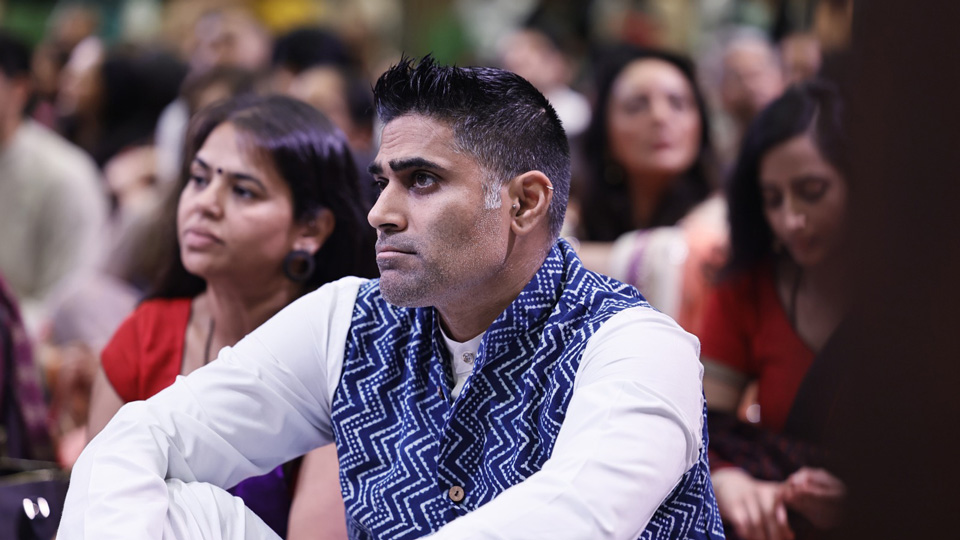
Dipti Mistry, an IP optometrist at Davis Optometrists in Market Harborough, on a celebration that builds connections between generations
“Within my family, we often start Janmashtami celebrations early in the morning. We observe a fast throughout the day and make an effort to visit the temple. There are readings from scriptures, revisiting many legendary divine stories from the time of Lord Krishna. We also meditate to aid spiritual awakening.
“Everyone plays a small part in preparing for the day. Tasks are not set, but as a community people will get involved in what they may enjoy doing – from making decorations, flower garlands and divas [candles] to preparing food offerings like Indian sweets. Temples are decorated with flowers. The fragrance from flowers, candles and incense sticks is quite something else. The day is filled with prayers and the singing of devotional hymns.

“Panjiri is a food traditionally made as an offering to Lord Krishna as prasad [blessed food] at Janmashtami. It is a is a very simple mix of ground coriander powder, sugar, various ground nuts and seeds mixed with a little ghee [clarified butter]. It is a bit like marmite though, as its strong taste may not appeal to everyone. However, panjiri has key health benefits for digestion and maintaining sugar levels. It provides the right nutritious balance for a system that has been under strain with fasting.
“We stay awake for prayers until the exact time of the birth of Lord Krishna at midnight. It is after these prayers we would break our fast with prasad.
“One of the special things about Janmashtami is that people of all ages, from children to the older generations, celebrate together. It is especially nice to see the younger generation interested in learning about traditions that are passed on through many generations.”
Life is an up and down journey. You might have a difficult start, but soon a good day will come
My Janmashtami
Rajesh Chandegra, an IP optometrist and director of Specsavers practices in Islington and Bishopsgate, on Janmashtami as a living tradition and the uplifting atmosphere of midnight prayers
“Janmashtami has always been one of the most meaningful days in our family calendar. It celebrates the birth of Lord Krishna, one of the most beloved deities in Hinduism. For me, it’s a festival that carries a deeper message beyond the rituals themselves. It is a reminder of the importance of faith, righteousness, compassion, and the timeless triumph of good over evil.
“A typical Janmashtami in our household begins early, with prayers and preparing the house shrine. We bathe our baby Krishna statue and dress him in new clothes – a small but cherished act that sets the tone for the whole day. We fast until the evening, when the family gathers to sing bhajans [Hindu devotional songs], share stories about Lord Krishna’s birth, and offer fruits, sweets, and vegetarian food at the shrine. A visit to the local temple is always part of the day too.
“As the evening deepens, we stay awake until midnight – the hour traditionally believed to mark Krishna's birth – before performing a special prayer ceremony and finally sharing prasad with family and friends.
“Over the years, our family has built its own rituals around the festival. Each year we create a small, decorated cradle for baby Krishna, and dressing him has become a cherished ritual in itself. The children help decorate our home temple with lights and flowers, and at midnight, everyone takes turns gently rocking the cradle while singing devotional songs together. It’s become something the whole family looks forward to: generation after generation.
“One Janmashtami celebration in particular has stayed with me. We attended a large temple gathering where hundreds of people came together for midnight prayers. The atmosphere was electric, joyous and uplifting. The temple was filled with live devotional singing and beautiful decorations. Watching people of all ages celebrating side by side left a lasting impression on me, and it's a memory I still return to.
“We attend the temple in Watford, which is huge. Some years, on Janmashtami we would be queuing until 1am to enter the temple and say our prayers. Since COVID-19, you have had to buy tickets to enter on Janmashtami so now people don’t have to queue for as long.
“What I love most about Janmashtami is the sense of togetherness it creates. Life is so busy, but on Janmashtami we make a conscious effort to be with each other and enjoy each other’s company. It's a genuinely joyful festival, full of devotional music, prayer, storytelling, and, of course, wonderful food. Seeing children dressed up as Krishna and Radha, and watching them learn about the values Krishna taught through his life, is always a highlight and a reminder of how those lessons still apply to how we live today.
“Growing up, on Janmashtami all we would want to do was play. Instead of just having my siblings to play with there would be another 20 other kids. It was chaos and carnage. Everyone was everywhere.
“My parents are really good at imparting generational knowledge. They teach my children why we have these festivals, the meaning behind them and what we are celebrating. It’s nice because I remember my grandmother coming over growing up and learning the same lessons. I know my family is very blessed because not everybody has the privilege of that relationship.
“No Janmashtami is complete without our fasting food, known in Gujarati tradition as faral or upvas food. It’s a fascinating category of cooking in its own right, built around a completely different set of rules to our everyday meals.
“Instead of wheat, rice, and regular pulses, fasting food relies on ingredients like sabudana [tapioca pearls], rajgira [amaranth flour], and singoda [water chestnut flour], alongside potatoes, peanuts, fresh fruit, and dairy like milk, yogurt, and paneer. Even the salt changes; we use sendha namak [rock salt], instead of regular table salt. Spicing is kept simple too, with green chilies, cumin, ginger, and coconut doing most of the flavour work, while onion and garlic are left out entirely.
2834
Hindu optometrists and dispensing opticians in the UK according to GOC data
“These substitutions aren’t arbitrary. Grains and pulses are avoided because they don't fit the definition of ‘fasting-appropriate’ foods. Rock salt is used instead of processed table salt because it’s considered purer in religious terms.
“Onion and garlic are excluded because they're regarded as tamasic – associated with heaviness or a dulling effect on the mind – even though they're staples in our everyday cooking. In their place, root vegetables and starches, like potatoes and tapioca, take over as the main source of sustenance.
“What I find interesting is that fasting food isn't really about eating less. Dishes like sabudana khichdi [a rice and lentil dish], rajgira paratha [a flatbread made with amaranth flour] and peanut-and-potato curries are often quite filling. It's less about restriction and more about eating a lighter, sattvik [pure diet], believed to keep the mind calm and the body light during a day devoted to worship, rather than cooking for taste or variety the way we might on any other day.
“If I close my eyes and think of Janmashtami, certain sounds, smells, and tastes come rushing back immediately. The sound of devotional bhajans and temple bells, and the rhythm of people chanting Krishna's name. The smell of incense and sandalwood mixing with fresh jasmine and marigold flowers.
“And the taste; traditional Indian sweets offered during worship, alongside the special fasting meal we prepare together as a family. These sensory details are what really carry the spirit of the festival for me. They’re what make Janmashtami feel less like a single day and more like a living tradition; one that's been shaped, year after year, by faith, family, and the simple joy of coming together.”
My Janmashtami
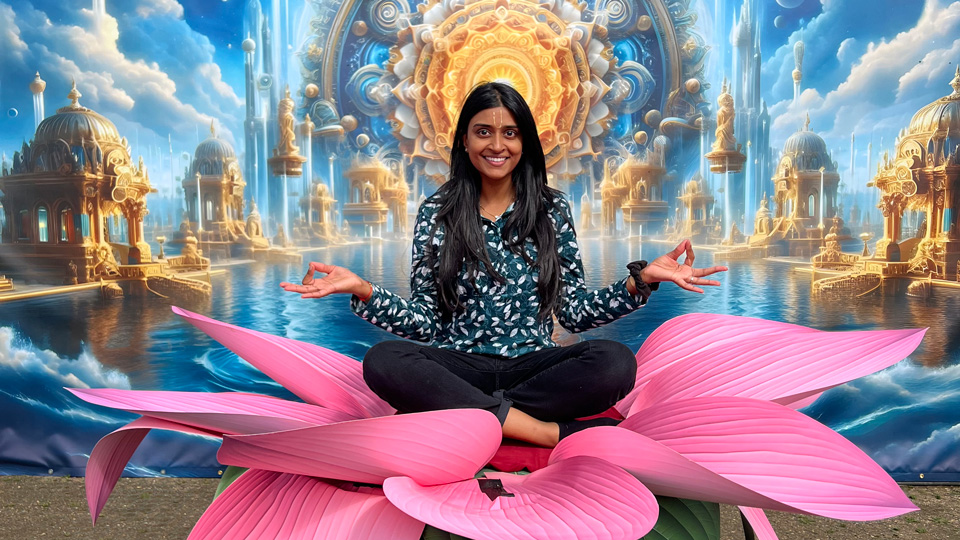
Vaneesha Patel, clinical lead optometrist for Davis Optometrists, on the special significance of celebrating Janmashtami as she awaits the birth of her first child
“Normally as a family we would go to the temple in Watford, which has big celebrations for Janmashtami. This year, the celebration is a special one because I am seven months pregnant with our first child. Because I’m waiting for a new baby, the birth of Krishna resonates in a slightly different way – there are those ideas of love and protection for this baby. I won’t travel to the temple this year, but hopefully, next year we can go together as a family.
“When we go to the temple, we sing devotional songs and take prasad. We tend to take some prasad back for close family who are unable to attend the temple. It does get quite busy at the temple, but it is nice because everyone is there for the same reason. We usually go first thing in the morning. Sometimes we will bump into family members from other parts of the country. The temple has its own cows and children will take dishes of grass and leaves to feed them.
“Janmashtami is not like Diwali where we are indulging in lots of different foods. We usually have the same dishes each year and we keep it quite simple. There is a farali dish with potatoes with salt, ginger, coriander, lemon juice, and peanuts. You might have it with yoghurt. Then there is a sweet seeroh dish made with semolina, sugar, ghee and milk. Each family might have their own twists on these foods. For example, my family generally don’t put peanuts in the potato dish, but my in-laws do.
“There is one bhajan that starts off quite slow and repetitive, and then it gets fast and people start dancing. That is one of the things that I really enjoy during Janmashtami. The sound of the flute and the cymbals remind me of the festival.
“For me, Janmashtami is a time to reflect and to quieten down. While I try to be kind and mindful of other people throughout the year, these festivals can serve as a reminder.
“I would like to pass on these traditions to my own child. The modern word is very busy, and it can be hard to keep up with everything. But when these celebrations come along we have time to pass on the traditions that have continued through generations.”
My Janmashtami
Dhruvi Valla, resident optometrist at Moorfields Eye Hospital, on the yearly ritual of building a cradle for baby Krishna
“Every year on Janmashtami, we build a small cradle for baby Krishna with wooden planks which we decorate with flower garlands. I usually do this with my mum, and she did it with her mum. It’s a lovely time to reset. We listen to religious music and it’s very peaceful. We put fresh silk cushions in the cradle, bathe baby Krishna and dress him. We make him smell nice with different essential oils. We offer baby Krishna different dairy products, like yoghurt in clay pots.
“The baby Krishna statue was given to my mum by her mother-in-law. He is on the altar daily and we will bring him down for special events, shower him, dress him up, and then return him back to his place once the festival is over. When I get married, my mum will give me my own baby Krishna.
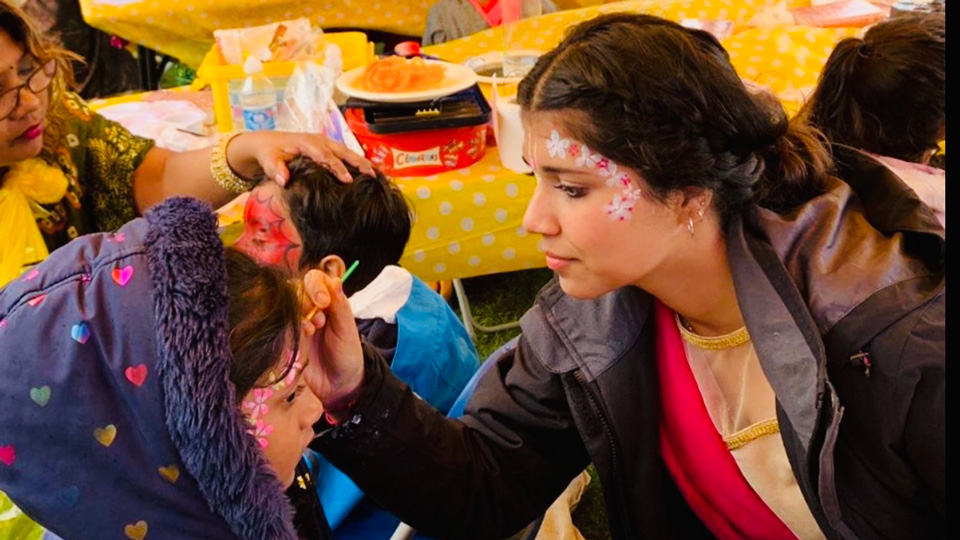
“During Janmashtami, I volunteer in the arts and crafts tent at the Watford temple. I will mostly do face painting – creating the different characters from the stories around the birth of Krishna. The children might make drawings of the different deities and give them to their friends. We might apply henna floral designs and patterns on the girls’ hands.
“I enjoy face painting because of the creativity. You can get into a flow state while you are doing it. During Janmashtami, around 50,000 people come to the temple so we need very simple designs that can be done quickly. They need to look the same so there is no partiality between children. I might spend about seven minutes on each design.
“The temple in Watford is one of the only temples to my knowledge that keeps cows. It has acres of land and greenery, as well as its own farm. For this reason, the temple is very self-sufficient. The cows produce a small amount of milk which is very rich and flavourful. It has a different taste to other milk.
“When we go to the temple, we're waiting until midnight for the revelation of the idol of Krishna. They lift a decorated silk curtain and we see Krishna beautifully painted in nice clothes. You feel this sense of excitement and exhilaration. Krishna was destined to die before he was born – he was going to be killed by his maternal uncle but he beat the odds. His birth shows us how righteousness can conquer evil and people can overcome difficult circumstances.
“In my own life, it makes me aware that everybody has hardships. Life is an up and down journey. You might have a difficult start, but soon a good day will come.
“Janmashtami is a happy occasion. You wear nice new clothes and you get a haircut. You'll present yourself in the best way possible because it's a celebration of a new beginning. It can serve as a reset for the rest of the year.
“After Janmashtami, I try to bring the positivity of the celebration into my own life. My religion plays a big role in my work as an optometrist because I feel that I have a duty towards my patients as someone who is responsible for their care.”

Diwali and Bandi Chhor Divas 2024
OT speaks with optometrists about how they will be commemorating the Hindu festival of light and Sikh day of liberation
OT asks...
What is your favourite sweet to have at Janmashtami?
More News
-
 How eye care is being delivered by ICBs to be highlighted at Westminster Eye Health Day
 -
 From late presentations to ocular trauma: how the Ukraine war is affecting the nation’s eye health
 -
 Public priorities for the NHS identified at Labour Party Conference
 -
 Liberal Democrats adopt Eye care everywhere as party policy
Comments (1)
You must be logged in to join the discussion. Log in
Sonia04 September 2026
What a fantastic article! Some excellent descriptions, and really nice to see how you all celebrate. Happy Janamashtmi to all
ReportLike1