


30 October 2024
On 31 October, many optometrists across the UK will celebrate Diwali, the Hindu festival of lights. The Sikh festival of Bandi Chhor Divas will also be celebrated on 1 November.
There are also 1272 Sikh optometrists and dispensing opticians – around 4% of all registrants in the UK.
OT caught up with optometrists to find out how they will be spending Diwali and Bandi Chhor Divas – and what the festivals mean to them.
My Diwali
Leicester optometrist Rajesh Rajani on his first grandchild’s first Diwali and how the festival is celebrated along the Golden Mile
In the past, everyone would gather at my father’s house first on Diwali, because he was the eldest. They would have snacks and talk, then move on to the next oldest brother’s house, and so on. Now because of logistics and because there are so many of us, we will go to a restaurant on the Golden Mile in Leicester. There are around 40 of us from my family and my wife’s family.
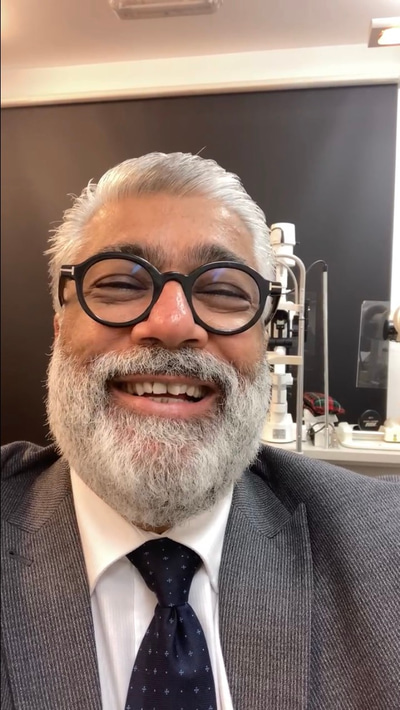
Rajesh Rajani
There is a massive fireworks display on Belgrave Road, and then everyone will go home and light their own fireworks. All the children are given sparklers. That is something I also remember from when I was growing up, so when I light a sparkler, I feel like a kid again.
Diwali is a happy moment for everyone. People get together and you have a chance to see all your family in one day
When I was a child, my mum would prepare five or six different snacks in the days leading up to Diwali. Then, when people would come to visit our house, we would hand out the snacks. Everyone in the family would cook, but each person would have a different style. If you did a blind taste test, you could tell one auntie’s cooking from another auntie’s. There would be certain flavours and tastes.
My favourite snack growing up was chevdo. It has peanuts, puffed rice, lentils and cashew nuts, then you make a temper by frying oil with mustard seeds and chutney powder.
Diwali is a happy moment for everyone. People get together and you have a chance to see all your family in one day. When we were young we would eat at each other’s houses once a week, but as time has progressed and our lives have got busier, that is not so easy. On Diwali, we have a general chit chat and we also reminisce, talking about the times when my parents were around. We bring that to the forefront of conversation because those were amazing times.
This year will be my first grandchild’s first Diwali, so it will be particularly memorable. We are really looking forward to that. My daughters have embraced celebrating Diwali. It is important that we don’t lose this part of our heritage because it is such a joyous time. Diwali is part of who we are.
My Diwali
Northampton optometrist, Dr Keyur Patel, on running riot in a packed house as a child and a red sweater that holds fond memories
Within the Hindu calendar, Diwali is one of the biggest celebrations. We mark the return of Lord Ram to Ayodhya and the victory of light over dark. It is one of those festivals that everyone celebrates as a Hindu – no matter how much or how little you practise the faith.
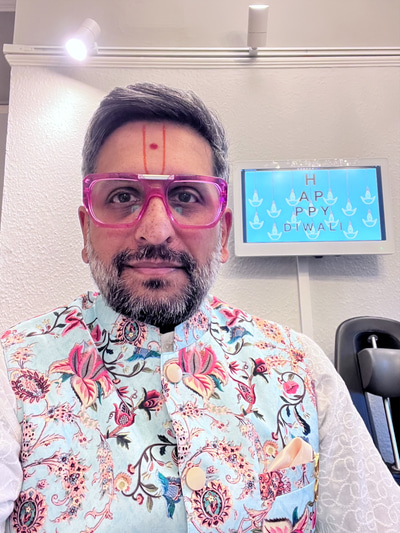
Optometrist Dr Keyur Patel
As a child, I enjoyed seeing all my cousins and running riot – knowing that we would be getting gifts. Now as an adult, Diwali is about connecting, both in person and remotely with the people who mean a lot to me. When I think about Diwali, it makes me smile.
A big thing around Diwali was that our parents would get us new clothes. This is something that we now do for our own children. There is a bright red jumper with a Velcro patch that I remember particularly fondly. I think mum may have regretted giving us free rein when I showed it to her, but it felt really cool and I kept it for years. Apart from being a lovely jumper, there was always an association of happiness with it.
As Gujarati Hindus, we will pray to Lakshmi in the lead up to Diwali. That is done as a small family unit – my wife, my children and I will sit in the evenings and pray to Goddess Lakshmi. We will hope for good fortune but not necessarily in a financial way – more in the sense of general prosperity.
Normally, when you go to temple, everyone does their own thing and keeps a bit separated. But during Diwali and New Year’s, everyone hugs and greets each other. You might touch your elders’ feet as a sign of respect or they will touch your head as a blessing.
We won’t really do gifts at Diwali but there is a tradition of elders giving money to the children of the family. The amount of money doesn’t really matter. It is a token of prosperity and sharing with each other.
Our New Year falls the day after Diwali. We will say certain prayers and crack a coconut on the front door. The coconut is a symbol of good luck and prosperity.
I think all religions are essentially common ground. There is no religion that says ‘Go out and harm your neighbour.’ Ultimately, what it all boils down to is to be nice to each other. We all want to live in a peaceful world. If you look for what connects people rather than what divides people you will be able to live a much better life.
I have two sons – a four-year-old and a 10-year-old, who have grown up in the UK, and therefore have a lot of western influences. As a family we believe it is important for them to understand and appreciate our faith, culture and family origins.
There is a nice series of English language picture books called The Jai Jais, which are about the Hindu religion and some of the big concepts within our faith. My children ask questions I cannot answer all the time – particularly the four-year-old. I tell him ‘You will have to ask your grandma.’ When I was a teenager, I probably did rebel a bit because I would have rather been out with my friends than sitting cross legged on the floor. But as I have become older, I see the value in it and hope to be able to educate my children about why we do the things we do.
My Bandi Chhor Divas
London optometrist and AOP councillor, Jagdeep Kaur Gill, tells OT about teaching children about Bandi Chhor Divas through creative activities
Sikhs celebrate Bandi Chhor Divas, the ‘Day of Liberation,’ which falls on Diwali. Bandi Chhor Divas commemorates the return of Guru Hargobind Sahib Ji, the sixth Guru of the Sikhs, to Amritsar. The Guru was a political prisoner at Gwalior Fort, alongside 52 kings. When he was freed by the Mughal emperor Jahangir, the Guru was allowed to liberate as many kings as could hold on to his clothing. The Guru had a special robe tailored with 52 tassels – one for each king to hold on to.
Growing up in Punjab, Diwali was a time that the whole village came together. We would share food, light divas and gather for fireworks at night. We would have the day off during the festivities. Everyone I knew lived on the same street – my aunties and uncles. Here in the UK we all live in different areas, so you make an effort to travel to see your family. Many of the practices around Diwali in the UK are very similar – when you move, you bring your culture with you.
Celebrating Bandi Chhor Divas acts as a reminder to play an active part in society – to serve humanity with compassion beyond cultural and religious boundaries. We are inspired by the Guru’s example of standing up for human rights.
Diwali and Bandi Chhor Divas in pictures
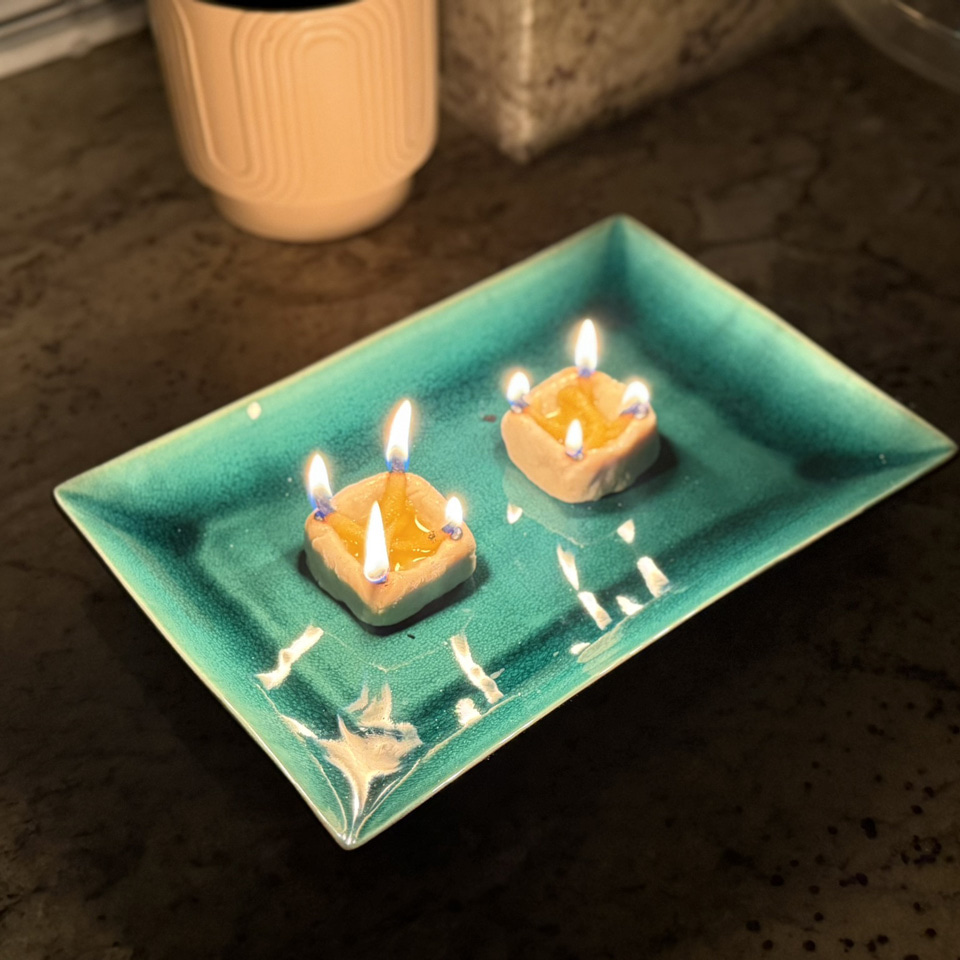
Handmade divas created by optometrist Kamal Kalsi in preparation for Bandi Chhor Divas
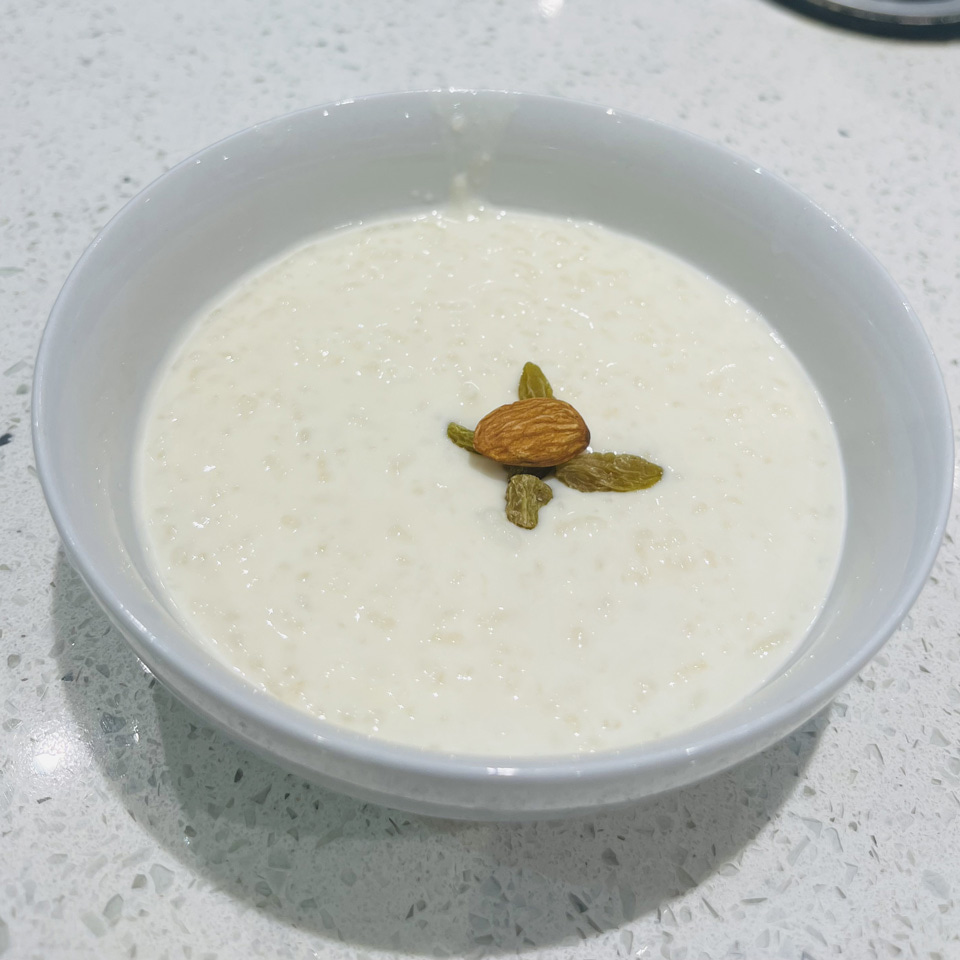
Optometrist Jagdeep Kaur Gill’s favourite Bandi Chhor Divas dish is kheer
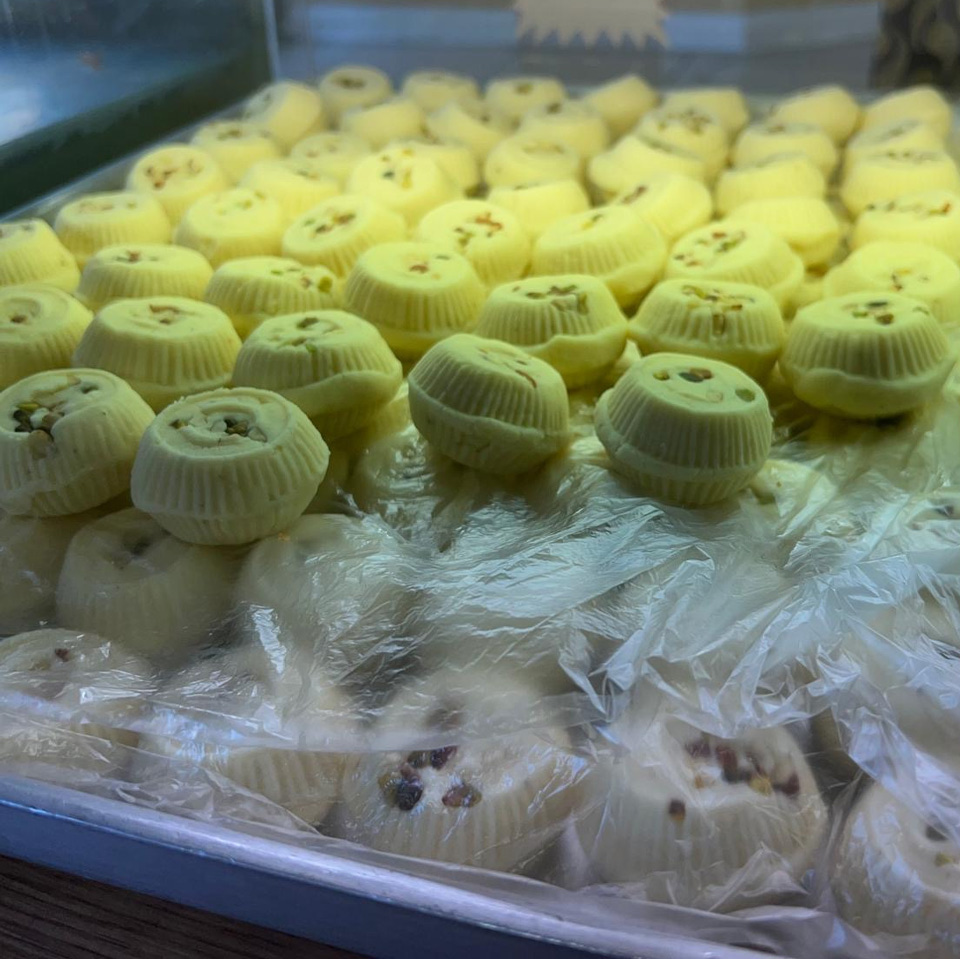
Penda are a favourite Diwali snack for optometrist Deepali Modha. “The first bite always reminds me of childhood,” optometrist, Sachin Patel, says of the sweet
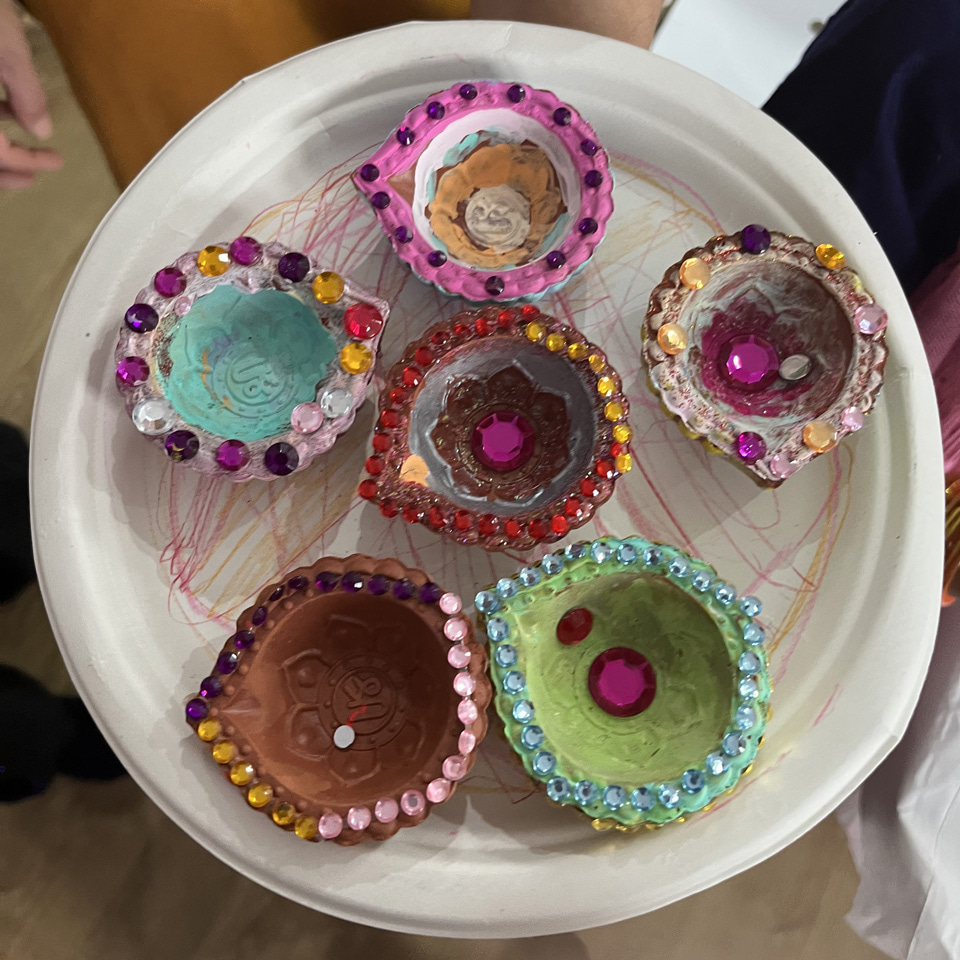
Clay pot divas decorated by children at optometrist Jagdeep Kaur Gill’s Gurdwara as part of an activity session
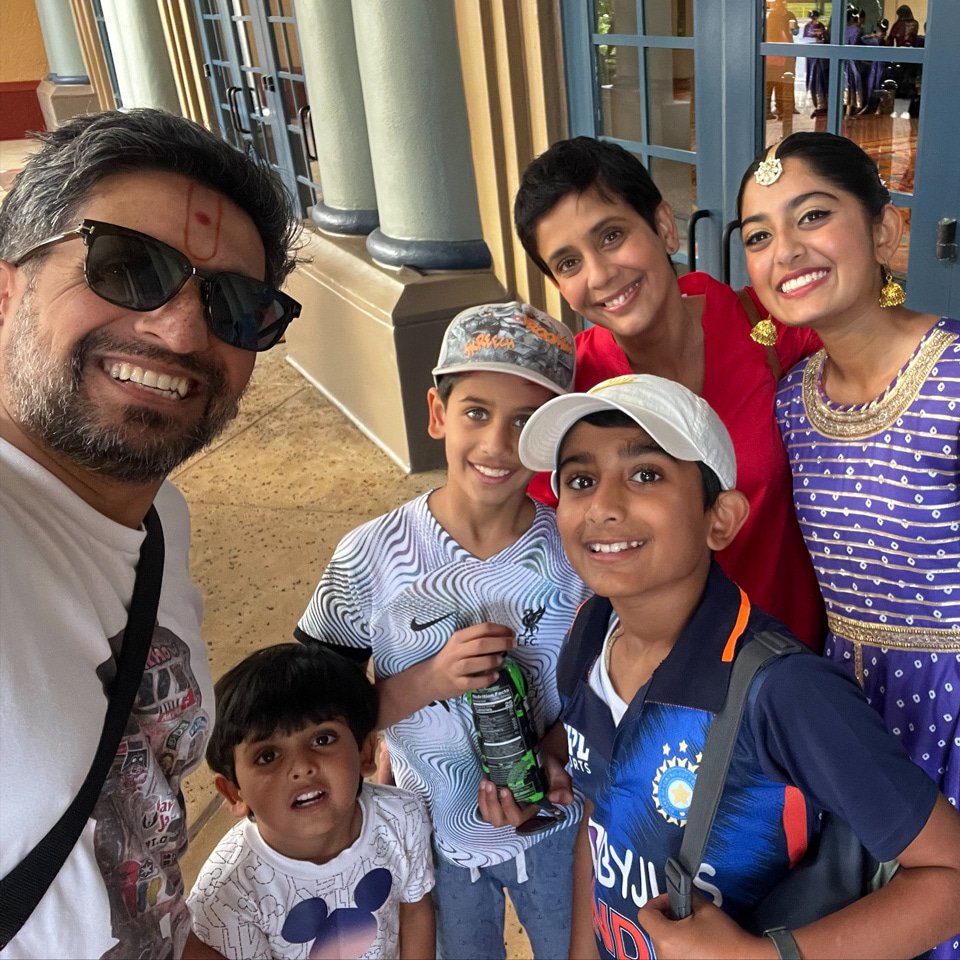
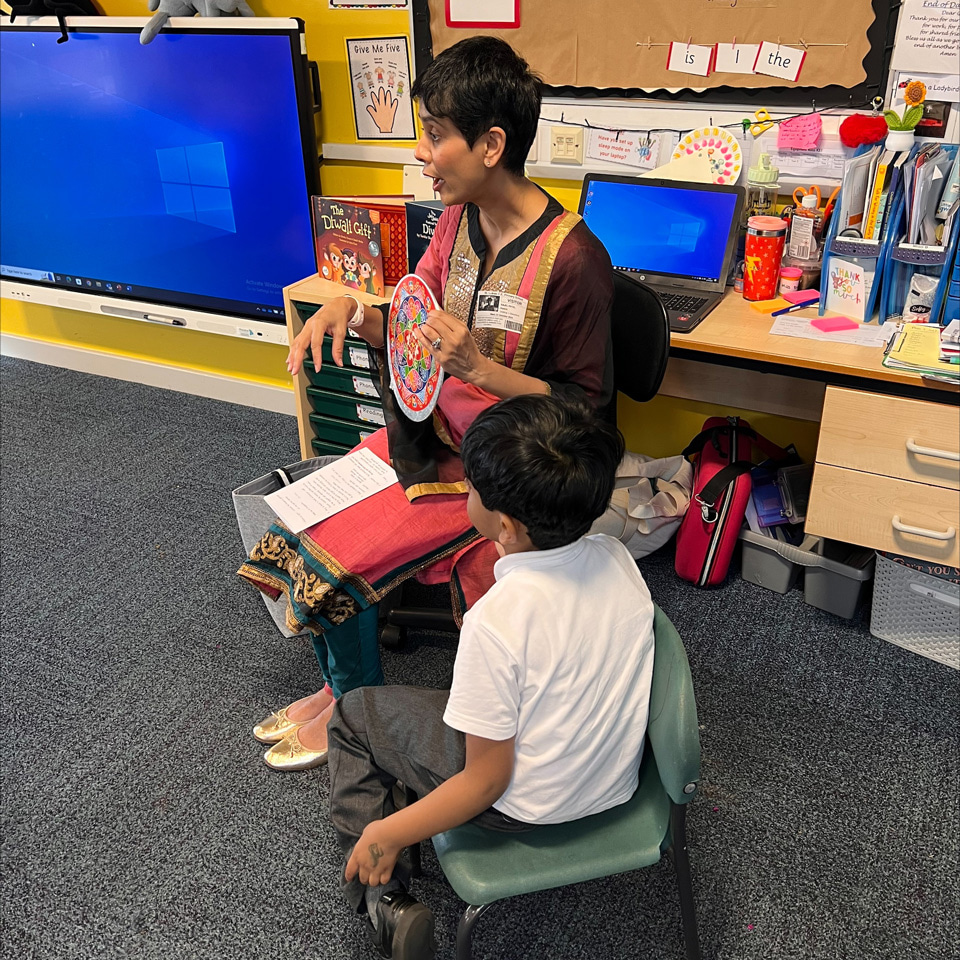
These ideas are reflected in the langar [community kitchen] within our Gurdwara [Sikh temple]. The langar is open to everyone, regardless of their background. Within our places of work, we try to serve people compassionately and be empathetic towards them.
My favourite food to have during Diwali is a type of rice pudding called kheer. It is made with milk, rice and sugar. You can add cardamom pods, dried fruits and nuts. Everyone has their own way of making kheer – my mum adds custard to kheer to make it richer. It takes a couple of hours to prepare so it is a labour of love.
For the past few years, my family and I have facilitated activity days for children at the local Gurdwara. My brother facilitates one at his Gurdwara in West London and I run one where I live in Romford, East London. We think of creative ways of making the teachings relevant for children. It’s important to create a space where the children feel like they are involved and where they can learn in a fun way. For one activity, we put a robe on a mannequin and then the children made tassels to put on the robe. Another time the children used modelling clay to make their own divas. I enjoy engaging with the children because they have all these questions and they look at life in a different way to adults. They renew your sense of excitement in the world.
My Diwali
Cheltenham optometrist Ankur Trivedi on teaching his daughters the significance of Diwali and Bandi Chhor Divas as part of a mixed faith family
The story of Diwali is about the prince Rama, whose wife Sita was kidnapped and taken away to an island called Lanka – which is considered to be where Sri Lanka is now. A war was fought by Rama and his army in order to free his wife. There is a celebration in the lead up to Diwali called Navaratri, which translates as nine nights. This recognises the nine nights of fighting that occurred before Rama rescued Sita. After Sita was freed, all of Rama’s subjects put lights outside their houses to guide him back to their family home.
From the age of six until when I went to university, I was in Leicester. During Diwali, everyone gets dressed up to the nines and will meet up with each other and share food.
My earliest memory of Diwali is going down the Golden Mile to the temple that my family attended. For me, Diwali is the sound of fireworks and the smell of my mother’s cooking.
In the lead up to Diwali, mum would ask me and other family members what we would like to eat. She liked to make things that we would look forward to. There is a dish called chakri that I like, which is deep fried savoury pinwheels made with flour, seasoning and a little bit of chili. Penda, which are round sweets made with milk powder, are also very moreish. There are also gulab jamun, which are a type of sweet dumpling served in a syrup. There is an Indian delicatessen in Bristol where I will go to get nice sweets for Diwali.
We live in another country to our grandparents’ generation, so it is about trying to keep hold of that history and tradition
My family is in Leicester and my other half’s family is in Kettering. We will try and visit them for Diwali but it is not always possible – especially if Diwali falls mid-week. My background is Hindu but my wife’s background is Sikh. We have two girls and we want to make them equally aware of both faiths. We live in another country to our grandparents’ generation, so it is about trying to keep hold of that history and tradition. It’s nice to have that connection to our faith and those roots that bind us together.
My Diwali
London optometrist Dr Vijay Anand on a family musical tradition and creating rangoli patterns for the front doorstep
In the days leading up to Diwali, there is a series of prayers that we do in the evening as a family. We light divas [lamps] in each of the rooms around the house. On the day itself, we will have people around to the house, do some prayers and eat together. Then there will be fireworks – which is the part that the children look forward to most.
Living in the UK, most children know about Christmas and why Christmas is celebrated. For me, it is also important that my children understand the significance of Diwali – which is one of the biggest events in the Hindu scriptures, alongside the birth of Krishna. I would like to convey to them that Diwali is part of our religion and culture.
Over the past couple of years, my wife has taught our eldest son bhajan [Hindu devotional song]. During our prayers in the lead up to Diwali, he has sung a bhajan and I have accompanied him on the tabla [small drum]. It is really nice and it has become a bit of a tradition – he looks forward to learning each new song.
When we pray, we will offer some of the food we are about to eat to the Gods first. During one Diwali a few years back, we opened our eyes following prayer to discover that my younger son’s mouth was full with shakarpara [fried sweet dough].
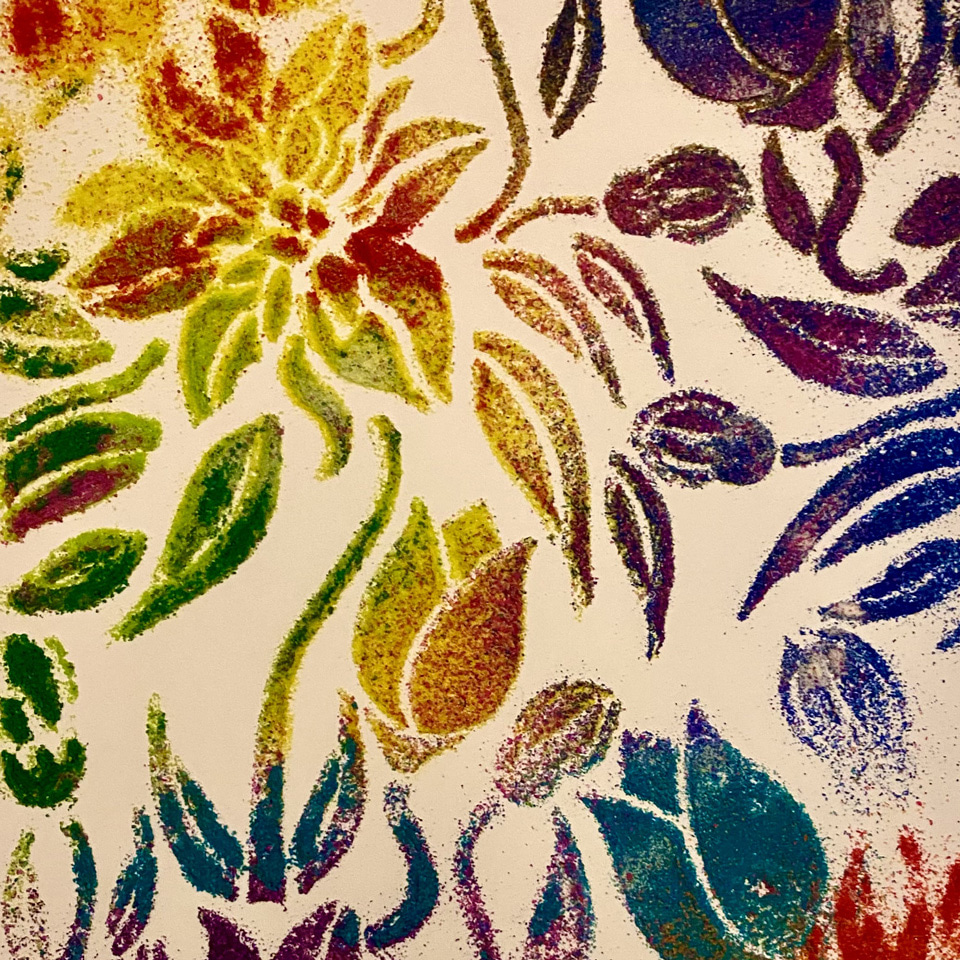
Myself and my wife have really tried to explain the meaning of Diwali to our sons. There are more and more children’s books that you can buy that help with that. When they were young, we would use picture books. Now they are eight and 11, we are moving on to chapter books. We also make rangoli [colourful patterns] with them from coloured powder for the step at the front of the house.
During Diwali, we think about the lessons we can learn from the Ramayana [a Hindu text that narrates the life of Rama] and what they mean for our daily lives. We consider the difference between what is right and what is wrong. By following these teachings, you can become a better human being.
My Diwali
London optometrist Sachin Patel on the phone ringing non-stop during his childhood Diwalis and creating new memories with his children
For Diwali, we will light many candles – it is about making the house as light and colourful as possible. It is a little bit like the reverse of Halloween decorations. I will try to finish work earlier and we will have fireworks. On the weekend closest to Diwali, we will visit my family and my wife’s family who are all within an hour’s drive of us. Diwali is a time when we pay respect to our elders.
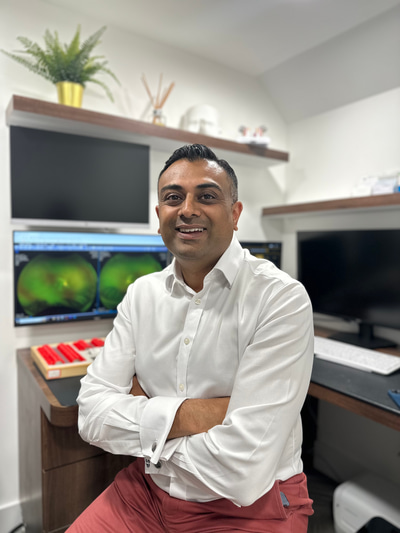
Optometrist Sachin Patel
We were very close to our grandparents as children, because everyone used to live in one big house together. My grandparents had come from India where Diwali was an even bigger thing and they would treat it like they would back home. As young children, we would be gifted sweets and money – back then, £5 went a long way.
Growing up, there were no video calls, so when you wanted to see someone you needed to visit them. Putting a face to a voice was very nice for my grandparents. Many people would come to the house during Diwali and the phone would be going off the hook.
Diwali is definitely a week of sweets. If you drive past an Indian sweet shop in the lead up to Diwali, it will be packed to the rafters. The sweet I like most is the penda. When I told my grandparents and parents that was my favourite, that was the sweet I was always given. The first bite always reminds me of childhood.
My children learn about Diwali at school, but in a more academic way. Over the past few Diwalis, it has been nice to teach them about what it means to us personally. I created memories with my parents and grandparents during Diwali, and now we are doing the same thing with our children. Now they are getting older, they are beginning to appreciate Diwali more because they realise that not all their schoolmates celebrate it. It is a special day for them.
My Diwali
Hertfordshire optometrist Deepali Modha tells OT about a firework mishap and juggling Diwali and Halloween celebrations
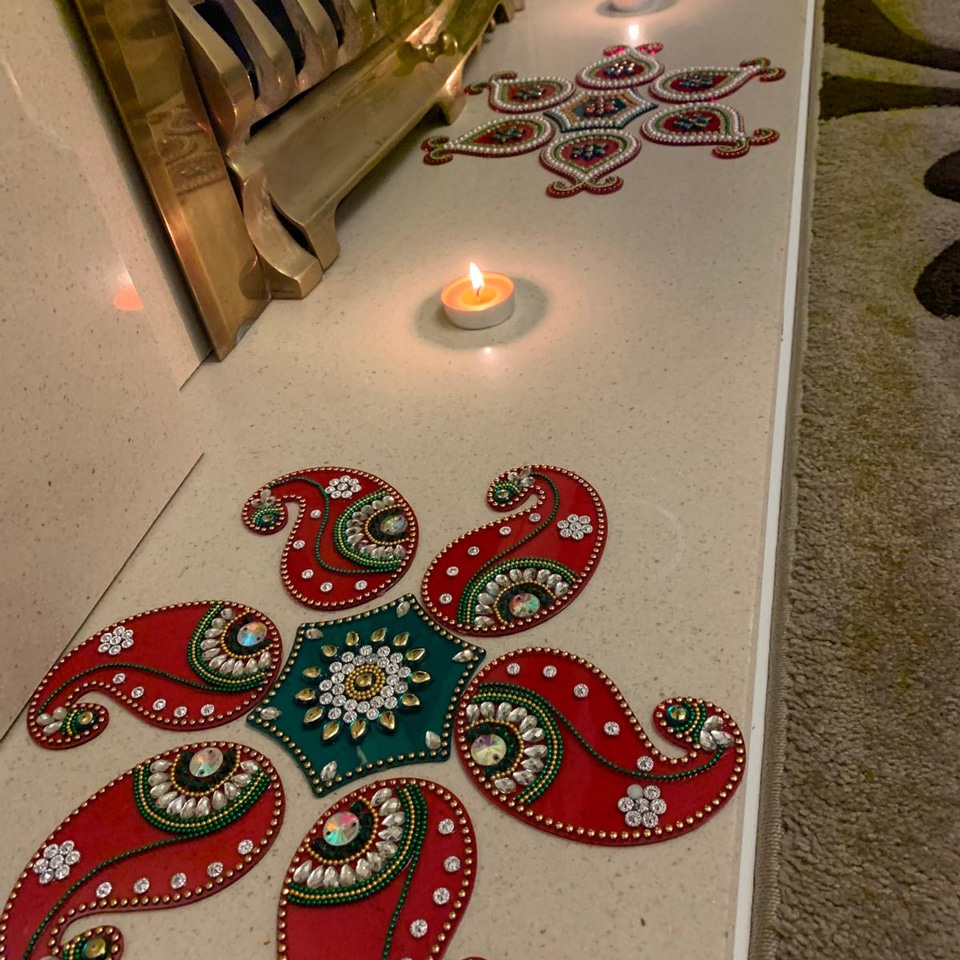
Before Diwali, we clean the house and put out our divas. It was said that when Rama and Sita came back from exile, it was a moonless night and people in their city of Ayodhya lit candles to pave the way for them. My children are still young and we make rangoli. The patterns are traditionally made with coloured powder, but we now have ready-made puzzle-like rangoli [see gallery]. When I was small, my mum would use coloured rice to make the rangoli.
I live in Hertfordshire and my family are based in Solihull and in-laws in Leicester, so for Diwali it is just me, my husband and my two children. This year, Diwali falls on Halloween so we will probably combine the two. We will do activity books in the morning and have some Indian food, then when it gets dark we will probably go trick or treating.
At the weekend, we will go up to see my mum in Solihull and prepare some different Indian delicacies, such as pendas and barfi. My kids love Diwali because they get presents, which are usually in the form of cash. Traditionally, the elders would give the younger ones money. I still get £10 here and there from my mum, my grandma and my uncles.
We will go to temple on either Diwali or the New Years Day, which is typical the day after Diwali. Most Hindus will have a little temple in their house as well. I have a space in an open cupboard that is decorated with flowers, small idols and offerings of food.
Diwali is a time when I reflect on the conflict between good and evil. After I lost my dad, the celebrations changed a bit. There is a lot going on in the world right now, but it is important to be grateful for our friends, family, and this celebration that brings us together. I think ahead to the next year and reflect on what has happened over the past 12-months. In Hinduism, we believe in karma and good deeds. During Diwali, I think ‘How can I be better this year?’ I find myself reading more of the Ramayana to increase my knowledge, so I can share it with my kids.
Diwali is a time to reconnect. Everyone has busy lives, so you might not speak to your cousins, your aunties and uncles very often. On the day I will receive many messages and phone calls wishing a happy New Year and prosperity for the next 12 months.
There was one memorable Diwali where one of the fireworks tipped over and started firing towards the house. Everyone was screaming as this firework was spinning around and we rushed back into the house.
When I was growing up, my parents had an Indian sweet shop in Birmingham. Diwali was a very busy time of year. All the aunties, uncles and cousins would come over to our house to eat, talk and play games. The whole family would play teen patti – which is a bit like poker with three cards. The best teen patti player was one of my uncles. He would make you think that he had a really good hand, then when everyone folded, he would show his cards and he had nothing. The winner always gave the money to charity.
I love penda sweets, which are made with milk, sugar, cardamom and pistachios. When I think about Diwali, I can see my mum in the kitchen cooking many different curries. There are also the smells of the sweet foods like mithai, rasmalai, and samosas, and the smell of the candles.
Now they are getting older, we are talking more with our sons about the significance of Diwali. I have been buying Diwali colouring books and picture books. My eldest son is five and he loves dressing up and talking about Diwali. Last year, he wore his traditional Diwali clothes to school to show everyone what he wears. Another girl’s mum made Indian sweets for the class. My son gets excited because it is something that is special to him and unique.
My Bandi Chhor Divas
Cardiff optometrist and AOP Councillor, Kamal Kalsi, on the childhood temptation of freshly-made sweets locked away
Where I grew up in Tanzania, Diwali was a huge celebration for us. My mum would bake for weeks ahead of Diwali, making savoury and sweet snacks. When we were kids, we would have a day out. Although there was a different reason to celebrate, as a child I remember the excitement of the different sweets. Each house was like going to a chocolate factory. My Hindu friends would have slightly different sweets to my Sikh friends.
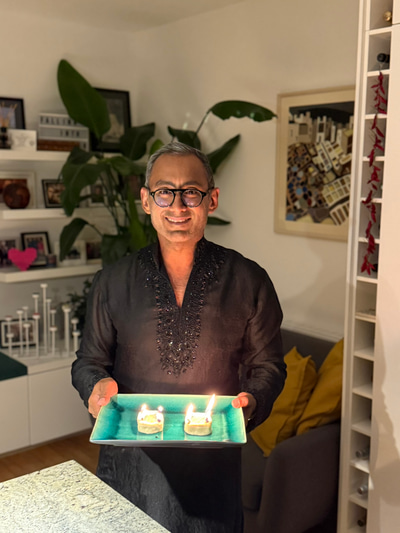
Optometrist Kamal Kalsi with divas he made by hand with flour, water and ghee using his mother’s method.
We would go to different houses and people would come to ours. My mum would wear a new outfit and bring containers with all the different sweets she had made. At each house, she would place some sweets on a plate and then cover it with a nice cloth. We might visit 15 or 20 houses. At the end of the day, we would go to the Sikh temple for a celebration of light. We would all gather in one house with my aunties and uncles for a fireworks display and to have an evening meal.
There is a particular sweet called ladoo, which is the shape of an orange. It tastes lovely and you would only have it on a special occasion. My aunts would come over and make ladoo with my mum. There was all this sweet stuff that we were not allowed to touch until Diwali – at the end of the day she would lock it away.
In the UK, I still celebrate Diwali but in a different way. If it falls on a work day, I will go to the Gurdwara after work, light candles and listen to the prayers. Although I don’t get to see my parents often, I still follow the tradition and light candles exactly as my mum would do for us as we were growing up. I think it is important for the younger generations coming through to understand what Diwali is about. I think it’s a good thing to continue tradition so it doesn’t get lost.
As told to Selina Powell


Comments (0)
You must be logged in to join the discussion. Log in