


30 January 2025
The Optometric Fees Negotiating Committee (OFNC) joined healthcare sector partners to host an MP drop-in session in Parliament this week (Tuesday 28 January).
The event was designed to galvanise support from MPs for investment in primary care services, and was attended by 40 MPs from across the three main political parties.
It was jointly hosted by the OFNC, the British Dental Assocation, the British Medical Association, Community Pharmacy England, and the Association for Primary Care Audiology Providers.
During the event, MPs had the opportunity to sign up to a cross-party letter to Wes Streeting, the secretary of state for health and social care.
The letter called for the Government to work more closely with primary care bodies, “to begin the long-term process to rebuild primary care and help deliver on the Government’s priorities for the NHS.”
Fully-funded primary care expansion plans and the involvement of primary care in planning and designing healthcare delivery is vital to this, the letter said.
It also noted that currently, nine in 10 patient interactions happen in primary care.
The letter went on to state that primary care bodies “note [that] the Government intends to shift care from hospitals to community, and move from sickness to prevention.
“These primary care providers will be instrumental in driving this reform, and the primary care representatives we met are enthusiastic about working together to support these critical shifts,” it stated.
The letter emphasised that, “due to the pressure all parts of primary care are facing as a result of damaging funding cuts and a lack of long-term planning, it is clear there is little capacity to deliver the reforms needed and improve the care people receive closer to home.”
MPs join primary care drop-in event at Westminster
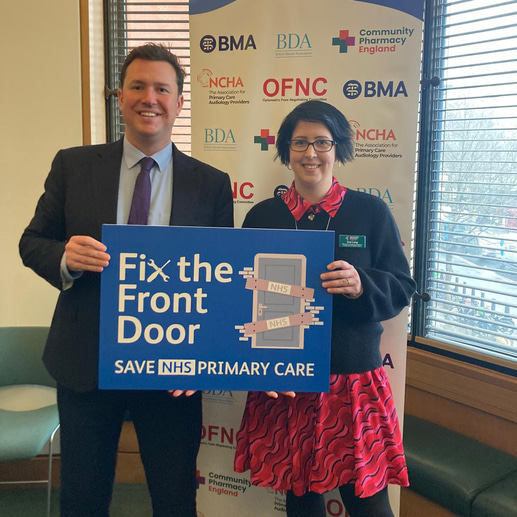

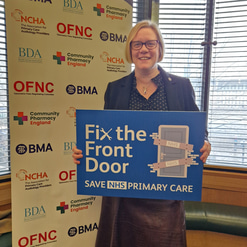
Funding, commissioning, and IT connectivity
MPs also had the opportunity to hear from those working within primary care, and were briefed on the day-to-day work of the primary care bodies in attendance, which included the OFNC.
It was emphasised that the optometry workforce is ready and able to support the Government’s three big shifts – from hospital to community care, from analogue to digital, and from treating ill health to prevention – as long as the funding is provided.
IT connectivity was noted as a crucial ‘part of the puzzle’ to the roll out of extended eye care services, such as glaucoma management and monitoring, in the community.
The importance of national support for consistent commissioning via integrated care boards in order to enhance care for patients, cut the waiting list backlog, and reduce pressure on other areas of healthcare, was also relayed.
The AOP’s clinical and policy director, Dr Peter Hampson, attended the event in his capacity of OFNC secretary.
Hampson said: “The event went very well – we had some really good conversations with a range of MPs, some of whom had personal stories to share, and some who reported the challenges raised by constituents. The general agreement was that primary care is a vital part of the NHS and could help to tackle the current NHS backlogs. It was incredibly useful to have representatives from all of our primary care colleagues in one room highlighting the depth and range of skills that primary care as a sector has to offer.”
Additionally, the event aimed to increase awareness of the funding challenges that optometry, audiology, pharmacy, general practice and dentistry are facing.
That these funding challenges might inhibit primary care from delivering on the ambitions of Government for the NHS was emphasised.
MPs join primary care drop-in event at Westminster
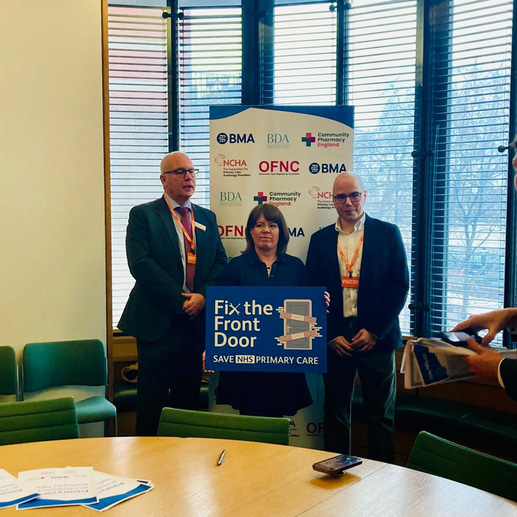
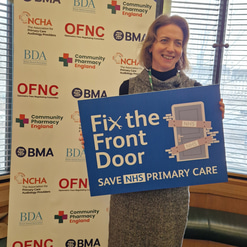
The AOP noted that Lord Darzi’s September 2024 report revealed a decline in primary care funding over the past two decades, with primary care’s share of the NHS budget decreasing from 27% to 18% between 2006 and 2022.
At the same time, the proportion spent on hospitals increased from 47% to 58%, the AOP said.
Head of policy at the Federation of Optometrists and Dispensing Opticians, and the National Community Hearing Association, Jenny Lincoln, who spoke on behalf of the National Community Hearing Association, noted that audiologists, together with other primary care providers, “deliver vital services that improve lives and reduce pressure on hospitals. Yet, chronic underfunding has left the audiology sector struggling to keep up with growing demand.”
“Primary care is the most used part of the health service, acting as the first point of contact for many patients and members of the public. Yet it faces intolerable pressures due to cuts in funding,” Lincoln said.
She added: “The strength of support from cross-party MPs demonstrates the understanding that this government must rebalance NHS funding and commit to a long-term strategy that ensures primary care can thrive and play a central role in future healthcare delivery.”


Comments (0)
You must be logged in to join the discussion. Log in