


24 November 2026
On Tuesday (24 November), many UK optical professionals will mark Guru Nanak Gurpurab – a Sikh commemoration of the birth of the founder of Sikhism, Guru Nanak.
OT spoke with optometrists about the personal significance of Guru Nanak Gurpurab and how they will observe the occasion.
My Guru Nanak Gurpurab
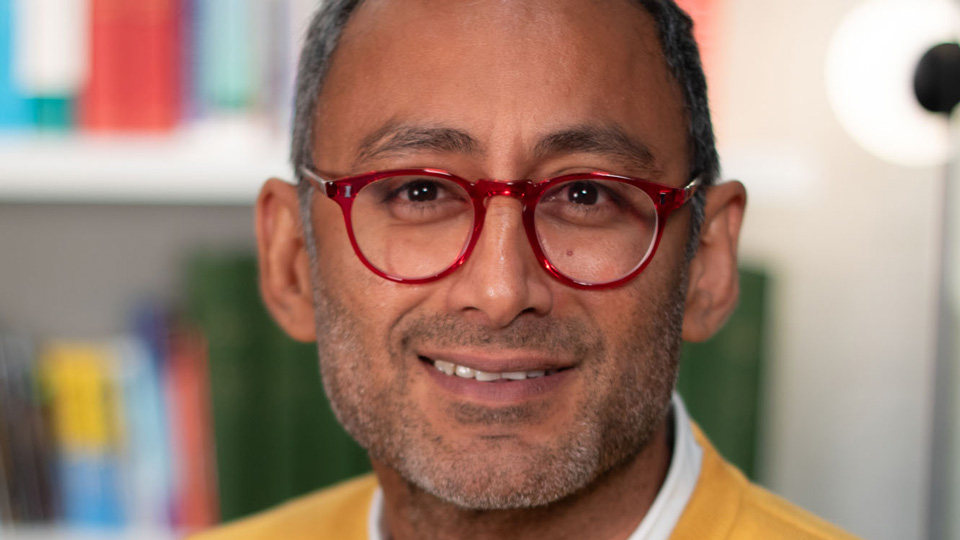
Optometrist and AOP Councillor for Wales, Kamal Kalsi, on how Gurpurab is a time of togetherness, kindness and equality
The Gurpurab is one of the most important celebrations in Sikhism. The occasion commemorates the birth of Guru Nanak Dev Ji, who was born in 1469. We recognise his birth and reflect on his message of equality, peace, love, honest living and selfless service.
Gurpurab is usually celebrated with prayer, food, family time, kindness and helping others. A continuous reading of Guru Granth Sahib [central holy scripture of Sikhism] is carried out over 48 hours within Gurdwaras [Sikh temples]. Free vegetarian meals are served in Gurdwaras to everyone – regardless of religion, background or wealth.
The celebration is a time of togetherness, kindness and equality. Families, children and the older generation come together to celebrate. The Nagar kirtan is carried out – a procession with devotional singing of hymns. Some families decorate their houses with lights and flowers to create festive atmosphere.
When I think about Gurpurab, I recall the sound of hymns and Guru Granth Sahib being read aloud. Then there is the irresistible aroma of karah prasad [a sacred sweet made with whole wheat flour, butter and sugar] being prepared in the mornings. I used to love eating it as a child, and now my son does not leave the Gurdwara without having prasad.

My Guru Nanak Gurpurab
Locum optometrist and chair of Shropshire Local Optical Committee, Jagdeep Singh, on how his appreciation of Gurpurab has evolved as he has grown older
For me and my family, Guru Nanak Dev Ji's Gurpurab is very much centred around family, faith and community. My family usually visit our local Gurdwara, spend time listening to kirtan [classical Sikh hymns] and the teachings of Guru Nanak, and share langar - a free vegetarian meal served to everyone, regardless of religion, caste, or background.
We also take the opportunity to undertake seva, or selfless service, which can be anything from rolling flatbreads and chopping vegetables to serving food. Growing up Sikh in the UK, it has always been a day that brings the community together, but also one that gives you an opportunity to pause and reflect on the values Guru Nanak taught and what they mean in everyday life and putting them into action.
Gurpurab celebrates the birth of Guru Nanak Dev Ji, the founder of the Sikh faith, but for me its significance goes much further. Guru Nanak Dev Ji challenged the social injustices of his time, particularly divisions based on caste, gender and social status. He promoted a society founded on equality, dignity, sharing and service to others. Those principles were radical at the time and, in many ways, remain incredibly relevant today. For me, Guru Nanak Dev Ji's Gurpurab is therefore an opportunity to reflect not only on his birth, but on his enduring message of challenging inequality, uplifting others and ensuring everyone is treated with equal dignity and respect.
I really enjoy the sense of togetherness. There is something special about seeing different generations of families, including my children and my parents, and other families, coming together at the Gurdwara, sharing food, volunteering and celebrating their faith. Having been born and brought up in the UK, it is also an important connection with my heritage. You grow up balancing British and Sikh identities, and occasions like Gurpurab remind you that those identities can complement rather than compete with one another.
You grow up balancing British and Sikh identities, and occasions like Gurpurab remind you that those identities can complement rather than compete with one another
Some of my strongest memories are probably less about one particular year and more about the experience of Gurpurab growing up. Going to the Gurdwara with family, seeing it full of people, hearing kirtan and then sitting together for langar are memories that stay with you. As you get older, you appreciate that experience differently. As a child it can feel like a celebration; as an adult you begin to understand much more about the values and history behind it.
For our family, Guru Nanak Dev Ji’s Gurpurab is an important opportunity to spend time together and maintain our connection with the Gurdwara and the wider Sikh community. Like many British Sikh families, our emphasis remains on preserving the meaning of the occasion and helping our children understand its significance.
Guru Nanak's teachings resonate strongly with me. As an optometrist, there is a very natural connection with the principles of seva, equality and compassion. Every patient deserves to be treated with the same dignity and respect, irrespective of their background, circumstances or beliefs.
1318
Sikh optometrists and dispensing opticians working in the UK
There is also something important about service. Whether I’m sitting with an individual patient, working with colleagues or contributing more widely to the profession, I try to remember that leadership isn't simply about your position or title. It’s about how you use your knowledge and opportunities to help others.
Guru Nanak challenged inequality and encouraged people to look beyond status and difference. For me, that translates into listening to others, treating people fairly, speaking up when something isn’t right and, wherever possible, leaving things a little better than I found them.
The sound I immediately associate with Gurpurab is kirtan in the Gurdwara. Then there are the smells coming from the langar kitchen and, of course, the food itself. Things like dhal, sabzi, roti and the taste of karah prashad instantly bring back that sense of being in the Gurdwara.
But it is probably the combination of everything that creates the memory: the music, families talking, people volunteering and serving langar, and everyone sitting together to eat. That sense of warmth and community is what Gurpurab feels like to me.
My Guru Nanak Gurpurab
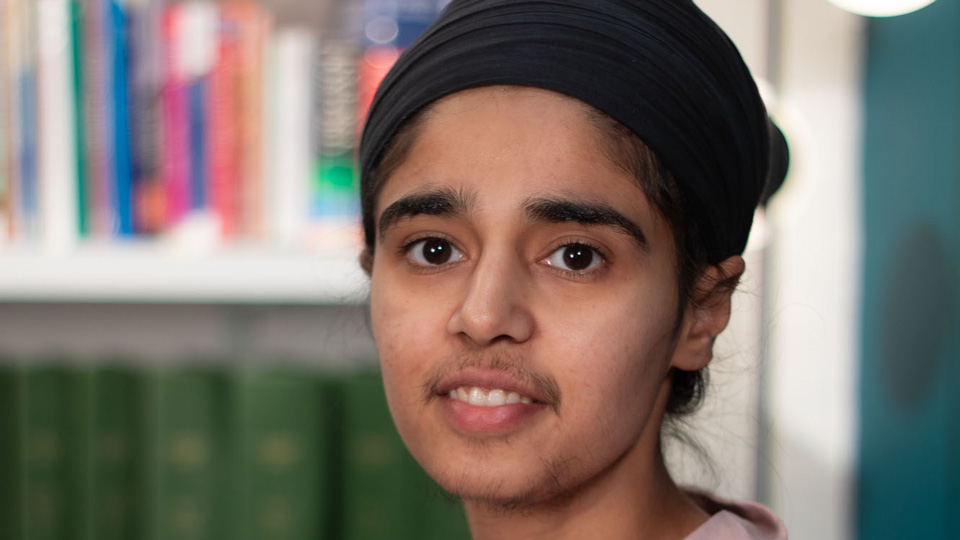
Optometrist and AOP Councillor, Jagdeep Kaur Gill, on the unique perspective children bring to Gurpurab
During Gurpurab, I help organise children’s activities at Seven Kings Gurdwara as part of a project organised by the Sikh Education Council. One of the main aims is to create an environment where children feel welcomed in the Gurdwara. We wanted them to feel that the Gurdwara is their home as well. This is a place for them as much as for anyone else.
All of the activities are themed around Guru Nanak’s Gurpurab. We might have 50 or 60 children visit over the course of the day. The older children might write poetry or do reflective exercises. We want to know what they think. It’s always fascinating because children view the world differently – it can be a learning experience.
As a Sikh, Guru Nanak’s Gurpurab marks the beginning of a new way of life. That’s why it is recognised as an important day. We contemplate Guru Nanak’s teachings. This is something we do every day, but Gurpurab is a chance for different people to get together and make a conscious effort to do so. It’s a chance to reflect and pause.
I was in the Punjab around this time last year. During Guru Nanak’s Gurpurab, all the Gurdwaras were decorated. Seeing the scale of the langar was fascinating. Everyone puts their time, their effort and their money into preparing a community meal on a voluntary basis. It’s not transactional – people are receiving nothing in return. You are reminded what humanity is. During the langar, something magical happens.
My Guru Nanak Gurpurab
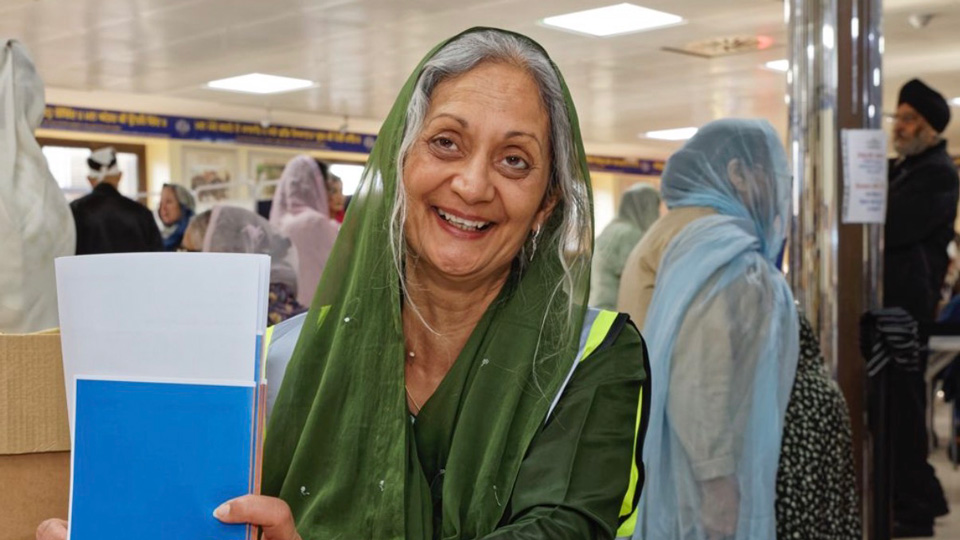
Locum optometrist, Parminder Channa, tells OT that the peace of the early morning is her favourite time to visit the Gurdwara
For Gurpurab, the Gurdwara will organise a reading of the Guru Granth Sahib. This is known as the Akhand Path. The scripture is read continuously day and night for 48 hours and this is followed by singing of Guru Nanak Dev Ji’s hymns or kirtan accompanied by music. I find the tabla [drums] amazing.
My favourite time to go to the Gurdwara is the early morning. The sense of peace is palpable at that time. Added to this is the joy of being part of the community celebrating a very special Gurpurab. We take part in cooking, serving and washing up as a team. The smell of cooking chapatti is a trigger for the tasty langar.
This Gurpurab is a reminder and celebration of the start of where I am today
For Gurpurab, we might make gulab jamun. My mother-in-law would make the best gulab jamun – each little dough ball would be perfect, even when she was making 100 of them.
We grew up reciting the first verses of the Guru Granth Sahib which were penned by Guru Nanak, as did my own children. It’s lovely to have discussions with them now about what the teachings mean. I think I have grown in my understanding because of the conversations I have with them.
Guru Nanak taught us that every individual can make a divine connection with God. Divinity is in each and every being. You don’t need to have outside rituals to show that you are devoted to God. We should try to live a good, honest, human life. This Gurpurab is a reminder and celebration of the start of where I am today.
My Guru Nanak Gurpurab
Optometrist and co-founder of Out of the Box Optics, Gajan Singh, on Guru Nanak’s example of radical equality
On Gurpurab, we will visit the Gurdwara and reflect on the lessons from Guru Nanak's lifetime. Guru Nanak was focused on absolute equality – between genders, religions and people of different social status. That idea was massively revolutionary for his time, and even for today. The family that you are born into does not dictate your value – it’s your actions that count, not your birthright.
A key aspect of Guru Nanak's vision was challenging the caste system. He rejected the social hierarchies and caste discrimination that was very prevalent at the time, teaching others that all human beings are inherently equal by divine origin. He also strongly condemned the subordination of women and helped to elevate the status of women in society and spiritual life. The langar was one way that Guru Nanak helped to institutionalise equality with everyone sitting together and eating as equals during the communal meal.
The langar was one way that Guru Nanak helped to institutionalise equality with everyone sitting together and eating as equals
We tell our children stories of Guru Nanak – how he challenged the darkness and approached certain situations. We make an effort to reflect on Guru Nanak’s teachings with them throughout the year. My children will often ask questions about why certain disciplines are in place. For example, my six-year-old son is one of two students in his school who wears a turban. After I explained why this is something that we wear, he embraces wearing his turban because he understands the importance and responsibility that comes with it.
The word Guru means to dispel darkness and ignorance. In order to be a reflection of that, we need to be a light in the darkness. We need to give people hope and support where we can. As an optometrist, I aim to treat people equally and with dignity. The privileges that we have as clinical practitioners give us responsibilities, not status.
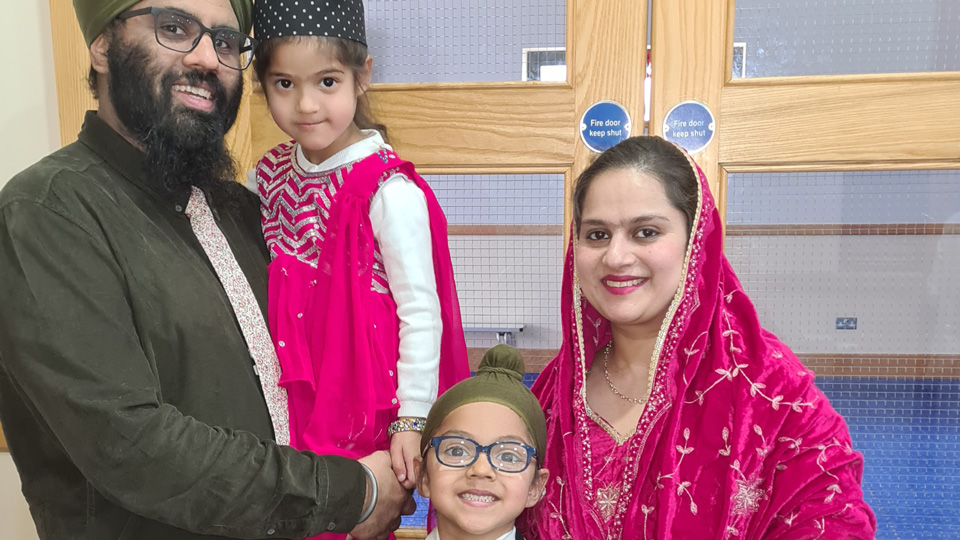

Celebrating Vaisakhi 2025
OT speaks with eye care professionals about one of the most important days in the Sikh calendar


Comments (0)
You must be logged in to join the discussion. Log in