

24 January 2026
I was diagnosed in my mid 20s with retinitis pigmentosa. It’s an inherited eye condition, and my dad has it too. He’s now in his 80s, and he is practically blind. He’s got a very tiny bit of vision, and he has a guide dog.
I was 25 or 26 when I was diagnosed. I went into an opticians, and mentioned, ‘my dad has got this condition, if you want to have a look.’ The optometrist had a look at my eyes and at the retina, and said she needed to refer me.
It was a bit of a crushing moment, when I realised that she thought I had it. Up to that point, I had been aware of the possibility that I might get it. There was a 50/50 chance, as my dad has the dominant variant.
At that point, I was quite upset, but I bottled it away and just ignored it, which wasn’t perhaps the best thing to do, but it allowed me to not worry about it for a bit and continue on with my career, which involved video, filming and photography.
Being diagnosed as severely sight-impaired
I go to Moorfield Eye Hospital every couple of years, as a check-in. The doctor there said, ‘Have you considered trying to be registered as sight impaired or severely sight impaired?’ I hadn't really twigged that that was a thing that I could do. To be honest, I wish they had said it years earlier.
The consultant wasn’t there on the day, but the junior doctor said, ‘I’m not sure if you are going to be registered or not. If you are, you probably won’t be severely sight impaired. What’s to lose? Just give it a go.’
It’s like imagining what’s behind you. You can’t see it, and you don’t realise that it has gone
A few weeks later, I got the message from the hospital to say that the consultant had decided that I was severely sight impaired. I was quite shocked to find out that I skipped the whole sight impairment category, and all the practical benefits that come with it. In terms of benefits, you can get free bus passes. I haven’t driven for 10 or 15 years, so it has been a bit awkward. It has limited life a little bit.
Retinitis pigmentosa: a “constant pressure”
My sister has got the same condition. She is older than me, and I think she has got more or less the same vision as me, but she was registered as sight-impaired. The ability to register is not something that is necessarily promoted.
I recognise now that I am severely sight impaired, but my perspective has always been my perspective, and it hasn’t obviously changed for me. It’s been such a slow progression to now, and it’s narrowing and narrowing, both up and down and left and right, but you don’t notice it. It’s not like you see black spots drifting across. It’s that you unsee things. It’s like imagining what’s behind you. You can’t see it, and you don’t realise that it has gone.
I’ve got a new chapter ahead of me that I need to work out. Having thought previously that I'd be a cameraperson or a video production person forever, that is a bit upsetting
There is a constant pressure that the condition is slowly ramping up. I’ve mostly ignored it, but there was the tipping point when I was registered severely sight-impaired. I was like, ‘hang on. I really have got to think about my future now.’
Up until that time, I was still thinking that maybe I needed to get back into video. It was the career aspect I felt the most emotional about. In my family life, it affects us slightly – I can’t go and collect the kids from extracurricular activities in the car, for instance.
Planning for a new chapter
I was 10 when I first got a book about photography, from my nan. I immediately wanted to be a cameraman. I got really into it.
The problem now is moving around in crowded environments. I tripped over a light stand at a shoot a couple of years ago. I just didn’t see it, and it was indicative to me – I needed to think, in the longer term, about what I’m going to be good for in the next 10, 15, or 20 years. Can I really sustain video as a profession? The crowded, uncontrolled situations on sets are really difficult to deal with.
It was hard coming to terms with that: that in terms of my career, chapter one is closed. I’ve got a new chapter ahead of me that I need to work out. Having thought previously that I’d be a cameraperson or a video production person forever, that is a bit upsetting. But I’ve got other skills around that, so I’m trying to work through that during my career break.
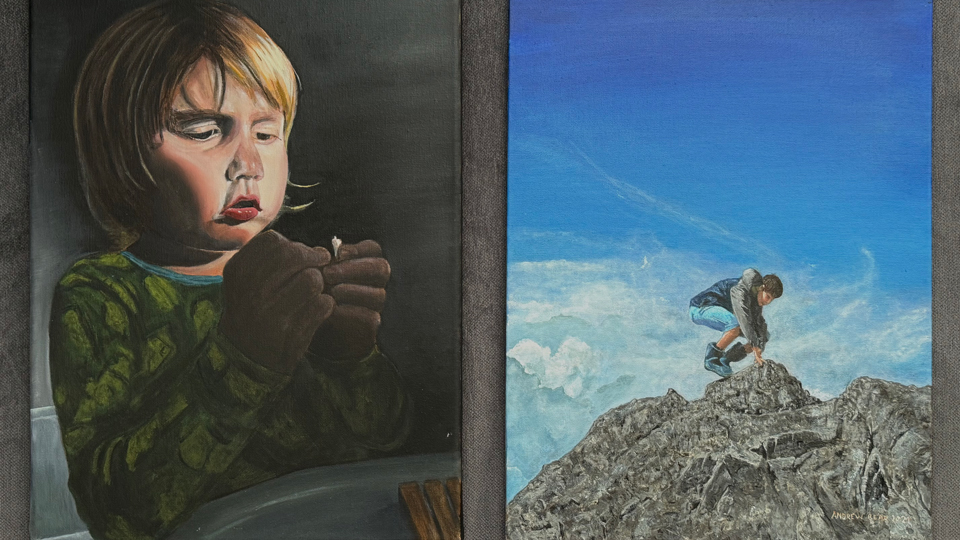
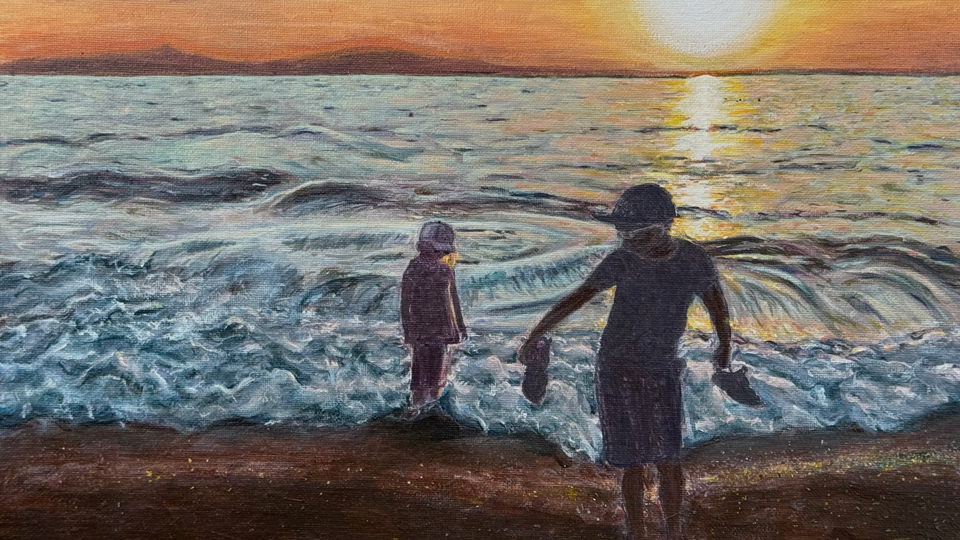
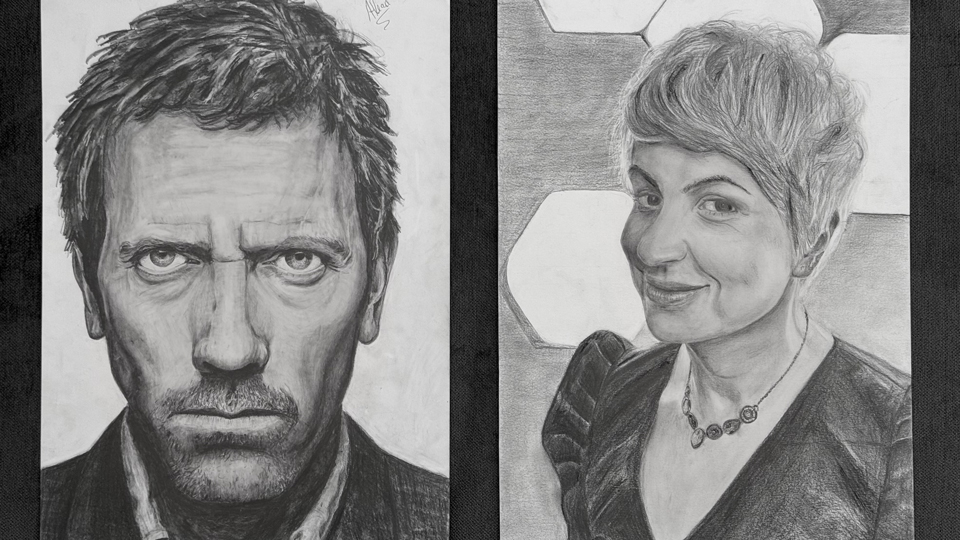
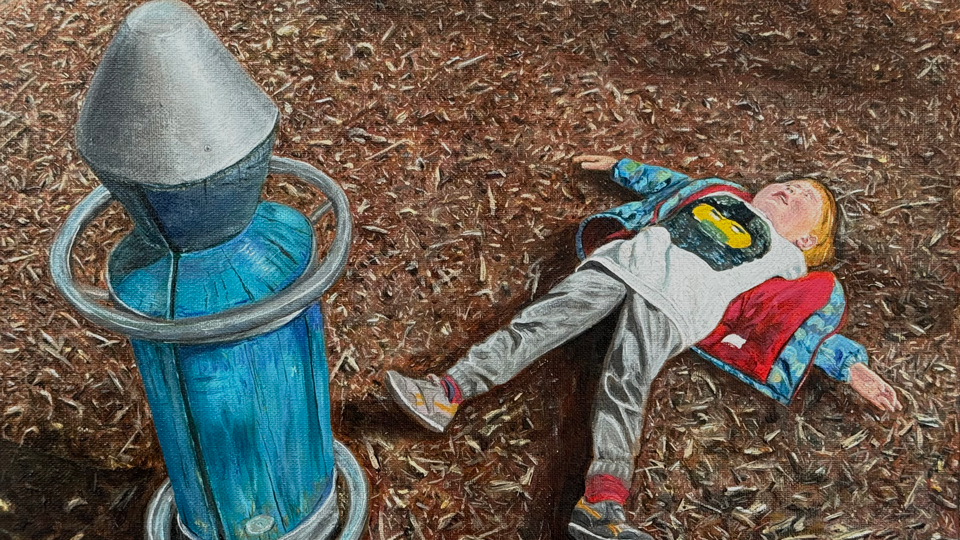
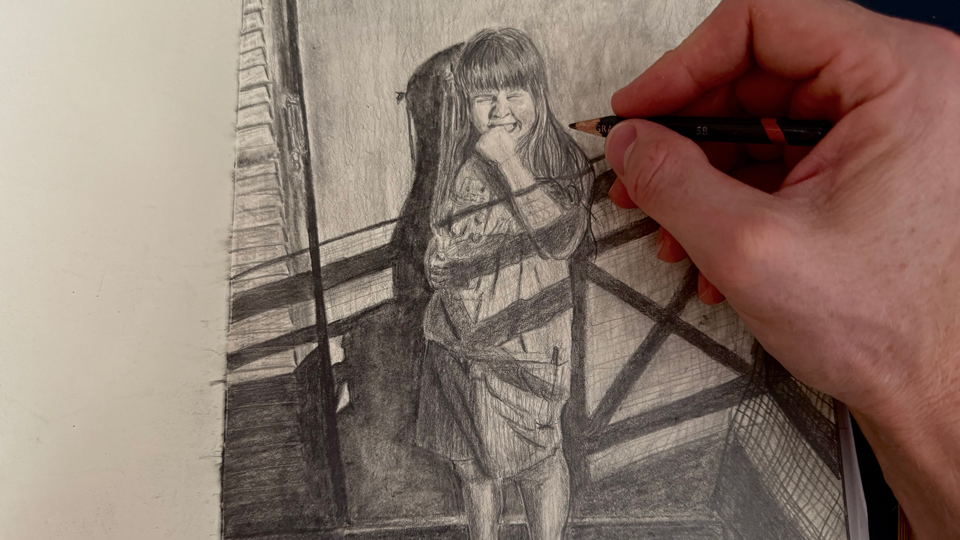
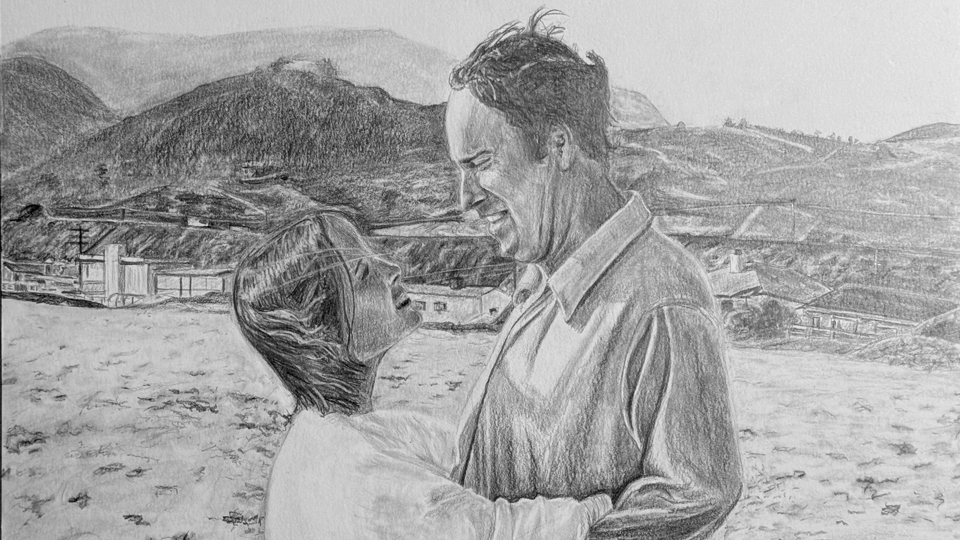
Sight loss doesn’t define you. It’s just one of those things that people deal with. It’s a pain, but you’ve still got the ability to live and enjoy your life. Yes, it has restricted me, but doesn’t mean that I can’t be happy. It’s important to remember that. I can still paint pictures, and I can still draw, and I can still do other things that I want to do.
I began my previous job, as deputy head of digital communications at the Department for Work and Pensions, partly because of my eyesight, and partly situationally – through COVID-19, and circumstances changing. But what I was doing only partly aligned with my creative passion. Through my sabbatical year, I’m looking to find my creative feet again, in different ways.
I have got really into art recently, and I’ve been consistent – every day, I’m drawing and posting it to a group that we’ve set up with some friends. I’m trying to find other avenues for creative expression, which I can undertake whilst I’ve got this condition, which I’m beginning to acknowledge is limiting me. Exploring that is quite exciting.
I’ve started posting daily updates on social media, posting to TikTok, YouTube Shorts, Instagram and Facebook. It is about sharing why I do my art, and how it connects to reinforcing visual memories that I know will become less accessible to me as my sight loss continues. It’s also a great way to keep the creative momentum through habit during my sabbatical.
Watch Andrew’s ‘why I make art’ LinkedIn videos: part one explains what motivates him to pick up a paintbrush, and part two explains how painting helps him remember as his vision deteriorates.
About the author

Andrew Read 
Artist, filmmaker, photographer, and former deputy head of digital communications at the Department for Work and Pensions
Andrew Read is currently in the midst of a sabbatical year, where he is focusing on creative projects including the visual arts. He lives with retinitis pigmentosa


Comments (0)
You must be logged in to join the discussion. Log in