


24 November 2024
The chances are that when many of us stepped out of doors this morning, the sun had yet to fully make an appearance. By the time we return home, looking forward to a hearty meal and perhaps the latest thrilling TV series or a peaceful read, the sun will have long set – if it even really made much of an impression in the grey skies at all.
While winter has much to enjoy (scarves, hot chocolates, glittering frosts and cheerful robins), it can bring its challenges (not least: defrosting the car, permanently chilly noses, shorter days, and heating bills).
Dr David Crepaz-Keay, head of research at Mental Health Foundation, shared with OT: “Many of us will be affected by the changing seasons. For those of us who work in spaces where we may not have much access to natural light, we may find we’re not seeing much daylight at all.”
“The arrival of colder weather and darker evenings can affect our mood, energy levels, sleeping patterns, and appetites,” he added.
Are there signs that teams can be looking out for among colleagues, that they may be having a difficult time?
Crepaz-Keay told OT: “It can be really helpful to have colleagues around us who are able to spot when we might be struggling. Sometimes it might be obvious someone is struggling, but if not, there are a few things you can look out for.”
“If someone is in a position where they need more support, they might seem more tired than usual, or start making uncharacteristic mistakes. They might isolate themselves or avoid other colleagues,” he explained, adding: “They might have a sudden change in the speed of their work – slowing down and procrastinating, or becoming more chaotic and taking on more work than they can manage.”
If things progress, more overt signs of a mental health problem might become apparent, such as outbursts of anger or emotion, absences from work, or not looking after their appearance as they normally would.
“Everyone responds differently. Some people may become withdrawn while others may become more agitated; some may sleep more, others may have difficulty sleeping. You may be well placed to notice changes in the behaviour of your family, friends or colleagues,” he said.
While many of us can find that the change in seasons has an effect on our sleep, mood, or energy levels, Crepaz-Keay noted that if this is affecting daily life, it may be a sign of experiencing Seasonal Affective Disorder (SAD).
He said: “If you think you have SAD, you shouldn’t be dismissive of your feelings – instead, talk to your doctor about how you’re feeling. NICE recommends SAD is treated in the same way as depression, through talking therapy and/or medication.”
It can be really helpful to have colleagues around us who are able to spot when we might be struggling
Open conversations
Faye McDearmid, optometrist and practice owner at Campbell & McDearmid Optometrists, in Redcar
Faye McDearmid noted the effect that the darker winter days can have on mood, sharing: “It’s dark all the time. We work in a dark room and then drive home in the dark.”
Discussing the role that the practice team can play in wellbeing, she pointed out: “When you work, you spend more of your time with your work family. I’ll see my team probably more than I see my husband or my sister. So looking out for each other is important.”
“You will know their normal behaviours and personality,” she said, suggesting that colleagues are in a position to consider whether team members are acting like themselves, or whether something may be different.
McDearmid highlighted the importance of "taking time to check in with whether people are really okay,” beyond the polite exchange of ‘how are you?’
Taking learnings from the consulting room, McDearmid explained that if a contact lens wearer describes their experience as ‘fine’, she will consider: “Is that ‘Feelings I’m Not Expressing’? Or are they really okay?”
Another approach might be to ask: “What is on your mind,” and on hearing their response, following up with “is there anything else?”

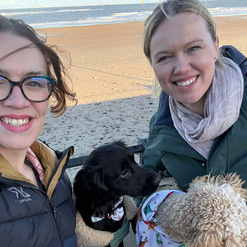

The practice team completed mental health training through Mind, which has had a long-lasting effect on how the team discusses the topic of wellbeing.
“The fact we did it together, I think, means we all talk about it and normalise that it’s okay to feel sad when it’s wintery,” McDearmid said.
“If we get a winter flu or cold, we take time off until we’re better. So, if you feel down, we explain that you might need to take some time to recover from that too, and that’s okay. I think because we’re open about it, we don't have a problem with it,” she added.
Looking out for each other during the practice day might include encouraging team members to take a break, and if possible, get out for a walk to make the most of winter daylight, McDearmid shared.We all talk about it and normalise that it’s okay to feel sad when it’s wintery
The practice also has a diffuser with a selection of essential oils, holds baking days and team events, and in the winter, the tea-time drink of choice may be a seasonal hot chocolate.
McDearmid reflected: “I used to think it was special, but to me that’s just looking after people in the way you should.”
To bring some levity to the day, the practice also has mugs for visitors stating: ‘Our favourite patient,’ and ‘Our favourite rep,’ along with a badge sporting a ‘silly name’ if a colleague forgets their name badge.
McDearmid said: “You’ve got to be able to enjoy what you do because we’re doing it for a long time. The little things that make you smile really help, especially in the winter.”
Creating a culture of care
Gail Steele, director of Auerbach & Steele, London
Based in Chelsea in London, Auerbach & Steele is surrounded by a constant buzz of activity which doesn’t cease in the winter months.
“London is electric,” Steele shared, “we’re very lucky to be here.”
Speaking to OT about how the practice approaches team wellbeing, Steele highlighted: “We have employment law and HR advisers, so we comply with all requirements. But really, a lot of the modern requirements are just normal things that you would do as a caring employer.”
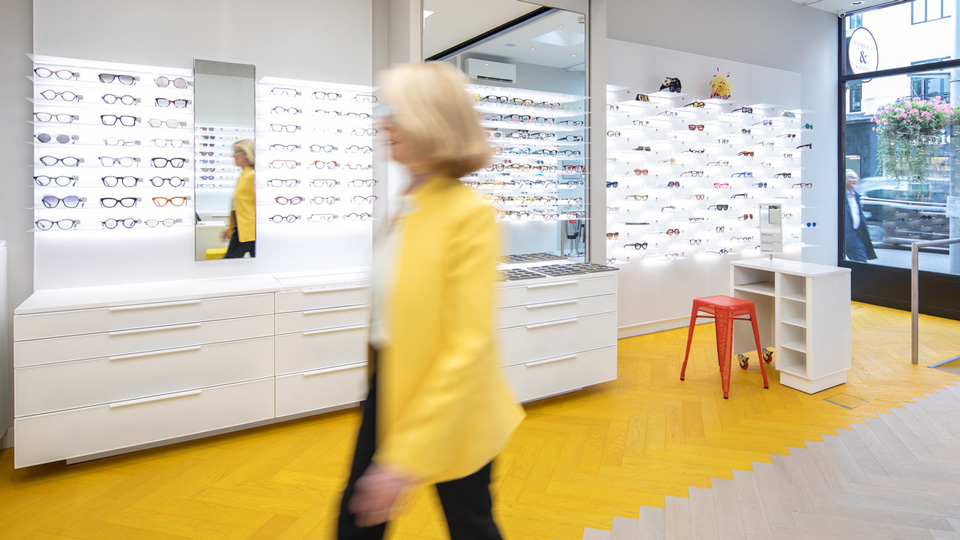
Auerbach & Steele was first set up in 1996, and Steele reflected: “One thing that a long time in practice has taught me is that people have different needs. Especially today, and being based in central London, there are all sorts of stresses and strains, and you always have to have your antenna out.”
The practice team is very open and supportive of each other, she noted: “The team here are amazing. If somebody is having trouble finding somewhere to live, there are staff who will give them their spare room for a while. There is all sorts of support. It’s very impressive.
“Often, it’s outside of my influence. All I ever felt I should do is create a culture where we work in harmony and all look out for each other within the practice. If they are in real trouble they can come to me, but often I’m the last place people come to because the team are very good at looking after each other,” she shared.
Steele acknowledged that her experience in the profession has helped her to learn to deal with the challenges that arise in practice. She told OT: “45 years of experience helps. There isn’t much I haven’t seen on the way through.”All I ever felt I should do is create a culture where we work in harmony and all look out for each other within the practice
She added: “You know that you can deal with most things. There are problems that seem huge to inexperienced people, that I know we’ll go a month further on and look back wondering: ‘What was I worrying about so much?’”
In fact, there is one saying that the practice team shares: “onwards and upwards.”
Steele explained: “We look forward, not back, and that is important. What can I do to make things better tomorrow and work forward in the most positive way I can?”
Community spirit and creativity
Thom Pears, technical director at Haine & Smith, South West England
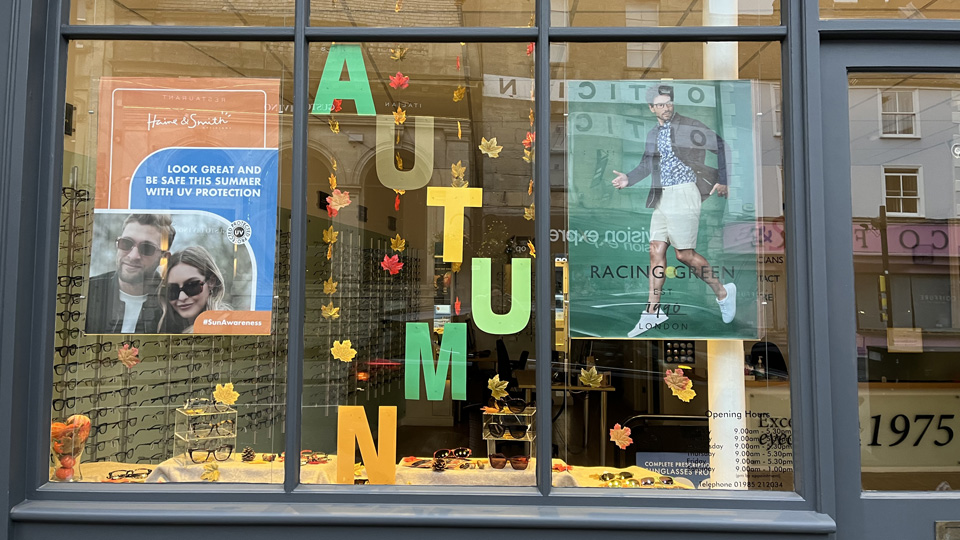
Thom Pears, technical director at Haine & Smith Opticians, an independent group of practices in the South West, explained that the teams embraces the changing seasons and “use them as an opportunity to get creative.”
Seasonal window displays are a creative highlight, “with rich autumnal colours – think vibrant oranges, reds, and yellows.”
“From spooky Halloween set-ups to sparkling Christmas scenes, each display reflects the personality of the practice and the creativity of our staff,” he added.
“The winter months are filled with community spirit,” Pears shared, continuing: “We love getting involved in local Christmas events, especially a Christmas light switch-on. Our teams often stay late, chatting with the community and handing out goody bags filled with freebies from our generous suppliers.”
“These events not only bring festive cheer but also strengthen our connection with the people we serve,” he added.
Shh... The importance of sleep
Many of us can relate to the challenge of waking up on a cold, dark, winter morning, perhaps not helped by a late night watching aforementioned TV show or reading ‘just one more chapter’.
In addition to his roles as head of education at the AOP and OT clinical editor, Dr Ian Beasley is also undertaking a master’s degree in sleep medicine at the University of Oxford.
Talking to OT about the importance of sleep, Beasley explained that the main “reset switch” for the body’s sleep-wake cycle, and circadian rhythm as a result, is exposure to light first thing in the morning.
Sharing his approach to winter mornings, he said: “I don’t press the snooze button, and once I’m up I will switch a bright light on.”
Exposure to light over the course of the day can help to reinforce the sleep-wake cycle.
Beasley commented: “This is hard for optometrists to do, but if you can get out of the consulting room for a walk at lunchtime to expose yourself to some daylight – even just getting out for 10 minutes – can help.”
“I don’t think a lot of us take sleep seriously, and maybe we take it for granted,” Beasley said, adding: “We spend about a third of our lives asleep.”
I don’t think a lot of us take sleep seriously, and maybe we take it for granted
The core functions of sleep include physical restoration, including cellular repair and growth, and it plays a role in optimising the immune system and balancing hormones that regulate stress, growth, appetite, and conservation of energy.
Sleep also affects cognitive function, including how memories are processed, problem solving, and emotional regulation.
“Given all of the functions of sleep, it won’t come as a surprise that if you’re not sleeping properly, that leads to a number of issues,” Beasley shared.
For more from Dr Ian Beasley on the topic of wellbeing, re-watch the webinar Eat. Sleep. Refract. Repeat from earlier this year, which explored the potential benefits of making simple adjustments to the three key pillars of sleep, nutrition, and exercise.
How does your practice team support wellbeing and look out for one another? Or do you have a personal go-to for self-care? Get in touch with the Optometry Today team to share.


Comments (0)
You must be logged in to join the discussion. Log in