


21 November 2024
A total 1056 days have passed since the New Year bells heralded the start of 2022, bringing with it a new dawn of education requirements for optometrists and dispensing opticians.
Over the past 25 months, registrants have navigated the new and refreshed requirements of the General Optical Council’s (GOC) CPD education cycle – including creating a Personal Development Plan (PDP) at the start of the cycle, and more recently a Reflective exercise, which marks a concluding task in the three-year cycle.
Data released by the GOC earlier this week reported that, as of the end of October, 63% of its 24,916 registrants had met the CPD requirements, meaning many will be completing CPD across the coming weeks ahead of the end of year deadline.
Remember, if you have completed CPD, you must declare this on your MyGOC, MyCPD – education providers no longer do this for you.
Here, OT speaks to three optometrists who work at the AOP – head of clinical and regulation, Henry Leonard; OT clinical editor for multimedia, Ceri Smith-Jaynes; and clinical and regulatory advisor, Roshni Kanabar – to glean their advice on meeting the CPD requirements with six weeks to go, and asked what their CPD resolution will be for the 2025–2027 cycle when the clock resets at the stroke of midnight on 31 December.
Henry Leonard, AOP head of clinical and regulation

Practitioner type: optometrist
Point requirement: 36
CPD points declared to date: 36.5.
What does CPD mean to you and why?
Undertaking CPD is a crucial part of being a modern healthcare professional. It allows us to keep our knowledge and skills up-to-date and gives our patients confidence that we are providing the highest standards of care, throughout our careers.
What is one ‘light bulb moment’ you have had this CPD cycle?
Prior to starting my own domiciliary practice in 2023, I had no experience of visiting patients in their own homes. Watching the series of OT skills videos on Domiciliary eye care gave me valuable hints and tips, drawn from practitioners with years of experience in this field.
When did you complete your PDP, how did you find completing it, and how have you used it throughout the PDP cycle to date?
I completed my PDP quite early in the cycle, after reading Dr Ian Beasley’s article on CPD: A new era. Having a PDP has helped me to structure my learning and tailor it to my current scope of practice.
Don’t leave it until the last minute – it’s much easier to complete CPD as you go along
Have you completed your Reflective exercise yet? If so, how was it?
I recently completed my Reflective exercise with another optometrist. It was helpful to talk through what I had set out to achieve, how this had changed throughout the cycle, and what my goals are going to be for the next cycle. It was also interesting to hear another practitioner’s reflection on their CPD.
What are your three top tips for members who are yet to complete the CPD requirements?
- Don’t leave it until the last minute – it’s much easier to complete CPD as you go along
- Tailor your CPD to your specific scope of practice
- If you need to provide a reflective statement to accompany your CPD, do this as soon as possible after the event, whilst it’s still fresh in your mind.
I am sure you receive lots of enquiries towards the end of a CPD cycle. What is the one thing about the cycle that you would like to demystify or debunk?
We usually get a flurry of calls towards the end of each year from members who are worried they haven’t managed to log six CPD points over the past year. The good news is that there is no annual CPD requirement, so provided you’ve met the requirements over the three-year cycle, you don’t need to panic. Having said that, we are now getting towards to the end of this three-year cycle, so if you’ve been putting it off, now is a good time to make sure you’re on track.
Ceri Smith-Jaynes, OT clinical editor for multimedia

Practitioner type: specialty optometrist
Point requirements: 36 general points, and 18 specialty points
CPD points declared to date: 45, as well as 20 specialty points.
What does CPD mean to you and why?
CPD is a mixed bag of emotions for me. When I first qualified, it wasn’t compulsory, but I was just interested in certain things. I’d turn up to anything that was free, promised a decent buffet, or because my friends were going. Later, I found myself a little constrained, trying to collect a complete set of badges, covering competencies that might not relate at all to my daily practice.
The thing I like about the latest CPD requirements, is that there are fewer domains, and you are encouraged to plan CPD around a set of goals you have defined yourself. I still take some opportunist CPD, but I’ve definitely been more targeted in this cycle because I’ve had a set of learning outcomes in mind. I’m really pleased about the self-directed CPD element. I often read around a topic because it has cropped up in practice and it’s somewhat satisfying to formalise that learning and earn a point.
What is one ‘light bulb moment’ you have had this CPD cycle?
Record keeping audits. Although we’d nudge each other about record keeping from time to time, I previously had no formal process for examining my records. The idea of a record keeping audit terrified me but (in the same way peer review was terrifying until you had done your first one), it was a helpful and relatively painless exercise, that made my records more robust. I had to audit someone else, which gave me ideas for my own records, and I was forced to face a few flaws in my own work. I logged a point as ‘self-directed CPD, work-based learning.’
When did you complete your PDP, how did you find completing it, and how have you used it throughout the PDP cycle to date?
I’d just moved to a new practice when I filled in my PDP so I did find it helpful to organise my thoughts and examine my strengths and weaknesses. There’s a lot of uncertainty when you join a new team with different equipment, processes and personalities, and I found myself quite stressed at first. I could see I had a lot to learn, so I really went to town on my PDP, reflecting on what I wanted to achieve clinically and how I could cement my role in the new team. I re-read it about once a year, to see if I’d done the CPD I had set out to do.
The thing I like about the latest CPD requirements, is that there are fewer domains, and you are encouraged to plan CPD around a set of goals you have defined yourself
Have you completed your Reflective exercise yet? If so, how was it?
We have regular professional meetings after hours, so we used this time to do our Reflective exercise, in pairs. It took about 20–30 minutes each because we’d done a little preparation before the evening. The most helpful part was bouncing around ideas for the next cycle’s PDP.
What are your three top tips for members who are yet to complete the CPD requirements?
- Plan who your peer will be and agree a date for your Reflective exercise; you may have to look outside your own practice for a suitable peer if you are the director
- Check your account and search for CPD you are missing; the OT Survival pack will help you fill in any gaps
- Don’t forget you can log self-directed CPD, but familiarise yourself with the guidance.
What is the one thing about the CPD cycle that you would like to demystify or debunk?
There is a misconception that reflection statements are only for self-directed CPD and peer reviews. Yes, they are only compulsory for these categories of CPD but, if you want the knowledge to stick in your brain more effectively, then I suggest making a habit of writing a reflection statement for every piece of CPD you do. It’s only a few minutes of thinking and it can make all the difference. Also, the rules changed mid-cycle, so now you can record self-directed specialty CPD.
Roshni Kanabar, AOP clinical and regulatory advisor
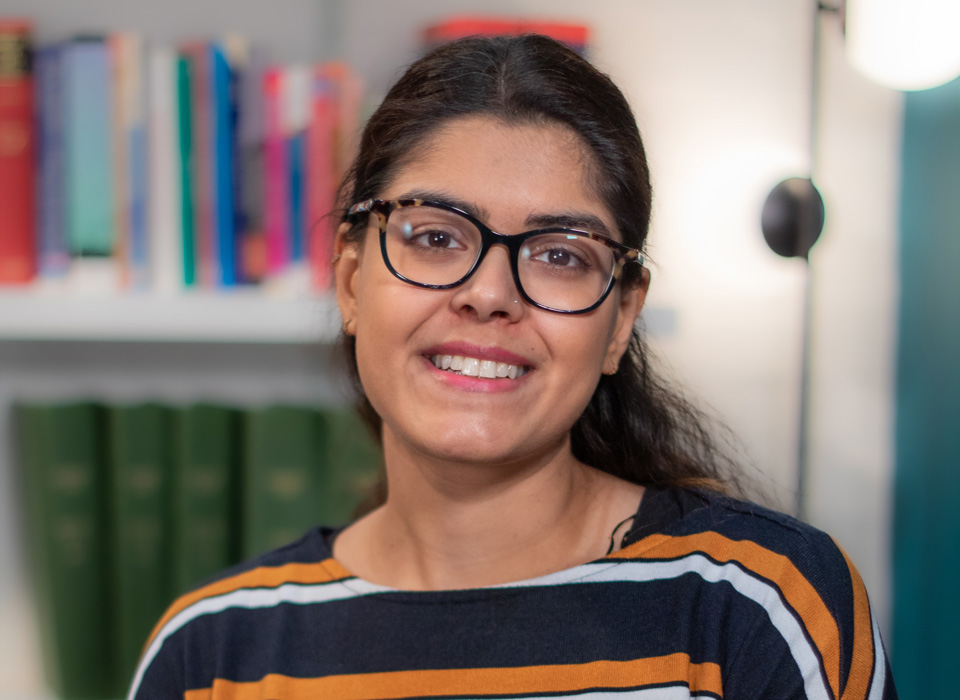
Practitioner type: specialty optometrist
Point requirements: 36 general points, and 18 specialty points
CPD points declared to date: 58.
What does CPD mean to you and why?
I carry out CPD for topics I find interesting and I therefore gain the CPD points organically. I never really look at what type of points the CPD will give me and which core domains. I am usually interested in a variety of topics and so I have never had to worry too much about not gaining the minimum points required. I find CPD helps me feel more confident as a practitioner and I am always keen to learn and increase my knowledge.
What is one ‘light bulb moment’ you have had this CPD cycle?
I have really enjoyed learning more about post operative cataract complications through CPD and putting this knowledge into practice.
When did you complete your PDP, how did you find completing it, and how have you used it throughout the PDP cycle to date?
I completed it at the beginning of the cycle and admittedly I have not updated it much since then. My goals have not changed much throughout the cycle, although since I recently started working as a hospital optometrist and left community practice, I have become much more interested in drugs and pharmacology, whereas before I was more interested in myopia management.
Do CPD that interests you – it is good to take time out of our busy schedules to increase our knowledge. The points will come organically
What are your three top tips for members who are yet to complete the CPD requirements?
- Do CPD that interests you – it is good to take time out of our busy schedules to increase our knowledge. The points will come organically
- Attend in-person CPD – fulfilling and I find I am able to learn more this way. I tend to get distracted and switch off during virtual CPD
- Use CPD events to talk to others and network. Nowadays opportunities do not come to you, you have to be proactive to make things happen and one way to do this is to talk to and take interest in others who work alongside you in the local area.
I am sure you receive lots of enquiries towards the end of aCPD cycle. What is the one thing about the cycle that you would like to demystify or debunk?
Most people think you have to get six CPD points a year, when actually it is a recommended number, not compulsory. It is good to spread the CPD points across the full cycle rather than try and get all the points in a panic at the end.


Comments (0)
You must be logged in to join the discussion. Log in