


21 October 2026
By the time Melanie Barratt approached the water’s edge at Samphire Hoe in September 2024, she had already overcome many obstacles.
The paralympic medallist had trained for three years, building up her swimming endurance and strength. To adapt to cold water, she had regularly immersed herself in a whiskey barrel of cold water in her garden.
To prepare herself for the mental challenges that would confront her during her 21-mile swim, she had sought tips from other Channel swimmers during a training camp.
Yet despite this preparation, standing on a beach in the darkness before dawn, Barratt knew that the biggest challenge was yet to come. In the lead up to the swim, she had worried about the jellyfish, the cold and the potential for large waves.
“Then there is the unknown, because you can train as long as you want, but you don’t know what the actual experience is going to be like until you begin,” she shared with OT.
A sense of freedom
Barratt, who was born with congenital toxoplasmosis, is blind in her left eye and has limited vision in her right eye.
Growing up, the Warwickshire athlete enjoyed the freedom that swimming in a pool provided.
In contrast to navigation on land, when Barratt was in the water, she did not need help to find her way around. She knew exactly how many strokes it would take her to reach the end of the pool.
“Before I could even swim, I liked the feeling of being supported by the water and moving through it,” she said.
“I liked being in an environment where it felt like I had control,” Barratt shared.
Barratt went on to win two gold medals, two silver medals and a bronze medal at the Paralympic Games in Atlanta in 1996 and Sydney in 2000.
It gradually became warmer and warmer, and then everything was blue – the sea and the sky
While throughout her career as an elite swimmer Barratt had trained in swimming pools, she was curious about the possibilities of open water swimming.
“It seemed equivalent to the difference between running on a treadmill and running outside,” she said.
“I always thought how amazing it would be to swim from one country to the other, and especially the iconic English Channel,” Barratt shared.
Her first experience swimming in the open water was alongside a friend at the River Avon in Stratford.
She remembers how cold the water was after years swimming in a swimming pool.
“I loved the feeling of being outside in the cold water, smelling and hearing nature,” Barratt said.
“The feeling afterwards was amazing. It’s a bit like the high you get from any intensive exercise, but the cold exaggerates it,” she said.
While Barratt’s first open water experience involved more socialising than swimming, she began to seriously consider the prospect of swimming the English Channel.
She faced a three-year wait for her allocated attempt – time that she used to prepare for the mental and physical hurdles she would face while swimming the Channel.
During this training regime, Barratt told OT that she had days where she would reluctantly make her way to the pool to work on her stamina.
“Sometimes I would have to make myself get in. But the world is always a brighter place after I’ve been swimming. That’s always the same,” she said.
Diving in
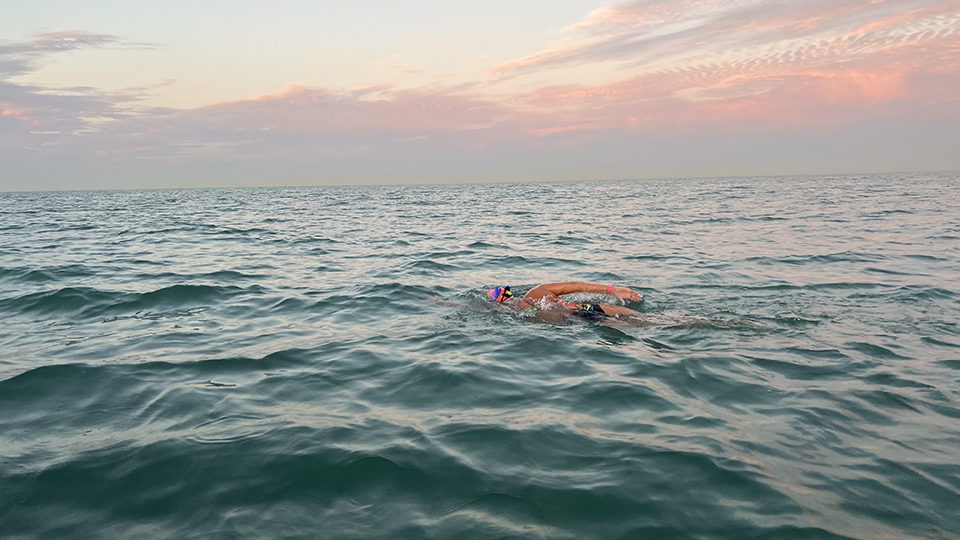
In the early morning when Barratt began her attempt to swim the English Channel, conditions were good.
The ocean was flat and the temperature of the water was around 17 degrees. In order for Barratt’s record attempt to count, she was not permitted to wear a wetsuit.
Barratt swam as the sun came up, receiving instructions through a bone conducting headset from a rotation of three guides who travelled alongside her on a boat.
“It gradually became warmer and warmer, and then everything was blue – the sea and the sky,” she said.
“We were so lucky with the conditions. It was incredible,” she said.
Barratt was sustained through the swim by powdered energy drinks, as well as bananas, fudge and small cakes that were thrown to her in plastic containers.
She ate tinned peaches to ease a sore mouth from the intake of salt water.
“You’re not allowed to touch the boat, so people throw you things,” she explained.
At one point, Barratt came into contact with a jellyfish – which she had not seen because it was on her left side.
When she turned her head to breathe, she felt the jellyfish across her face.
“Its whole body wet my nose. It was a really big jellyfish with lots of tendrils and I had to swim across it, but for some reason it didn’t sting me,” she said.
After a relatively smooth six hours, Barratt began to feel nauseous after drinking one of her energy drinks too quickly.
Knowing that she was less than halfway through the swim, Barratt began to question whether she would be able to finish the swim.
She estimates that the nausea lasted for around an hour – with Barratt going back to a lesson she had learned during her training camp with channel swimmers.
“When you go through a dark time, you have to think about why you are doing it and take the swim five minutes at a time,” Barratt said.
“You gradually learn that your body can do a lot more than you think it can,” she added.
Gradually the nausea eased, with Barratt continuing to make progress towards France. As they approached the coastline, a friend of Barratt’s entered the water to guide her toward the shore.
“I can remember seeing some rocks under the water and realising that I was there,” Barratt shared.
“It was quite amazing really,” she said.
Celebrating success
While Barratt has achieved extraordinary feats as an athlete, she told OT that completing her English Channel swim was a different level of emotion.
“It means more to me than the Paralympics because what I had to do to even get to start that swim was massive,” she said.
“I had to learn how to swim in open water, to train and condition myself for so many hours. Then to be able to complete it was such a huge thing,” Barratt observed.
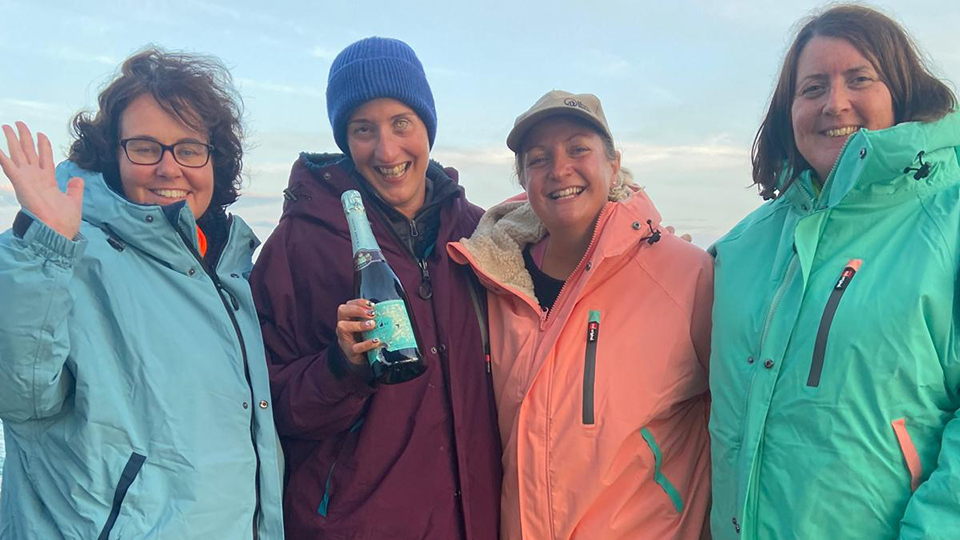
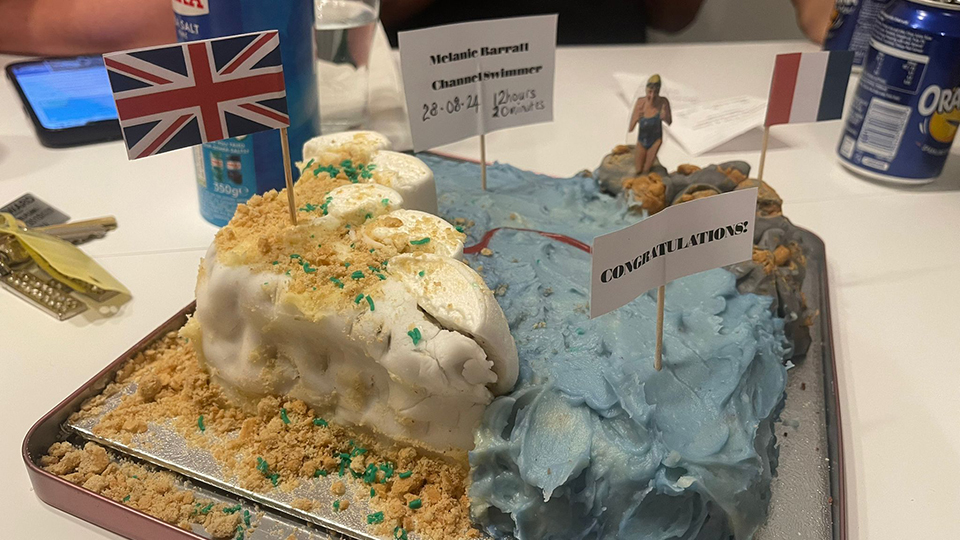
Back in the UK, Barratt celebrated with fish and chips and a cake which a friend had made in the shape of the White Cliffs of Dover.
Barratt has no pressing desire to begin training for another open water swim.
“I thought I would, but after doing the Channel, I feel like I have fulfilled my goal and proved to myself whatever I needed to prove,” she said.
Her swimming cap, costume and plastic food containers serve as a physical reminder of her record-setting swim.
“The Tupperware still has the labels on it from the swim, and that makes me smile when I use them,” she said.

Into the wild
OT speaks with Dr Sadie Rockliffe about her work to ensure that people with sight loss can enjoy the benefits of swimming in oceans, lakes and rivers


Comments (0)
You must be logged in to join the discussion. Log in