


10 August 2026
Growing up in Findon, West Sussex, Sadie Rockliffe and her brother would bob about swimming with the porpoises while their late father fished for mackerel.
Through the following decades, the ocean has served as an anchor during the challenges and triumphs that life brings.
“You gravitate there for your extremes – whether it is sadness and grief, or happiness and celebration,” Rockliffe said.
“Being in the water allows you to see things clearly and have that reset,” she observed.
Since 2023, Rockliffe has been working towards a PhD with the University of Brighton that aims to ensure that everyone has access to the unique benefits an ocean dip or river swim can bring.
The idea for the research project came about following a Blue Space Forum event where a woman with sight loss was invited to share her experiences.
She described the barriers she had to overcome to go for an ocean swim – from navigating uneven terrain to reach the water’s edge to inadequate public transport links.
Everyone should have the same access to natural spaces. The water is for everybody
Rockliffe began her PhD project, Sensory Inequalities and Access to Blue Space, motivated by a desire to bring the established physical and mental health benefits of the water to a broader group of people.
“Everyone should have the same access to natural spaces. The water is for everybody,” Rockliffe emphasised.
Through her research, Rockliffe has conducted a series of ‘swim along’ interviews in different locations across the UK to explore how people with sight loss experience blue spaces.
She noted that while people with sight loss can face hurdles in accessing rivers, oceans and lakes, the water has the effect of breaking down barriers that exist on land.
“When people get into the water, you generally shut your eyes anyway, and you start absorbing the feeling of being in the water with all your other senses,” Rockliffe said.
“Lots of the people I spoke to during my field work talked about the sense of freedom they had in the water. They felt like everyone else and had the opportunity to really push themselves without the fear of falling or tripping,” Rockliffe said.
The researcher added that while she was swimming with people with sight loss, they would often be the ones guiding her through unfamiliar environments.
“I was trapped in the reeds at one point with the ducks swimming around me, and the woman I was swimming with had to come back and help me,” she recalled.
“She explained how to swim through the reeds and reassured me that they aren’t as dense as I had first thought,” Rockliffe added.
Gateway to the Sea
Practical action to reduce barriers
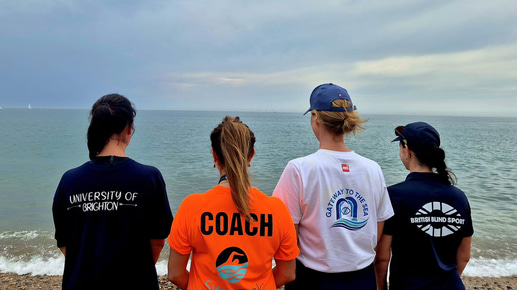
Rockliffe’s research has moved beyond abstract ideas to practical action through the Gateway to the Sea event, which was held at the end of June. The event provided people with sight loss with a supported introduction to sea swimming.
The initiative was led by the University of Brighton in partnership with British Blind Sport, SwimTrek and Paralympic gold medallist Melanie Barratt – who is the first blind woman to swim the English Channel.
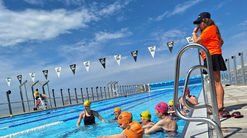
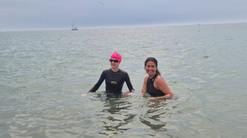
Swimmers first took part in a preparatory pool session at Sea Lanes Brighton before taking to the open water with the help of swimming coaches, lifeguards and swim guides.
“We learned about currents, tides and how to recognise your own abilities in order to stay safe in the water,” Rockliffe explained.
“It was so well received. It’s definitely something that we are aiming to roll out nationally,” she said.
Funding for the event was received by the Arts and Humanities Research Council, while support was also provided by Red Equipment.
Alongside the Gateway to the Sea event, weekly visually impaired swim sessions take place at Sea Lanes Brighton on Saturdays from 3pm to 4pm.
Rockliffe praised the inclusive and proactive approach of Sea Lanes Brighton staff.
“After I spoke to them about the transport issues that many people face, they now are also running a free shuttle service,” she said.
The researcher observed that there has been a focus on encouraging people to get into nature as part of the growth of social prescribing within healthcare.
However, the responsibility is often on the individual to get to those natural spaces.
“That raises an issue because it's presuming that people can make their own way there. In fact, many people rely on others or infrastructure to access those spaces,” she said.
Rockliffe reflected that breaking down the barriers to access oceans, rivers and lakes is a ‘no-brainer.’
“There shouldn’t be a hierarchy of who gets to enjoy these spaces,” she said.
Sadie Rockliffe on her relationship with the water
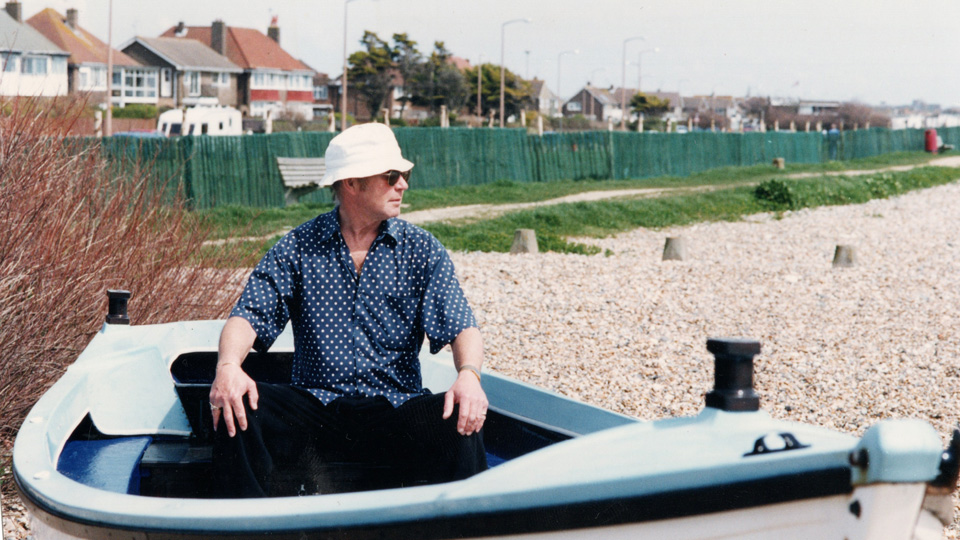
“I have wonderful memories of being with my dad and my brother down at the sea. My dad had a little fishing boat that we would take out. My brother and I would bob about with some porpoises while dad would be fishing for mackerel. Listening to the water lapping against the boat on a wonderful sunny day is absolutely glorious for me.
“We all have our own personal relationships and connections to the water. Cold water immersion is particularly good for your body, but it's also good for your mental wellbeing. It is now being used by people to be able to get through the daily tasks and stresses of the day.
I have wonderful memories of being with my dad and my brother down at the sea
“The water brings back a sense of calm. You can be silly in the water – there is that sense of playfulness and innocence that we had as children. There is research about how it almost moisturises your brain. You feel like everything is relaxing. For myself, as someone who is neurodivergent, I feel like my brain is quietening down.”


Comments (0)
You must be logged in to join the discussion. Log in