


27 November 2025
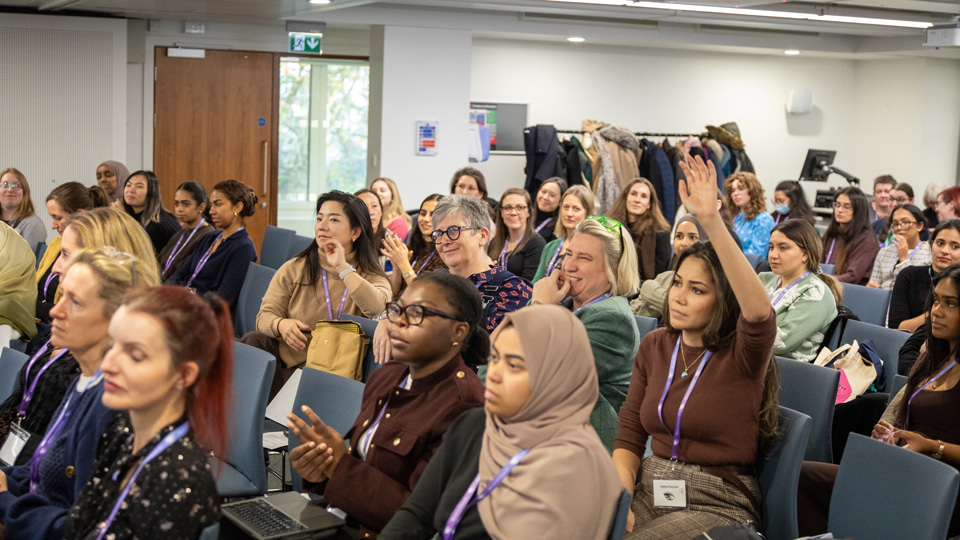
Gender-based disparities in how trainee ophthalmologists are using artificial intelligence (AI) and accessibility challenges in parliament were among topics discussed at the Women in Vision UK annual meeting (21 November, City St George’s, University of London).
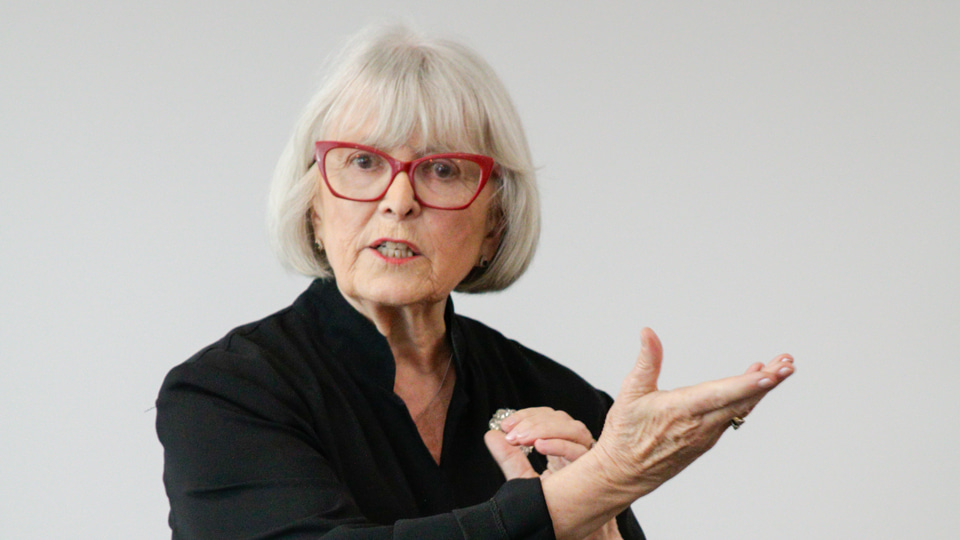
The event featured a series of short presentations as well as a public speaking workshop by Judith Potts – the founder and trustee of the Charles Bonnet syndrome charity, Esme's Umbrella.
Labour MP, Marsha de Cordova, and consultant oculoplastic surgeon, Naresh Joshi, delivered keynote talks. Below, OT presents a selection of insights from the event.
1 The gender gap in AI
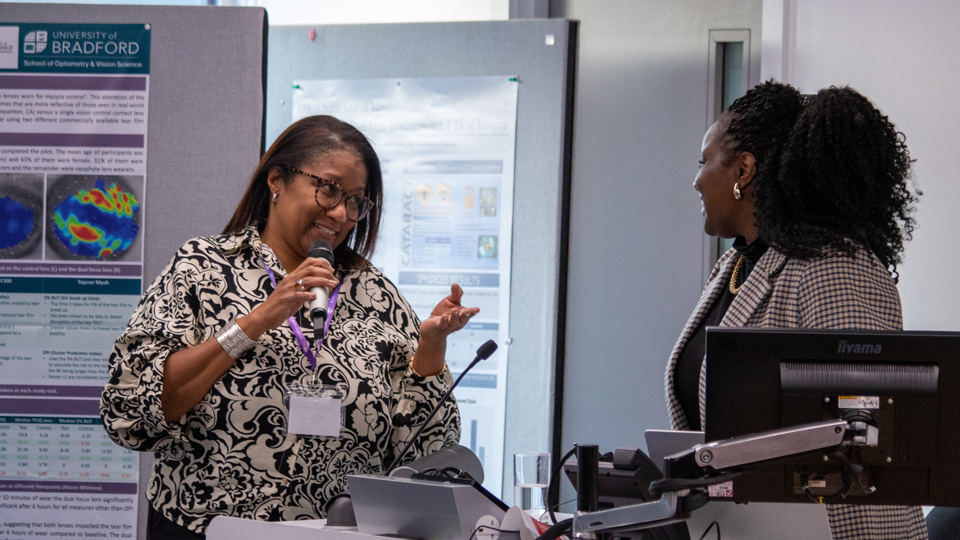
Strasbourg University Hospital ophthalmologist, Emilia Koestel, presented findings from the European Board of Ophthalmology Survey that illustrated a disparity in how male and female ophthalmology trainees are using AI.
The European Board of Ophthalmology has members across the European Union, UK, Switzerland, Turkey and Norway.
Koestel highlighted that there were no significant gender-based differences in clinical hours, weekly study time, or international meeting attendance.
“Among those results, what struck us was the reported AI use in our sample – 27.8% of men reported using AI for their training compared to only 20.2% of women,” she highlighted.
“This is a symptom of a wider problem that relates to digital skills,” Koestel added.
Koestel referred to findings from a 2019 UNESCO report on the gender gap in digital skills, which found that women were 25% less likely than men to know how to leverage technology for basic purposes.
“At a time where technology is key to every field, and where we are using AI to increase our productivity in daily tasks, these findings are particularly important,” Koestel emphasised.
2 Women in Vision Ghana now has 278 members
Delegates received an update on the newly-formed Women in Vision Ghana network, which was launched in July.
The network is open to anyone within fields related to vision, including optometrists, ophthalmologists, vision scientists, and students. Men are also welcome to join the network, which aims to foster allyship.
Within Ghana, around 40% of optometry undergraduates are female – compared to only 5% of lecturers within the optometry faculty.
Women in Vision Ghana lead coordinator and optometrist, Dr Dillys Amega, told OT that research investigating the reasons for this disparity highlighted a lack of mentorship as a key factor.
“There were not enough role models to look up to and there was a lack of understanding around the path into academia,” she said.
The Women in Vision Ghana network now has 278 members across the country.
“We want to be able to build a community of women who are empowered with the skills to be leaders in whatever career path they choose,” she highlighted.
“We believe in giving people a platform to be the best version of themselves professionally,” Amega emphasised.
Amega, who has practised as an optometrist in Ghana for the past 10 years, highlighted that optometry is a profession where she is able to see the immediate impact of her actions.
“You provide an intervention, and you see a change,” she said.
“It's rewarding as a profession, and it's even more rewarding when the impact is on a larger scale,” Amega shared.
Behind the scenes at Women in Vision UK
3 How do you catch the Speaker’s eye when you are blind? Marsha de Cordova MP on accessibility challenges within parliament
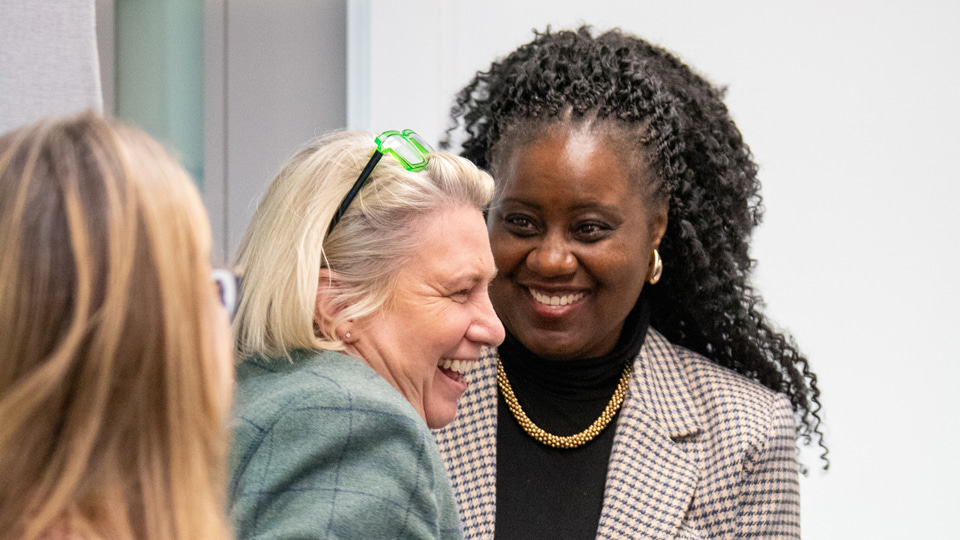
As part of her keynote address, Labour MP for Battersea, Marsha de Cordova, outlined the ongoing accessibility challenges that blind and partially sighted people face within parliament.
De Cordova, who is severely sight impaired and has nystagmus (“I call it my wobble,” she told delegates), shared that she entered politics in order to create change for people with disabilities.
However, she soon discovered accessibility hurdles within the corridors of power.
“I was elected in 2017, which was a huge honour for me,” she said.
“But going into the House of Commons – which many would call the mother of all parliaments – I quickly learned that parliamentary buildings, policies and procedures were not necessarily accessible or inclusive for blind and partially sighted people,” de Cordova observed.
She told delegates that these barriers range from trip hazards and poor lighting to the convention that requires MPs to catch the Speaker’s eye when they would like to speak.
“You can imagine how challenging that continues to be for me,” de Cordova said.
Her experience of facing accessibility hurdles as an MP with sight loss has motivated de Cordova to bring about change.
“I don't want anybody coming behind me to have to face those same barriers,” she emphasised.


Comments (0)
You must be logged in to join the discussion. Log in