


06 October 2025
This week (7– 15 October), many Jewish optometrists and dispensing opticians will mark Sukkot – a harvest festival that is also linked to the exodus of the Jewish people from Egypt.
Statistics from the General Optical Council show there are 248 Jewish optometrists and dispensing opticians working in the UK.
OT spoke with optometrists and dispensing opticians about what Sukkot means to them.
My Sukkot
Optometrist, Menachem Salasnik, on the meaning behind living in a temporary dwelling during Sukkot
During Sukkot, we live in a hut outside our homes called a sukkah. Depending on the weather, that could be just for meals, or some people may even sleep outside in the huts. The huts have temporary walls and a roof made from bamboo or evergreen foliage. We are reminding ourselves that the security of the walls protecting our home is just a fallacy. There is only one being that is really looking after us and protecting us, and that is God. Like most of our festivals it is linked to a historical event. After we left Egypt during Passover, we then spent 40 years in the desert with no protection except for God’s protection.
My children help to build the sukkah and then I put on the roof. I find being out in the open, among nature, very inspiring. We spend so much of the time trying to control the world, and this gives a chance to step back and think, ‘I am just a small cog in something bigger.'
There is an understanding that we each have a divine mission – as does everything else in nature – to bring goodness to the world. The sun, the moon and the plants all have a divine mission. As a low vision optometrist, which is my main specialty, my role is to care for people who are losing their sight. I was given different skills and abilities to do that. I don’t see optometry as just a career, but as part of a broader purpose. On Sukkot, I therefore connect with other aspects of nature and celebrate our combined divine purpose.
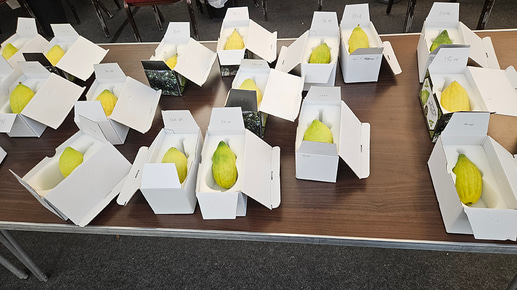
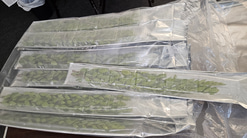
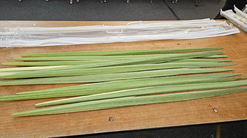
During Sukkot, we will source four different naturally growing species: the central branch of a palm tree, an etrog, myrtle leaves, and a willow tree branch. Each of these species has a certain significance. The palm tree branch, which is tall, thin and straight, represents the spine. The etrog, which is a citrus fruit, is the heart, the myrtle is the eyes, and the willow is the mouth. The idea is to connect all of those different parts of our body in the worship of God.
If you go to the marketplace, you will find people poring over these different species with magnifying glasses, looking for the best possible fruit. Because the etrog represents the heart, we want our heart to be as loving and giving as possible – so there is an intense search for a very beautiful etrog.
Nowadays in England, it is not a big deal finding the four species. Willow grows very nicely in England. That’s not a problem. The etrog is generally sourced from the Middle East, Morrocco or Israel, but with modern transportation you are not limited to what grows in your country. If you went back 150 years, for Jews living in Europe it was very difficult to get an etrog and they might have just one for a whole community.
After Sukkot ends, we are not really meant to throw the four species out. Some people will use the etrog to make a tangy type of jam. Others will stick cloves it and the dried fruit makes a nice sweet smell in the house. The myrtle, willow and palm can be kept to use as fuel for a fire during the following Passover – when we will burn any leavened bread or yeast that we have in the house.
Growing up, I remember trying to eat our meals in the sukkah, the rain coming down and everything getting washed out. The Simchat Torah at the end of Sukkot was the best part. There were sweets thrown in the synagogue, you got to dance with the scrolls and sing all day. It was a great time.

Passover 2024: “Children are the stars of the show”
Optometrists tell OT how sharing stories during Passover helps to transfer traditions from one generation to the next
My Sukkot
Dispensing optician, Yaron Jacobs, on sukkah hops, the nostalgia attached to the smell of an etrog and the joy of corny jokes
No practising orthodox Jew would work the first two days or the last two days of Sukkot because they are what we call Yom Tov. They are days where we are not permitted to do a range of activities – similar to the Sabbath. The idea is that you are meant to be spending time with your family and friends. I personally do not work the entirety of Sukkot but there will be people who work the middle days.
In Hebrew, Sukkot it is referred to as Z'man Simchatenu [the time of our joy]. Joy is an immense part of Sukkot. Going back to biblical times, there would be huge celebrations in the temple courtyard.
During Sukkot, there is a mitzvah [commandment] to dwell in a sukkah. The roof needs to be made from a material that grows naturally from the ground. The idea is that everything you would usually do in your house, you do in the sukkah apart from cooking. Living in England, with our climate, there aren’t too many people who sleep in their sukkah – but some people do. My personal custom is not to sleep in the sukkah, but it depends on a person's family and origin. One of the fundamental aspects of observing Sukkot is the lulav [palm frond] and etrog. We take these four species of vegetation and bind them together.
There are all different types of sukkahs. At this time of year, there are pop-up shops where people can buy sukkahs that you construct yourself with poles and canvas walls, pre-fabricated wooden sukkahs and plastic sukkahs that fit together a little bit like Lego. For all the sukkahs, you would still need to make the roof out of natural material. I put up a canvas sukkah in my garden and reinforce the walls with wood to make it a little bit more secure. For the roof, many people in the UK use laurel because it grows quickly and has large leaves that are unlikely to fall off the branches. You don’t want something that is going to fall in your soup. When I lived in America, it was popular to use pine branches for the roof.
There are no specific dishes that we have during Sukkot. It closely follows Rosh Hashanah [the Jewish New Year], when we have apple dipped in honey to symbolise a sweet New Year. In certain Jewish traditions, there are foods that are popular. I am an Ashkenazi Jew – my grandparents and great grandparents came from Eastern Europe. They would have made holishkes, where cabbage is stuffed with rice and meat.
Because the etrog represents the heart, we want our heart to be as loving and giving as possible – so there is an intense search for a very beautiful etrog
During Sukkot, will invite people over to have a meal in our sukkah. Not everyone has the opportunity to have a sukkah – for example, if you live in a flat and you don’t have a balcony that is open on top. Some people will do what we call a sukkah hop, where you go from sukkah to sukkah within the local community.
During the intermediate days, I will try to reach as many people as possible who may not have had the opportunity to do the mitzvah of the four species. I will go around the streets of Edgeware, offering people the opportunity to hold the lulav and etrog. For non-Jewish people, if they are curious, I will explain what I am doing and why I am doing it. The main thing is that it is a time of joy. I might tell people a corny joke.
There are many aspects to joy. You have to be happy within yourself. Joy happens when you are around other people. That’s another reason that we invite people around, because there is no joy in sitting by yourself in your own little sukkah.
The etrog has a really unique citrus smell that is not quite like a lemon, grapefruit or orange. Every time I smell one it gets those nostalgia cogs turning. During Sukkot, if you live in a Jewish area, you can hear your neighbours sitting in their own sukkahs. You can hear what songs they are singing. There is a feeling of togetherness – it is really nice.
My Sukkot
Optometrist, Ariella Mirvis, on a sukkah that lost a battle with British weather and gaining a greater appreciation for Sukkot as she grows older
We have a pop-up sukkah with poles that you set up in a rectangular shape, and canvas that you attach using velcro. It is a family effort putting it up and it takes around two hours to build. Then we put bamboo and laurel leaves on the top, and we just hope that the wind and the rain doesn’t blow it away. That did happen one year when there were really strong winds. We were watching out the window as the sukkah was blown around the garden. We took the damaged sukkah back to the store and they kindly replaced it. My parents never saw their sukkah again.
I do a lot of cooking in advance. My freezer is fully stocked. In my community, everyone opens up their sukkah, and we go from one person’s garden to the next. Everyone volunteers to do a different course of the meal – we always prepare the dessert. Last year we prepared cupcakes and cookies for around 70 people.
It is a really nice bonding moment for everyone to come together. Everyone's chatting. The kids are playing in the garden. In the last few years, we've had amazing sunny weather, and it has been a perfect afternoon with people mingling and talking. It makes you feel grateful for the community that you have around you.
This year I will work the middle days of Sukkot. Some people are quite stringent about only eating their meals in a sukkah during Sukkot even if they are working. Some restaurants construct a small sukkah outside so people can use that if they want to. There is a massive one that I’ve seen in Canary Wharf where all the businesspeople who work in that area can join together and have lunch.
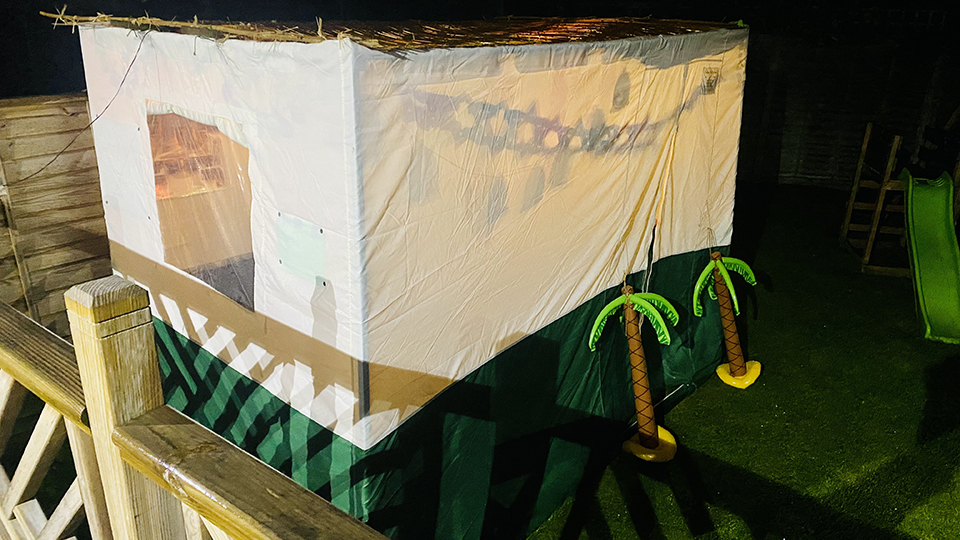
Being outside, exposed to the elements in a temporary dwelling that could fly away at any moment, makes you appreciate how lucky you are. It makes you grateful that you get to go back inside and spend time with your family in the warmth and shelter.
I remember as a child putting on my coat and my gloves to eat outside. Even if raindrops were plopping in my soup, I didn’t care. I thought it was so exciting with the fairy lights twinkling and looking at the stars. My kids feel the same. They take great pride in creating artwork to decorate the sukkah with.
When I was growing up, my mum used to say that this was her favourite festival and I didn’t really understand why. Yes, it is exciting to eat outside but there are many other holidays. Now I have my own children, I really appreciate what she meant. It is so special to be together and appreciate what we have.
After the attack in Manchester on Yom Kippur, we are sending our love and support to the families of the people who died. Even though we are hundreds of miles away, we are one big family and community. We stand in solidary with the people who are struggling and hope for a better time.

Celebrating Vaisakhi 2025
OT speaks with eye care professionals about one of the most important days in the Sikh calendar
My Sukkot
Optometrist, Louise Marshall, on passing traditions to the next generation and dipping challah in honey for a sweet New Year
I don’t have a sukkah in my garden, but we have friends that do and we will go over to their sukkah for a meal. When my children were younger, they had a sukkah at their school and would help to decorate it with paintings and coloured paper chains. When you are in a sukkah, the roof is made of natural vegetation, and you are meant to be able to look through the roof at the stars. During Sukkot, our synagogue puts on Sukkah crawls for the children and teenagers, where they go from sukkah to sukkah in the community together. It’s a fun time.
Sukkot comes after the two holiest festivals in the year, Rosh Hashanah [Jewish New Year] and Yom Kippur [Day of Atonement]. They all follow on together during a month called the Yomim Noraim. During this time, it is customary to eat bread called challah dipped in honey, as well as honey cake. This is to symbolise hoping for a sweet and happy New Year. I have my grandma’s honey cake recipe written on a piece of paper. I was only 10 when she died but my dad kept all of her recipes. It is a tradition that has been passed on. Everyone’s honey cake is a little bit different.
For me, Sukkot is one of the traditions in Judaism where we go back to our roots. It is an eight-day holiday that commemorates Gods’ protection of our ancestors after our exodus from Egypt. With many of our festivals, they tell the story of our existence as a people. We teach our children, so they teach their children. You pass these traditions on to the next generation. There is a feeling of togetherness, and it is a happy time.
When you go to the synagogue, the lulav and etrog are passed between the congregation and you shake it and make a prayer. This is what we call a mitzvah –following a commandment from God. When we go to my friends’ sukkah for dinner, we will also perform this mitzvah. The lulav makes a certain sound as you shake it that I remember from childhood.
It's not every day that you sit outside in a hut, especially this at this time of year. During Sukkot we are commemorating the 40 years the Israelites lived in the desert after being freed from slavery in Egypt. The sukkah represents the flimsy huts that they lived in during their journey.
Sometimes when you have a big puffer jacket on and you are freezing cold, you do wonder, ‘why do we do this?’ But it’s good to question and to learn. You have family and friends around you, and you are experiencing this together. It is a time to talk, reflect and reconnect with Judaism.


Comments (0)
You must be logged in to join the discussion. Log in