


16 April 2025
Two consultant ophthalmologists from Moorfields Eye Hospital have travelled to Dhaka, Bangladesh, to provide diagnosis and treatment for patients with eye trauma over a two-day humanitarian trip.
Mahi Muqit, a senior vitreoretinal consultant, and Niaz Islam, a senior medical retina expert, were invited by the National Institute of Ophthalmology and Hospital (NIOH) and Bangladesh’s interim government Ministry of Health, to help 120 patients with bullet wounds to their eyes.
The injuries had been sustained during protests against the previous government. Around 1000 people experienced ocular trauma during anti-discrimination demonstrations in July and August 2024.
Approximately 700 people had received emergency treatment at the hospital, with vitreoretinal surgeries performed for bullets or fragments lodged in their eyes.
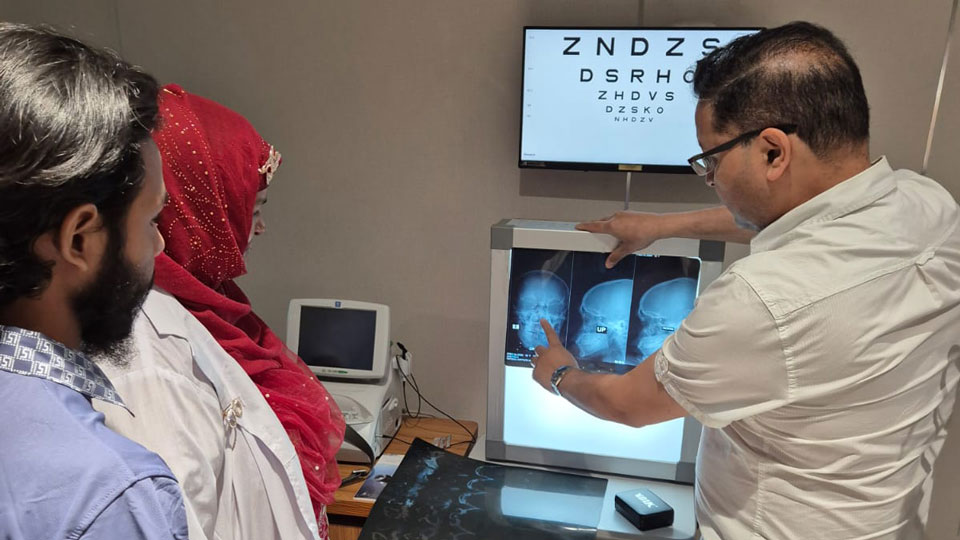
The humanitarian trip aimed to provide further treatment to patients, with the ophthalmologists working alongside local doctors and providing medical and surgical training.
The ophthalmologists evaluated 120 patients, aged between 14 and 30. The majority had received initial treatment last year.
Of the patients, 24 received complex sight saving surgery. One of which still had the original bullets inside his eye, requiring an operation to remove them and fix a retinal detachment.
Patients who did not receive surgery were given a rehabilitation plan agreed with local doctors.
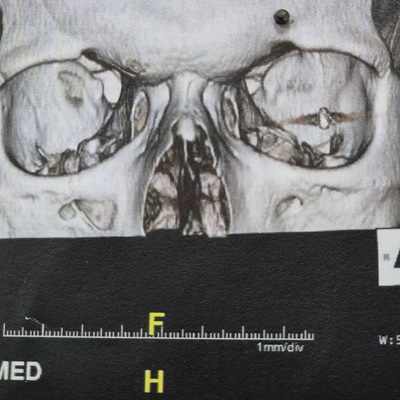
Muqit said of the experience: “It was an honour to be invited to help these people, and an intense experience for all of us. It’s such a privilege to be able to restore sight to people who have lived with sight loss for months.”
Muqit has worked with NIOH retina doctors over the past 10 years, in conjunction with Helen Keller International.
Speaking of the people they had seen during the humanitarian trip, he shared: “Rohan is smiling now because our surgery meant he could already see better. He was with friends when he was shot in both eyes by the police. He was blinded in both eyes, with one being beyond hope.”
“Our operation on the other eye fixed his retinal detachment and removed scar tissue. We have every expectation that his vision will continue to improve as he recovers from the surgery,” he said.
The ophthalmologists also met with the Health Adviser of the interim Government at the Ministry of Health, providing a debrief of the services performed.
Islam provided expert opinion and advice to patients on their macula and retina disorders resulting from eye trauma.
Commenting on the experience, Islam said: “I was delighted to be able to share our expertise and experience with colleagues at NIOH – we hope our legacy lies in having transferred skills to them, so they can in turn offer sight-saving surgery to many others affected by eye trauma in Bangladesh.”


Comments (0)
You must be logged in to join the discussion. Log in