


11 November 2024
On 5 November, representatives from across the hearing care sector came together in the Churchill Room of the House of Commons to discuss commissioning of primary care audiology in the community.
MP Yasmin Qureshi, alongside Specsavers and Dr Zoe Williams, a GP and TV presenter, hosted It’s Time To Talk About Hearing.
Event attendees were able to engage in a series of hearing care activities and review a map of commissioned audiology services across the nation.
The event saw the formal launch of Specsavers’ 2024 hearing health report, and a call to end a “postcode lottery” of audiology services.
The report highlights a need to make “more effective use of capacity and expertise that already exists in community services to extend NHS care.”
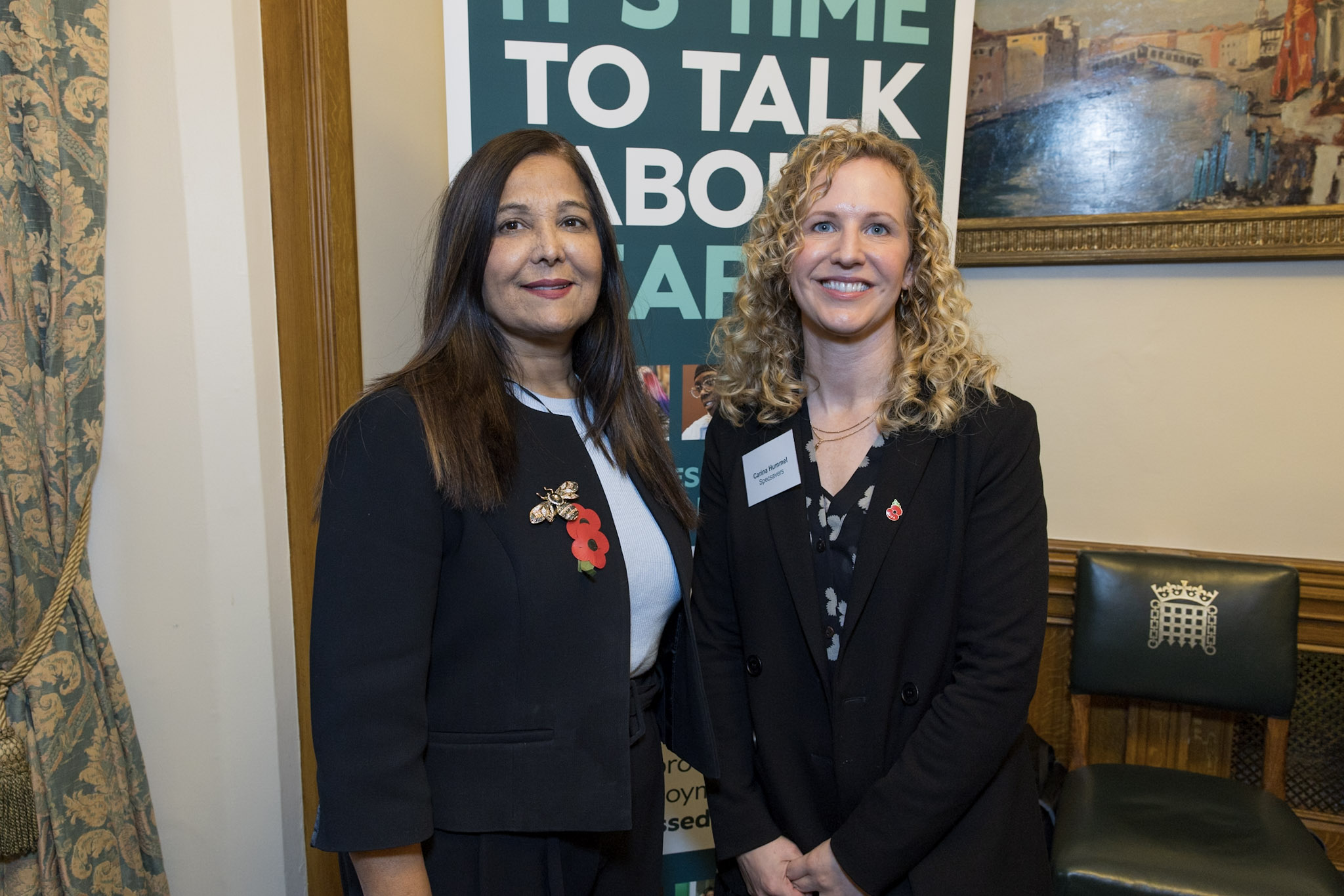
MP Yasmin Qureshi with Carina Hummel
In addition, the calls include the commissioning of ear wax removal services by primary care audiologists everywhere, and investment in better IT connectivity between primary and secondary ear and hearing care services.
OT attended the event to learn more about the issues facing audiology, and the implications for optometry.
1 Harness capacity on the High Street
MP Yasmin Qureshi, Labour MP for Bolton South and Walkden, began the proceedings with a reflection of her experience of hearing loss and those of constituents.She shared: “Uncorrected hearing loss can complicate our communication and social interactions. It can lead to social isolation and loneliness, which we know can increase mortality, increase blood pressure, heighten stress hormones, impair the immune system, and can even increase our risk of developing dementia.”
“This is exactly why it should worry us that 45% of people who need treatment for adult-onset hearing loss are not being able to access it,” she added.
Uncorrected hearing loss can complicate our communication and social interactions
Highlighting the pressure on NHS hospital services and lengthy waiting times for appointments, Qureshi suggested change is needed to support access to audiology services.
“That is one of the reasons why I am calling for a move to a model of primary care audiology, working alongside NHS hospital departments,” she said, adding: “We need to harness the capacity that exists on our High Streets.”
This model means care earlier and closer to home, at lower costs, and could help reduce pressure on hospital hearing services, enabling them to concentrate on more complicated needs.
Qureshi noted the challenges constituents have faced in accessing ear wax removal services, sharing that she has heard examples of people visiting a hairdresser for help.
"I think the commissioning of primary care providers for ear wax removal services would mean we can get providers to adhere to regulatory safety standards,” she said.
2 Audiology: Part of the transformation
Carina Hummel, managing director for audiology at Specsavers, explained that the Specsavers hearing health report has been launched in alignment with three big shifts the Government has outlined for the NHS: from hospital to community, sickness to prevention, and analogue to digital.Hummel described this as the “ideal opportunity to highlight how audiology can be part of that transformation.”
Specsavers is working in consultation with colleagues across the sector to consider the issues that need to be addressed, and how to improve patient health.
Early detection and treatment is core to the discussion, and Hummel highlighted that the key questions are: “How do we change the conversation about hearing? How do we start to remove the stigma and find new ways to talk about hearing care? How do we get more public engagement in the issue?”
The hearing health report indicated that 5.3 million people are in a ‘denial phase’ when it comes to addressing their hearing loss, Hummel noted.
The report also highlights the workforce challenges faced in audiology, and the need for more people to enter the sector. Specsavers has brought in initiatives seeking to address the issue, and is also investing in diagnostic technology and capacity.
Hummel shared: “It’s really critical that people can access care regardless of where they live, their location, but also their financial circumstances. We’re actively working with ICBs in many communities to offer NHS services.”
“Today we are calling for a nationally commissioned audiology primary care service to supplement NHS hospital services,” she shared, adding: “I think if we can do this, the impact would be profound.”
It’s really critical that people can access care regardless of where they live, their location, but also their financial circumstances
3 An optical model for audiology
Doug Perkins, founder of Specsavers, took to the microphone to discuss the calls for a primary care audiology service, he shared: “Of all the things we’ve heard [today], I think the postcode lottery is the most emotional side.”During the event, audiologists were operating video otoscopes offering ear health checks, as well as a hearing loss simulator. In addition, MPs were able to view a map of services commissioned in each constituency.
“When you look at those maps you realise it is the socially deprived areas that are not getting the support they should be on access to primary care,” he noted.
Perkins shared: “We need to improve access, and that must drive us in the direction of the optical model.”
Audiology has been somewhat left out, he noted, adding: “With an ageing population, audiology can’t surely be left out of the equation where people are having to wait two years to be able to hear.”
Specsavers will put the case to Stephen Kinnock, Minister of State for Care, and colleagues in the Labour Party, taking advantage of the upcoming 10-year plan for the NHS, he shared.
Perkins reflected that, “with the support of the people in this room,” a realistic model for primary care audiology services delivered in the community could be built across the nation in five years.
“With optics improvements, ophthalmology improvements, and audiology improvements, we can develop a huge case for the investment and outcomes of this health change to everyday people,” he said.
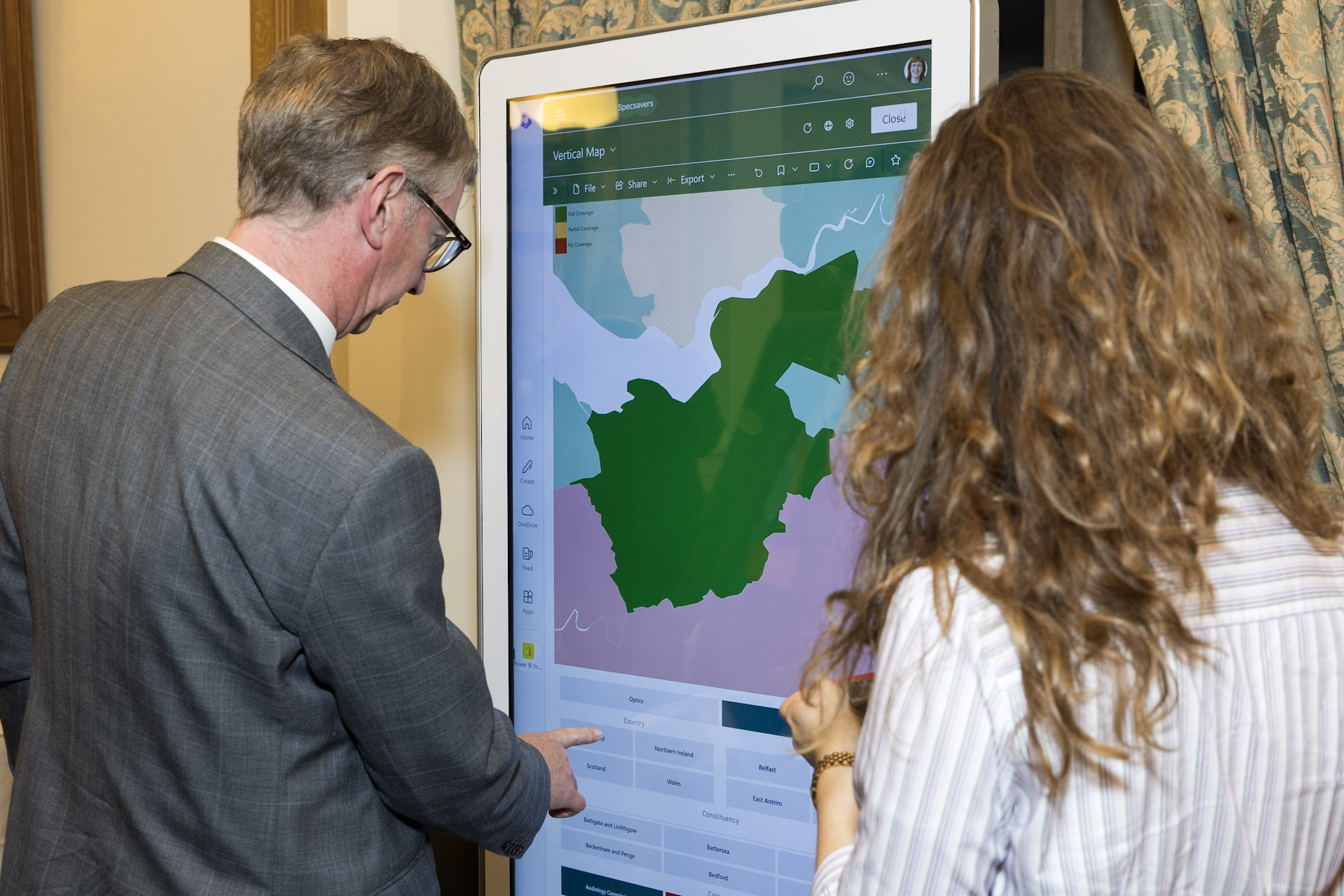
A map of commissioned services across constituencies
4 Improving patient outcomes with High Street access
Giles Edmonds, optometrist and clinical services director for Specsavers, was in attendance at the event. He spoke to OT about the implications of the call for primary care audiology services in the community for optometry.Edmonds’ described a “mismatch” in the commissioning of NHS services for optometry and audiology across parts of the country.
For example, Specsavers’ report noted that there are no NHS community audiology services commissioned in Scotland, though NHS Scotland has committed to a primary care model for adult audiology. Meanwhile, NHS Wales is providing adult audiology services in community settings, such as GP practices, but Specsavers has suggested that this has not increased capacity.
With a new health minister in post, and additional funding allocated for the NHS in the Autumn Budget, Edmonds said: “We should be uniting together as a sector behind changing government policy. There is no better time to do get audiology on the agenda.”
Reflecting on his takeaways from the event, Edmonds noted the synergy between optometry and audiology, telling OT: “They face exactly the same challenges. Mainly it is around commissioning. It’s a reminder that we have to constantly fight our patients’ corner for better services, and that’s going to be really important.”
“It’s about having the right clinical capacity in the community, in the right location,” he told OT, adding: “Whether it’s a Specsavers store or another optometry practice, we’re there on the High Street, we’re easily accessible, tend to be open five to seven days a week, we have short waiting times, the right level of equipment, and trained team around eyes.”
“It’s another primary care service that could be delivered better on the High Street to improve patient outcomes,” he said.
It’s a reminder that we have to constantly fight our patients’ corner for better services
5 Taking the weight off secondary care
Jess Brown-Fuller, Liberal Democrat spokesperson for hospitals and primary care and MP for Chichester, also shared her personal experience of hearing loss as part of the event, which was identified through early years intervention.“I’m aware that as I get older, the reduced hearing I already have will no doubt increase, and I will need to ask for support from audiology services,” she said, adding that this is one of the reasons she welcomed the £22 billion funding for the NHS in the autumn Budget as a “step in the right direction.”
Brown-Fuller highlighted: “Hearing loss is not just a physical issue. It has profound social and mental health implications, and addressing hearing loss can facilitate healthy ageing.”
Hearing loss is not just a physical issue. It has profound social and mental health implications, and addressing hearing loss can facilitate healthy ageing
She emphasised that good hearing is “crucial for staying engaged with services, participating in community activities, and staying connected with others, and that’s why community audiology is so important.”
Brown-Fuller suggested community-based solutions should be prioritised.
“We must invest in our primary care to take the weight off our secondary care, protect essential services and meet the health needs of all of our citizens together, working across parties, we can build the NHS that once again works for the people,” she said, adding: “Healthcare is not a luxury, it is a necessity.”
6 Barriers to hearing assessments
Dr Zoe Williams, a GP and TV presenter, is quoted in the report sharing her tips for healthy hearing and spoke at the launch event about the barriers to hearing assessments.The first barrier that holds people back from seeking a hearing assessment is stigma, Williams said, sharing that this can stop people from addressing their hearing loss for up to 10 years.
“It is important we all work together to quash that,” she said, highlighting that the less hearing lost when the individual starts to use hearing aid technology, the better their experience will be, the easier it will be to adapt, and the less sound they will lose over time.
She pointed out, in the same way that the public visit an optometrist for a sight test and are guided on any next steps: “The only action people need to take is to get that hearing assessment... the audiologist can help them do what they need to do next.”
Secondly, Williams noted, is a prevalent idea that hearing isn’t important.
“In my experience, I think people don’t necessarily understand the importance of their hearing,” she said, adding that patients can fear it is a “waste” of a GP appointment.
Finally, Williams pointed out issues of access when it comes to hearing care services.
“Hearing assessments and hearing technology are available on our High Street for people who can afford to pay privately,” she said.
Meanwhile, 120,000 people are on NHS waiting lists and 8000 are waiting more than 14 weeks to be seen by the hospital audiology service.
She said: “It doesn’t need to be that way. We don’t have waiting lists for people to have their eyes checked, and we don’t need to have people waiting to have their hearing checked either. If we could ensure that patients could self-refer to audiologists, take the GPs out of the equation, that could save half a million GP appointments every year.”


Comments (0)
You must be logged in to join the discussion. Log in