
04 June 2026
“Patient choice is central to informed consent in community optometry. As the first clinical point of contact, optometrists play a key role in ensuring patients understand their condition, the clinically appropriate options available, and what different care pathways involve. This includes explaining NHS and private routes where relevant, outlining reasonable expectations around access and outcomes, and discussing options within common referrals such as cataract care.
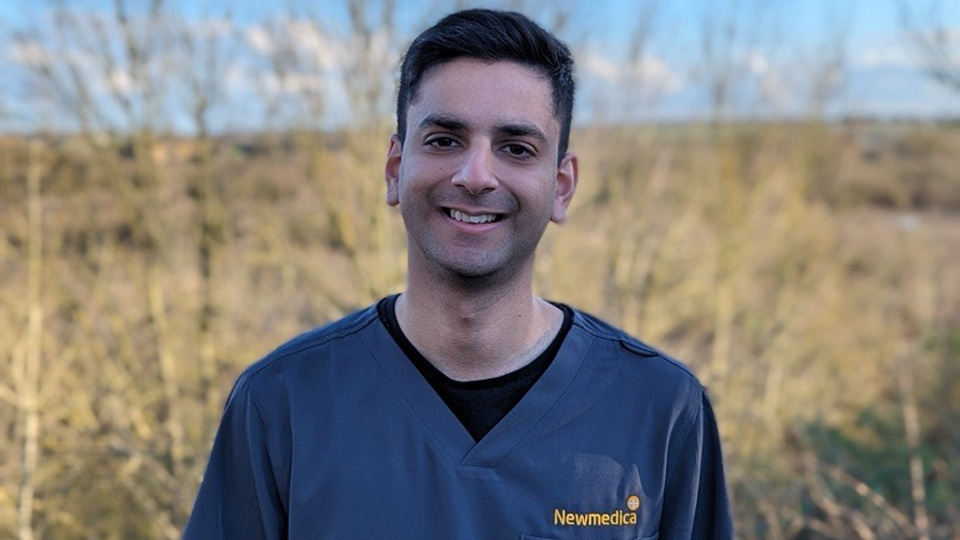
“Research by Newmedica indicates that a significant proportion of cataract patients with astigmatism could benefit from toric intraocular lenses, making discussion part of informed consent. Clear, balanced conversations support patient understanding, strengthen trust, and help ensure continuity of highquality care following referral.”
Information for health professionals about Newmedica.
Patient choice and informed consent in optometric practice
Patient choice is a cornerstone of good optometric practice and a fundamental element of informed consent. In community settings, optometrists are often the first clinical point of contact, and the discussions held in practice play a critical role in shaping how patients understand their eye condition, the options available to them, and the care that may follow.
“We all want the best for our patients as optometrists,” says Karan Vyas, optometrist and advanced clinical practitioner at Newmedia. “That means giving patients all the options on the table,” he adds.
From both a clinical and professional perspective, informed consent relies on patients receiving clear, balanced and comprehensible explanations of clinically-appropriate options. When patients understand not only what is recommended, but also why and what alternatives exist, they are better able to make decisions that reflect their visual needs, lifestyle and expectations.

Explaining NHS and private pathways clearly
In everyday community practice, supporting patient choice means confidently and neutrally outlining:
- Clinically appropriate treatment options
- What NHS and private pathways involve
- Differences in access, experience and reasonable expectations.
These conversations are not about steering patients towards a particular route. Instead, they are about transparency, ensuring patients feel informed and supported in their decisionmaking.
“It’s about ensuring that patients have a full range of options to pick what’s best for them,” Vyas explains: “That includes understanding what care might look like, how quickly it may happen, and what outcomes they can reasonably expect.”
For optometrists, this approach strengthens trust and reinforces their role as patient advocates.
Cataract referrals: awareness of available options
Cataract referral remains one of the most common reasons for onward referral from community optometry. However, many patients are unaware that choice can exist within cataract care itself.
Discussing this information allows patients to consider whether additional options may be relevant to their vision, daily activities and postoperative expectations. Importantly, these conversations help ensure that consent is truly informed, rather than patients discovering options later in the care pathway. Toric lenses may be available on the NHS in certain areas under certain conditions when considering referrals. Optometrists should look at what’s available in the area when advising their patients.
Toric lenses may be available on the NHS in certain areas under certain conditions when considering referrals. Optometrists should look at what’s available in the area when advising their patients.
“Ensuring patients have a choice of both NHS and private is not about restricting them to one pathway,” Vyas continues. “It’s about helping patients make a properly informed choice that gives them the best possible outcome for their individual circumstances.”

Trust in referral partners and continuity of care
Trust is essential when referring patients onward. Community optometrists need confidence that patients will continue to receive highquality, appropriate and consistent care after referral.
“Having worked in community practice myself, I can say that patients are treated in the most extraordinary way at Newmedica. We want to treat every patient how you’d want your parents to feel,” Vyas says: “Our clinical outcomes reflect that, and patients are more satisfied with our service.”
Newmedica delivers NHS and privately funded ophthalmology services through consultantled multidisciplinary teams in modern centres. Reported outcomes include some of the lowest posterior capsule rupture rates in UK ophthalmology, alongside a strong focus on patient experience and continuity of care.
For community optometrists, considering both outcomes and patient experience is an important part of choosing trusted referral partners.
Key points for community optometrists:
- Patient choice underpins informed consent
- Clear explanations support confident decisionmaking
- Cataract patients may be unaware of clinically-appropriate options
- Discussing NHS and private pathways supports transparency
- Trust in referral partners supports continuity, outcomes and patient satisfaction.