


16 April 2026
Researchers at the University of Pittsburgh School of Medicine have explored the potential of a naturally occurring microbe in promoting corneal repair.
A study published in Cell Reports described how scientists genetically modified the microbe, Corynebacterium mastitidis, to secrete a small protein that regulates inflammation.
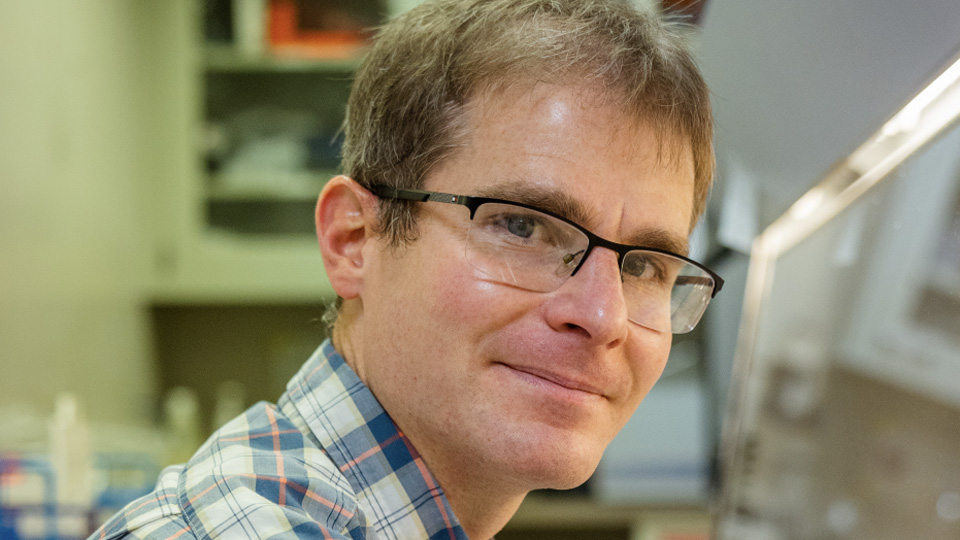
Associate professor of immunology and ophthalmology at the University of Pittsburgh, Dr Anthony St. Leger, told OT that the idea for the research began with the chance discovery of a colony of bacteria underneath a mouse’s eyelid in 2017.
“We had suspicions that there were bacteria around the ocular surface constituting an ocular microbiome – similar to the gut microbiome, which promotes gut health,” he explained.
“We stumbled upon this specific microbe because we were growing bacteria in various conditions, and we accidentally forgot a plate in anaerobic chamber,” St. Leger recalled.
We had an idea that if we could engineer this microbe to produce proteins of interest then we can basically apply it to the eye one time and have it continually produce and secrete this therapeutic agent
The researchers discovered that one bacterium, Corynebacterium mastitidis, was able to grow in this oxygen deficient environment.
They later demonstrated that this microbe was capable of both colonising and promoting the health of the eye.
“The defining moment of this study was when we were able to show this bacterium stimulated a protective immune response. We could confer that protection if we moved the bacterium to other mice that didn’t have it,” St. Leger shared.
This specific microbe became the focus of St. Leger’s research when he established his own laboratory.
“That’s when the idea of this eye drop came into play. We knew that the microbe could live on the ocular surface,” he said.
“We had an idea that if we could engineer this microbe to produce proteins of interest then we can basically apply it to the eye one time and have it continually produce and secrete this therapeutic agent all the time, rather than putting in eye drops multiple times a day,” St. Leger explained.
He highlighted that previous research focusing on the gut and lung had demonstrated that microbes could be engineered to continually secrete cytokine interleukin10 (IL10) – a protein that regulates inflammation.
“Nobody had ever done this in the eye,” St. Leger shared.
The research team engineered the benign bacterium, Corynebacterium mastitidis, to secrete IL10.
Mice whose corneas were gently scratched and treated with the engineered bacteria healed faster than those treated with regular bacteria or saline.
The faster healing was not observed when the receptor for IL10 was blocked.
St. Leger noted that this potential therapy could be delivered in a single application – compared to eye drops which may require multiple daily applications.
“Eye drops are effective, but they are laborious,” he observed.
He added that the research also serves as a proof-of-concept of manipulating the ocular microbiome.
St. Leger shared that research focusing on the ocular microbiome is “just hitting its stride.”
“With studies like ours, we show that manipulation of this environment is possible. If we understand what is a healthy condition, and what is a pathogenic condition, perhaps we can engineer a microbiome of the eye to promote homeostasis or to counteract some autoimmune conditions,” he said.
The academic observed that one of the exciting aspects of the system is that it is modular.
“We built it so you can swap in different genes – different cytokines, growth factors or other proteins – to tailor the therapy to specific eye diseases,” he said.


Comments (0)
You must be logged in to join the discussion. Log in