


13 April 2026
Change often begins in small, humble ways, but can build into a meaningful impact for ourselves and our environments.
Stress Awareness Month, held each April, seeks to increase awareness of the causes, effects, and management of stress.
This year, the awareness campaign is focused on #BeTheChange, exploring how small actions can have a large impact.
The organisers of Stress Awareness Month described the theme as “a powerful call to personal agency, action, and transformation rooted in the principles of self-efficacy, neuroplasticity, and relational connection.”
Statistics from the Health and Safety Executive found that, in 2023–2024, 776,000 workers reported suffering from work-related stress, depression or anxiety – accounting for nearly half of all self-reported work-related ill health.
In recognition of Stress Awareness Month, OT asked how optometrists can #BeTheChange in their own lives and circles when it comes to wellbeing?
Small, intentional shifts during the day
Optometrist Sheena Tanna-Shah, founder of Inspiring Success and Optometry Wellness, suggested: “To #BeTheChange this Stress Awareness Month, optometrists can start by making small, intentional shifts throughout their working day.”
This could look like arriving to the practice a few minutes early to prepare the space and begin with a sense of calm.
This can “set the tone for everything that follows,” Tanna-Shah said, adding: “Whereas starting flustered can create a ripple effect of stress.”
Introducing simple resets into the day, such as taking a few deep breaths between patients or pausing for a moment of mindfulness in challenging situations can help regain focus and perspective.
“Reminding yourself that you are doing your best, and reaching out to colleagues when things feel overwhelming, fosters both personal resilience and a supportive team culture,” she said.

The life coach and rapid transformation therapy practitioner emphasised: “Wellbeing also comes from how we care for ourselves physically and mentally during the day.”
“Checking in with your posture, taking gentle stretches, and stepping away from your clinical space at lunchtime even for a short walk or coffee can make a significant difference to your energy levels,” Tanna-Shah said.
Creating a ‘transition ritual’ at the end of the day can help to separate work from home life, she continued. Rituals could include consciously switching off the computer, reflecting on one thing to be grateful for, and one thing learned.
“These small, consistent actions may seem simple, but together they can transform how you feel, helping you show up as a calmer, more present practitioner for both yourself and those around you,” Tanna-Shah told OT.
Reminding yourself that you are doing your best, and reaching out to colleagues when things feel overwhelming, fosters both personal resilience and a supportive team culture
Pause, pay attention, and be self-aware
Optometrist and accredited professional coach, Peter Greedy, highlighted the need to step back and acknowledge an issue.
He told OT: “As optical professionals we are fixers. We are presented with a problem – poor vision, gritty eyes, glare – and we diagnose and fix it where we can or refer on as needed. We are solution focused.”
He continued: “In my work as a coach within the profession, talking about how we pay attention to our patients or customers I use the phrase: ‘listen to understand, rather than listen to solve’.”

This is something that optometrists need to apply to themselves too, Greedy said.
He said: “We are often too busy to stop, listen and seek understanding of what is happening in the moment.”
“We would be well served to ‘pay attention’ – another favourite phrase of mine as it implies there is a cost to the act of attending to something, in this case ourselves,” he added.
Greedy shared with OT: “My encouragement to my colleagues is to take more moments to pause, listen, pay attention and be more self-aware of what’s happening to us, our colleagues and those we serve. Let this be the change.”
My encouragement to my colleagues is to take more moments to pause, listen, pay attention and be more self-aware of what’s happening to us, our colleagues and those we serve
Open up the conversation with colleagues
Considering how optometrists can #BeTheChange in their own professional circles, Retallic said: “I think the easiest thing to do is to put yourself in other people’s shoes. How could how I’m acting make someone else feel? How would I like to be made to feel?”
“I think it would be a very important thing to decide to ask how someone is and open up a conversation,” he continued.
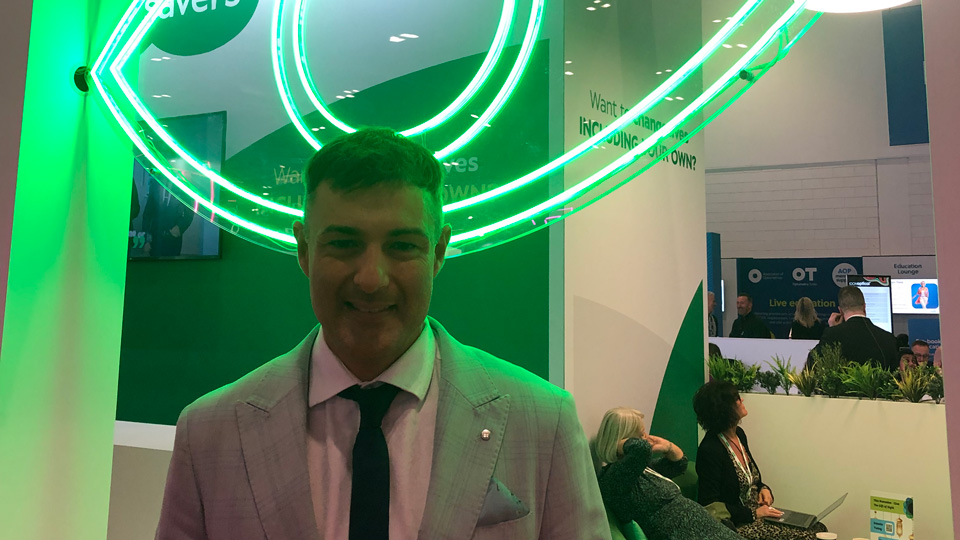
Retallic acknowledged that it can be difficult to open up a wellbeing conversation because many people are nervous about not knowing what to say.
“You’ll find a way. We are an empathetic profession – if a patient said that, we would probably be happier having that conversation than if a fellow colleague was to say the same thing,” he said.
The mantra of ‘putting the patient first’ is important, Retallic shared, but emphasised: “At some point we also need to prioritise our own health. So, it’s how do we get that balance? You’ve got to get that right, because the stress builds up and it can lead to burnout.”
I think it would be a very important thing to decide to ask how someone is and open up a conversation
Acknowledge the challenges
Asked to share his thoughts for Stress Awareness Month, he said: “We work in a profession where we are trained to be calm, capable, and constantly focused on others.”
“Day after day we hold clinical responsibility, manage risk, and support our patients, often without pausing to acknowledge what we ourselves might be carrying,” he said.
Longhurst noted: “The reality is that many optometrists are quietly navigating their own challenges behind the consulting room door.”
The reality is that many optometrists are quietly navigating their own challenges behind the consulting room door
He recommended that ‘being the change’ means creating space for those challenges to be acknowledged, without attaching judgement.
Longhurst suggested: “That might look like checking in with a colleague and genuinely listening to the answer, sharing something small about how we’re actually doing, or allowing ourselves to step back when we need to.”
He shared that this can also extend to patients, telling OT that many arrive with more than their visual concerns.
“By creating a calm, human space in clinic, we can support their wellbeing as well as their sight,” he said.



Comments (0)
You must be logged in to join the discussion. Log in